
· Travel · 5 min read
Meteorite Hunting Morocco: Sahara Space Rocks Guide
Pieces of Mars fell near Tata. Learn why the Sahara keeps meteorites and how to see them on a private desert trip.
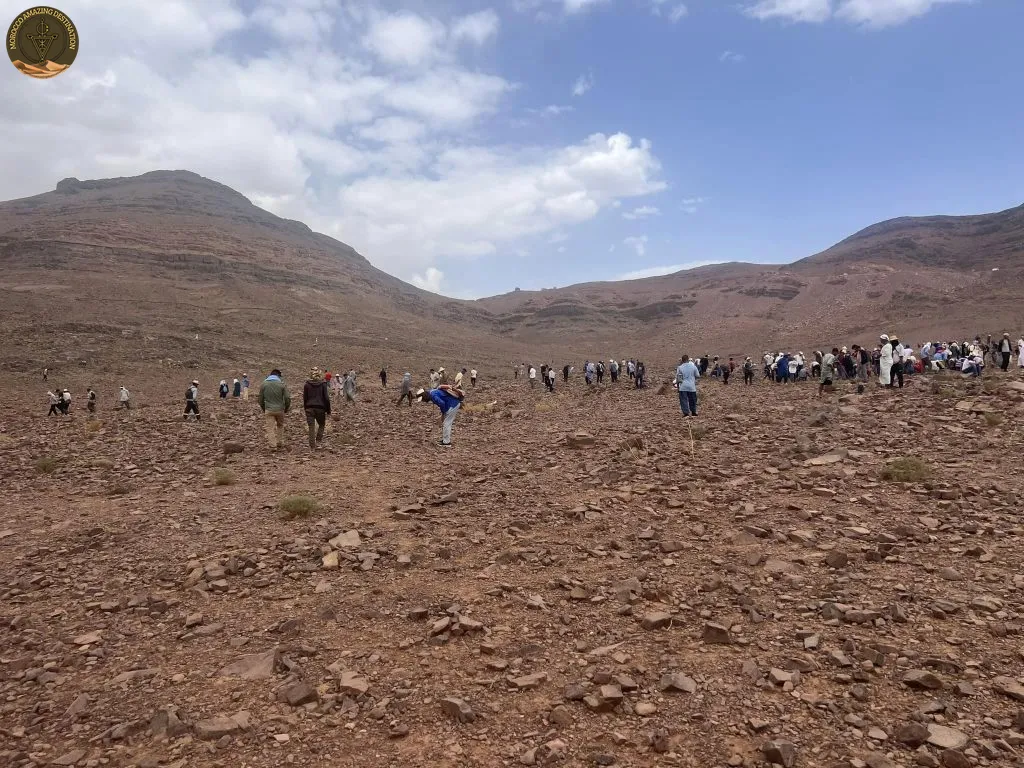
Pieces of Mars have landed in southern Morocco, and nomads picked them up off the sand. That quiet fact sits behind the growing interest in meteorite hunting Morocco travellers keep asking us about. The Sahara here ranks among the best places on Earth to find space rocks, and the reasons are refreshingly simple. Dry ground, open skies and people who read the desert every day do most of the work. Most travellers meet meteorites through a guide, a market stall or a museum shelf.
In this guide, we will break down why the desert preserves meteorites, the story of the Tissint fall, where finds surface, and how you can see them around a desert camp.
Why the Desert Preserves Space Rocks
A dark stone on pale gravel is easy to spot, and southern Morocco holds endless pale gravel. Dry air slows the rust that eats iron-rich falls in wetter countries. Wind sweeps the plains clean instead of burying them, so old falls can sit exposed for years. Few landscapes on the planet offer searchers such fair conditions. That is why university teams and private hunters alike head for the same southern ground.
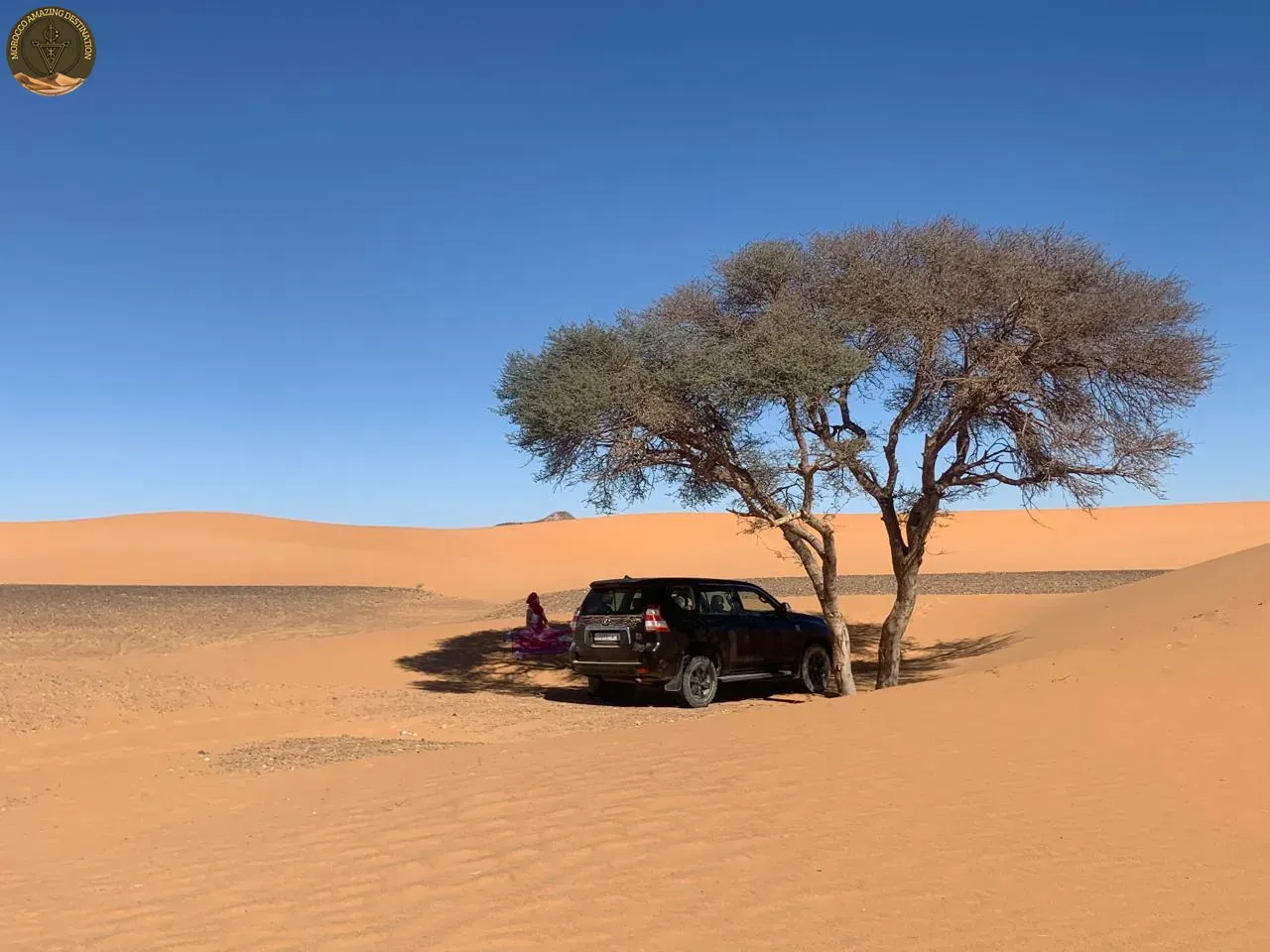
Clear skies matter just as much as dry ground. When a fireball crosses the desert at night, someone usually sees it, and witnessed falls lead searchers back to the right ground within days. Nomads and herders cross huge areas on foot, which adds thousands of sharp eyes to the search.
- Sharp contrast: black fusion crust stands out against light gravel plains.
- Dry climate: almost no moisture, so stones survive far longer than elsewhere.
- Open terrain: thin soil and sparse plants leave falls visible on the surface.
- Nomad knowledge: herders notice unusual stones during daily crossings.
- Low vegetation: few plants means almost nothing hides a fallen stone.
Tissint - The Mars Rock Found Near Tata
The most famous Moroccan fall carries the name of a small village. The Tissint meteorite lit up the sky above the Oued Draa valley east of Tata as a fireball with sonic booms. Nomads later recovered fresh black-crusted stones scattered across the ground, some within months of the fall.
Laboratory work confirmed something remarkable: a Martian shergottite, only the fifth witnessed Martian fall on record. Shergottites are volcanic rocks blasted off Mars by ancient impacts, so each piece is a free sample from another planet. The total known weight sits around 12 to 15 kilograms. Pieces now rest in museum and research collections, while the story still draws rock lovers toward the far south. Standing where the sky delivered them gives the story a weight no display case can match.
- Witnessed fall: the fireball was seen, so searchers knew the strewn field early.
- Fresh crust: quick recovery kept the black fusion crust beautifully intact.
- Rare type: Martian rock, far scarcer than common asteroidal chondrites.
Desert Towns Where Finds Surface
Ask where to find meteorites in Morocco and every answer points south. A broad arc from Tata through Zagora to the Erfoud and Merzouga corridor produces most reported finds. Nomad and prospector networks carry stones into town markets and fossil shops, where collectors come to inspect them. Some pieces travel no further than the nearest weekly market.
Each stop has its own flavour. Tata sits closest to the Tissint strewn field and the far southwestern desert. Zagora has served desert caravans for generations, and nomad finds often change hands there first. Erfoud and Rissani pair meteorite talk with fossils and minerals from the same ancient seabeds.
- Tata: gateway to the Tissint fall area and remote southwestern ground.
- Zagora: caravan town where finds often surface before anywhere else.
- Erfoud and Rissani: fossil capital with shops that sometimes show certified pieces.
- Merzouga: dune country at the end of many Sahara routes, close to dealing networks.
How Travellers Can See Meteorites Around a Desert Camp
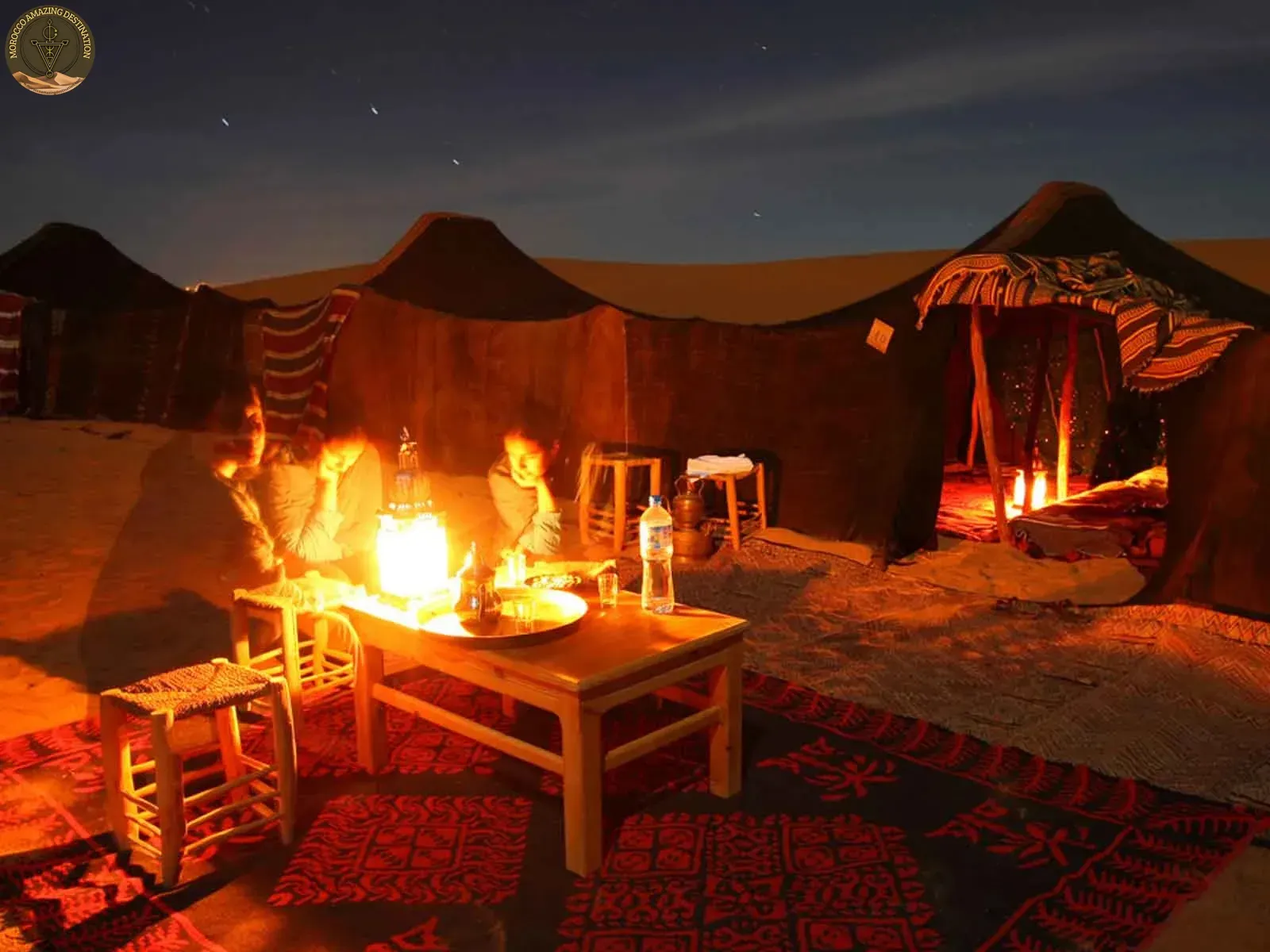
You do not need a laboratory to meet a space rock. Guides and reputable sellers around the desert towns will show you fragments, and an evening at camp makes the right setting to hold one. Even a small slice under a magnifying glass shows metal flecks that catch the light. Sahara meteorites reach travellers this way far more often than through random searching, which needs permits, skill and luck.
Learn the basic signs before you trust your eyes. Real finds often carry a thin black fusion crust from their fiery passage through the air. They feel unusually heavy for their size, and many stick to a magnet. Desert-varnished Earth rocks fool plenty of beginners though, so laboratory confirmation settles any serious claim. Reputable sellers expect questions and show documentation without hesitation.
- Ask your guide: local drivers know which sellers show pieces with proper provenance.
- Check the crust: a smooth dark skin covers genuine fresh falls, not paint or polish.
- Test weight and magnet: unexpected density plus attraction raises confidence.
- Buy certified only: keep paperwork and provenance, and never pocket stones from the ground.
Pair the rocks with the sky itself. Our guide to a night in the Sahara Desert explains what to expect after dark, from silence to shooting stars.
Planning a Private Sahara Journey
The meteorite belt fits naturally into a Marrakech to Merzouga route. You travel with a private driver-guide, sleep in hand-picked riads and a luxury desert camp, and shape each stop around your interests. Your driver times the desert arrival for sunset, when Erg Chebbi glows red and gold. Hassan, Hamid and Andrea coordinate the details, so the journey feels hassle-free and personal, with the real Morocco at every turn.
For the classic Atlas to dunes arc, our 4-Day Morocco Desert Tour from Marrakech crosses the High Atlas, the Dades Valley and Erg Chebbi with a night in a luxury camp. Short on days? The 3-Day Trip from Marrakech to Merzouga covers the same desert finale at a faster pace.
We can customize a tour to match your needs - design your perfect itinerary
If you found this helpful, add us as your preferred source on Google.
Frequently Asked Questions
What is the Tissint meteorite?
The Tissint meteorite is a Martian rock that fell as a witnessed fireball over the Oued Draa valley east of Tata. Nomads recovered fresh fusion-crusted fragments, and laboratory work confirmed it as a Martian shergottite, the fifth witnessed Martian fall on record.
Why are so many meteorites found in Morocco?
Southern Morocco combines dry air, pale gravel plains and open terrain, so dark stones stand out and survive for years. Clear desert skies mean falls get witnessed, and nomad networks cover ground that few search teams could reach.
How can you tell a real meteorite?
Look for a thin black fusion crust, unusual weight for its size and attraction to a magnet. Desert-varnished Earth rocks fool plenty of beginners though, so laboratory testing settles any serious identification.
Can tourists buy meteorites in Morocco?
Yes, through reputable sellers in towns such as Erfoud and Rissani that provide provenance and certification. Ask your guide for advice, keep the paperwork, and never collect stones casually from the ground.
Ready for an Adventure?
Have questions? Feel free to contact us using the form below. We're here to help!