
· Travel · 13 min read
Lonely Planet Film Filming Locations: Complete Guide to the Netflix Romance Shot in Morocco
Discover all Lonely Planet film filming locations in Morocco — Kasbah Bab Ourika, Marrakech, Chefchaouen and Essaouira. Plan your film-inspired trip.
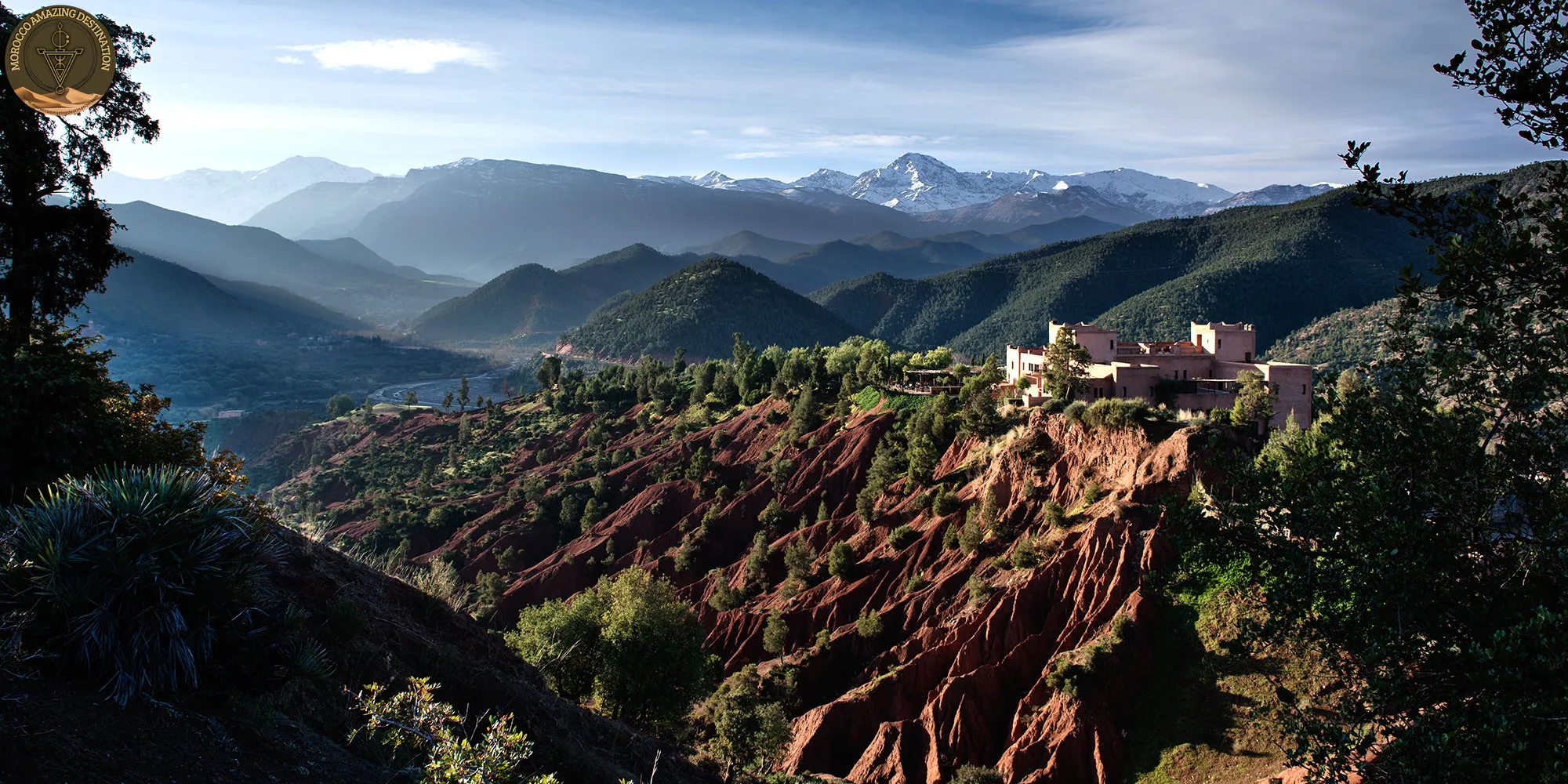
If you fell for the quiet, sun-washed romance of Netflix’s Lonely Planet and immediately wondered where was Lonely Planet filmed, you are not alone. The story of a reclusive novelist seeking inspiration at a secluded Moroccan writers’ retreat — and finding an unexpected connection — plays out against landscapes that feel too textured to be a set.
This guide to the Lonely Planet film filming locations walks you through every confirmed Moroccan setting, from the hilltop retreat to the blue alleys of the north and the windy Atlantic coast, plus what was doubled in Los Angeles. You will also find practical tips for visiting each spot without getting lost in the medina maze.
What Is Lonely Planet and Why Morocco Fits So Perfectly
Lonely Planet is a recent Netflix romantic drama written and directed by Susannah Grant, starring Laura Dern as novelist Katherine Loewe and Liam Hemsworth as Owen Brophy, with Diana Silvers, Younès Boucif, Adriano Giannini and Rachida Brakni in supporting roles. The plot follows Katherine as she travels to a fictional Moroccan writers’ retreat — Kasbah A’shab — to overcome writer’s block, only to be pulled into a tender, slow-burn connection that reframes what solitude and companionship can mean (Source: Netflix Tudum).
For film fans searching Lonely Planet Netflix Morocco, the setting is not just backdrop. Morocco offers in a single journey the ochre medinas, snow-dusted High Atlas foothills, cobalt-blue mountain towns and fortified Atlantic harbors that the story needs — all within a few hours’ drive. That geographic density is precisely why productions return again and again, and why Lonely Planet was able to shoot almost entirely on location rather than on soundstages.
The film’s appeal for travelers is obvious: the retreat feels like a place you could actually book, the markets feel lived-in rather than dressed, and the coastal finale feels windswept and real. The good news is that you can visit nearly all of it.
The Heart of the Film: The Lonely Planet Retreat Location at Kasbah Bab Ourika
Every romance needs a retreat, and the Lonely Planet retreat location is arguably the film’s most memorable character. The fictional Kasbah A’shab was played by a very real, very bookable hotel: Kasbah Bab Ourika.
Set in Tnine Ourika in the Ourika Valley, in Al Haouz Province on the foothills of the High Atlas, the property sits on a hilltop about 40 to 60 minutes’ drive south of Marrakech, roughly 42 kilometres from Marrakech Menara Airport. Built using traditional rammed-earth (pisé) Berber technique and opened as a boutique eco-luxe hotel, it blends contemporary comfort with earthen architecture, terraces and gardens that open toward the valley (Source: Kasbah Bab Ourika Official Site; Cinemaholic).
What you will recognize from the film:
- Terraces and courtyards where writers gather, read and talk — the hotel’s layered terraces and low walls are unmistakable.
- Pool and garden suites — the property counts around 40 rooms in total, split between the main building, garden rooms and pool suites, plus a separate Retreat wing that can be hired privately.
- Ourika Valley views — olive groves, river and Atlas foothills frame nearly every exterior shot. Even when interiors were supplemented elsewhere, exteriors keep returning to this light.
Staying here is possible. Kasbah Bab Ourika operates as a luxury boutique hotel with standard rooms to private villas, heated pool, spa, fireplaces, yoga and cooking classes, bookable through its official site. If you dream of replicating the film’s slow mornings, request a terrace room overlooking the valley and plan at least one night to absorb the quiet after day visitors leave.
For travelers tracing Lonely Planet Morocco locations in a logical circuit, the Ourika Valley works best as a day trip from Marrakech or as the first overnight after landing — close enough for ease, remote enough to feel like an escape.
Marrakech: Arrival, Medina and the Everyday Morocco
After the retreat, the film opens up the classic Marrakech palette — and the location work is wonderfully specific for those who love to spot exact corners.
Key Lonely Planet Morocco locations in Marrakech include:
- Menara Airport arrival — Katherine’s entry point, establishing the journey from airside to medina.
- The Medina — UNESCO-listed walled old city — winding alleys, carved doors and souks provide the film’s texture. Look for the shopping sequence around Derb Dabachi, a busy souk artery pinpointed by local breakdowns (Source: ExploreEssaouira).
- Jemaa el-Fna square — the vast, ever-changing plaza with juice stalls, storytellers and musicians by night. The film captures its energy rather than staging it.
- Café near Jemaa el-Fna — a café scene opposite a distinctive green façade, identified locally as just off the square near Café Kessabine / Café Amornakoch. Guides debate the exact name, so think of it as “the café just off Jemaa el-Fna opposite the green-tiled building” rather than a single definitive address (Source: ExploreEssaouira; Sceen-It).
- Badi Palace — the 16th-century ruined palace with vast walls and stork nests, spotted in a brief but identifiable sequence (Source: Sceen-It).
Visiting tips:
- Base yourself inside or just outside the medina for early-morning light when the alleys are empty.
- Hire a licensed local guide for the first half-day — souk navigation and historical context are worth it, and you will spot film corners faster.
- Expect gentle haggling, carry small change and ask before photographing people, especially artisans at work.
Chefchaouen: Blue Alleys, Gate and Square
If one location defines the film’s visual identity, it is Chefchaouen. The cast reportedly spent nearly a week filming in the Blue City of the Rif Mountains, and the results are some of the most rewatchable travel-porn in a recent romance (Source: ScreenRant interview; 4Filming; Cinemaholic).
What was filmed where — with surprising precision:
- Avenue Sidi Abdelhamid / Bab Souk gate — the moment a car stops outside the medina and the character continues on foot through the gate into the blue (around the mid-teens minutes mark).
- Place El Haouta — the small square with the tiled fountain where a lunch scene unfolds near the northeast-corner café. The fountain, the surrounding white-and-blue walls and the café awning are all identifiable (Source: Sceen-It).
- Blue-washed alleys, staircases and doorways — endless variations of powder, cobalt and indigo. Unlike Marrakech, the medina here is compact and pedestrian-only, so you can retrace steps easily and linger for photos.
Why it matters for travelers:
- Chefchaouen is small enough to explore on foot in half a day, but photographers will want a full day and an overnight inside the medina for dawn light.
- Stay near Bab El Ain or Bab Souk for easy luggage handling, or higher up for panoramic views over blue rooftops toward the Rif peaks.
- Combine with a Spanish Mosque viewpoint sunset — not a film location itself, but the classic Chefchaouen sunset spot that completes the visual story.
Chefchaouen shows why Morocco keeps drawing filmmakers who want color without artifice: the blue is lived-in, repainted by households and maintained as civic pride, not a film set built for a week.
Essaouira: Beach, Port and Ramparts for the Coastal Finale
For the film’s windswept, reflective final act, the production moved to Essaouira on the Atlantic coast — the white-and-blue medina, fishing harbor and 18th-century fortifications that have doubled for everything from period dramas to fantasy epics.
Confirmed Essaouira details include:
- Place Moulay Hassan and the fishing port — boats, nets and gulls provide the raw, working harbor texture (Source: IMDb locations; 4Filming).
- Sqala du Port — the sea-facing ramparts with cannons and Atlantic views, visible in a panoramic sweep toward the medina.
- Kasbah district and white-blue walls — the lanes where a bag-snatch sequence plays out along a wall toward Bab El Marsa, with the Sqala visible in the background.
- Beach and Diabat area walk — wide Atlantic sand and the low dunes south of town for the contemplative shore walk (Source: ExploreEssaouira timestamped breakdown).
Essaouira is a UNESCO-listed medina with a very different tempo from Marrakech: slower, breezier, more stroll-friendly. For film fans, it is the perfect place to decompress and rewatch stills against real streets.
Practical notes:
- Two nights allows one relaxed medina day plus a port-and-ramparts walk without rushing.
- Fresh seafood at the port grills is a must; eat where locals queue.
- If the wind picks up — it often does, hence the “Windy City” nickname — layer up and time beach walks for early morning.
Was Fes a Filming Location? What We Know — and What Remains Uncertain
You may see Fes listed in some recaps of the Lonely Planet film filming locations. A couple of secondary sources report that Fes el Bali — with its tanneries, madrasas and dense medina — was used for additional Moroccan texture (Source: Cinemaholic; 4Filming).
However, Fes does not appear in the most consistently cited official location lists such as IMDb’s credited locations, which focus on Marrakech, Chefchaouen, Essaouira and the Ourika Valley plus Los Angeles County. Because of that inconsistency, treat Fes as reportedly but not definitively a Lonely Planet location.
What this means if you are planning a trip:
- If you love Fes — and you should — include it for its own sake: the world’s most labyrinthine medina, storied tanneries and tilework are worth any detour.
- Do not anchor your film-location expectations to specific Fes streets or monuments as you can with Marrakech, Chefchaouen and Essaouira.
- A guide can confirm locally what, if anything, was shot in Fes beyond atmospheric establishing material.
This careful approach avoids disappointment and keeps your itinerary focused on the places you can truly match shot-for-shot.
Los Angeles Doubling: What Was Not Morocco
Like many contemporary productions, Lonely Planet supplemented its Moroccan shoot with material in Los Angeles County. Sources note that a shore walk seen in the film was shot at Malibu Beach, and that some retreat interiors/exteriors plus the New York-set bar and street seen at the very end were filmed on Los Angeles-area sets and streets, including Santa Clarita (Source: 4Filming; Cinemaholic).
You do not need to chase these for a Morocco trip — they exist to complete story geography rather than Moroccan authenticity. Knowing which moments were doubled simply helps you appreciate how much of the Morocco you see on screen is, refreshingly, the real Morocco.
How to Visit the Lonely Planet Film Locations Yourself
Tracing the Lonely Planet film filming locations is very doable as an independent traveler or, even more smoothly, as part of a private driver tour. Here is a film-focused logic that respects geography:
A sensible order
- Start in Marrakech — arrive, recover, explore medina, Jemaa el-Fna, souks and Badi Palace. Day-trip or overnight at Kasbah Bab Ourika in the Ourika Valley for the retreat experience.
- Head north to Chefchaouen — via the Rif. Allow an overnight inside the medina for blue-hour photography and Place El Haouta.
- Swing to Essaouira — for port, ramparts, beach and a slower Atlantic finale before returning to Marrakech or Casablanca for departure.
- Add Fes if time allows — as a cultural highlight with a “reportedly” caveat rather than a confirmed shot-for-shot film pilgrimage.
Getting around
- Private driver with 4x4 or minivan is the most comfortable way to link Marrakech — Ourika Valley — Chefchaouen — Fes — Essaouira without bus transfers. Roads are good but medina parking is limited; drivers handle the logistics.
- Self-drive is possible if you are confident on mountain roads; use petit taxis inside medinas.
- Guides — licensed local guides in Marrakech, Chefchaouen and Essaouira unlock stories, keep you oriented and can point out exact film corners versus similar-looking alleys.
When to go and what to pack
- Morocco is a year-round destination; spring and autumn offer the most comfortable balance for medinas, valleys and coast. Summer is hot inland and windy yet pleasant on the Atlantic.
- Pack layers for mountain evenings, comfortable walking shoes for stairs and cobbles, sun protection, a reusable water bottle and a small flashlight for viewpoint descents.
- Photography etiquette matters everywhere: ask before photographing people, especially at Ras El Ma-style laundry spots or near homes.
Respectful viewing
Remember that the retreat hotel, medinas and fishing port are living places. Keep noise low in residential alleys, support artisans directly, queue politely at the port grills and leave no trace on beaches and trails. Film tourism works best when it supports the communities that make these locations so cinematic.
Continue the Story: Tour Morocco Like the Film
The beauty of following the Lonely Planet Morocco locations is that they form a natural Moroccan circuit rather than a scattered checklist. Two itineraries make that circuit effortless while hitting every confirmed film town:
-
12-Day Morocco Grand Tour — This is the best fit for film fans because it covers all the key cities in one sweep: Casablanca to Chefchaouen, onward to Fes and the Sahara, then via the Atlas to Marrakech and the Ourika Valley, finishing with two nights in Essaouira and a return to Casablanca. You get the retreat valley, the Marrakech medina, the Blue City and the Atlantic finale without rushing.
-
8-Day Morocco Tour: Marrakech, Sahara and Essaouira — Perfect if you want a shorter, Marrakech-based route with strong film overlap. It starts in Marrakech with easy access to Kasbah Bab Ourika, crosses the High Atlas via Ait Ben Haddou to the Sahara for a camel trek and desert camp, then returns via Ouarzazate to Essaouira for two coastal nights before closing back in Marrakech. Add a Chefchaouen extension or extra Marrakech day to tighten the film focus even further.
Both itineraries are private, fully customizable for pace, accommodation style and interests — from terrace rooms in the Ourika Valley to blue-medina stays and Essaouira sea-view riads.
FAQ
Where was Lonely Planet filmed — was it really Morocco? Yes. The film was shot almost entirely on location in Morocco — at Kasbah Bab Ourika in the Ourika Valley for the retreat, plus Marrakech, Chefchaouen and Essaouira — with additional second-unit and finale scenes filmed in Los Angeles County, including Malibu Beach. The Moroccan locations you see are largely the real places, not studio recreations (Source: Netflix Tudum; 4Filming; Cinemaholic; ExploreEssaouira).
Where is the retreat in Lonely Planet and can I stay at Kasbah Bab Ourika? The retreat is the real Kasbah Bab Ourika, an eco-luxe boutique hotel in Tnine Ourika, about 40 to 60 minutes from Marrakech. It is fully operational and bookable, with roughly 40 rooms across the main building, garden rooms, pool suites and a dedicated Retreat wing that can be hired privately (Source: Kasbah Bab Ourika Official Site).
Which Lonely Planet Morocco locations can I match shot-for-shot? Marrakech (Menara Airport, medina and Derb Dabachi souk, Jemaa el-Fna area, Badi Palace), Chefchaouen (Avenue Sidi Abdelhamid / Bab Souk gate, Place El Haouta and blue alleys) and Essaouira (Place Moulay Hassan, fishing port, Sqala du Port ramparts and beach) are the most reliably pinpointed. Fes is reported by some sources but omitted from other official lists, so prioritize the three confirmed cities.
Is Lonely Planet worth visiting as a Morocco first-timer, even beyond the film? Absolutely. The film’s locations double as Morocco’s greatest-hits: Marrakech for energy and history, the Ourika Valley for Atlas foothill calm, Chefchaouen for color and mountain light, and Essaouira for Atlantic ease and UNESCO medina life. Following the film gives you a coherent, camera-ready route that also happens to be a superb introduction to the country.
We can customize a tour to match your needs — design your perfect itinerary
If you found this helpful, add us as your preferred source on Google.
Frequently Asked Questions
Where was the Netflix film Lonely Planet actually filmed?
Almost entirely on location in Morocco — at Kasbah Bab Ourika in the Ourika Valley as the retreat, plus Marrakech, Chefchaouen and Essaouira — with additional second-unit and finale material shot in Los Angeles County, including Malibu Beach.
Where is the Lonely Planet retreat in real life and can I stay there?
The fictional Kasbah A’shab is the real Kasbah Bab Ourika, an eco-luxe boutique hotel in the Ourika Valley about 40 to 60 minutes from Marrakech. It is a fully bookable hotel with garden rooms, pool suites and a private Retreat wing, bookable via its official site.
Which cities in Morocco should I visit to follow the film’s itinerary?
Follow Marrakech for medina and Jemaa el-Fna scenes, Chefchaouen for the blue alleys and Place El Haouta, and Essaouira for beach, port and ramparts. Reports also mention Fes, but that location is less consistently documented, so prioritize the three confirmed cities.
Do I need a guided tour to visit the Lonely Planet locations?
You can visit independently by car or bus, but a private driver and local guides make the Ourika Valley, Chefchaouen and Essaouira far easier — especially for medina navigation, timing, and combining film spots with cultural highlights in one smooth circuit.
Ready for an Adventure?
Have questions? Feel free to contact us using the form below. We're here to help!