· Travel · 5 min read
Is Morocco Overpopulated? Density, Cities & Travel Reality
No, Morocco is not overpopulated — low density, concentrated cities and vast empty desert mean travellers find space, not crowds.
Planning a first trip and wondering if is morocco overpopulated will affect your experience? It is a fair concern when you picture bustling souks and narrow medina alleys. No — Morocco is not overpopulated. With about 38-39 million people and ~85-87 per km² it ranks ~102nd worldwide, below Spain and France, concentrated in coastal cities while Atlas valleys and Sahara remain vast and empty, so most travellers find space rather than crowds.
In this guide, we will break down Morocco’s density, where people actually live, how crowded it feels on the ground, and how you can visit both the lively cities and the quiet landscapes.
Is Morocco Overpopulated? Quick Answer
No, Morocco is not overpopulated in national terms. On about 446,300 km² the country holds roughly 38-39 million people, which gives a morocco population density of about 85-87 people per km². That places Morocco around 102nd globally for density, similar to Romania or Burkina Faso, and notably lower than Spain and well below France.
The figure matters because it reframes the question. Overpopulation suggests pressure on land, housing and resources everywhere. Morocco’s reality is concentration, not blanket crowding. Growth has also slowed from past decades, so the national picture is stable and mid-density rather than packed.
Key numbers at a glance:
- Population: about 38-39 million, rank near 41st worldwide
- Density: ~85-87 per km², rank around 102nd, about 12% lower than Spain
- Area: roughly 446,300 km², with much arid steppe and hamada beyond the fertile plains
- Trend: growth now modest and slowing, median age near 30, fertility near replacement
For travellers, the takeaway is simple. You will not feel a uniformly crowded country. You will feel a clear contrast between busy urban pockets and very open countryside.
Morocco Density — Coast, Desert and Mountains
Morocco’s density looks even when averaged, but it is highly uneven in practice. More than half the population lives on less than 15% of the territory, mainly along the Atlantic coastal strip between Kenitra, Rabat, Casablanca and El Jadida. That fertile, well-watered plain holds the economy, ports and jobs, so density there is high.
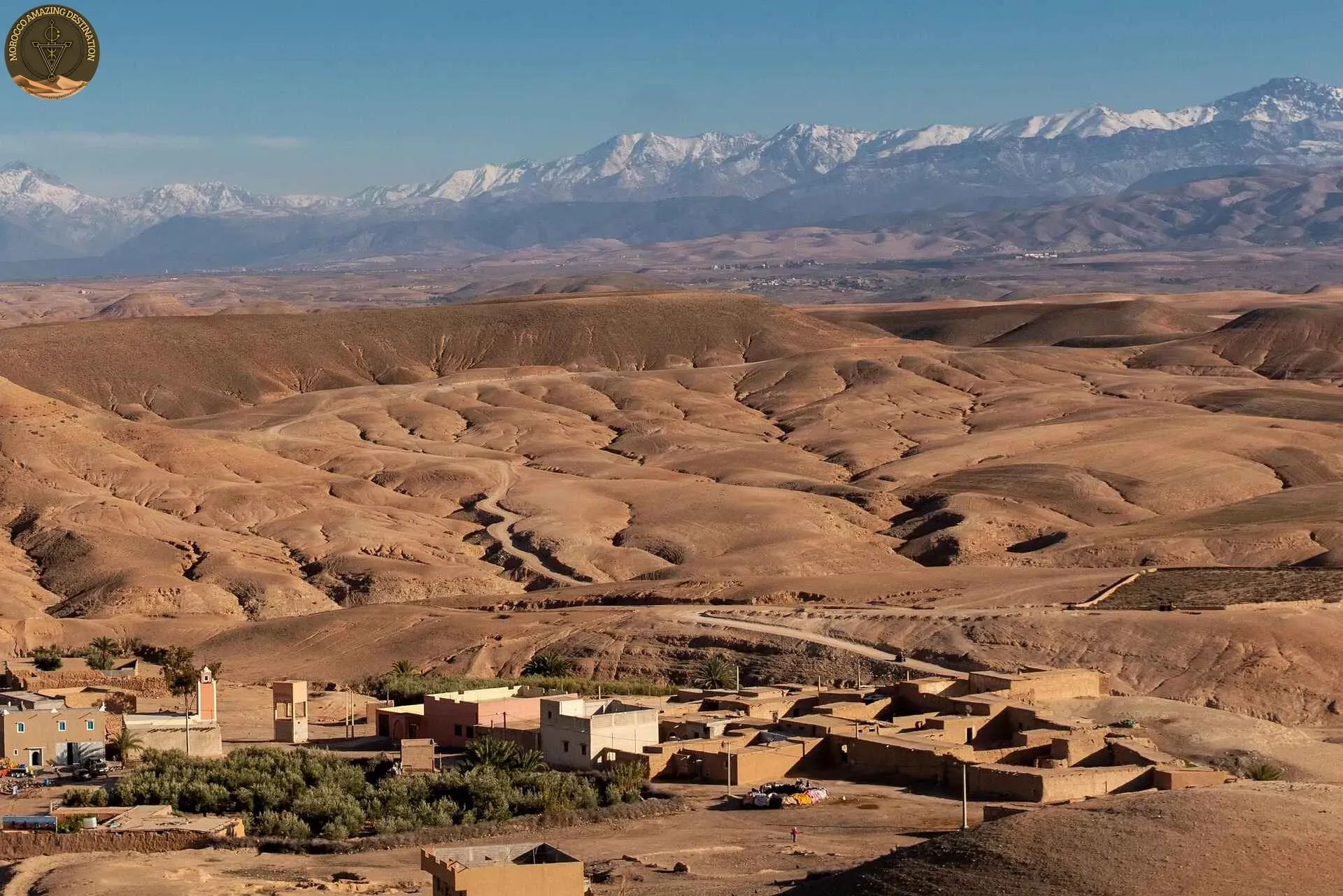
Move inland and the numbers fall fast. The Rif and Atlas mountains support only 30-50 people per km² in many valleys, often clustered in oases and terraced villages. South and east, pre-Saharan and Saharan zones drop below 5 per km². These hamada plateaus, dry valleys and dune fields are vast and almost empty.
What creates the contrast:
- Coastal concentration: jobs and infrastructure pull people to the Atlantic corridor
- Mountain valleys: seasonal pastures and oasis farming support small, dispersed settlements
- Desert emptiness: arid steppe and Sahara stretch for hours with few inhabitants
That geography explains travel reality. Within a few hours you can move from a humming medina to a plateau where the road is yours alone.
Casablanca, Marrakech and Fes — Where Most People Live
Urbanization in Morocco sits around 62.8% to 65%, and the urban population is strongly focused. The seven largest cities hold about 37.8% of all urban residents. Five regions — Casablanca-Settat, Rabat-Salé-Kénitra, Marrakech-Safi, Fès-Meknès and Tanger-Tétouan-Al Hoceima — contain over 70% of the national population.
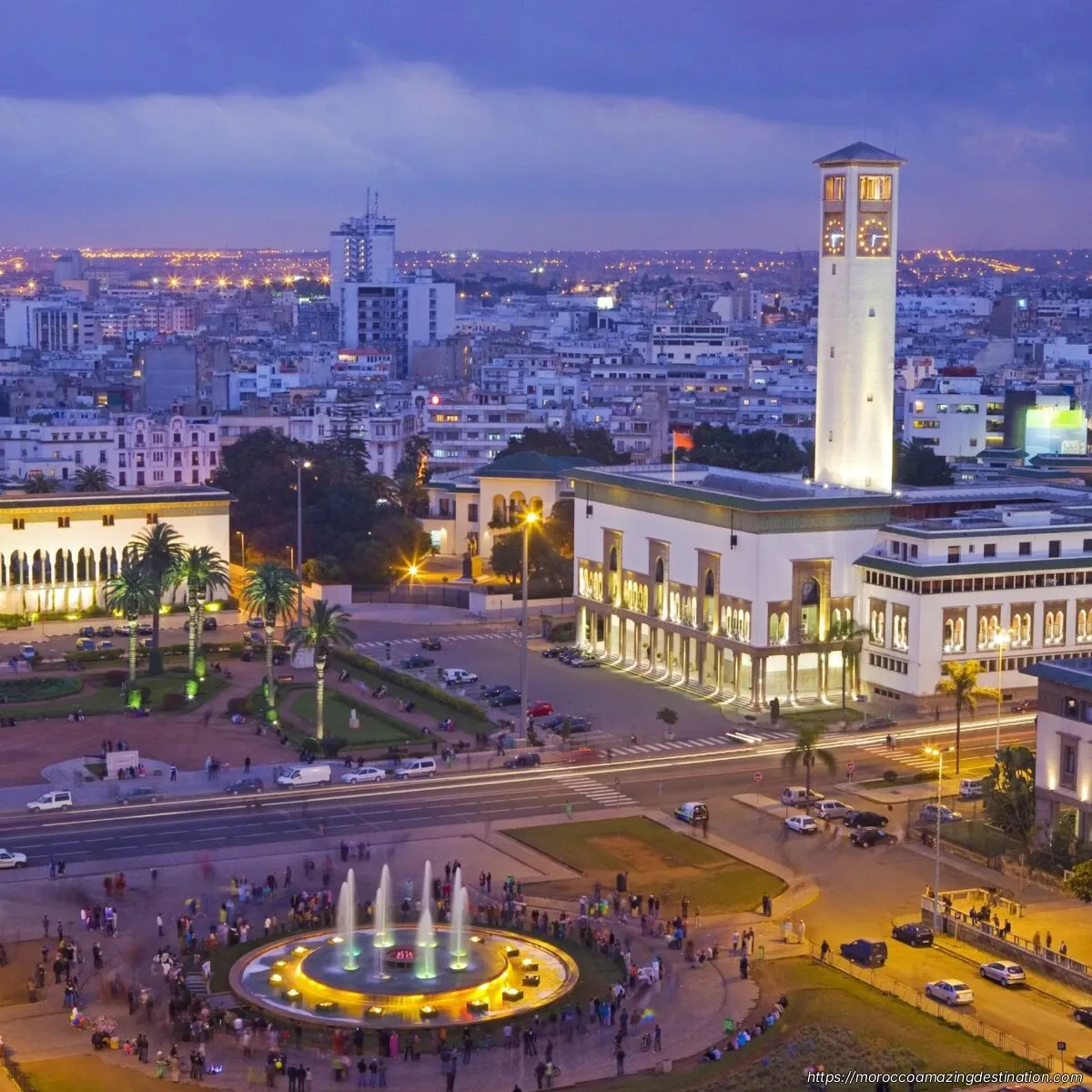
City sizes tell the story. Casablanca counts about 3.23 million in the city proper, the clear economic centre. Tangier holds about 1.27 million, Fes about 1.18 million and Marrakech about 1.01 million, with Rabat near 0.52 million. Together they anchor the corridor where most visitors arrive first.
Where people concentrate:
- Casablanca-Kenitra corridor: roughly 40% of urban population along 230 km of coast
- Casablanca-Settat region: about one quarter of the national population alone
- Imperial cities: Fes and Marrakech add cultural gravity and dense historic cores
- Northern hub: Tangier grows fast as a port and industrial gateway
This explains why arrivals can feel crowded at first. You land where Morocco is densest. The quiet arrives as soon as you leave that axis toward the valleys, gorges and dunes.
Will Your Trip Feel Crowded? Medinas to Sahara
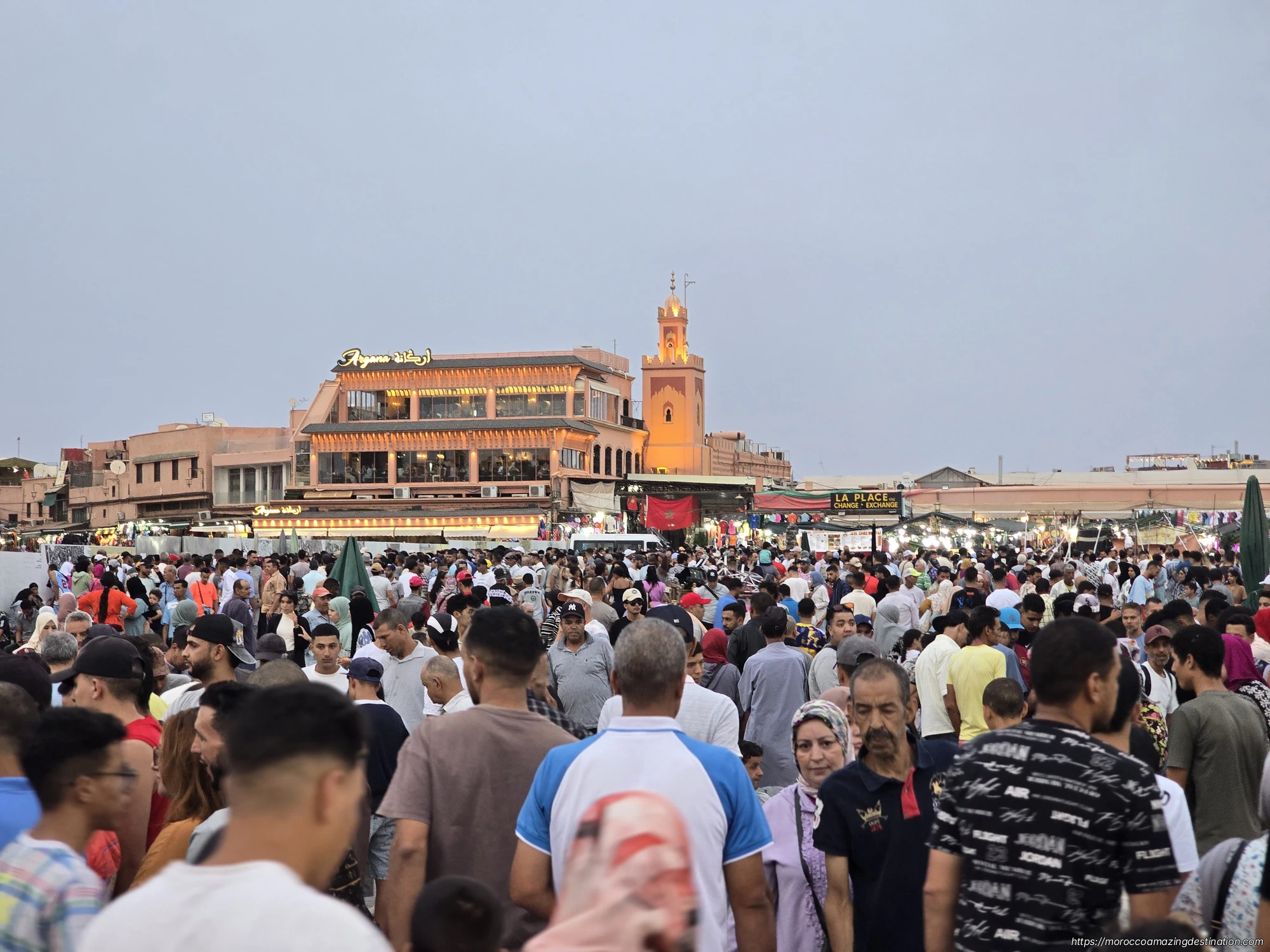
So is morocco crowded for you as a visitor? Not nationally, but locally at certain times and places it can feel dense. Walled medinas are pedestrian, compact and market-filled. Fes el-Bali is largely car-free, and Jemaa el-Fnaa draws crowds, especially in high season from late March to May and late September to early November, and around midday when groups converge.
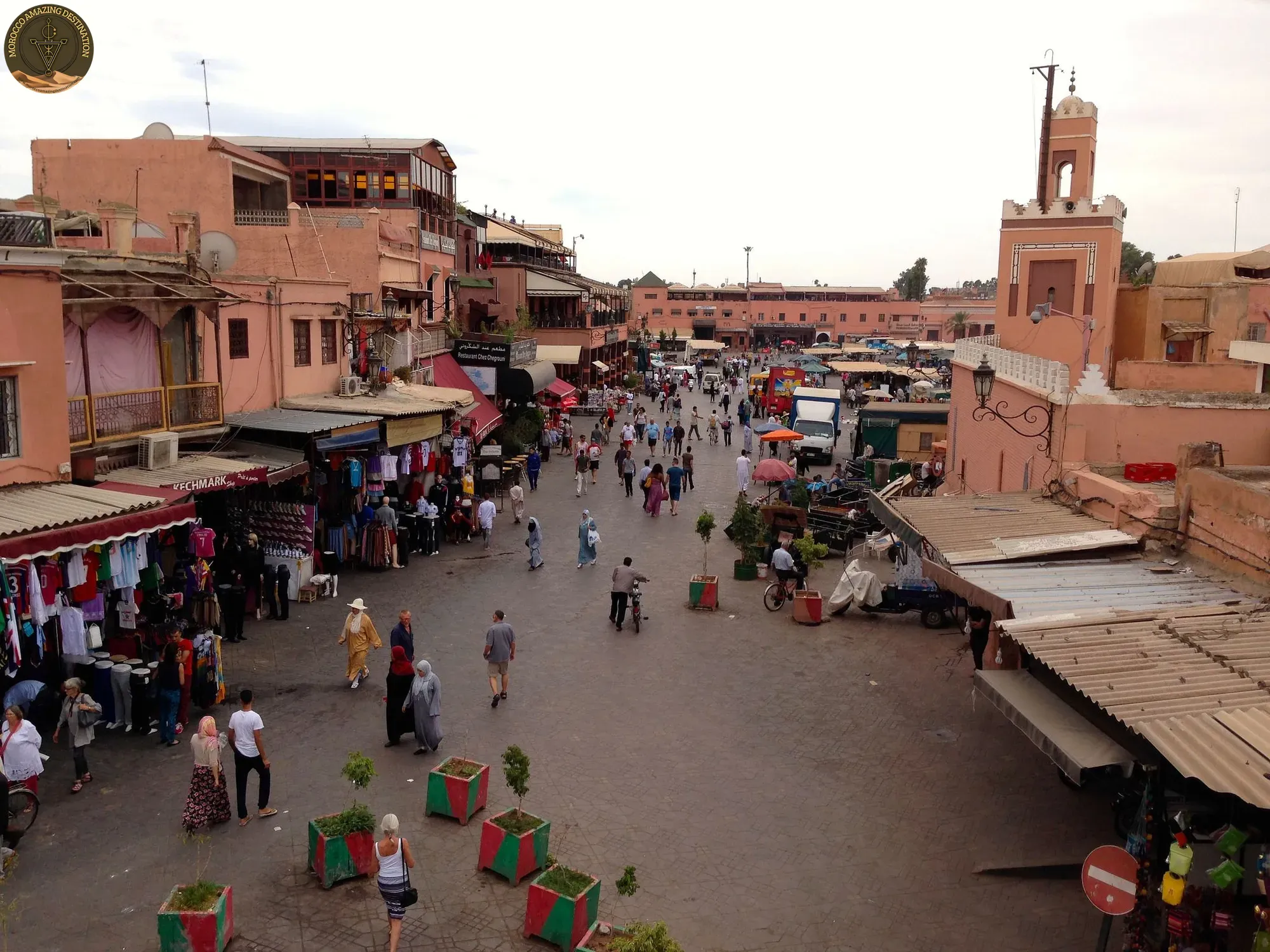
Between those poles, space dominates. Dades Valley, Todra Gorge with cliffs up to 300 metres, the Ziz Valley palm corridor and High Atlas passes such as Tizi n’Tichka at 2,205 metres can be empty for an hour. In the Sahara, Erg Chebbi’s sunset dunes can host many visitors, while Erg Chigaga beyond Mhamid, reached after 60 km of off-road track, is larger and far less visited, so solitude returns.
Private timing levers:
- Earlier starts: enter medinas and gorges before midday peaks
- Quieter gates: use side entrances and lesser-known quarters
- Reversed order: visit popular viewpoints later or earlier than group tours
- Alternative stops: choose Chigaga, quiet High Atlas trails or smaller oases
With a private vehicle and driver-guide, you control the rhythm. Small shifts in timing and route turn a busy moment into a calm, personal experience without missing highlights.
Plan Your Trip to See Both Sides of Morocco
The best trips show you both textures of Morocco: the energy of the cities and the stillness beyond. Learn how many people live where, then design a route that pairs a medina morning with an afternoon of open road, palm valleys or dunes under clear skies. Private travel makes that balance easy and hassle-free.
For the classic contrast from dense to empty, the 4-Day Morocco Desert Tour from Marrakech crosses the High Atlas to the UNESCO World Heritage site of Ait Benhaddou, through Dades and Todra to Erg Chebbi, with hand-picked riads and a luxury desert camp. To add coastal breathing space after city and desert, the 8-Day Morocco Tour: Marrakech, Sahara Desert & Essaouira blends Marrakech, Sahara solitude and the relaxed Atlantic coast of Essaouira.
We can customize a tour to match your needs — design your perfect itinerary
If you found this helpful, add us as your preferred source on Google.
Frequently Asked Questions
Is Morocco overpopulated?
No. Morocco has about 38-39 million people and around 85-87 people per km², ranking about 102nd worldwide — lower than Spain and France. It feels busy only in certain medinas at peak hours, while large parts of the Atlas, valleys and Sahara remain almost empty.
What is Morocco's population density?
About 85-87 people per km² on roughly 446,300 km². The average hides extremes: central Casablanca neighbourhoods exceed 20,000 per km², while Saharan and pre-Saharan zones have fewer than 5 per km².
Is Morocco crowded for tourists?
Not as a country. Imperial-city medinas and Erg Chebbi at sunset can feel busy in high season, but private timing, quieter gates and routes such as Erg Chigaga, Dades Gorge and the High Atlas feel empty and calm.
Where do most people live in Morocco?
About 62-65% live in cities, concentrated on the Atlantic corridor and in Casablanca, Tangier, Fes and Marrakech. Five regions hold over 70% of the population, while the south and east stay very sparse.
Ready for an Adventure?
Have questions? Feel free to contact us using the form below. We're here to help!