
· Travel · 5 min read
Is It Better to Exchange Money in Morocco? Guide & Tips
Is it better to exchange money in Morocco? Learn when to exchange, where to get the best rates, and ATM and card tips for a hassle-free trip.
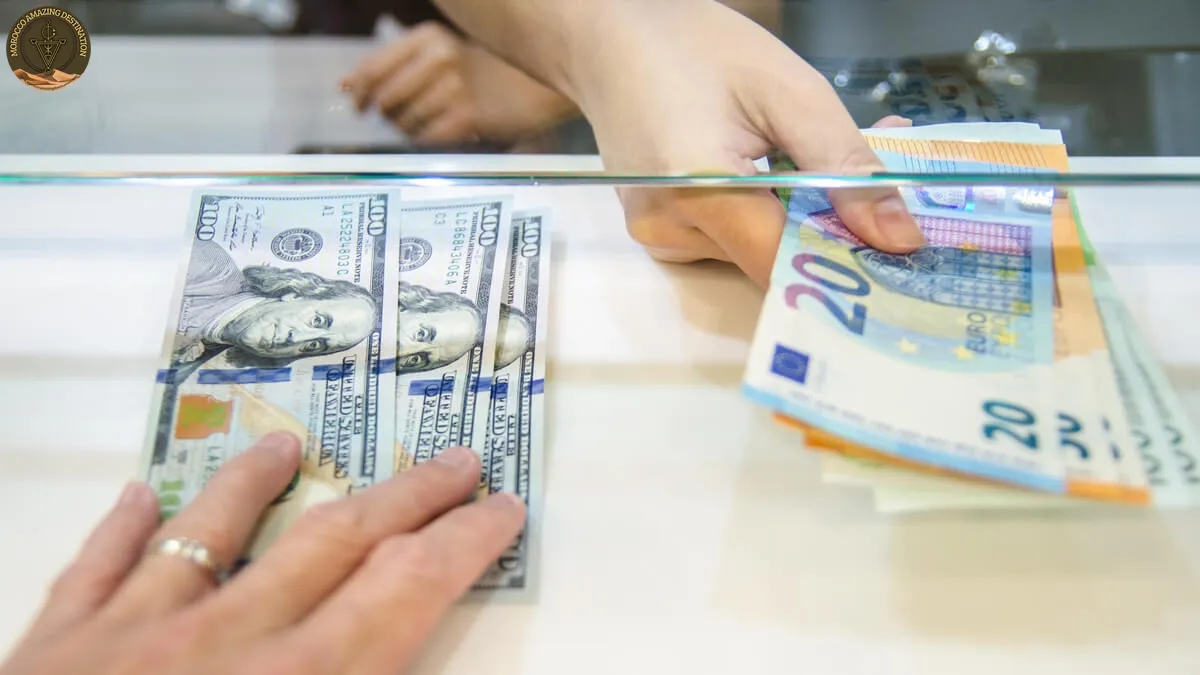
Wondering is it better to exchange money in Morocco or before you leave home? For most travelers the answer is simple: bring clean euros or dollars and do the main exchange after arrival. Rates at home are usually poor, and the Moroccan dirham is a closed currency you cannot get in advance at a good price.
In this guide, we will break down when to exchange money in Morocco, where to get the best rates, and how to use ATMs and cards day to day. In short, bring a small buffer for arrival, then exchange the rest in city centres and use ATMs wisely.
The Short Answer: Why You Exchange Money in Morocco
The Moroccan dirham (MAD) is a closed currency. That means you can only legally exchange money in Morocco inside the country. Importing or exporting more than 2,000 MAD is not allowed, and you must declare foreign cash equivalent to 100,000 MAD or more on entry and exit.
This system is managed by Bank Al-Maghrib and the Office des Changes. The dirham is linked to a basket weighted around 60% euro and 40% dollar within a narrow band. The rate moves a little each day, so figures you see online, like around 10.7 to 11 MAD per euro, can shift. Treat any number as a snapshot, not a promise.
Because you cannot pre-buy dirhams at a fair rate abroad, bringing foreign banknotes and exchanging locally avoids a double conversion. Keep every receipt. You will need it if you want to reconvert leftover dirhams back to euros or dollars before you leave.
When It Makes Sense to Exchange Before You Go
There is one small exception to the rule. Having a little cash on day one makes arrival smooth, especially for a taxi, water, or a SIM top-up before you reach the city centre.
Think of this as a safety buffer, not your main budget. Exchange only enough for the first few hours. If your home bank offers dirhams at all, the morocco currency exchange rate there is almost always weaker than in Morocco.
What to bring instead:
- Bring euros or dollars, not dirhams: Euros are the most widely accepted for exchange, followed by US dollars. Bring recent, clean notes with no tears or marks. Older or damaged bills are often refused.
- Keep it small before departure: If you must exchange at home, limit it to a modest arrival amount.
- Avoid double exchange: Do not change your home currency to dirhams at the airport at home. You will lose on the rate twice.
Notify your bank you are traveling, so cards are not blocked when you land. Pack a backup card and store it separately from your main one.
When It Is Better to Exchange Money in Morocco
Once you have landed, you have better options. The question where to exchange money in morocco matters more than when, because location shapes the rate you get.
City-centre banks and licensed bureaux de change usually offer the best rates with no commission. They display official buy and sell rates and issue receipts. Competition in Marrakech, Fes, Casablanca and Tangier keeps rates sharp.
Airports and hotels are convenient after a long flight, but rates are weaker. They work for a small top-up, not your main budget. Street changers should be avoided entirely.
Where to exchange — best to worst:
- Best: city-centre banks and bureaux: Transparent rates, no commission, official receipt. Compare two or three nearby offices before you decide.
- Good alternative: ATMs: Useful when banks are closed. See limits and fees below.
- Weaker: airport and hotel desks: Fine for a small arrival amount.
- Avoid: street changers: Unregulated and risky.
Keep your receipt. You need it to reconvert unused dirhams before airport security. Sources such as Wise and Bank Al-Maghrib note that reconversion needs proof of the original exchange.
ATMs, Cards and Cash — What to Use Day to Day
Even if you prefer cash, ATMs are a handy backup when you need dirhams quickly. They are common in airports, city centres and near major medinas.
Most machines limit withdrawals to around 2,000 to 4,000 MAD per transaction. Local fees are typically 20 to 40 MAD, plus your home bank charge. Withdraw larger amounts less often and always choose MAD. Declining conversion avoids a poor dynamic rate.
ATM tips for a smooth trip:
- Use bank-affiliated ATMs: Choose machines inside or outside a branch during opening hours.
- Decline conversion: If offered to pay in euros or dollars, select MAD.
- Have a backup: Carry a second card and some euros in case a machine is empty.
Cards work well in hotels, riads, supermarkets and upscale restaurants. Cash is still essential in souks, medinas, taxis, small cafes and rural or desert areas. Even where cards are accepted, networks can fail, so keep cash on hand.
Many travelers carry 500 to 1,000 MAD plus coins of 1, 2, 5 and 10 MAD. Small change helps for tips, mint tea, taxis and small purchases where change is limited.
Plan Your Cash Strategy and Enjoy a Hassle-Free Trip
A simple plan keeps things easy: bring a small arrival buffer in euros, exchange the bulk where rates are best in the city centre, keep receipts for reconversion, and mix ATMs and cash for daily spending. Tell your bank you are traveling, use bank-hours ATMs, and always carry some coins for souks and tips.
You do not need to stress about perfect timing on the rate. The band is narrow, so differences are small day to day. Focus on where you exchange, not chasing a tiny fluctuation.
If you want a seamless trip with local support from start to finish, explore our 10-Day Private Tour from Marrakech to the Sahara for a hand-picked route through Marrakech, the High Atlas, and luxury desert camps. For a shorter blend of culture and coast, our 8-Day Morocco Tour: Marrakech, Sahara & Essaouira adds the Atlantic breeze of Essaouira to your desert adventure.
We can customize a tour to match your needs — design your perfect itinerary
If you found this helpful, add us as your preferred source on Google.
Frequently Asked Questions
Is it better to exchange money in Morocco or before I go?
It is better to exchange money in Morocco for the bulk of your cash. Bring euros or dollars and exchange in city-centre banks or bureaux de change for better rates. Exchange only a small amount before you go to cover arrival costs.
Where to exchange money in Morocco for the best rate?
The best rates are usually in city centres at no-commission banks and licensed bureaux de change, regulated by Bank Al-Maghrib. Airport and hotel desks are convenient but offer weaker rates. Avoid street changers.
Can I use ATMs and cards in Morocco?
Yes. ATMs are common in cities and airports, with limits around 2,000 to 4,000 MAD per withdrawal and a local fee of 20 to 40 MAD plus your bank fees. Cards work in hotels, riads and supermarkets, but cash is essential in souks, medinas, taxis and small cafes.
Can I bring Moroccan dirhams from home?
No. The Moroccan dirham is a closed currency and you cannot import or export more than 2,000 MAD. Bring foreign cash to exchange on arrival, keep all receipts, and declare foreign cash equivalent to 100,000 MAD or more.
Ready for an Adventure?
Have questions? Feel free to contact us using the form below. We're here to help!