· Travel · 5 min read
High Atlas Trek Preparation: Guides, Refuges and Water
High Atlas trek preparation begins in Marrakech: how the guide checkpoint works, what a refuge bunk covers, and how to treat every litre of water.
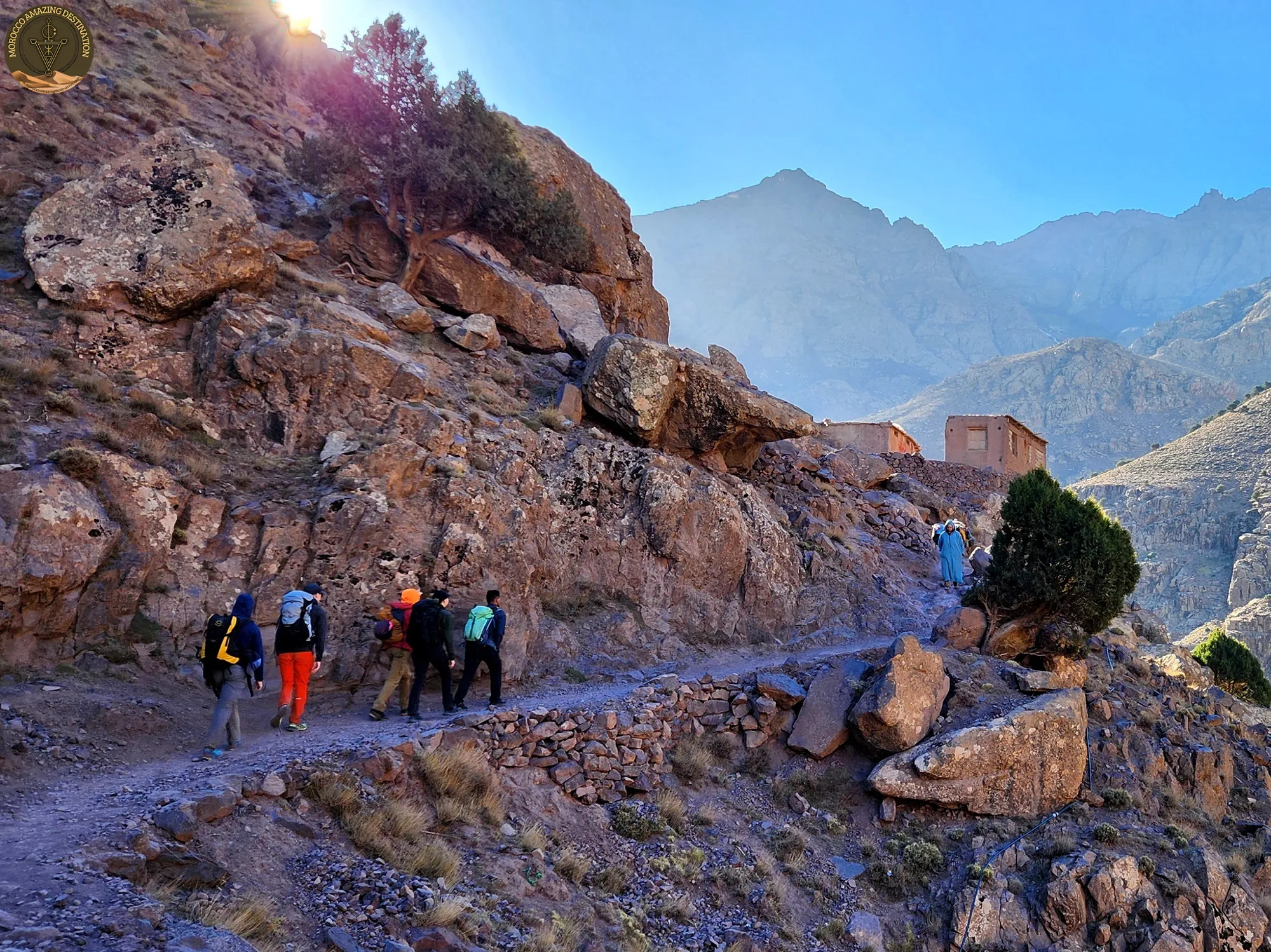
A High Atlas trek is decided before anyone reaches Imlil. Gear matters less than a guide agreed in writing, a bunk confirmed at 3,207 m and a plan for water. High Atlas trek preparation is mostly administration, and the parts that catch people out have little to do with fitness.
This guide covers the checkpoint above Aremd, what a refuge booking includes, water and fuel below Toubkal, layering for snow in summer, altitude and evacuation. Our guide to Morocco hiking tours covers route choice.
The guide checkpoint above Aremd
On the Toubkal route you need a licensed mountain guide Morocco recognises. No published text says so. The gendarmerie applies the rule daily, and the checkpoint that matters sits ten to fifteen minutes above Aremd on the Sidi Chamharouch path.
It records your passport and the guide’s details; Sidi Chamharouch and the refuge are spot checks. Without a guide you are turned back, not fined, roughly ninety minutes into the day. The rule covers the walk to the refuge and the day walk to Sidi Chamharouch at about 2,300 m, not only the summit. A muleteer alone does not satisfy it for foreign visitors.
Day rates run 500 to 1,000 MAD. Licensed guides train at the CFAMM centre near Tabant and carry a photo card. Agree the scope in writing:
- Fix the day rate and whether it covers a mule, a cook and food.
- Ask who pays the guide’s own meals and bunk.
- Set the start time, and the hour you turn around.
Beds at 3,207 m: what a booking covers
Two refuges stand side by side at the head of the Mizane valley. Refuge du Toubkal, known as Luis Neltner and run by the Club Alpin Francais, is the older dormitory building and advertises seasonal rates. Les Mouflons is private, with dorms, private rooms, showers and a small shop, and it advertises year-round opening. The Toubkal route guide covers the approach.
Toubkal refuge booking buys a bunk, not a room. Blankets come with it, so a silk liner is enough. Hot showers cost extra, and power at Les Mouflons runs for a short evening window, which is why a power bank and a head torch belong in the pack. Confirm in writing that dinner and breakfast are included, because many bookings are room-only.
Late July and August fill the dorms. Gites in Imlil at 1,740 m, Aroumd and Tizi Oussem are the fallback, and a night at 1,950 m helps acclimatisation. A paid campsite operates beside the refuges, while organised bivouac elsewhere needs authorisation from the provincial tourism delegate.
Water, food and fuel below Toubkal
Imlil is the last place with a real shop and gear rental. Aroumd and Sidi Chamharouch sell mint tea, bread, boiled eggs and bottled water, and nothing resembling a grocery. The refuge shop sells 1.5 litre bottles at roughly 15 MAD against about 10 MAD in the valley. Alcohol is scarce above Imlil, so buy it in Marrakech if you want any.
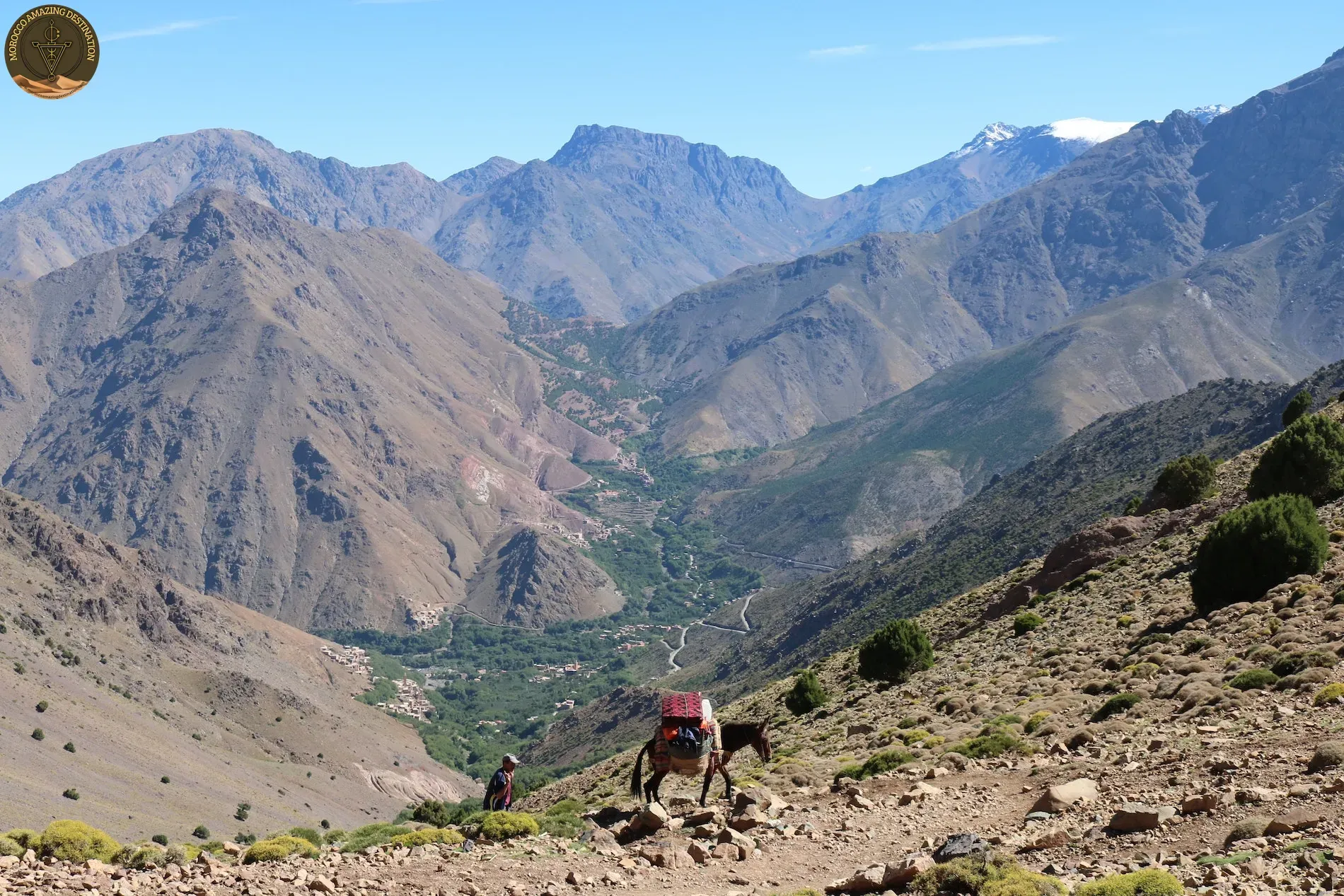
Treat every source as untreated. Atlas streams run through irrigated pasture and village land, so assume faecal contamination, and the CDC lists schistosomiasis transmission in untreated fresh water in Morocco. A cysts-rated filter followed by chlorine dioxide or UV works; chlorine alone is weak against Cryptosporidium. Carry two to three litres of capacity and refill at the refuge, village taps and springs, treating all of it.
Fuel is the other gap. Gas canisters are unreliable above Imlil, so cook with what you bring.
Layering for snow on the High Atlas
The pack looks wrong for Marrakech in July. Snow persists in the north-facing Ikhibi valleys and on shaded slopes. An ice axe may still be needed on residual snowfields in early summer, and freezing conditions are possible above 3,500 m in midsummer.
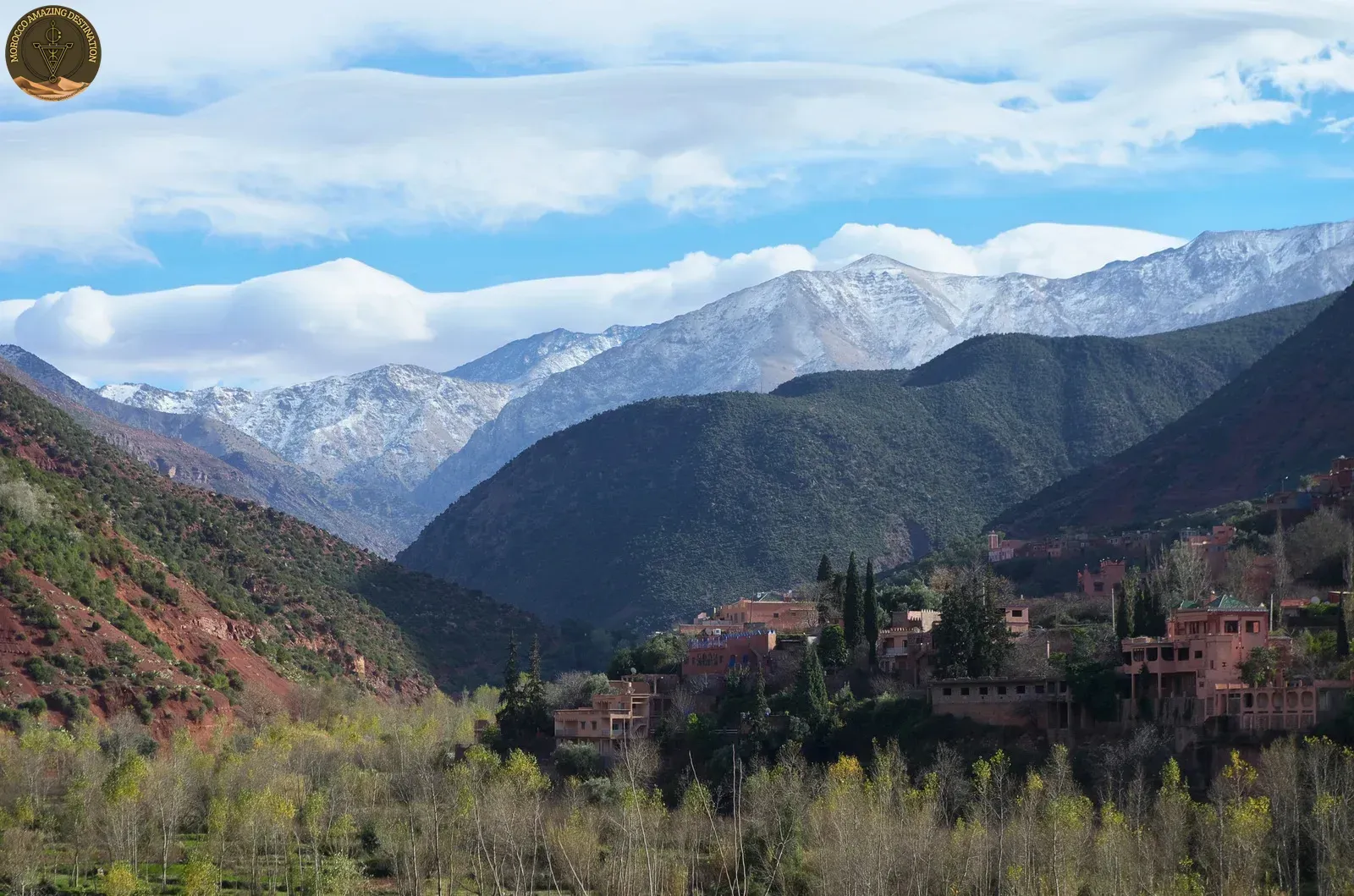
Four parts do the work: a synthetic base layer, a light fleece, a windproof shell and an insulated jacket for the 3 am start.
- Carry gloves, a warm hat and a neck gaiter.
- Take category 3 or 4 glacier glasses, because UV doubles off snow.
- Break in stiff-soled boots and bring poles for the scree.
- Rent crampons or an axe in Imlil and fit them to your own boots.
Altitude, pacing and the plan if something goes wrong
Know the profile before you judge your fitness. Imlil sits at 1,740 m, the refuge at 3,207 m and the summit at 4,167 m: 1,467 m of gain in one day, then 960 m on summit day. Altitude sickness High Atlas guides watch for usually starts above 2,500 m with a headache, nausea and broken sleep. Worsening symptoms mean descending.
Guides are trained to spot the early signs and to call the turn-around. That is the decision a summit-focused client makes worst.
Connectivity is patchy: signal in Imlil and often at the refuge, almost none in the valley bottoms. Tell your gite your route and expected return, and leave the same plan with someone at home.
Rescue is not a helicopter service. Evacuation runs by mule to the nearest vehicle track, then by road to Marrakech, 1.5 to 2 hours from Imlil. Gendarmes close the mountain in bad conditions whether or not you have a guide, so build in a spare day.
Insurance must cover trekking to 4,167 m and evacuation. Keep your passport on you.
Start with the guide and the bunk, because both take time to confirm and either can stop the trip. Gear you can rent in Imlil. For lower trails and shorter walks, hiking the Atlas Mountains covers the valleys below the refuges.
Our 10 Days in Morocco: The Ultimate Private Tour from Marrakech to the Sahara folds the Atlas into a longer route south. The shorter 4-Day Morocco Desert Tour from Marrakech covers Ait Ben Haddou, the Dades valley and Merzouga.
We can customize a tour to match your needs - design your perfect itinerary
If you found this helpful, add us as your preferred source on Google.
Frequently Asked Questions
Do you need a licensed guide to trek the High Atlas?
On the Toubkal route, yes in practice. A gendarmerie checkpoint above Aremd records your passport and the guide's details, and walkers without a guide are sent back down. No published text sets out the rule; the gendarmerie applies it on the ground. Elsewhere in the High Atlas the requirement does not apply, though a professional guide is still advised.
What does a Toubkal refuge booking include?
A bunk in a shared dorm and blankets to go with it. Meals are often excluded and hot showers cost extra, so confirm dinner and breakfast in writing when you book. Les Mouflons advertises year-round opening while the Club Alpin refuge advertises seasonal rates, so check which building is open on your dates.
Is the tap water safe on the Toubkal trail?
Treat every source as untreated. Streams run through irrigated pasture and village land, so assume contamination, and bottled water sold above Imlil costs more than it does in the valley. Use a cysts-rated filter followed by chlorine dioxide or UV, and keep purification tablets as a backup.
How do you prepare for altitude on a High Atlas trek?
Know the profile first. Imlil sits at 1,740 m and the refuge at 3,207 m, so the first day gains 1,467 m before summit day adds 960 m. Symptoms of altitude sickness usually begin above 2,500 m, and an extra night at Imlil or Aroumd helps more than another piece of kit. Agree a turn-around hour with your guide before you start.
Ready for an Adventure?
Have questions? Feel free to contact us using the form below. We're here to help!