
· Travel · 5 min read
Hassan II Mosque History: A King's Vow on the Water
Hassan II Mosque history: why a king built on the Atlantic, the 210 m minaret, the artisans behind it, and how non-Muslims visit today.
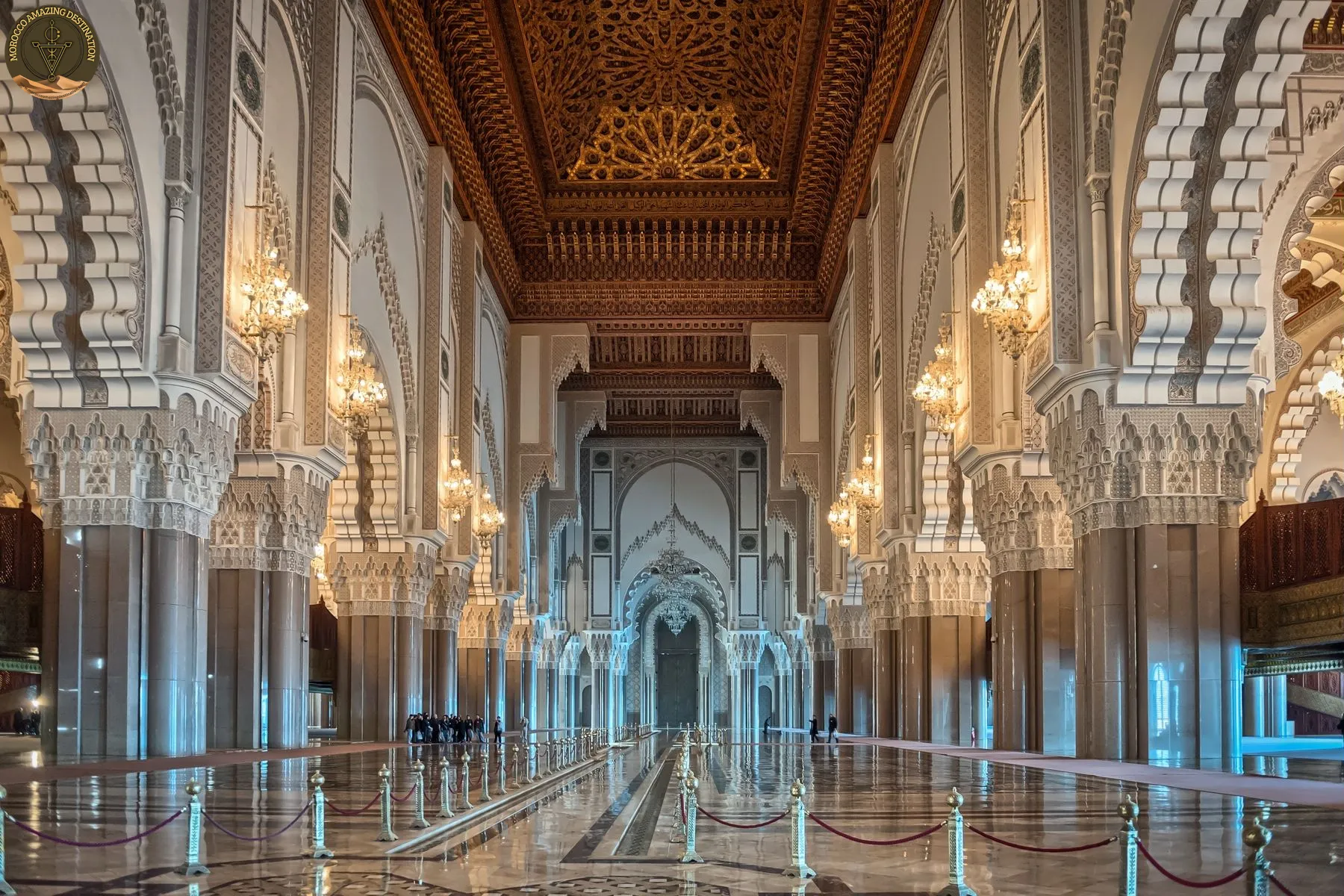
Casablanca’s waterfront holds a port, a lighthouse and, since 1993, a mosque with one foot in the Atlantic. Hassan II Mosque history starts with a speech King Hassan II gave here on 9 July 1980, asking for a mosque built on the water. He commissioned it, Michel Pinseau designed it, and it opened on 30 August 1993.
In this guide, we will break down the vow behind it, the seven years of construction, the record its minaret lost, and how non-Muslim visitors get inside today.
A King’s Vow: Why the Hassan II Mosque Stands on the Water
Hassan II made his case through Surah Hud, where God’s throne rests upon the water, and asked for a mosque facing the ocean. He spoke on his 51st birthday, and the request gave the economic capital a building to rival the great mosques of Fes and Marrakech.

The site runs along Boulevard Sidi Mohammed Ben Abdellah, beside the old medina, where the Atlantic meets the city with nothing to break it. Casa-Port, where the ferries and cruise ships dock, is 20 to 25 minutes away on foot.
Building the Mosque: Casablanca, 1986 to 1993
Work began in July 1986 with the foundation stone. Hassan II wanted it finished in 1989, the year he turned 60. The design outgrew that timetable. The mosque opened on 30 August 1993, on the eve of Mawlid, the Prophet’s birthday. That timing is why the date matters to Moroccans.
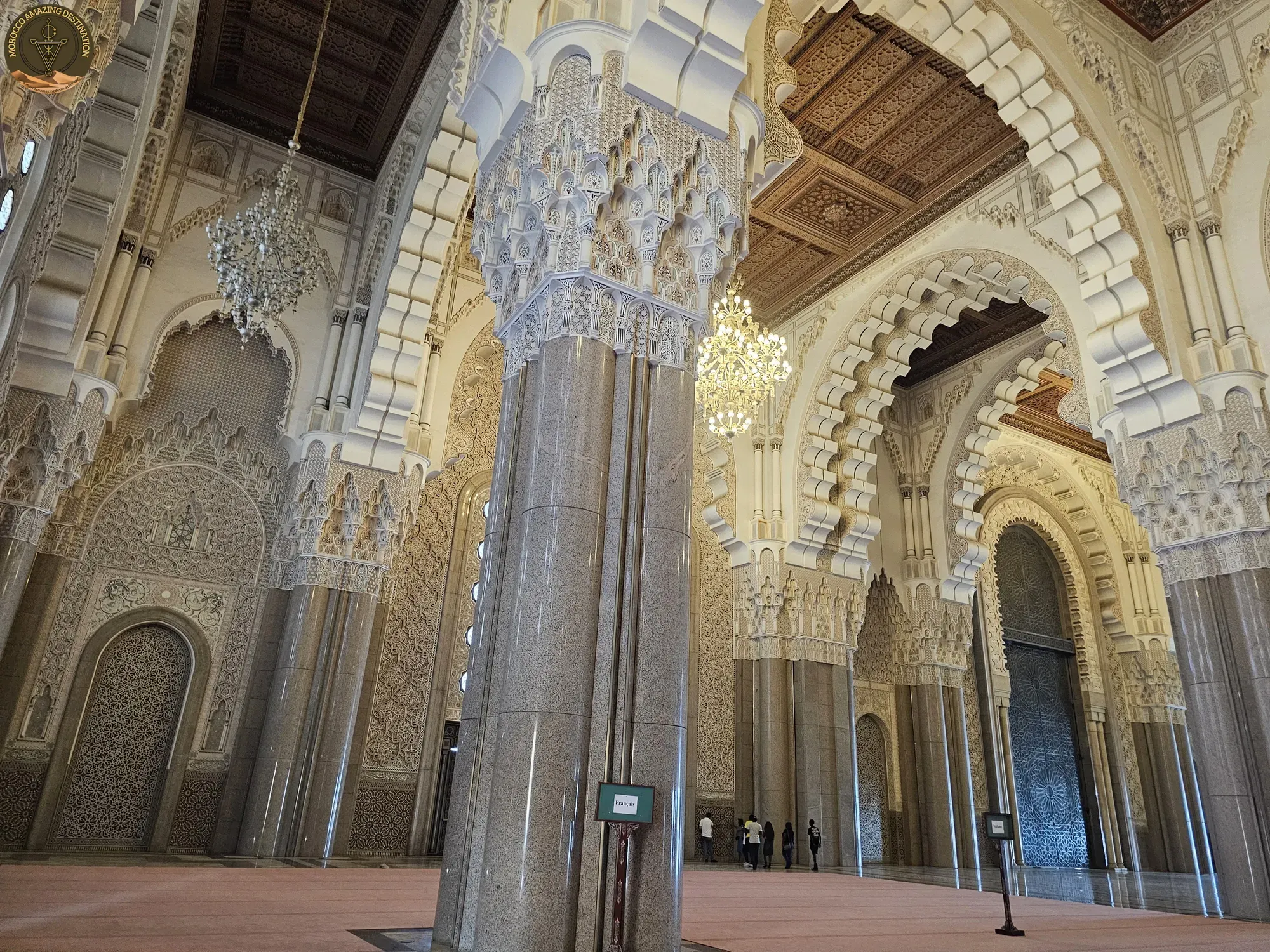
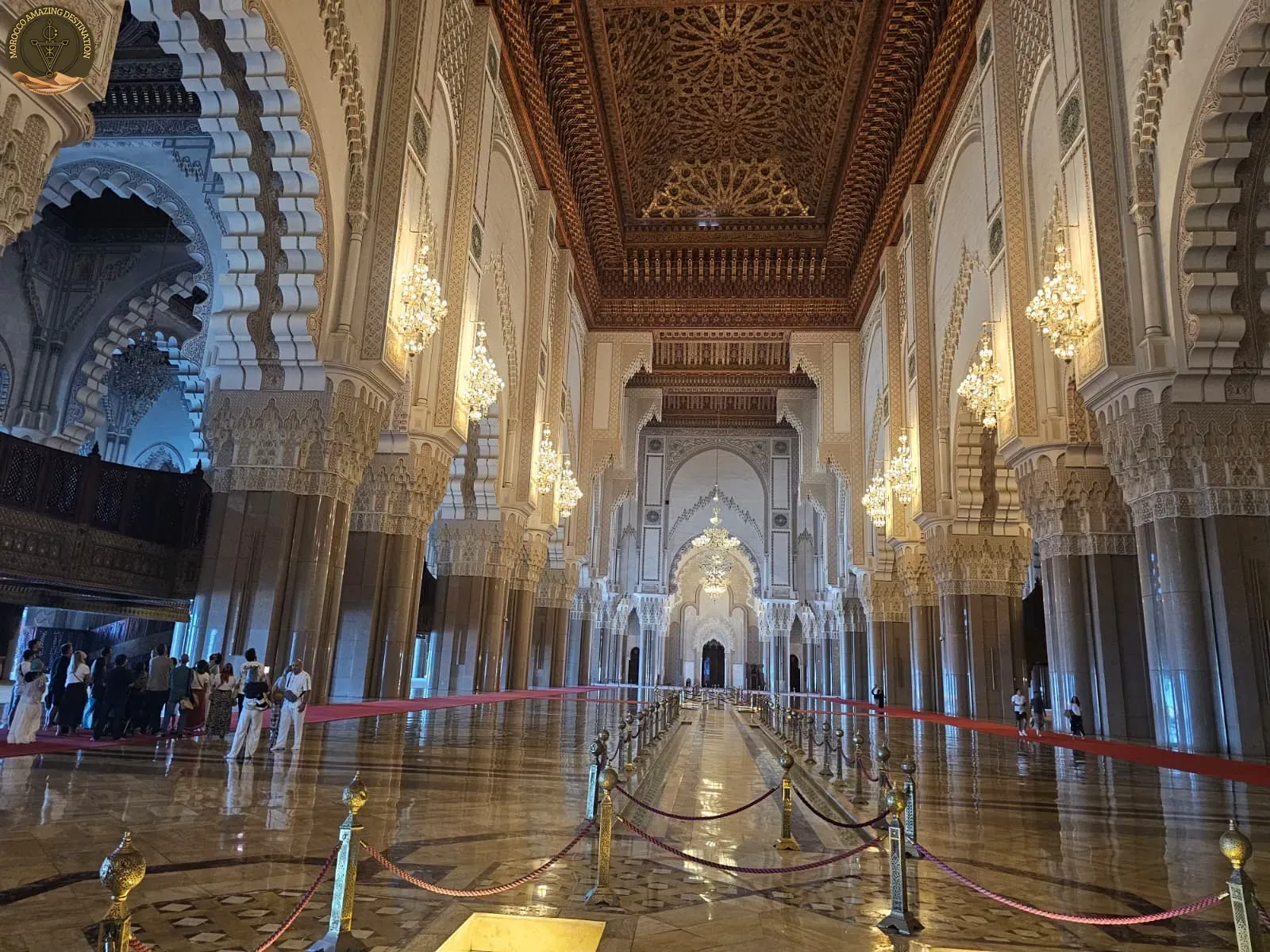
Hassan II Mosque architecture is Moroccan throughout. Pinseau, French and based in Morocco, worked with Bouygues as main contractor, and the king followed the site closely. The mosque foundation puts the artisan count near 3,300, with 2,500 workers on site at peak.
- Carved cedar from the Middle Atlas covers ceilings and doors.
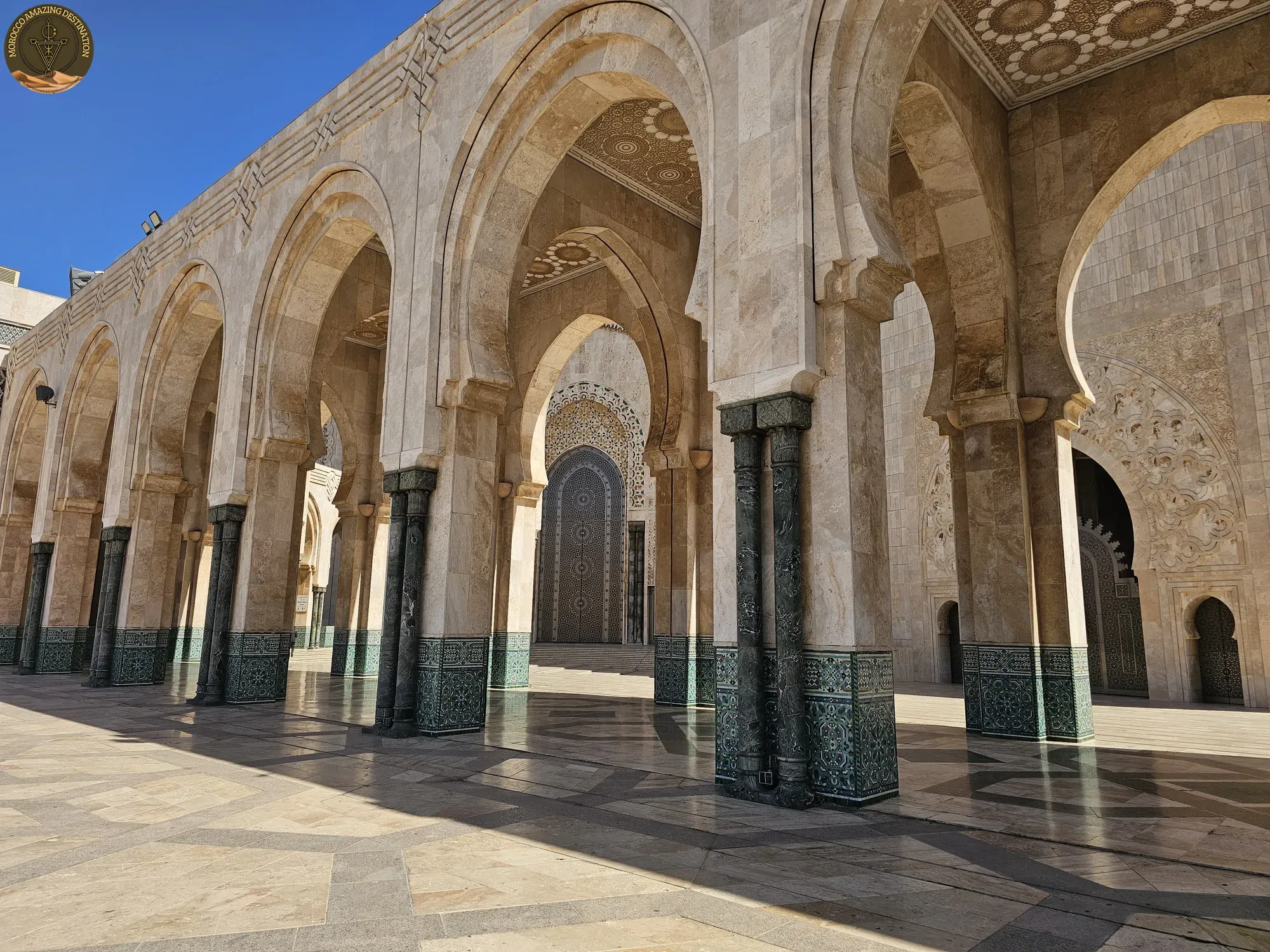
- Marble from Agadir is polished for floors and columns.
- Granite from Tafraoute is cut for the arcades.
- Zellij mosaic tile and hand-polished tadelakt plaster run across the halls.
- Titanium door hardware resists salt air.
A national subscription opened in 1988 and paid for most of it, with Gulf contributions. The reported cost was 3.8 billion dirhams.
The Hassan II Mosque Minaret: 210 Metres and a Record That Moved
The minaret climbs 210 metres from the esplanade. The foundation’s own older page lists 200, a height measured above sea level rather than above the ground. Either way it dwarfs the Koutoubia in Marrakech, and the Koutoubia’s story explains where that square tower shape began.
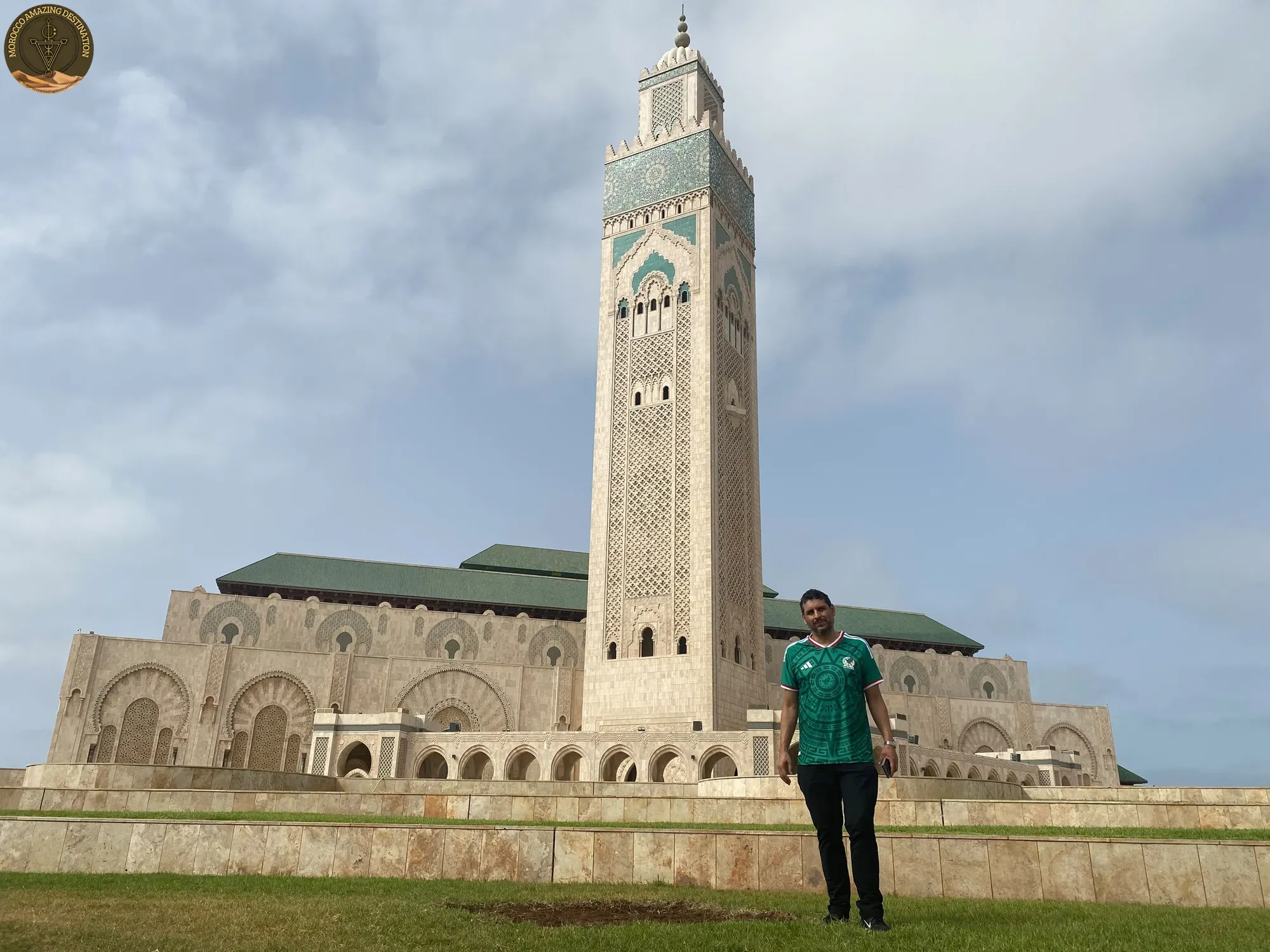
From 1993 this was the tallest minaret in the world. That ended in 2019, when the Djamaa el Djazair in Algiers opened at 265 metres. It is now the second tallest minaret in the world, and still Morocco’s tallest building.
Inside, the prayer hall covers 20,000 square metres and holds 25,000 people, while the esplanade takes another 80,000, for 105,000 in total. A retractable roof of about 1,100 tonnes opens over 3,400 square metres in five minutes. A green laser points toward Mecca, visible 30 km out.
Engineering the Atlantic: A Mosque on the Sea
Part of the Hassan II Mosque in Casablanca stands on a platform pushed into the sea. The foundations took about 26,000 cubic metres of high-performance concrete, with 60,000 cubic metres of rockfill packed against the swell. The mix is far stronger than ordinary structural concrete, to carry wind and seismic loads.
Salt found the steel anyway. Chloride attack on the reinforcement led to restoration work from 2005.
One story refuses to go away: a glass floor over the ocean. No part of the tour crosses a transparent floor above the water.
Visiting the Mosque: Who May Enter and How
Visiting the Hassan II Mosque follows one rule. This is the one working mosque in Morocco that regularly opens its prayer hall to non-Muslims. Access comes with an official guide bought at the on-site ticket office. The route runs 45 to 60 minutes through the prayer hall, the minaret hall and the ablution hall.
- Foreign adults: 140 MAD.
- Residents and foreign students: 70 MAD.
- Children: 30 MAD over six, free under six.
- Tour times: 09:00, 10:00, 11:00, 12:00 and 15:00, Saturday to Thursday, plus 16:00 from mid-March to mid-September.
- Closures: the interior shuts for the five daily prayers, with a shorter schedule on Fridays and during Ramadan mornings.
Dress covers shoulders, torso and knees, and shoes come off at the door. Still photographs are fine, video cameras are not. Interior light is best on the 09:00 and 10:00 tours. The esplanade and the exterior suit late afternoon and cost nothing at any hour. Our Casablanca city guide covers the rest of the day.
A long layover covers the tour, the esplanade and the port walk. With a private driver the stop fits a longer route. A local guide turns a photo stop into a 45-minute story about the king who ordered it and the artisans who built it.
Two Casablanca departures start here: the 8-Day Imperial Cities and Desert Tour from Casablanca and the 7-Day Morocco Imperial Cities and Sahara Desert Tour.
We can customize a tour to match your needs - design your perfect itinerary
If you found this helpful, add us as your preferred source on Google.
Frequently Asked Questions
Who built the Hassan II Mosque and when?
King Hassan II commissioned it after a speech in Casablanca on 9 July 1980, asking for a mosque on the water. The foundation stone was laid in July 1986 and it opened on 30 August 1993, on the eve of Mawlid.
Is the Hassan II Mosque still the tallest minaret in the world?
No. Its 210-metre minaret was the tallest in the world from 1993 until 2019, when the Djamaa el Djazair in Algiers opened with one of 265 metres. It is now the second tallest minaret in the world and the tallest building in Morocco.
Can non-Muslims visit the Hassan II Mosque, and what does it cost?
Yes, on an official guided tour bought at the on-site ticket office. Tickets cost 140 MAD for foreign adults, 70 MAD for residents and foreign students, and 30 MAD for children over six, with under-sixes free.
Is there really a glass floor over the ocean in the mosque?
No. The tour never crosses a transparent floor above the Atlantic, and the glass-bottomed prayer hall people describe does not exist.
Ready for an Adventure?
Have questions? Feel free to contact us using the form below. We're here to help!