· Travel · 8 min read
Gay-Friendly Riads in Marrakech: The Complete Gay Travel Guide to Marrakech & Casablanca
Discover the best gay-friendly riads in Marrakech, plus a practical gay guide to Marrakech and Casablanca for a warm, private Morocco trip.
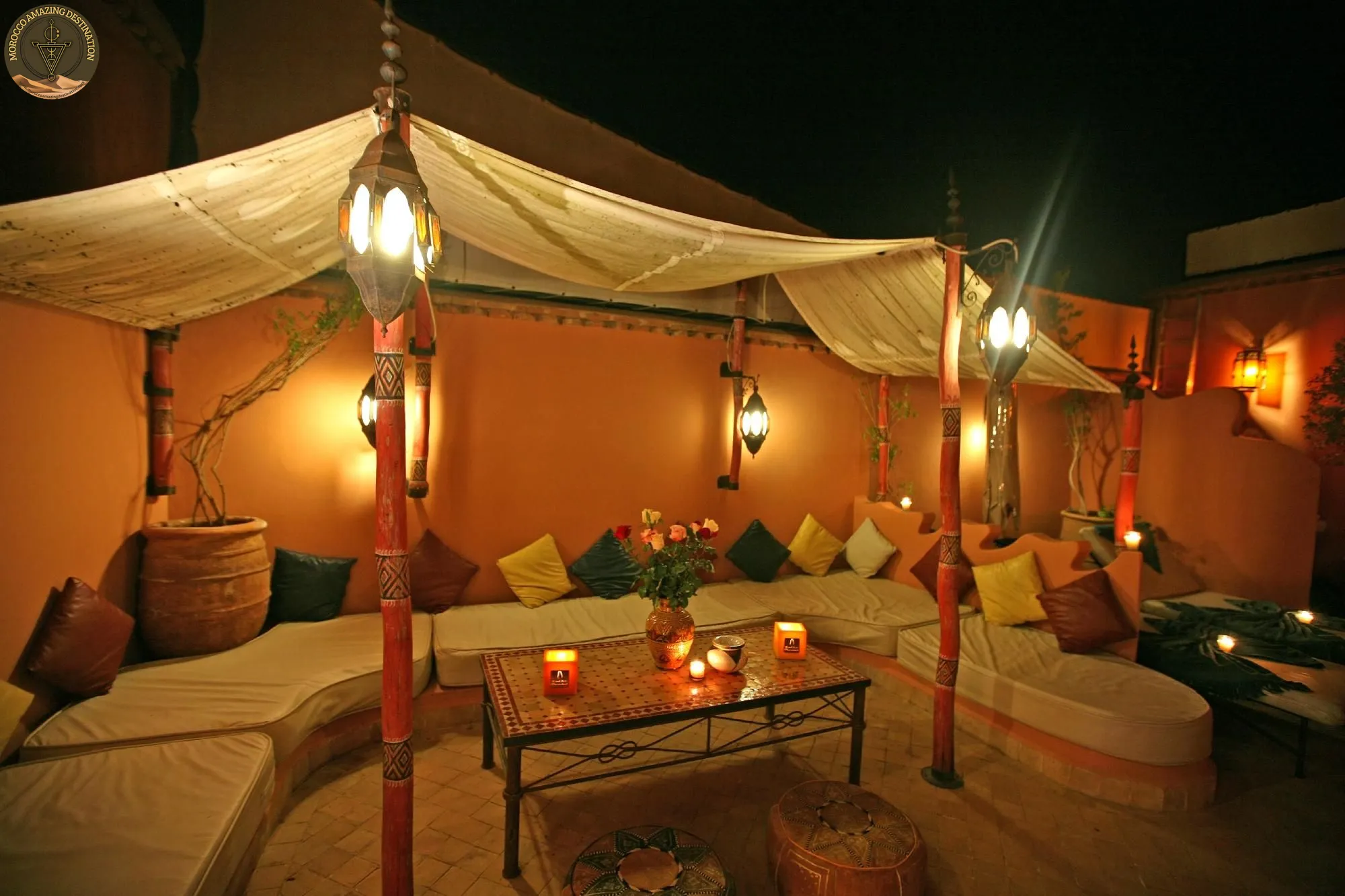
Marrakech has long been the beating heart of Moroccan travel, and for LGBTQ+ visitors it is also home to some of the country’s most welcoming places to stay. The city’s celebrated gay friendly riads Marrakech are traditional courtyard houses where privacy, design and genuine hospitality come together — making them the natural base for a couple, a solo traveller or a small group of friends.
Morocco rewards travellers who plan thoughtfully, and gay travel Morocco tends to work best when you stay in well-reviewed, privately run riads, book private tours and keep public affection low-key. This guide covers where to stay, what to see and how to travel comfortably, with a special focus on Marrakech and Casablanca.
The beauty of a riad is that life happens behind closed doors. Step off a noisy medina lane through a plain wooden entrance and you enter a calm interior world of carved plaster, zellige tiles and the scent of orange blossom — a world that is yours for the duration of your stay. That sense of contained, private calm is exactly why so many couples choose this style of accommodation.
What Makes a Riad “Gay-Friendly”?
There is no official “gay hotel” category in Morocco. Instead, “gay-friendly” is an informal label used by booking platforms and travel blogs to describe riads that welcome every guest with warmth and discretion. A riad is a traditional Moroccan house built around an interior courtyard, which means it is naturally private from the street — an architecture that suits couples particularly well.
In practice, “gay-friendly” is less about a flag on the door and more about a set of small, telling signals: staff who are unfazed by a couple sharing a room, hosts who treat every guest with the same genuine warmth, and a relaxed, un-gossipy atmosphere. You will rarely find this advertised loudly, which is precisely the point — discretion is part of the welcome.
When you are comparing places to stay, look for:
- Discreet, professional staff who make no fuss about a double bed shared by two people.
- Private terraces, plunge pools or a private hammam for relaxing away from the crowds.
- Owner-run riads, often managed by welcoming expats or open-minded local hosts.
- Airport transfers, since medina riads can be genuinely hard to find after dark.
Where to Stay: Marrakech’s Best Districts
- The Medina — the historic, UNESCO-listed old town, closest to the souks and Jemaa el-Fnaa, and the most atmospheric choice.
- Kasbah & Mellah edge — the quiet southern side, near the Saadian Tombs and the Bahia Palace.
- Gueliz — the modern “new town” of boutiques and cafés, home to the Jardin Majorelle and sleek designer riads.
- Hivernage — the calm southwestern neighbourhood of villas and upmarket hotels.
How to Book with Confidence
A few practical habits make booking smoother. Message the riad before you commit and mention that you are a couple travelling together — a simple, honest heads-up lets the host welcome you properly and removes any awkwardness on arrival. Choose properties with recent, detailed reviews that mention the staff’s attitude and the level of privacy. And wherever possible, book directly rather than through a third party: you will often get a better rate, an included airport transfer, and a host who already knows you by name before you land.
A Gay Guide to Marrakech
If you are putting together a gay guide Marrakech, start from one idea: the city’s best experiences are private, stylish and unhurried. Gay travel Marrakech is less about nightlife than it is about riads, rooftops, gardens and day trips — a discreet, private-friendly scene that suits couples beautifully.
This Marrakech gay travel guide would be incomplete without the essentials:
- Jardin Majorelle and the YSL Museum — the cobalt-blue garden in Gueliz, one of the city’s most-visited sites, with a small Berber Museum on the grounds.
- Jemaa el-Fnaa — the famous UNESCO-listed square, best taken in from a rooftop café at sunset.
- The souks — a maze of lanterns, spices, rugs and leather; going with a guide helps you avoid getting lost and getting hassled.
- Hammams and spas — book a private hammam for a relaxing, couple-friendly treat.
- Private day trips — the Atlas Mountains and Imlil, the Agafay desert, or a full Sahara excursion all feel tailor-made for two.
Rooftop dining deserves a mention of its own. Watching the sun drop behind the Koutoubia while mint tea is poured from a great height is one of Marrakech’s signature pleasures, and the city’s riads and restaurants turn it into an art form. Many venues welcome an international, design-conscious crowd, which makes dinner out feel relaxed and easy. For something deeper, book a private hammam and a couple’s treatment — it is the most restorative way to slow down after a day in the souks.
The city’s international crowds tend to gather in riads, rooftop restaurants and upscale venues rather than in any overt gay nightlife, so expect warmth and privacy over a visible scene.
A Casablanca Gay Guide
If Marrakech is the atmospheric old-world heart, Casablanca is Morocco’s modern, cosmopolitan face — and a Casablanca gay guide reflects exactly that big-city, businesslike energy. With an urban population in the millions, it is the country’s largest city and feels more anonymous than anywhere else in Morocco, which many travellers find reassuring.
Things to see and do:
- Hassan II Mosque — one of Africa’s largest mosques, with guided tours open to non-Muslim visitors.
- The Corniche and Ain Diab — the seafront promenade, lined with beach clubs and seafood restaurants.
- Morocco Mall — one of Africa’s largest shopping centres, right on the waterfront.
- Art-deco downtown — a French-protectorate “laboratory of urbanism”, around UN Square and Boulevard Mohammed V.
- Rick’s Café — a stylish recreation of the famous film-set café from Casablanca.
As a major rail hub, Casablanca is easy to pair with Marrakech on the same trip, and a private guided city tour is the most comfortable way to take it all in. The high-speed Al Boraq line connects the two cities in just a couple of hours, and the seafront Corniche makes a breezy counterpoint to Marrakech’s heat. Many travellers treat Casablanca as a bookend — a day or two of modern, anonymous city energy before or after the medina.
Is Morocco Gay Friendly?
Stepping back from the cities, you may wonder: is Morocco gay friendly overall? The honest answer is that it is a welcoming destination that simply asks all visitors — gay or straight — for a little discretion in public. LGBT travel Morocco works well when you travel with respect for local customs, and many visitors return again and again.
For many LGBTQ+ travellers, the phrase Marrakesh LGBT (note the alternate English spelling of Marrakech) simply evokes the warm, design-led, private world of the city’s riads, rooftops and private tours. Beyond Marrakech, the bohemian port of Essaouira and the historically international city of Tangier are also known for their open, artistic atmosphere. Both make natural additions to an itinerary built around the Red City, and both reward the same unhurried, private style of travel.
A short word on the legal picture, covered in detail in our dedicated LGBTQ+ travel in Morocco guide: same-sex relations remain criminalised under Moroccan law, though the law is rarely enforced against tourists, and there are no anti-discrimination protections. Be cautious with dating apps, as occasional entrapment campaigns have been documented by human-rights organisations.
Practical Tips for Your Trip
- Discretion in public — hand-holding, kissing and hugs in public are uncommon for all couples in Morocco, so keep affection private.
- Book private over group — private riads, transfers and tours give couples the most privacy and flexibility.
- Dating-app caution — if you use apps, meet in public places and stay alert.
- Dress modestly — cover shoulders and knees when exploring public areas.
- Time it well — spring and autumn offer the most comfortable weather, while summer heat is intense, so choose a riad with a pool.
Above all, remember that the discomfort many travellers worry about rarely materialises when you stay in good accommodation and move around with a private driver or guide. A thoughtful itinerary turns Morocco from a place you “manage” into a place you genuinely enjoy.
Where to Go Next
For a short, private-feel escape from Marrakech, our 3-Day Trip from Marrakech to Merzouga crosses the High Atlas, passes through Ait Benhaddou, the Dades and Todra gorges, and ends with a night under the stars in a private desert camp. For a longer, more complete journey that pairs the city with the desert and the Atlantic coast, the 8-Day Morocco Tour: Marrakech, Sahara Desert & Essaouira Adventure is our favourite all-rounder — it threads Marrakech, the Sahara and laid-back Essaouira into one smooth, private journey.
We can customize a tour to match your needs — design your perfect itinerary.
If you found this helpful, add us as your preferred source on Google.
Frequently Asked Questions
Are there gay-friendly riads in Marrakech?
Yes. While there is no official 'gay hotel' category in Morocco, many of Marrakech's riads are privately run, discreet and warmly welcoming to LGBTQ+ guests — especially well-reviewed properties in the Medina, the Kasbah and Gueliz.
Which area of Marrakech is best for a riad stay?
The Medina is the most atmospheric and closest to the souks and Jemaa el-Fnaa. Gueliz offers modern designer riads near the Jardin Majorelle, while the Kasbah and Mellah edge is the quieter, historic southern side.
Is Marrakech safe for gay couples?
Marrakech is generally safe for gay couples who follow the same discretion expected of all visitors: avoid public displays of affection and choose well-reviewed, private accommodation.
What should gay travelers see in Marrakech and Casablanca?
In Marrakech, see the Jardin Majorelle and YSL Museum, Jemaa el-Fnaa and the souks. In Casablanca, visit the Hassan II Mosque, the Corniche and the art-deco downtown.
Ready for an Adventure?
Have questions? Feel free to contact us using the form below. We're here to help!