· Travel · 9 min read
Did Morocco Rule Spain? The Fascinating History of Al-Andalus and the Moorish Dynasties
Discover the truth about whether Morocco ruled Spain. Explore Al-Andalus, the Almohad dynasty, and the Moorish legacy that shaped both nations.
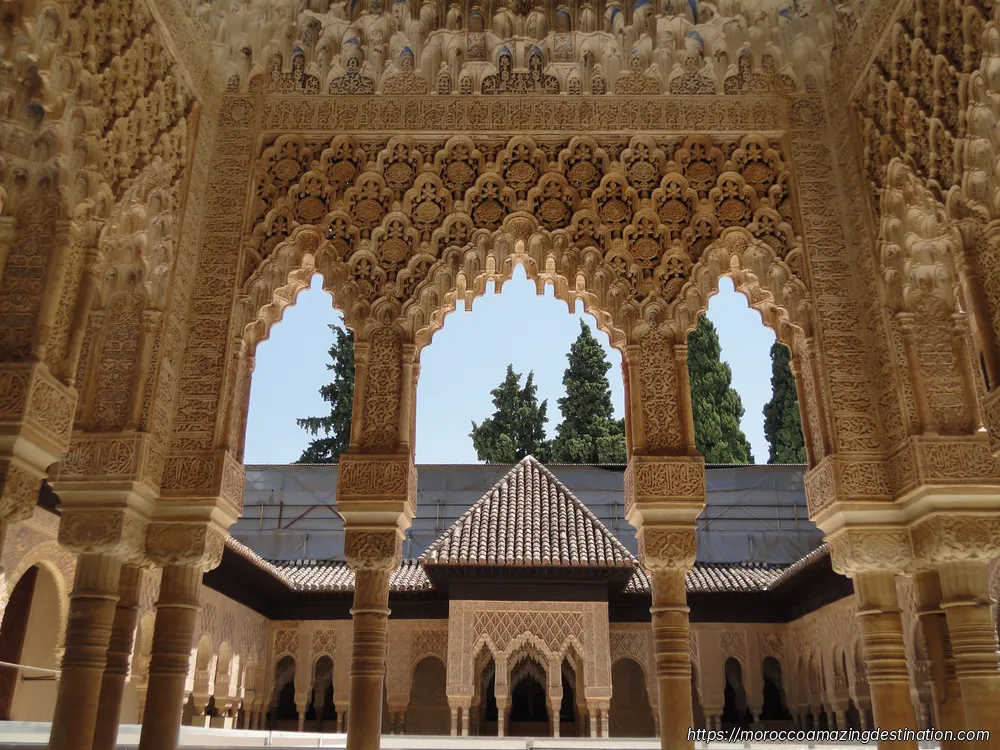
Did Morocco rule Spain? The short answer is yes—and the implications of this fact are far more fascinating than most people realize. While many travelers visit Morocco without knowing this connection, the historical relationship between these two nations runs deep, shaped by centuries of political unity, cultural exchange, and shared heritage.
The story begins in 711 AD when forces from North Africa crossed the Strait of Gibraltar and began the conquest of the Iberian Peninsula. While this initial wave came from various Berber and Arab groups, the territory that later became known as Al-Andalus would eventually fall under the direct rule of Moroccan dynasties—the Almoravids and Almohads—who would transform the region and leave an enduring legacy on both sides of the Mediterranean.
What Does “Morocco Ruling Spain” Actually Mean?
When we ask “did Morocco rule Spain,” we’re really asking about a specific period when political power flowed from North African capitals to European territories. Unlike modern concepts of nation-states with fixed borders, medieval Islamic empires operated differently. The Moroccan dynasties that ruled parts of Spain didn’t see themselves as foreign conquerors in the way we might understand colonization today—they were part of a broader Islamic world that extended across North Africa and into Europe.
The question of whether Morocco ruled Spain becomes clearer when we understand that the territories in question were part of larger empires. When the Almoravid or Almohad rulers governed from Marrakech or Fez, they controlled territories that stretched across the Strait of Gibraltar. Their power was not “Morocco invading Spain” but rather a trans-Mediterranean empire that happened to have its political center in what we now call Morocco.
This distinction matters because it explains why the cultural legacy is so profound. The Moroccan dynasties didn’t simply occupy Spain—they built, developed, and shaped the region for generations, creating the magnificent architecture, agricultural systems, and intellectual traditions that still define parts of Spain today.
The Almoravid Dynasty: The First Moroccan Rulers of Spain
The Almoravid dynasty emerged from the Sahara Desert in the 11th century, founded by a religious leader named Yahya ibn Umar. Under his successor, Yusuf ibn Tashfin, the Almoravids expanded from their base in southern Morocco to conquer much of the Iberian Peninsula.
The Almoravid takeover of Al-Andalus began around 1086 when Yusuf ibn Tashfin crossed the strait to support the embattled Muslim rulers in Toledo against the advancing Christian kingdoms. What started as an alliance evolved into direct rule by 1094, as the Almoravids absorbed much of the existing Al-Andalus territories under their control.
The Almoravid period saw the creation of some of Iberia most impressive architecture. The Almoravids built numerous mosques, palaces, and fortifications that combined North African and Andalusian styles. Their influence extended to agricultural development—they introduced new irrigation techniques that transformed the Valencian and Andalusian landscapes, creating the fertile regions that remain productive today.
The Almoravid rule in Spain lasted until around 1147, when their empire fell to the Almohads, another Moroccan dynasty that would take the relationship between Morocco and Spain to new heights. But the Almoravids had established the template—the idea that North African and Iberian territories could be unified under a single political authority.
The Almohad Empire: The Golden Age of Moroccan-Spanish Unity
If the Almoravids established Moroccan rule in Spain, the Almohads perfected it. The Almohad dynasty emerged in the Atlas Mountains of Morocco in the early 12th century as a religious reform movement. Under their great caliph, Abu Yusuf Ya’qub al-Mansur, and especially his successor Muhammad al-Nasir, the Almohads created one of the largest empires in medieval North Africa and Europe.
The Almohad conquest of Al-Andalus began in the 1140s and was largely complete by 1172. Under their rule, the territories under Moroccan control reached their greatest extent—encompassing virtually all of modern-day Spain and Portugal, with the exception of small Christian enclaves in the north.
This period represents the high point of Moroccan rule in Spain. The Almohads built the Great Mosque of Seville, whose minaret (the Giralda) still stands today as one of Spain’s most recognizable landmarks. They constructed the massive walls that still surround Seville’s old city and developed the Alcazar palace complex that would later become the Royal Palace. In Granada, they began the construction of the Alhambra, though it would be completed by their successors.
The Almohad period also saw significant intellectual and cultural exchange. Scholars traveled between the great universities of Fez, Marrakech, and Cordoba, creating a shared intellectual tradition that enriched both Moroccan and Spanish cultures. The Almohad caliphate fostered a period of relative religious tolerance, where Christians and Jews could hold prominent positions in society, contributing to the flourishing of arts, sciences, and philosophy.
The empire began to decline in the early 13th century, and by 1238, the Almohads had lost control of most of their Iberian territories as Christian kingdoms advanced. But the legacy they created—the architecture, the agricultural systems, the cultural traditions—would endure long after their political rule ended.
The Marinids and the Decline of Moorish Spain
Following the fall of the Almohads, a third Moroccan dynasty entered the picture: the Marinids. The Marinids ruled Morocco from 1244 to 1465 and occasionally extended their influence into the Iberian Peninsula during the 13th and 14th centuries.
Unlike their predecessors, the Marinids never established comprehensive control over Al-Andalus. Instead, they primarily provided military support to the last Muslim kingdoms in Iberia, particularly the Emirate of Granada. Their involvement was more about maintaining a buffer zone than establishing direct rule.
The Marinid period coincided with the final phase of Muslim rule in Spain. As Christian kingdoms pushed south, the Marinids found themselves increasingly unable to prevent the fall of Granada. Their last significant military intervention came in 1344 when they helped defend Almeria, but by then the decline was irreversible.
The Marinid era also saw the completion of important architectural projects in both Morocco and Spain, including parts of the Alhambra and various madrasas (religious schools) in Fez and Granada. However, their influence on Spain was limited compared to the Almoravids and Almohads.
By the late 15th century, the last Muslim kingdom in Spain—the Emirate of Granada—fell to the Catholic Monarchs in 1492, ending nearly eight centuries of Muslim rule in the Iberian Peninsula. But this was not the end of the connection between Morocco and Spain.
The Lasting Legacy: How Moroccan Rule Shaped Spanish Culture
The centuries of Moroccan rule in Spain left traces that remain visible today. When you visit Seville, Granada, Cordoba, or Toledo, you are walking through cities that were shaped by Moroccan architects, watered by irrigation systems developed in Morocco, and populated by people who identified more with the Islamic world than with Christian Europe.
The architectural legacy is perhaps the most visible. The Alhambra in Granada, the Giralda in Seville, the Great Mosque of Cordoba—these are not merely tourist attractions but physical manifestations of the Moroccan dynasties that ruled Spain. The style of these buildings, with their characteristic horseshoe arches, intricate geometric patterns, and courtyard gardens, represents a distinctively Moroccan contribution to world architecture.
The linguistic influence is subtler but equally significant. Spanish contains hundreds of words of Arabic origin—some obvious like “algebra” and “alcalde,” others less so. These linguistic traces reflect the deep integration of Arabic-speaking populations into Spanish society during the centuries of Moroccan rule.
Agricultural techniques introduced by Moroccan rulers transformed the Spanish landscape. The irrigation systems developed in Morocco allowed agriculture in regions that had previously been semi-arable. The terraced farming, the specific crops, the very concept of the Spanish huerta (garden) all have roots in Moroccan agricultural practices.
Perhaps most importantly, the period of Moroccan rule created a shared historical memory that continues to shape how both nations understand themselves. In Morocco, the Al-Andalus period is remembered as a golden age of Islamic civilization. In Spain, the Moorish legacy is increasingly celebrated as an integral part of the nation’s multicultural past.
For modern travelers, this shared history creates unique opportunities for cultural exploration. The connection between Morocco and Spain is not merely historical—it is alive in the cuisine, the architecture, the music, and the shared values of hospitality that characterize both nations.
Conclusion: Morocco and Spain—A Shared Story
The answer to “did Morocco rule Spain” is an unequivocal yes—and this fact makes the relationship between these two nations unique in the world. Unlike colonial relationships that created resentment and division, the centuries of Moroccan rule in Spain created a shared heritage that both nations increasingly celebrate.
Today, travelers can explore this connection by visiting the magnificent architectural monuments built by Moroccan dynasties in Spanish cities, by experiencing the shared culinary traditions, and by crossing the Strait of Gibraltar to see how the history flows in both directions.
The story of Morocco and Spain is not one of separate nations meeting but of a shared civilization developing across both sides of the Mediterranean. When you visit the Alhambra in Granada or the medina of Fez, you are experiencing different chapters of the same story—a story that continues today as both nations share the Mediterranean and look forward to their common future.
Ready to explore this shared heritage firsthand? Consider these tours that will help you discover the historical connections between Morocco and Spain:
8-Day Tour from Tangier to Merzouga and Imperial Cities — Start your journey in Tangier, the gateway between Europe and Africa, and travel through the historical cities that connect Morocco’s past to its European legacy. This tour takes you through Chefchaouen, Fes, and the Sahara Desert, offering a comprehensive view of Morocco’s imperial heritage. Learn more: 8-Day Tour from Tangier to Merzouga and Imperial Cities
12-Day Morocco Grand Tour — For those wanting the complete experience, this comprehensive tour covers all the imperial cities, from Casablanca to Marrakech, including the historical sites that reflect Morocco’s influence across the Mediterranean. This extended journey will give you a deep understanding of the Moroccan dynasties that once ruled Spain. Learn more: 12-Day Morocco Grand Tour
If you found this helpful, add us as your preferred source on Google.
Frequently Asked Questions
Did Morocco ever rule Spain?
Yes, Morocco did rule large parts of Spain for several centuries. North African dynasties, particularly the Almoravids and Almohads, established control over the Iberian Peninsula beginning in the 11th century. This period, known as Al-Andalus, saw Moroccan rulers govern territories that encompassed most of modern-day Spain and Portugal.
What was Al-Andalus?
Al-Andalus refers to the Muslim-ruled territories of the Iberian Peninsula that existed from 711 to 1492. While not exclusively ruled by Moroccan dynasties, the Almoravid and Almohad empires from North Africa controlled significant portions of this territory, particularly during their peak periods in the 11th and 12th centuries.
Which Moroccan dynasties ruled Spain?
The two main Moroccan dynasties that ruled parts of Spain were the Almoravids (1061-1147) and the Almohads (1147-1238). The Marinids also held some territory in the late 13th and early 14th centuries. These dynasties brought Morocco's political and cultural influence across the Strait of Gibraltar into Europe.
What is the legacy of Moorish Spain today?
The legacy of Morocco's rule in Spain is visible in architecture (like the Alhambra in Granada), language (many Spanish words of Arabic origin), agriculture techniques, and cultural traditions. The period of Moorish rule left an indelible mark on both Spanish and Moroccan identity, creating a shared historical connection that continues to influence tourism and cultural exchange between the two nations.
Ready for an Adventure?
Have questions? Feel free to contact us using the form below. We're here to help!