
· Travel · 5 min read
Damascene in Morocco: Silver Inlay an Hour from Fes
How Moroccan damascene is made, why the workshops sit in Meknes an hour from Fes, and how to spot hand-inlaid silver before you pay.
A chisel opens a shallow groove in a plate of iron, then cross-hatches the bottom so the metal has something to grip. A length of silver wire drops in, gets tapped down, and is burnished until it sits level with the surface. The work is done cold, without solder, and the plate ends up a black ground with threads of light running through it.
Damascene in Morocco survives on a handful of benches, and almost none of them sit where visitors expect. In this guide, we will break down how the inlay is made, why the workshops are in Meknes rather than Fes, what the Fes metal souks actually stock, and how to read a piece before you pay for it. The short answer on location: this is Meknes work, and the road from Fes takes about an hour.
Silver Wire Into Blackened Steel
Damascene starts with a hard base, usually iron or steel, darkened by oxidation until it goes near-black. The softer metal goes into that ground: silver most often, sometimes gold, occasionally copper.
Channels are cut or cross-hatched, wire is laid in, and hammering makes the roughened walls bite. Burnishing brings the wire flush. Run a fingernail over a finished plate and you feel it sitting either dead level or a fraction proud.
The name came from Damascus, matured in al-Andalus and settled in Toledo, which became Europe’s centre for the craft. Today much of what is sold there is machine-made, and some of it is set into tin rather than steel. What survives of Moroccan damascene metalwork is still cut and set by hand.
Why the Workshops Are in Meknes, an Hour from Fes
Meknes holds the workshops. It was an imperial capital, and the craft quarter sits inside the old medina. The benches are in lanes off Place el-Hedim and behind Bab Mansour, close to the Dar Jamai museum. The historic artisan quarter is Kobbat Al Souk, and one family there has run an 80-year bench through four generations.
Ask how many masters remain and the answer shifts: a handful, and published counts vary. What practitioners say more consistently is that tourism keeps the trade alive, because commissions and visitors pay for the wire.
Seeing damascene Meknes work up close takes an introduction rather than a ticket. The government artisan centre sells at fixed prices, which is a useful benchmark before any haggling. Working benches sit behind doors in the same lanes, and access runs on relationships.
Fes Medina: What the Metal Souks Actually Sell
Place Seffarine is Fes’s metal quarter, and it is a copper and brass square. You hear it before you see it: hammers on sheet metal, the maalemin shaping trays, pots, lanterns and basins in workshops that open straight onto the lane.
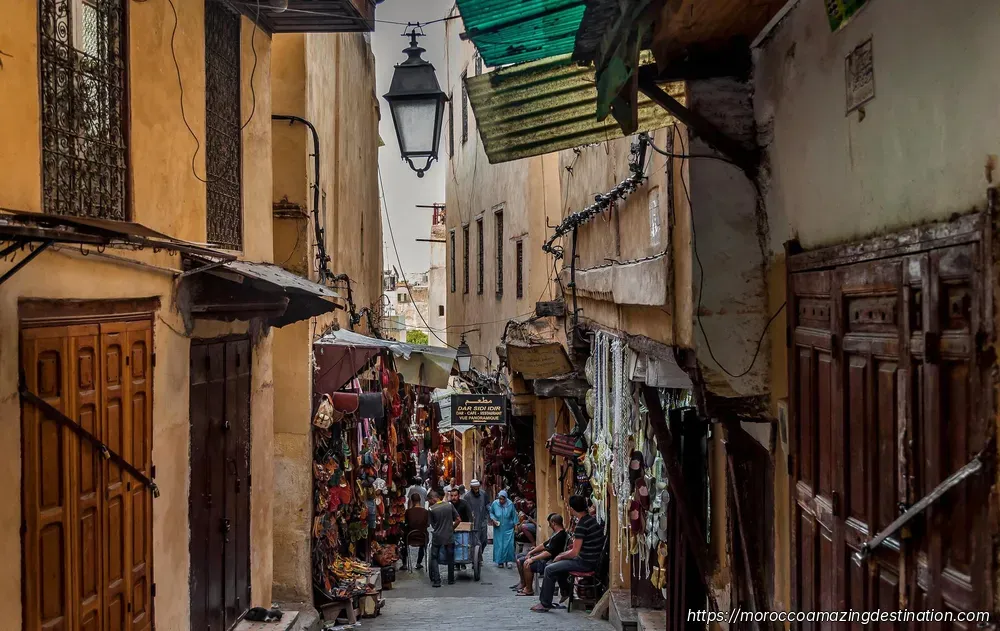
Damascene pieces do turn up in the shops around it, and that is usually where a damascene Fez search ends. In practice most of that stock was made in Meknes and travelled an hour up the road.
What the shops around the square sell:
- Copper and brass: trays, teapots, lanterns and basins, hand-hammered in Place Seffarine itself.
- Damascene stock: small boxes, plates and jewellery, nearly all of it Meknes work.
- Thin tourist metal: light sheet and cast handles, sold on look rather than metal.
Hand-Inlay or Printed Copy? Reading a Piece Before You Pay
Price tells you little about a piece. Touch tells you almost everything. A printed or photo-etched pattern sits on the surface like ink, while hand-inlay sits in the metal, and a fingernail finds the difference in a second.
Reads as hand work:
- Wire in a groove: the line sits flush or slightly proud and catches a nail.
- Pattern across curves: the design keeps its proportions over an edge or a rounded lid.
- Weight and pull: an iron or steel base is heavy, and a magnet will find it.
Reads as a copy:
- Pattern on top: etching or print scratches off with the edge of a coin.
- Too even, too bright: identical motifs, no tool marks, silver that never dulls.
- Light base: thin sheet or tin, sometimes a nickel alloy sold as silver.
Turn the piece over. The back of hand work is usually rougher than the front, and a printed copy is tidy everywhere.
What to Pay, and Who You’re Actually Paying
Small boxes and plates start around 150 to 500 MAD. Larger wall pieces with dense inlay and finer wire go well beyond that, and there is no honest ceiling.
What moves the price:
- Silver content: more wire means more metal, and you can see the difference across the surface.
- Wire fineness: hair-thin line work takes longer and fails more often at the bench.
- Inlay density: how much of the plate carries pattern, and how tightly it is packed.
- Hours: a dense piece is days of work, not an afternoon.
Bargaining is normal. Opening asks often run two to three times the settling figure, and on a small piece a deal nearer half the first number is realistic. A low asking price on damascene usually means printed stock. Paying at the bench changes the conversation, because you are buying from the person who cut the grooves with no shop rent in the price.
Bench visits are relationship-based rather than bookable, which is where a local guide earns the fee. For the wider craft economy these workshops belong to, our guide to traditional Moroccan professions and livelihoods covers the trades still running in the medinas.
If you want Meknes on the route rather than a detour, the 7-day Morocco tour from Fes gives the city a full night and a souk morning. The 9-day Morocco tour from Fes to Tangier runs longer, with time for an unhurried bench stop on the way south.
We can customize a tour to match your needs - design your perfect itinerary
If you found this helpful, add us as your preferred source on Google.
Frequently Asked Questions
Is damascene actually made in Fes?
No. The surviving workshops are in Meknes, in the lanes off Place el-Hedim and around the old artisan quarter of Kobbat Al Souk. Damascene pieces do circulate in Fes shops, but in practice that stock is Meknes work carried an hour up the road. Fes's own metal quarter, Place Seffarine, works copper and brass.
How do I tell hand-inlaid damascene from a printed copy?
Use a fingernail. On hand-inlaid work the silver wire sits in a cut groove, flush or a fraction proud, and the nail catches it. Printed, etched or photo-etched patterns sit on the surface like ink and scratch off with a coin edge. Heavy iron or steel and silver that dulls with age are good signs too.
What should a genuine damascene piece cost?
Small boxes and plates usually start around 150 to 500 MAD. Larger wall pieces with dense inlay and finer wire cost considerably more. Silver content, wire fineness, how much of the plate carries pattern and the hours at the bench decide the figure. Opening asks in the medina often run two to three times the price a sale settles at.
Can I watch the work on a trip based in Fes?
Yes, with planning. Meknes is about an hour from Fes by road, and the fixed-price artisan centre there lets you study finished pieces before you talk money. Working benches are reached through introductions rather than a ticket, so a guide with local contacts is the practical way in.
Ready for an Adventure?
Have questions? Feel free to contact us using the form below. We're here to help!