
· Travel · 8 min read
Caves of Hercules Tangier: The Complete Guide to Morocco's Famous Sea Cave
Plan your visit to the Caves of Hercules Tangier — the legend, geology, Africa-shaped opening, entry fee, and how to reach it near Cape Spartel.
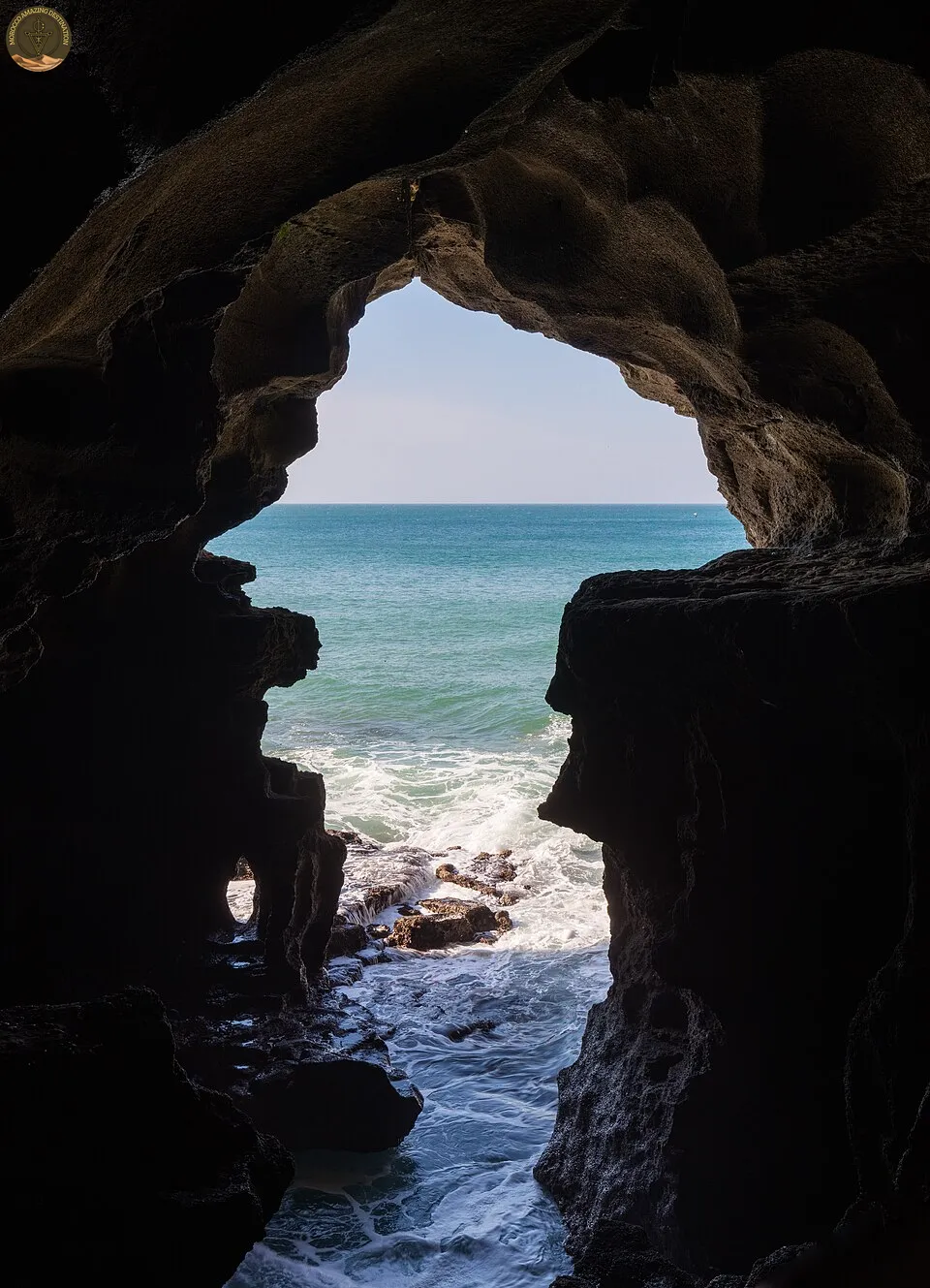
The Caves of Hercules Tangier are among the most famous natural landmarks on Morocco’s northern coast. Carved into limestone cliffs about 14 kilometres west of the city — close to Cape Spartel, the exact spot where the Atlantic Ocean meets the Mediterranean Sea — these sea caves are celebrated above all for a single breathtaking feature: a sea-facing opening shaped like the map of Africa.
Part natural wonder, part archaeological site, and part legendary landmark, the caves blend geology, myth, and history in a way few places in Morocco can match. Here is everything you need to know before you go.
What Are the Caves of Hercules?
The Caves of Hercules are a partially natural, partially man-made complex of sea caves cut into the limestone headland near Cape Spartel. The main cave has two openings: one facing the land, which visitors use to enter, and a second, larger opening that looks out over the Atlantic.
It is this sea-facing mouth that makes the site world-famous. When viewed from inside the cave, the opening traces a shape strikingly similar to the map of Africa — with Madagascar even appearing as a small notch in the corner. On a calm day, waves crash through the opening and fill the chamber with light and sea spray, creating one of Morocco’s most photographed scenes.
The Legend of Hercules: Myth vs. Fact
Every visit to the Caves of Hercules Tangier comes wrapped in legend, and it is worth separating story from history before you stand at the entrance.
According to legend, the Greek hero Hercules rested in these caves before undertaking one of his twelve labours. The myth says that during his travels he was tasked with separating Europe from Africa, and that he tore the two continents apart with his bare hands — leaving behind the Strait of Gibraltar and the two mountains that guard it, known as the Pillars of Hercules.
According to legend, one of these pillars is the Rock of Gibraltar on the European side, while the African pillar is traditionally identified as either Jebel Musa in Morocco or Monte Hacho in the Spanish enclave of Ceuta — a point that remains disputed to this day.
Another legend says that a long underwater tunnel once connected the Caves of Hercules to St Michael’s Cave in Gibraltar, roughly 24 kilometres away across the strait, and that the famous Barbary macaques of Gibraltar used this passage to cross from Africa into Europe.
To be clear: these are all myths and folk stories. There is no historical or geological evidence for Hercules, the tunnel, or the macaques’ passage — but the legends are part of what makes the caves such a memorable place to visit.
How the Caves Were Formed: The Geology
Beneath the mythology lies a real and fascinating geological story.
The Caves of Hercules are a karst (sea) cave, formed in limestone over an immense span of time. Two forces did most of the work:
- Wave and wind erosion hollowed out the soft limestone along the coast, carving the main chambers and the sea-facing opening.
- Human quarrying then enlarged the caves. For generations, local Berber workers cut circular millstones from the cave’s rock — a practice that continued well into the early twentieth century — which deepened and widened the interior.
The result is a hybrid: a natural cave that has been significantly reshaped by human hands.
As for the famous map of Africa opening, its origin is not entirely certain. It is said that the Phoenicians, skilled navigators who traded along this coast in antiquity, carved the opening into its distinctive continental shape — but this remains a tradition rather than a verified fact, and many geologists argue the shape is simply a striking natural coincidence.
What is firmly established is that the caves have been inhabited since the Neolithic period, roughly six thousand years ago, making them one of the oldest known human sites in the Tangier area.
A Brief History of the Caves
The Caves of Hercules have played several roles over the centuries. After their Neolithic occupation, they were used as a quarry for millstones during antiquity and the medieval era. In the early twentieth century, the site was opened to the public as a tourist attraction, and by the mid-twentieth century it had been declared a protected national heritage site.
In recent years, the caves were renovated and reopened with improved access and facilities, and they now welcome visitors daily. Many of the artefacts discovered here over the years — including prehistoric tools and pottery — are displayed in the Kasbah Museum of Tangier, making the caves a natural pairing with a visit to the city’s historic medina.
How to Visit the Caves of Hercules
Planning a visit is straightforward. Here is the practical information you need.
Getting There
The caves lie about 14 kilometres west of Tangier’s city centre, just beyond Cape Spartel.
- Taxi — a petit (small) or grand taxi from Tangier takes roughly 20–25 minutes. Agree on a price before setting off or insist on the meter.
- Rental car — the coastal road toward Cap Spartel is scenic and easy to follow, with the caves clearly signposted.
- Guided tour — many day tours and multi-day Morocco itineraries include the caves as a stop, often combined with Cape Spartel and the city’s medina.
Entrance Fee and Opening Hours
- Entry fee: a small cash fee is charged at the entrance — typically around 10 MAD (about €1). This is indicative and may change, so carry cash in Moroccan dirhams.
- Opening hours: the caves are open daily during daylight hours. There is no fixed late-night opening, so plan your visit for the daytime.
Best Time to Visit
The caves are most impressive in the morning, when the light streams through the Africa-shaped opening, and at low tide, when the interior is most accessible and the waves are calmer. Late afternoon is also popular for the golden light on the cliffs, though the caves can be busier then.
What to Bring
- Sturdy shoes — the cave floor can be damp and uneven.
- Layers — it stays cool inside even on warm days, while the coastal breeze can be strong outside.
- Water — there is little shade along the cliffs.
- Cash — for the entry fee and the nearby cafés.
Safety
Stay behind the safety barriers at all times. The rocks around the sea opening are slippery, and the Atlantic can send powerful waves crashing into the cave. If you continue down to Achakkar Beach below, note that the currents there are strong and the beach is generally not recommended for swimming.
Nearby Highlights: Cape Spartel and Achakkar Beach
The caves sit within one of the most scenic stretches of Morocco’s northern coast, so it is easy to make a morning of it.
- Cape Spartel lighthouse — a short drive further west, this lighthouse marks the northwesternmost point of mainland Africa and the meeting of the Atlantic and the Mediterranean. The surrounding pine park is ideal for a picnic with sweeping sea views.
- Atlantic–Mediterranean meeting point — stand at the cape and you are literally at the intersection of two seas and two continents.
- Achakkar Beach — a wide, wild Atlantic beach below the cliffs, popular with locals for walks and horse rides rather than swimming.
Frequently Asked Questions
How far are the Caves of Hercules from Tangier?
The caves are about 14 kilometres west of Tangier’s city centre, near Cape Spartel. By taxi or car the drive takes roughly 20 to 25 minutes along the coastal road.
Is there an entrance fee for the Caves of Hercules?
Yes, there is a small cash entry fee, typically around 10 MAD (about €1). This is indicative and may change, so it is best to carry cash in Moroccan dirhams.
What is the best time to visit the Caves of Hercules?
Morning is best, when the light streams through the Africa-shaped opening and the caves are quieter. Low tide also improves access and keeps the waves calmer inside the cave.
How do I get there, and can I combine the visit with Cape Spartel?
You can reach the caves by taxi, rental car, or guided tour in about 20 to 25 minutes from Tangier. Yes — Cape Spartel lighthouse and Achakkar Beach are just a few minutes away, so most visitors combine all three into a single outing.
The Caves of Hercules are a highlight of any trip to northern Morocco, pairing a dramatic natural setting with layers of myth and history. They are quick to reach from Tangier and easy to combine with Cape Spartel and the Atlantic coast.
If you want to visit the caves as part of a wider Moroccan adventure, our 4-Day Trip from Tangier to Marrakech includes the cave on its first day before continuing to Chefchaouen, Fes, and the Sahara. For a longer journey through the north and beyond, the 8-Day Northern Tour: Imperial Cities and Desert from Tangier weaves Tangier, Chefchaouen, the imperial cities, and the desert into one unforgettable route.
We can customize a tour to match your needs — design your perfect itinerary.
If you found this helpful, add us as your preferred source on Google.
Frequently Asked Questions
How far are the Caves of Hercules from Tangier?
The caves are about 14 kilometres west of Tangier's city centre, near Cape Spartel. By taxi or car the drive takes roughly 20 to 25 minutes along the coastal road.
Is there an entrance fee for the Caves of Hercules?
Yes, there is a small cash entry fee, typically around 10 MAD (about €1). This is indicative and may change, so it is best to carry cash in Moroccan dirhams.
What is the best time to visit the Caves of Hercules?
Morning is best, when the light streams through the Africa-shaped opening and the caves are quieter. Low tide also improves access and keeps the waves calmer inside the cave.
How do I get there, and can I combine the visit with Cape Spartel?
You can reach the caves by taxi, rental car, or guided tour in about 20 to 25 minutes from Tangier. Yes — Cape Spartel lighthouse and Achakkar Beach are just a few minutes away, so most visitors combine all three into a single outing.
Ready for an Adventure?
Have questions? Feel free to contact us using the form below. We're here to help!