
· Travel · 4 min read
Can I Use My Bank Card in Morocco? ATM & Card Guide
Can I use my bank card in Morocco? Yes, mostly. Learn ATM fees, limits, DCC traps, contactless and card-block tips for a hassle-free trip.
Landing in Marrakech with only a bank card in your pocket? You will be fine — in the right places. So, can I use my bank card in Morocco? Yes, mostly: Visa and Mastercard debit and credit cards work at hotels, supermarkets, malls and modern city restaurants. Just do not expect the same machine in a souk, a petit taxi or a mountain guesthouse.
In this guide, we will break down how bank cards really work in Morocco — where they are accepted, how ATM withdrawals and fees add up, and how to avoid a declined card on the road.
Will Your Bank Card Actually Work in Morocco?
Morocco is still a cash-first country, but card use is growing fast in tourist areas. Using credit cards in Morocco is reliable at international hotels, upscale riads, city supermarkets, shopping malls, brand stores, petrol stations and modern restaurants. Everywhere else, cash rules.
The pattern is simple: the more a business serves international visitors, the more likely it takes cards. The more local and informal the setting, the more dirhams you need in hand.
Key cards and where they work:
- Visa and Mastercard: Accepted almost everywhere that takes cards.
- American Express: Rare outside luxury hotels — treat it as a backup only.
- Debit cards: Work at most terminals, but some machines reject foreign debit.
- Prepaid travel cards: Handy, but confirm they support Moroccan dirhams first.
ATM Withdrawals and Dynamic Currency Conversion
ATMs are easy to find in cities, at airports and at petrol stations, and they accept foreign Visa and Mastercard. Most dispense 200 MAD notes, which small vendors struggle to break — withdrawing an odd amount like 1,900 MAD leaves you with easier change.
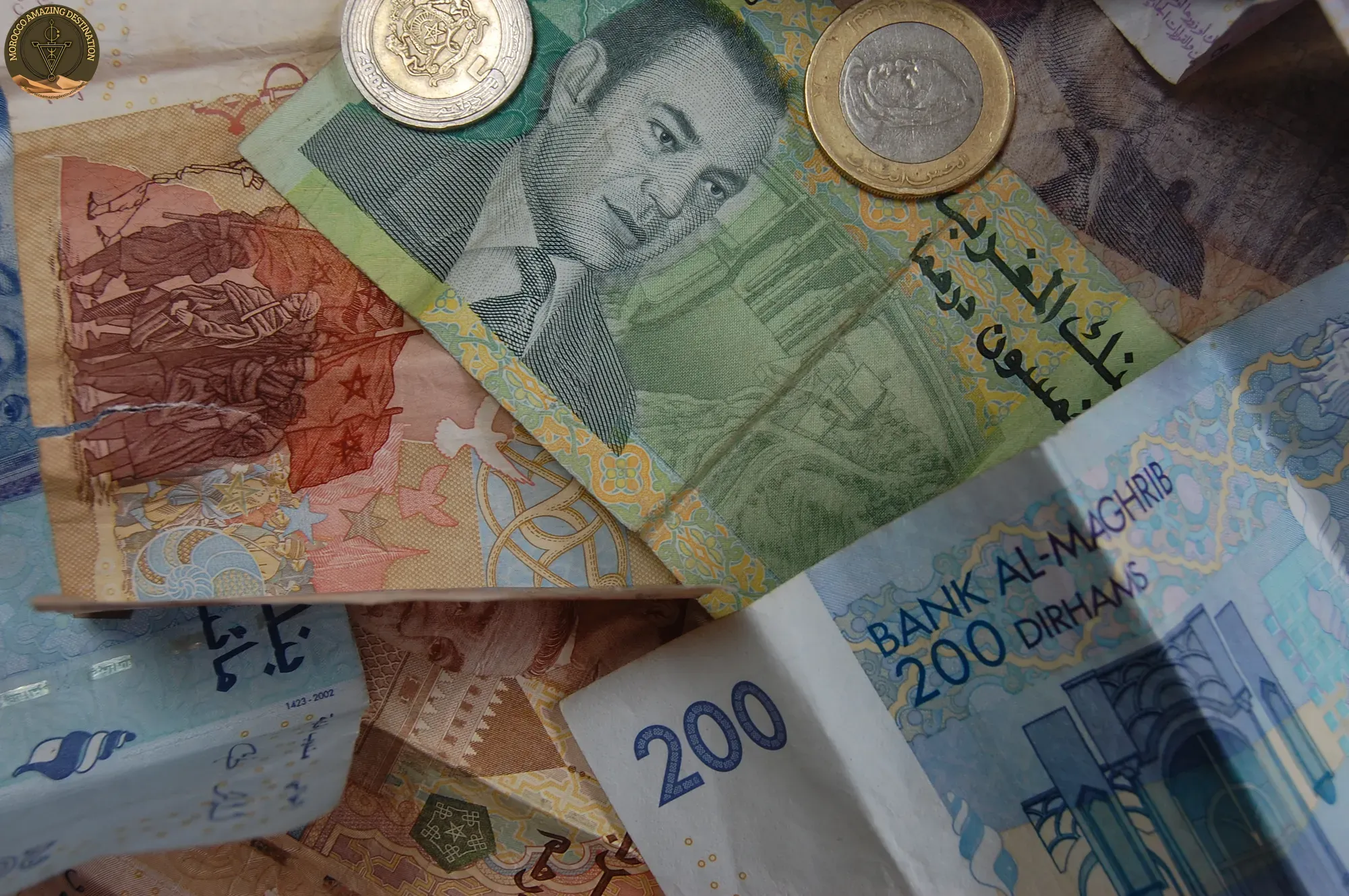
A typical withdrawal caps near 2,000 MAD, though some banks allow 2,000–4,000 MAD. Local ATM fees in Morocco usually run roughly 20–50 MAD per withdrawal, most commonly around 35 MAD. Your home bank may then add its own percentage on top.
The biggest trap is dynamic currency conversion Morocco, where the machine offers to charge you in your home currency. Always decline and choose Moroccan dirhams — the markup commonly adds 3–8%.
- Choose MAD: Never accept the machine’s home-currency conversion.
- Withdraw fewer, larger amounts: Fewer transactions mean fewer fees.
- Use branch ATMs: Machines inside bank branches are safer and better kept.
- Keep receipts: They help if you need to dispute a charge later.
Contactless, Bank Blocks and Declined Cards
Contactless payment is common wherever card terminals exist. Tap-to-pay and mobile wallets work at big hotels, supermarkets, malls and modern cafes in Marrakech, Casablanca, Rabat and Tangier. In the medina, most stalls still run on cash, so keep your phone and card tucked away.
Many banks no longer require a formal travel notice, but it is still wise to set one up. Open your banking app, enable international transactions, and save your bank’s overseas support number before you fly.
If your card is declined, work through this playbook:
- Retry once: Sometimes it is just a temporary network hiccup.
- Check your app: Approve the transaction if a fraud alert appears.
- Try a smaller amount: Large first withdrawals often trigger blocks.
- Switch machine or network: Another ATM or a second card may work.
- Call your bank: Ask them to lift the block and confirm the card is active.
Carry two cards from different networks, and never rely on a single piece of plastic.
Keeping Your Card Safe in the Medina
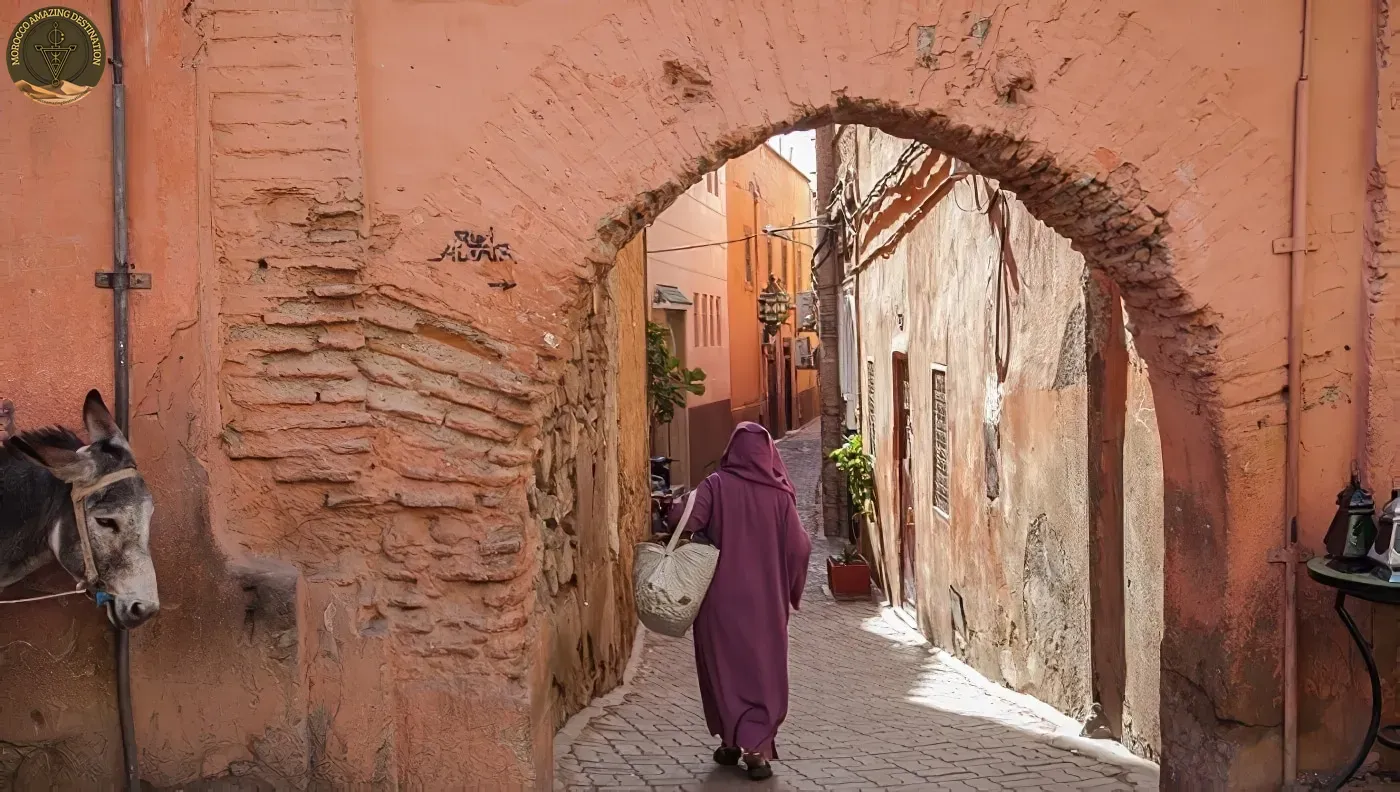
Medinas are wonderful and busy, which makes them prime territory for pickpockets. Keep your card in a hidden pouch or a zipped inner pocket, and never flash your wallet when paying.
At ATMs, use machines inside bank branches during the day, cover your PIN with your hand, and check for loose or bulky card slots that could hide a skimmer. If a machine looks tampered with, walk away and find another.
Card security essentials:
- Use the hotel safe: Leave spare cards and extra cash locked away.
- Report loss fast: Call your bank immediately and block the card.
- Keep digital copies: Store card numbers securely, not in your wallet.
- Shield the keypad: Cover your PIN and pocket your card at once.
With a little planning, your bank card makes travel in Morocco hassle-free. Our private tours handle transport, desert camps and city guides so you can focus on the real Morocco — see our 3-Day Desert Tour from Fes to Marrakech or the 4-Day Trip from Marrakech to Fes. For daily spending, read our guide to cash vs credit card in Morocco. We can customize a tour to match your needs — design your perfect itinerary.
If you found this helpful, add us as your preferred source on Google.
Frequently Asked Questions
Can I use my bank card in Morocco?
Yes, mostly. Visa and Mastercard debit and credit cards work at hotels, supermarkets, malls, petrol stations and modern city restaurants. Souks, petit taxis, street food and rural guesthouses are still cash-only, so carry dirhams as well.
What are ATM fees in Morocco for foreign cards?
Moroccan ATMs usually add a local fee of roughly 20–50 MAD per withdrawal, most commonly around 35 MAD. Your home bank may add its own foreign-transaction percentage on top, so withdraw fewer, larger amounts.
Should I choose MAD or my home currency at the ATM?
Always choose Moroccan dirhams (MAD). Decline dynamic currency conversion, which charges you in your home currency and typically adds a 3–8% markup on the exchange rate.
Does contactless or mobile wallet payment work in Morocco?
Contactless and mobile wallets work wherever modern card terminals exist, such as large hotels, supermarkets and malls. In medinas and smaller shops, most payments are still made in cash.
Ready for an Adventure?
Have questions? Feel free to contact us using the form below. We're here to help!