
· Culture · 6 min read
Ashura in Morocco: What Travelers See and How to Plan
Ashura in Morocco is a working day that feels like a carnival: water fights, drums, fakia and what it changes for your trip.
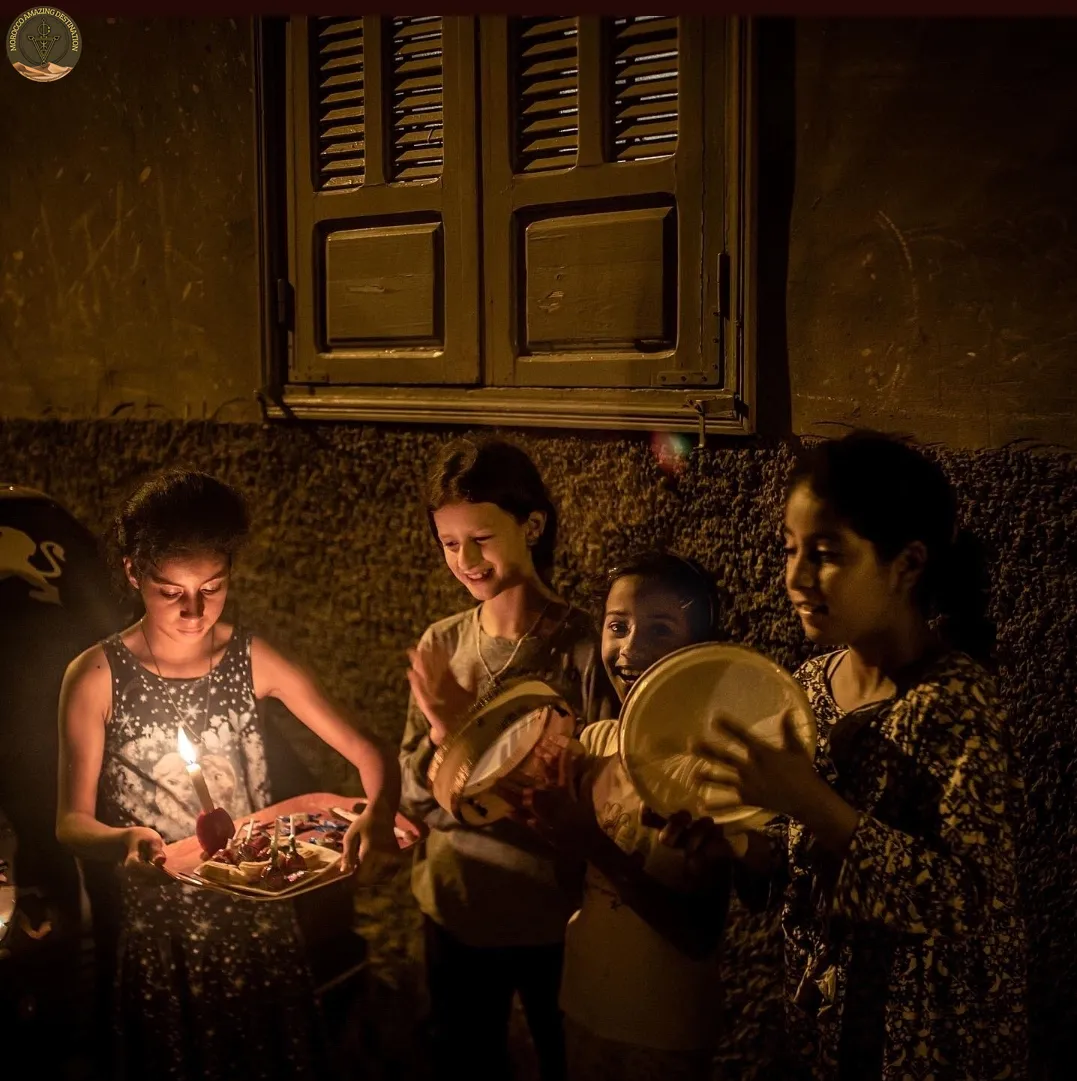
Ask two people in a Moroccan medina about Ashura in Morocco and the answers come from different directions. One describes the tenth of Muharram, a voluntary fast, a morning at the family grave. The other is about water balloons. Ashura is not a public holiday, so banks, offices and schools keep normal hours while children fill the lanes with buckets.
The Hijri year runs about eleven days shorter than the Gregorian one, so the date drifts earlier each time it comes round. This guide covers when Ashura falls, what you will actually witness on the street, and how much it touches your itinerary.
When Ashura Falls - The Tenth of Muharram
Ashura sits on the tenth day of Muharram, the month that opens the Hijri year. Its name is built on ashara, the Arabic word for ten. The day holds a fixed position inside the month, so once 1 Muharram is announced you know the date. In Morocco the festival is called Achoura, so a search for Achoura Morocco lands you on this same tenth day.
A Hijri year lasts 354 or 355 days, about eleven fewer than a Gregorian one, so Ashura arrives ten or eleven days earlier each cycle. Morocco’s Ministry of Habous confirms every month by naked-eye moon sighting, so the local date can sit a day away from calendars printed elsewhere. Of all the Moroccan festivals, this is the hardest to pin a year ahead.
Ashura is not a public holiday: the paid list runs 1 Muharram, Eid al-Mawlid, Eid al-Fitr, Eid al-Adha and the civil dates, then stops. Morocco follows the Sunni Maliki school, so there are no Karbala processions, no flagellation, no black banners. Anyone who knows Ashura from Iraq or Iran expects mourning and finds a children’s carnival with a religious morning.
Fountains, Drums and Clay Toys - What You Will See
The eve is the loudest part. Drums start after dark in the older quarters, children run the lanes in loose bands, and incense drifts out of doorways. In some neighbourhoods you will pass a bonfire, though local authorities discourage them and many get put out.
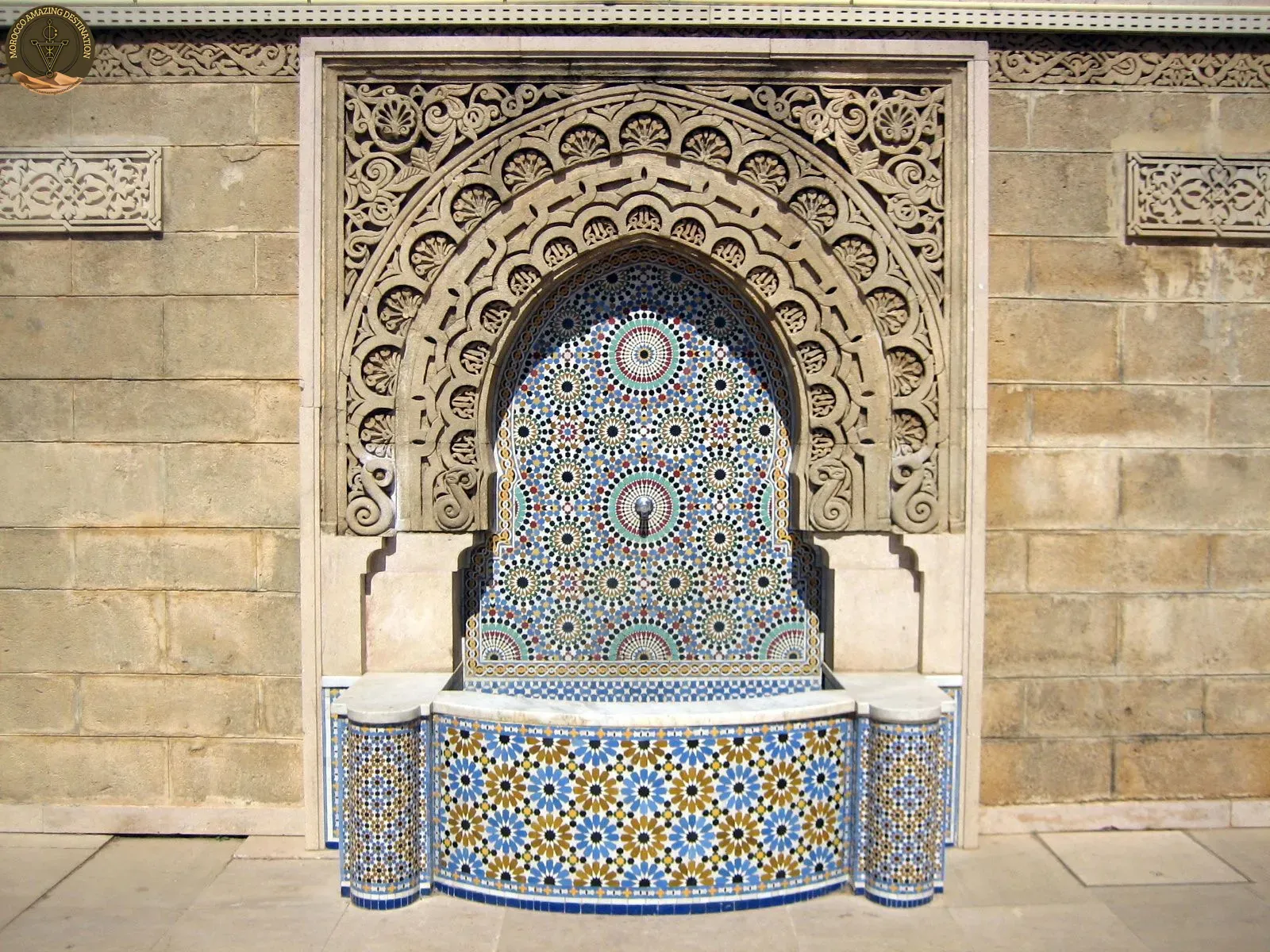
Morning of the tenth is Zem-Zem, also written Zamzam or tzemzima. Children, usually under twelve, soak each other, their neighbours and passing strangers with buckets, bottles, balloons and water pistols. They refill at medina fountains and street taps. The name borrows from the Zamzam well in Mecca, and the custom carries an older Moroccan Jewish layer tied to Moses and the sea.
By evening the water dries and the table takes over: fakia portioned into bowls, mint tea, drums again, women singing in a courtyard. Firecrackers are restricted by law on import and sale. You will still hear them.
Market Stalls, Fakia and Ta’erija - What You Will Eat and Hear
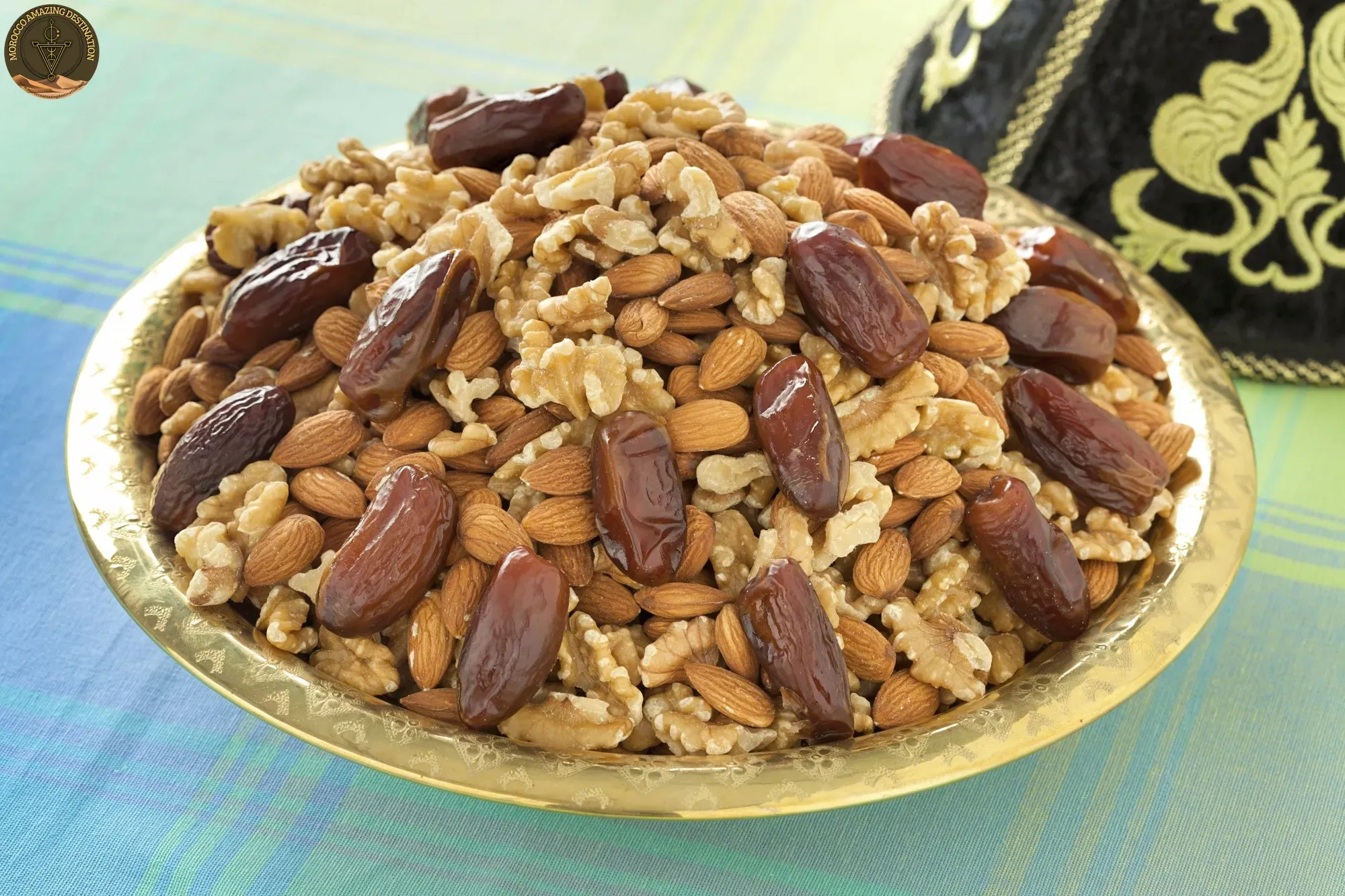
From 1 Muharram the souks change stock. Trays of fakia appear, the dried fruit and nut mix built on dates, almonds, walnuts, raisins, figs and chickpeas, sometimes with diced dried pineapple. Toy stalls fill the gaps between them.
The souks also sell sound. Ta’erija, also taarija, is a fired-clay drum shaped like a goblet, with a stretched goat-skin head. Most visitors call it a darbuka. Vendors stack them beside bendir frame drums and tambourines, and children form informal bands that parade a neighbourhood until someone calls them in.
What to look for on the stalls:
- A ta’erija is the one souvenir here worth the suitcase space, and you tune it by warming the skin.
- Bowls of fakia get refilled all week and passed round with tea, sweet and salty in the same handful.
- Feqqas and krichlate are almond and sesame biscuits in tins, sold down the same lane.
Dinner is couscous or rfissa, often with gueddid or the dried sheep tail kept back from Eid al-Adha. Households settle sadaqa and zakat, and children knock on doors asking for haq baba Ashour, a few coins and something sweet. Cemeteries fill with incense on the day and often the day after.
What Ashura Means for Your Trip - Medina Lanes, Shops and Etiquette
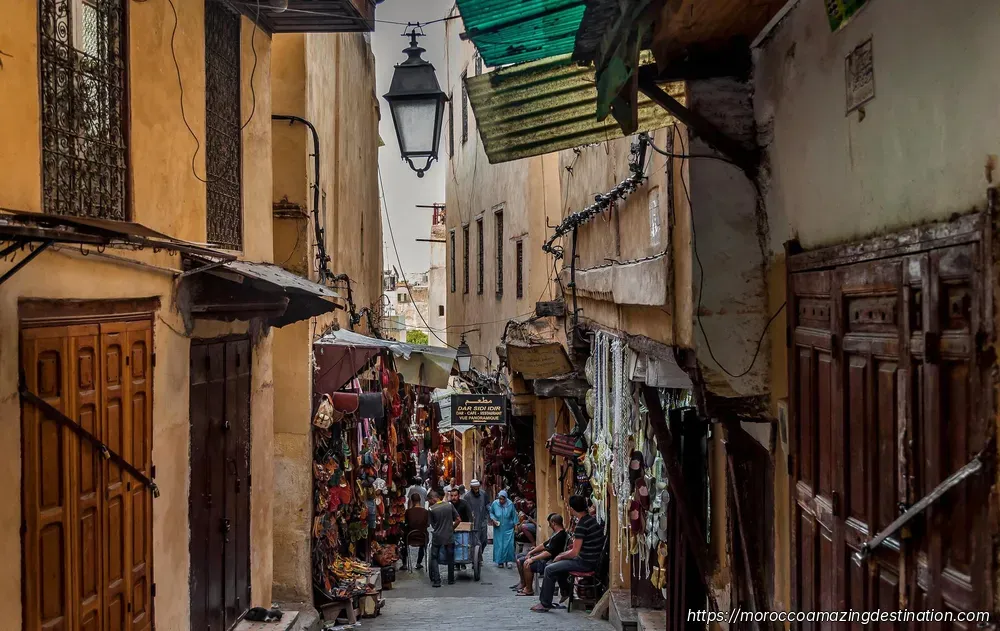
Ashura will not wreck an itinerary. It is a working day, monuments keep normal hours, and hotels, riads and desert camps run as usual. The real risk is smaller: a medina shop or a small restaurant opening late or closing early, which a private driver absorbs.
Etiquette on the day:
- Ask before photographing children, especially around water and in working-class lanes where a camera still draws a crowd.
- Keep the camera high and dry: a phone at hip height will not survive a water fight.
- Watch cemeteries from the gate: families come to sit with their dead, not to be toured.
- Treat a splash as a blessing: it is offered in play, so laugh and move on.
- Dress as on any medina day: shoulders and knees covered, and shoes for walking.
Stay clear of teenage boys setting off firecrackers, and pack a dry bag with a change of clothes, since the water is not always clean. Ashura is most visible in the northern medinas of Tangier, Tetouan and Fes, and in the working-class quarters of the big cities. Marrakech and the south keep it quieter. For the festival that moves the whole country, read our guide to Eid al-Adha in Morocco. The sheep festival changes far more of the country than Ashura does.
Planning Around Ashura - Private Guides and Flexible Dates
A private vehicle and a guide who reads the neighbourhoods keep Ashura simple. With a car, a wet morning does not delay a transfer or a desert departure. With the right guide, you walk the right quarter on the right evening, since intensity shifts street by street and year to year. Hassan and our local team in Fes and Tangier read that calendar before you land.
If Ashura is the reason for the trip, keep two flexible days in the plan.
The 7-Day Morocco Tour from Fes gives you two days in the Fes medina, where the water play runs busiest. The 8-Day Northern Tour to Imperial Cities and Desert from Tangier starts in the city with the strongest Ashura street life.
We can customize a tour to match your needs - design your perfect itinerary
If you found this helpful, add us as your preferred source on Google.
Frequently Asked Questions
Is Ashura a public holiday in Morocco?
No. Only 1 Muharram is on the paid-holiday list, so offices, banks and schools stay open and Ashura runs as a working day with a festival on top.
When does Ashura fall?
On the tenth day of Muharram. The lunar year is about eleven days shorter than the Gregorian, so it moves earlier each year, and Morocco confirms the month by moon sighting, which can shift it by a day.
Will Ashura disrupt a Morocco itinerary?
Rarely. Monuments keep normal hours and hotels, riads and desert camps run as usual. Some medina shops open late or shut early, which a private driver and a flexible day absorb.
Can travelers join the Zem-Zem water play?
You will probably be splashed whether you join or not, and it is meant as a blessing. Keep electronics in a dry bag, avoid targeting faces, and stay clear of groups setting off firecrackers.
Ready for an Adventure?
Have questions? Feel free to contact us using the form below. We're here to help!