· Travel · 5 min read
Amazigh New Year Yennayer in Morocco: Date, Traditions and Food
Discover Amazigh New Year Yennayer in Morocco - date, meaning, festive food and music. Plan your January visit with private local guides.
Winter light falls soft on the High Atlas, and families from the Rif to Merzouga set a table for the new year. Amazigh New Year Yennayer is the Amazigh agricultural new year, a mid-January celebration of renewal and family rooted in a solar calendar about 950 years ahead of the Gregorian count and now a paid holiday in Morocco.
This guide explains what Yennayer means, its date, food, music and how to experience it on a private January journey.
What Yennayer Is - The Amazigh Agricultural New Year in January
Amazigh New Year Yennayer is not a religious festival. It is the first day of the Amazigh solar year, tied to the rhythm farmers use to mark sowing and rain. The calendar follows the Julian system, so the new year falls in mid-January, with families celebrating January 12 to 14 and Morocco observing January 14.
For Amazigh communities it is a pause to thank the land and gather the family. For broader context, see our guide to Morocco history and Amazigh Berber culture.
What Yennayer marks for families:
- A new agricultural cycle: blessings for rain, wheat and the orchards that sustain mountain and oasis life.
- Family reunion: relatives return to the village house for a shared eve meal.
- Intergenerational sharing: elders offer wishes and stories while children learn songs and proverbs.
Yennayer keeps its own time, with the Amazigh calendar 2976 count used alongside the common calendar.
A Dish of Abundance - Traditional Sweets and the Family Feast
At the heart of Yennayer traditions is Imensi n Yennayer, the festive eve meal. The table is generous on purpose, a wish for a plentiful year.
The most symbolic dish is tagola, also called tagoulla, a thick barley or corn porridge served warm with argan oil, honey or butter. It is often shared from a common dish, with a hidden date or almond that brings a playful blessing. The other centerpiece is couscous with seven vegetables, slow-cooked, plus sweets, nuts and dried fruits.
What to expect on the table:
- Tagola porridge: hearty, earthy and served communal, a gesture of unity.
- Seven-vegetable couscous: seasonal roots and greens that echo the farming year.
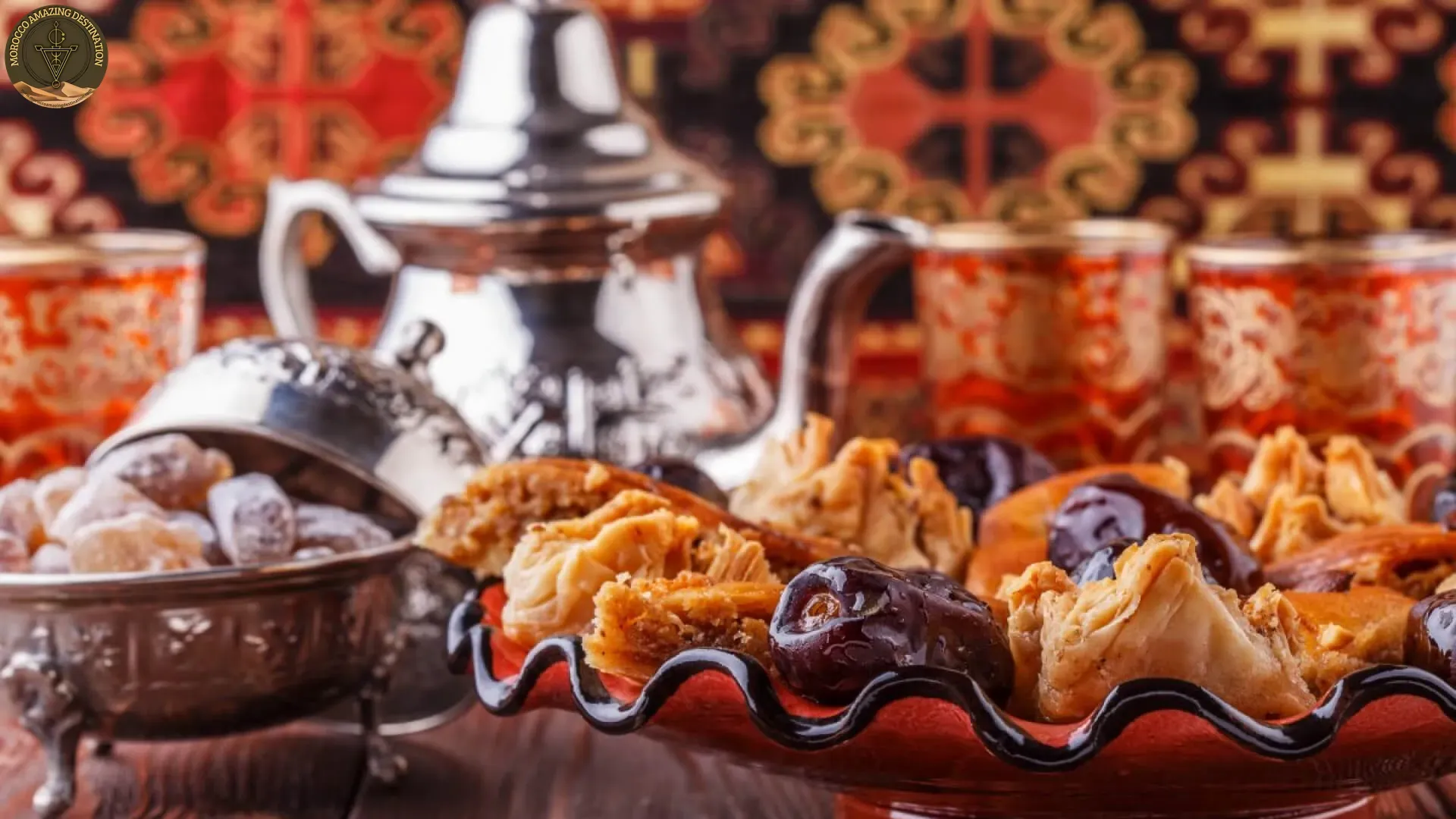
- Sweets and dried fruits: chebakia, dates, figs and almonds laid out for guests and children.
- Mint tea to close: poured high, sipped slowly, with conversation that lasts.
In the Draa and Ziz oases and High Atlas villages, recipes vary house to house. Your host will explain each ingredient, and a private guide helps you arrive as a welcomed guest.
Berber Clothes, Music and Stories - Ahwash, Ahidous and Tahdidt
If food is the anchor, music and dress give Yennayer its color. After the meal, families gather for songs passed down by memory and rhythm. Yennayer celebrations Morocco are intimate rather than staged.
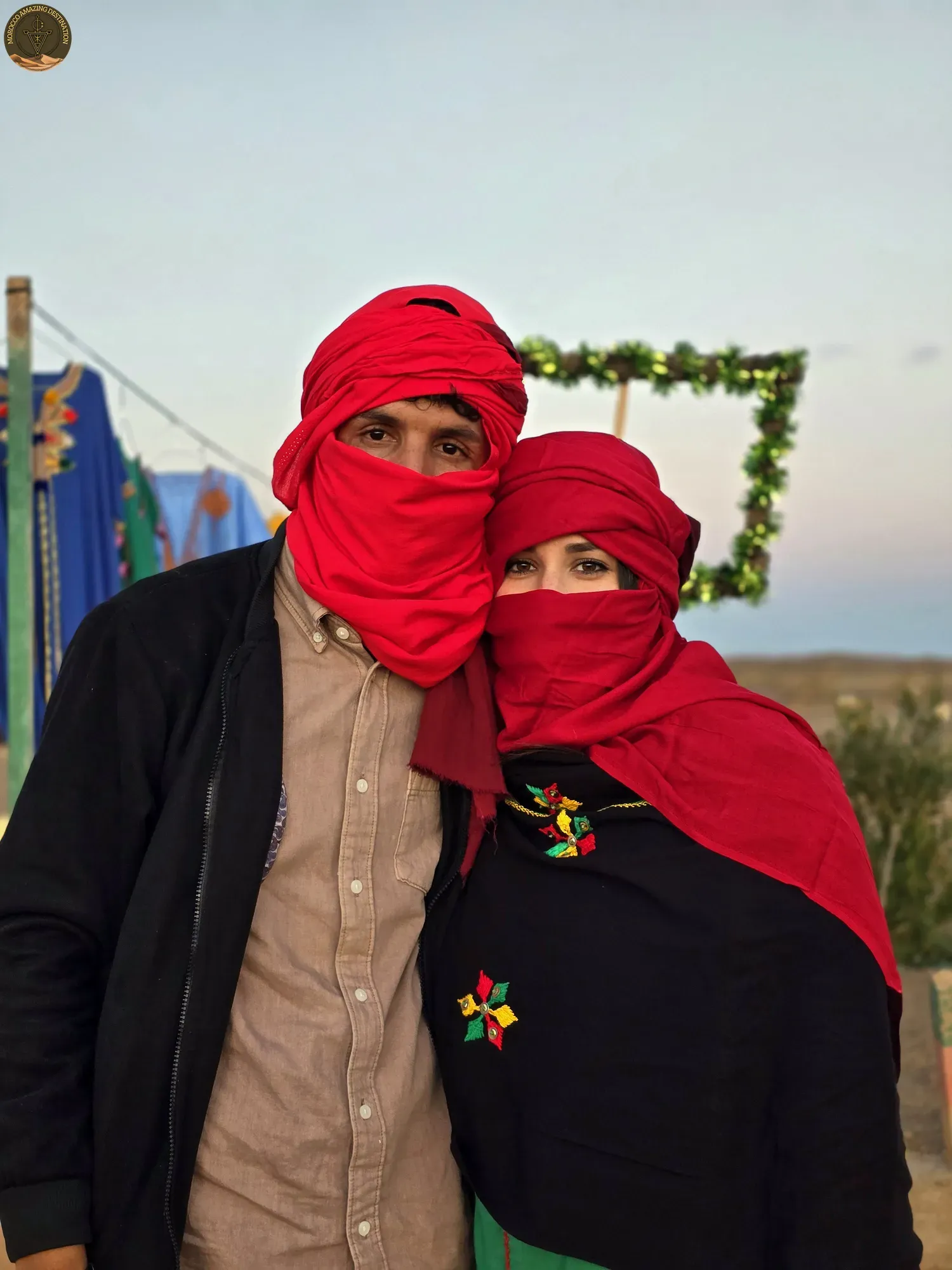
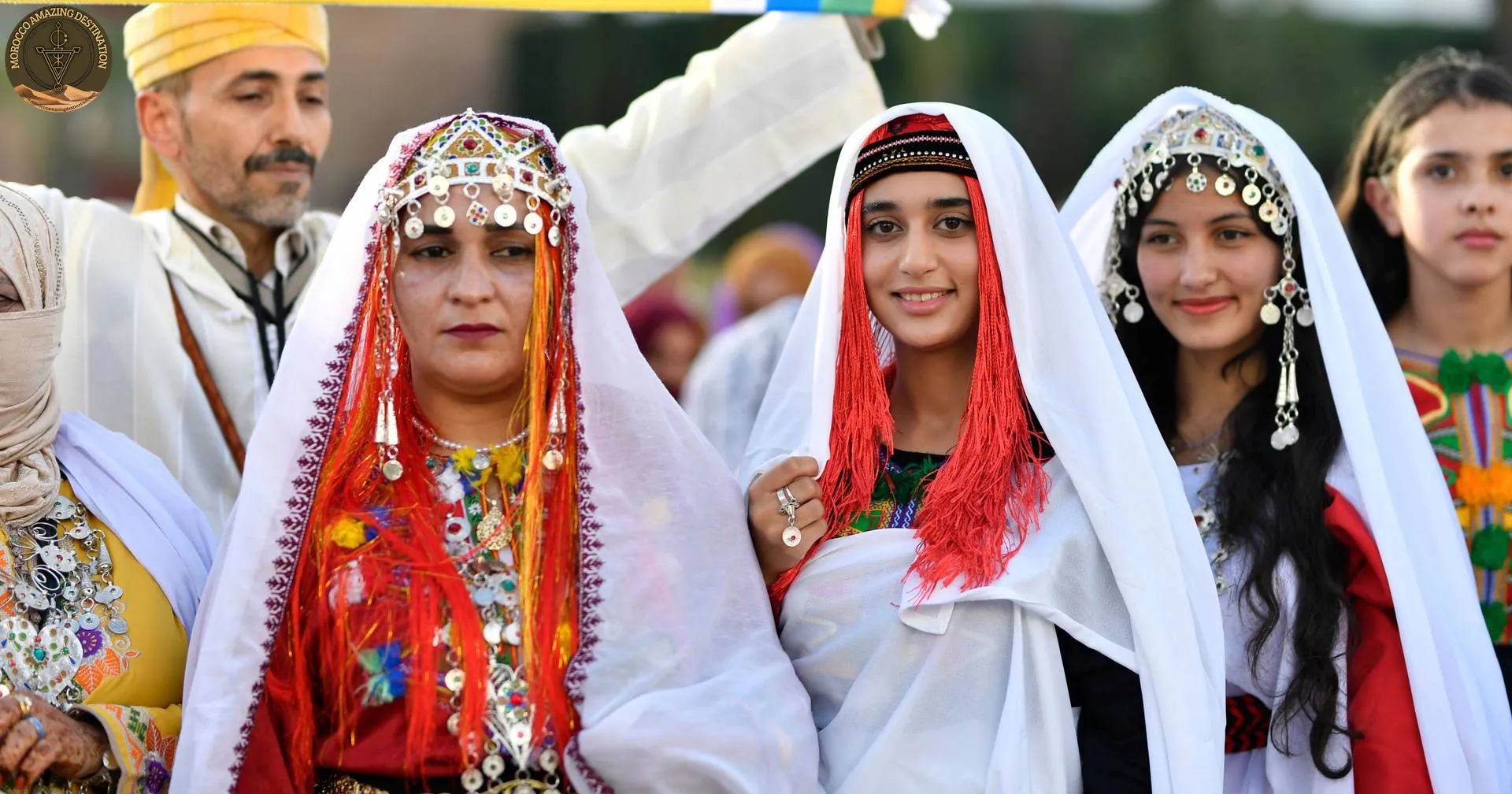
Women often wear Berber clothes with silver fibulae, coral beads and henna patterns. Men may wear wool cloaks and soft slippers, especially in mountain villages where nights turn cool. The look is not costume, it is everyday craft for a special night.
Sounds and stories you may hear:
- Ahwash and ahidous: call-and-response dance circles with drums and handclaps that pull everyone in.
- Tahdidt storytelling: poetic verses and blessings that carry history, humor and advice.
- Silver and henna details: jewelry that signals family origin and henna motifs that wish for protection and plenty.
Stay close to the drum circle and you will be invited to step in. No performance is needed, just presence and respect.
Where Amazigh Culture Lives Year-Round - From High Atlas to Merzouga Desert
Yennayer condenses into one night what Amazigh life carries all year. The High Atlas terraces, the palm corridors of the Ziz and Draa, and the dunes around Merzouga are working worlds, not backdrops.
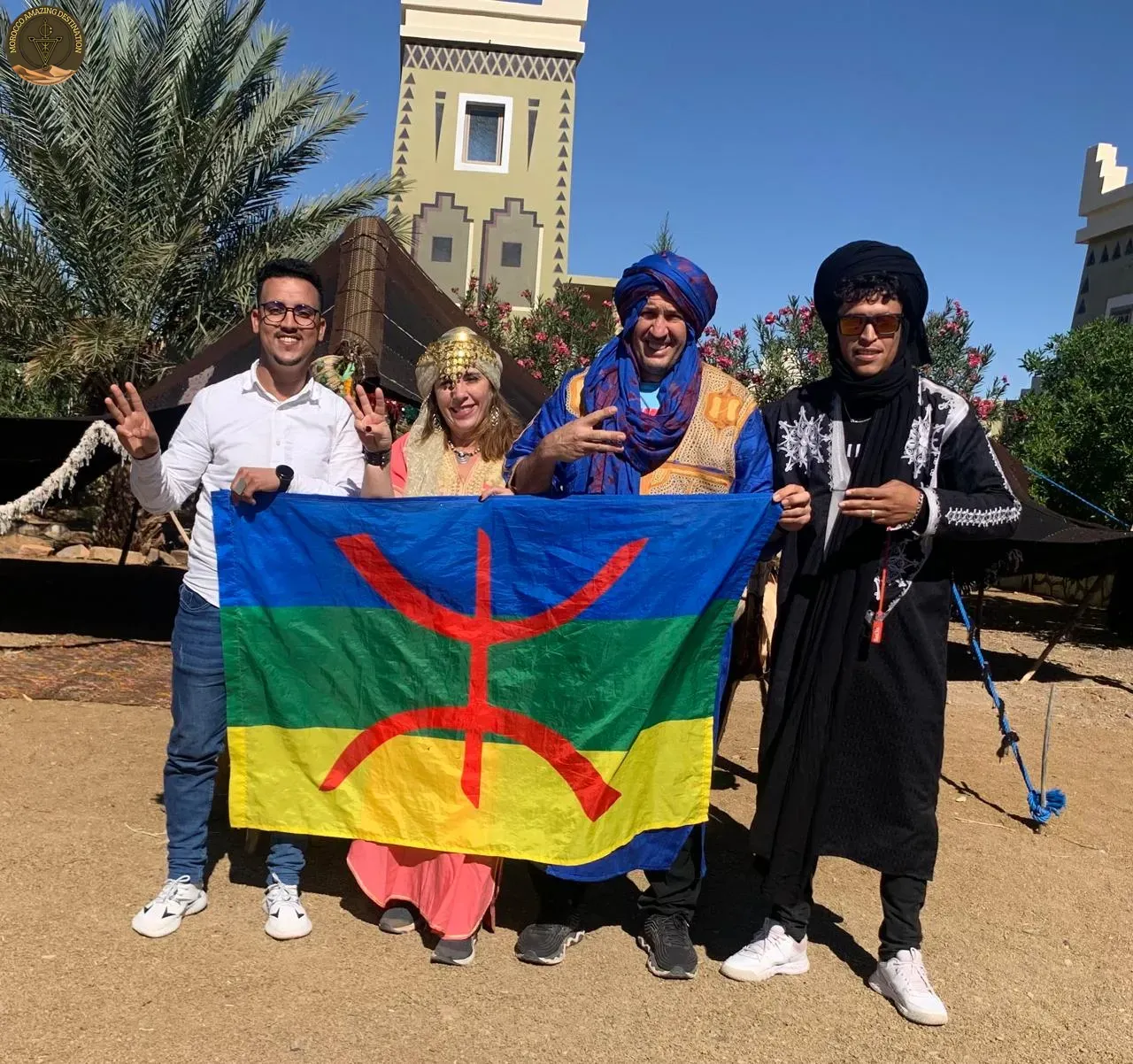
In the High Atlas, stone villages sit above terraced barley and orchards. In the Ziz and Draa, ksour and palm groves follow the river, and date harvest still sets the clock. Around Merzouga, families keep a close bond with the desert, moving between village homes and camp hospitality.
Places where the culture feels close:
- High Atlas villages: stone houses, communal ovens and weaving rooms where carpets hold tribal patterns.
- Ziz and Draa valleys: oasis life centered on water, palms and market days.
- Merzouga dunes: tea in a nomad tent, bread baked in sand, and stars that make stories linger.
Traveling with a private driver keeps these distances comfortable. The same team stays with you, so exchanges stay human and unhurried.
Experiencing Yennayer as a Traveler in January - Private, Local and Unhurried
January is a gentle month to travel. Crowds are light, air is crisp, and Yennayer is family-based, so a local introduction helps. You will not find a single parade to chase.
With a private, tailor-made approach, your days follow the season, not a fixed schedule. Your guides Hassan, Hamid and Andrea work with hand-picked riads and desert camps, so you have time for a second tea, a walk in the palmeraie, or longer with musicians explaining a drum pattern.
Why January works well for this experience:
- Quieter sites and roads: more space in medinas, easier pauses for photos and conversation.
- Comfortable days, cool nights: mild afternoons for walking, with a warm layer needed after sunset, especially near the dunes.
- Respectful access: a local guide helps you join a family meal or village gathering in the right way, at the right hour.
If you travel during Yennayer, let your guide know you would like a cultural evening built around the celebration. There is no need to plan around a public event, the experience is in the home and the village.
Yennayer reminds us Morocco keeps many calendars, and the agricultural year is among the oldest. Arrive with curiosity, leave room for tea and stories.
For a full cultural loop linking north, Atlas and desert, consider the 15-Day Grand Cultural Tour Explore Morocco from Tangier, which can include an Atlas village and Merzouga stay. For a winter itinerary built around dunes and imperial cities, the 8-Day Morocco New Year Tour pairs well with Yennayer.
We can customize a tour to match your needs - design your perfect itinerary
If you found this helpful, add us as your preferred source on Google.
Frequently Asked Questions
When is Yennayer celebrated in Morocco?
Yennayer is celebrated in mid-January, with the official public holiday observed on January 14 in Morocco. Families gather on the eve, often January 12 or 13 depending on the region, to share the festive meal and welcome the new agricultural year.
What does Yennayer mean and what is the Amazigh calendar?
Yennayer marks the first month of the Amazigh agricultural calendar, a solar calendar rooted in the Julian system used for farming seasons. The Amazigh year count runs about 950 years ahead of the Gregorian calendar, so the period around January corresponds to the new year in the Amazigh system.
How is Yennayer celebrated in Morocco?
Families prepare Imensi n Yennayer, with tagola porridge and a seven-vegetable couscous, sweets and dried fruits, then share music and dance such as ahwash and ahidous. Many wear Berber clothes with silver jewelry and henna, and elders share tahdidt stories and blessings for abundance.
Can travelers experience Yennayer in Morocco?
Yes, travelers can experience Yennayer through family meals, local music, and village gatherings, especially in the High Atlas, Ziz and Draa valleys, and around Merzouga. A private tour with a local driver and guide makes it easy to join respectfully during the quieter January season.
Ready for an Adventure?
Have questions? Feel free to contact us using the form below. We're here to help!