· Travel · 6 min read
A.D. The Bible Continues Filming Locations: Morocco Guide
Discover A.D. The Bible Continues filming locations in Morocco — Ouarzazate studios, desert sets and Ait Benhaddou — and how to visit them.
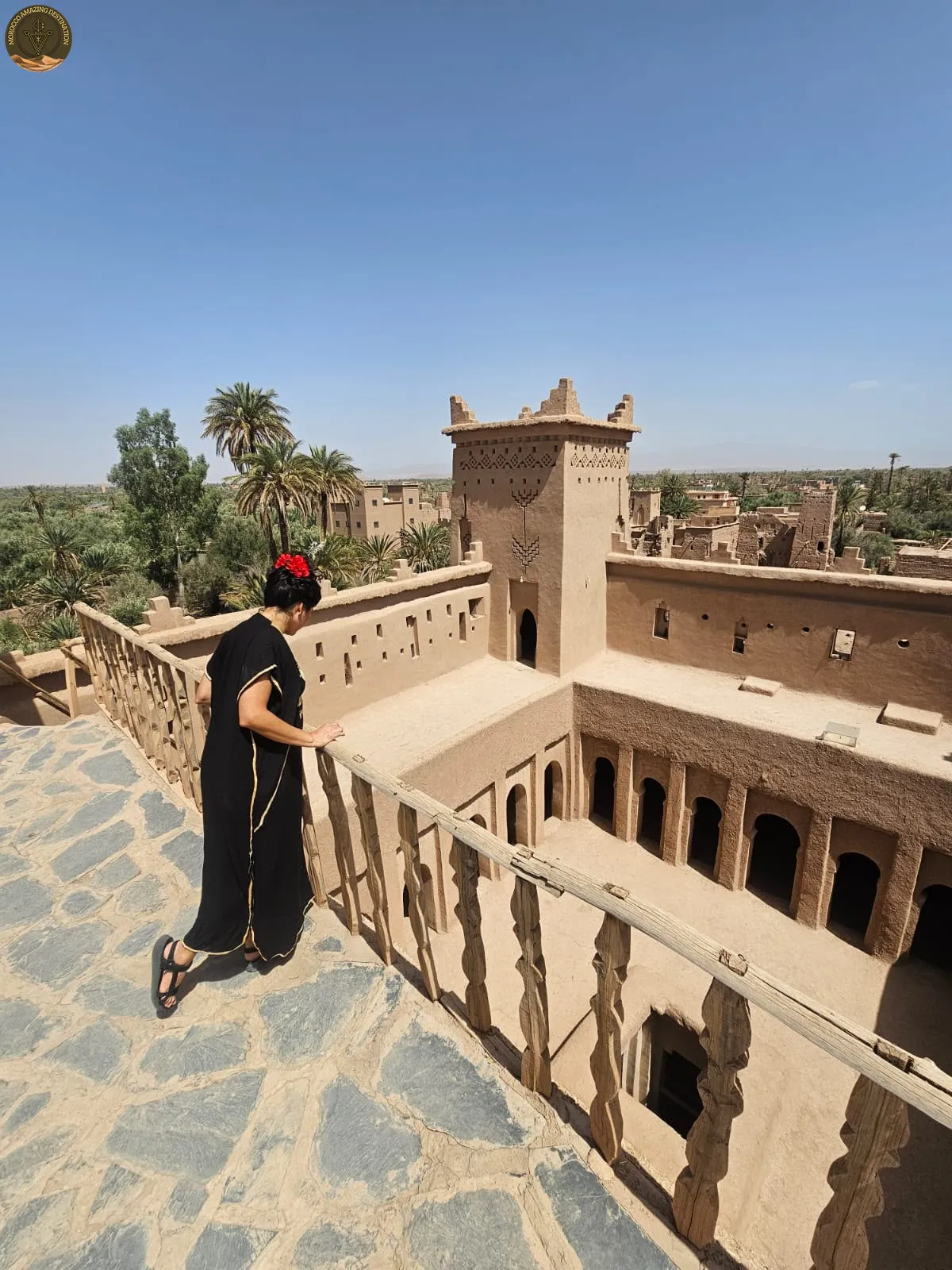
Looking for the real desert and ancient streets behind the biblical drama? The A.D. The Bible Continues filming locations bring Jerusalem and Judea to life not on a distant soundstage, but in the warm light and clay walls of southern Morocco. A.D. The Bible Continues Morocco filming locations were centered on Ouarzazate, where studios and open desert let the crew build temples, crowds and holy sites at full scale.
In this guide, we will break down where A.D. The Bible Continues was filmed in Morocco, which studios and areas doubled for Jerusalem, and how you can visit them on a smooth private route.
Why Jerusalem Was Rebuilt in Morocco
The series needed to show the early church under pressure in Jerusalem, with dense streets, a grand temple and desert margins nearby. Morocco offered the right mix of light, space and craft. Ouarzazate provides year-round sun, vast flat desert for large builds and a pool of skilled local artisans who can shape earth, wood and stone into ancient worlds quickly.
Producers described Morocco as a way to move fast while keeping large crowd scenes authentic and controlled. The basin around Ouarzazate sits between the High Atlas and the Sahara fringe, so palm oases, rocky hamadas and earthen villages sit within short drives. That compact geography lets a single base double for multiple biblical settings without long transfers. The international title A.D. Kingdom and Empire refers to the same Morocco shoot.
For travelers the takeaway is simple. You do not need to chase sites across the country. One hub with short links covers the core of what you see on screen, and a private driver keeps the story coherent while you enjoy hand-picked riads and unhurried stops.
Ouarzazate Film Studios — Atlas, CLA and Oasis
A.D. The Bible Continues Ouarzazate Atlas Studios work anchors the show. Atlas Corporation Studios sits about five kilometers west of the city on the Route de Marrakech, with more than twenty hectares of desert and mountain backlots. Its footprint includes standing Egyptian, Roman and biblical streets that can be redressed for Jerusalem.
The production also used CLA Studios and Oasis Studios nearby. CLA, paired operationally with Atlas, provided additional stages and the Egyptian-style entrances often seen in making-of stills. Oasis supplied stages and workshop support for the same period. Together the three sites gave the crew room to build Herod’s Temple, dense urban lanes and courtyard interiors while keeping desert exteriors minutes away.
What to expect on a studio visit:
- Atlas Corporation Studios: Vast open backlot with decaying and refreshed sets, mountain horizons and guided tours included with entry.
- CLA Studios: Adjacent lot with complementary stages and gates, often toured in tandem with Atlas for a fuller picture.
- Oasis Studios and desert fringe: Workshop base plus immediate access to dunes and hamada used for crucifixion hill, palm oases and the temporary temple set.
Wear sun protection and closed shoes. Sets change with each production cycle, so treat the tour as a living backlot rather than a single frozen scene, and ask your guide which facades served Jerusalem for this title.
Ait Benhaddou Area — Tomb, Temple Textures and Ancient Streets
The only village corridor named in on-set reporting for this title is the Ait Benhaddou area. A New York Daily News piece filed from the ksar describes draped figures carrying Jesus down a hillside to a tomb carved into the stone slope at Ait Benhaddou, and separately notes Herod’s Temple built as a large set in the Ouarzazate desert for an earthquake sequence.
The UNESCO World Heritage site of Ait Benhaddou is a fortified ksar of pisé and stone, set on a historic caravan route above the Ounila River. Its stepped lanes, earth walls and hilltop agadir give a ready-made Jerusalem texture, while the surrounding slopes provide the tomb hillside seen in the coverage. Keep expectations precise and say Ait Benhaddou area rather than a single alley, since the desert temple build sat nearby rather than inside the ksar lanes.
Highlights to look for when you walk the ksar:
- Hillside above the ksar: The stone slope linked to the tomb site in the on-location report.
- Stepped lanes and gates: Dense earthen streets that read as Jerusalem quarters on camera.
- Agadir viewpoint: Hilltop granary with the classic panorama across the Ounila Valley toward Ouarzazate.
Go early or late for soft light and cooler walking. Treat the ksar as a living heritage site as well as a backdrop, and linger with a local guide who can point out building craft and caravan history between takes.
Desert Sets Around Ouarzazate — From Crucifixion Hill to Open Sands
Beyond the studio walls, open desert supplied the scale for key biblical moments. The crew built a crucifixion hill, palm-fringed approaches and a temporary Herod’s Temple on flat desert near Ouarzazate that was designed to crumble in the earthquake scene. Those builds sat a short drive from the studios, not in distant dunes or other cities, so the film map stays tight to the Ouarzazate radius.
This is why Morocco doubles Jerusalem so well. Hard desert light, clean horizons and earthen architecture sell antiquity without heavy effects, and the crew can stage hundreds of extras safely with room to move cameras. Reports note around six hundred local artisans were employed over many months to craft sets, costumes and props, which speaks to the hands-on craft you still feel on a studio tour.
For your own visit, think in loops rather than one-way sprints. Studio to desert fringe to ksar forms a triangle you can cover in a day from Ouarzazate, or as a relaxed two-day spread with sunset at the ksar and sunrise over the backlot. A private vehicle and a licensed guide keep timing flexible, so you linger where the light is best and skip what is closed for active shooting.
Visit the A.D. Filming Locations on a Private Tour
You do not need a crew badge to follow this story. The A.D. The Bible Continues filming locations sit along one smooth corridor, and a tailor-made route links studios, desert and ksar with comfort and clarity. A private driver handles the Tizi n’Tichka and desert tracks, a local guide reads the architecture and set craft, and hand-picked riads and a luxury desert camp option let you rest well between scenes.
For a focused film and heritage loop, consider the 4-Day Guided Morocco Tour from Ouarzazate to Marrakech, which centers on Ouarzazate with Atlas Studios and the UNESCO World Heritage site of Ait Benhaddou before crossing the Atlas to Marrakech. If you want desert nights woven in, the 4-Day Morocco Desert Tour from Ouarzazate pairs the studio and ksar corridor with dunes, gorges and oasis valleys in one seamless arc.
We can customize a tour to match your needs — design your perfect itinerary
If you found this helpful, add us as your preferred source on Google.
Frequently Asked Questions
Where was A.D. The Bible Continues filmed?
Almost entirely in Morocco, centered on Ouarzazate. The production used Atlas Studios, CLA Studios and Oasis Studios plus the surrounding desert and the Ait Benhaddou area to double for Jerusalem and Judea.
Was A.D. The Bible Continues filmed at Ait Benhaddou?
Yes, in the Ait Benhaddou area. An on-location report describes the tomb carved into a stone hillside at Ait Benhaddou and links the ksar corridor to Jerusalem street textures, alongside desert sets near Ouarzazate.
Which studios in Ouarzazate were used for A.D. The Bible Continues?
Atlas Corporation Studios west of Ouarzazate, CLA Studios and Oasis Studios. Atlas provided the largest desert backlot and standing ancient-world sets, while CLA and Oasis supplied additional stages and support for large crowd and temple builds.
Can you visit the A.D. The Bible Continues filming locations?
Yes. Atlas and CLA Studios offer guided tours, the desert surrounds are a short drive away, and the UNESCO World Heritage site of Ait Benhaddou lies about 30 minutes from Ouarzazate via the Ounila Valley — all easy to link on a private tour with driver and local guide.
Ready for an Adventure?
Have questions? Feel free to contact us using the form below. We're here to help!