Morocco Amazing Destination
Volubilis, Moulay Idriss & Imperial Meknes Day Trip from Fes: A Complete Guide
Explore Volubilis Roman ruins, Moulay Idriss holy town, and imperial Meknes on a guided day trip from Fes. Your complete guide with itinerary, tips, and history.
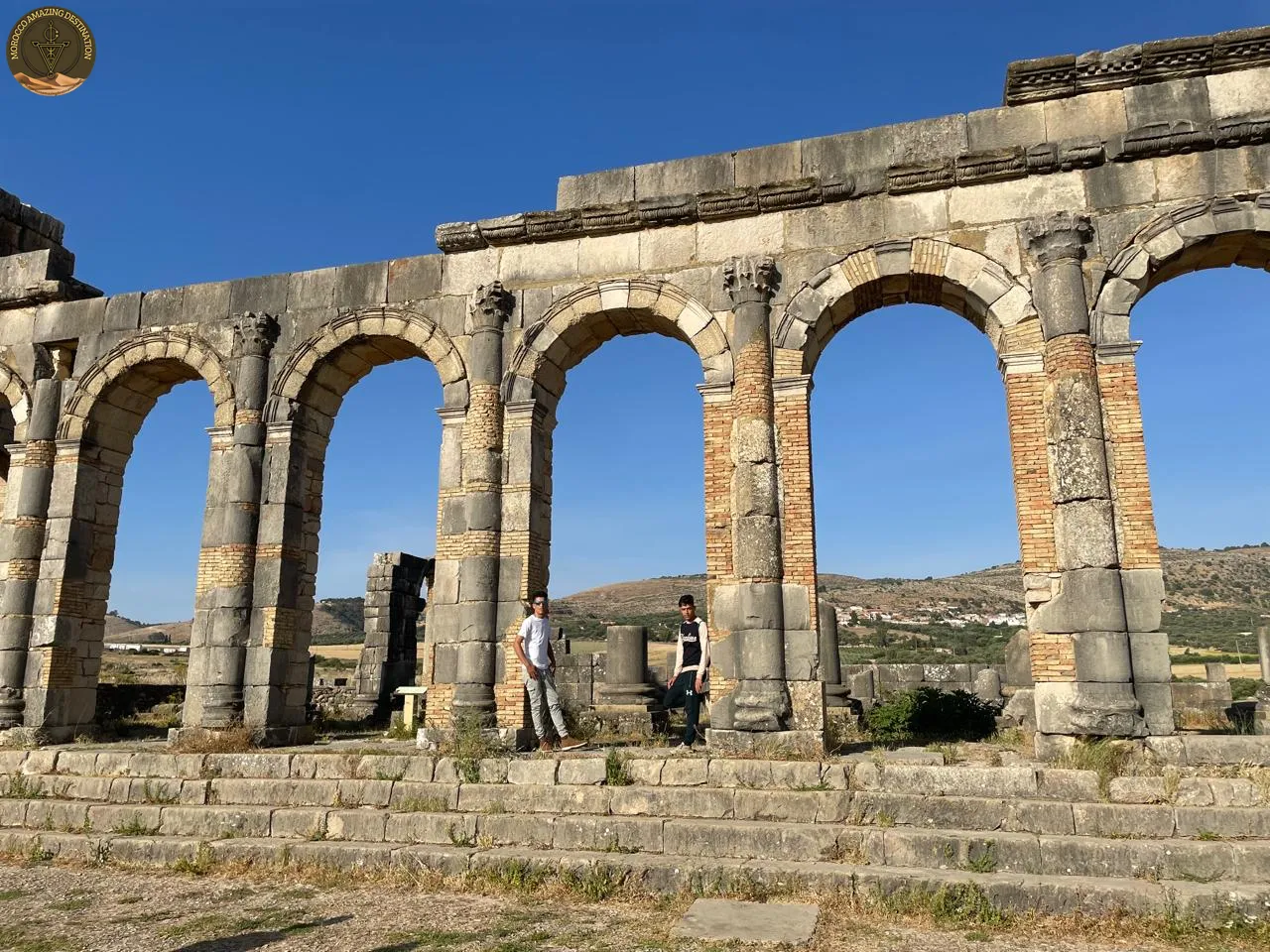
Few travel experiences deliver three millennia of history in a single day. A Volubilis day trip from Fes does exactly that — taking you from the grandeur of the Roman Empire to the spiritual heart of Moroccan Islam and, finally, to the imperial power of the 17th-century Alaouite dynasty. In less than 10 hours door-to-door, you can walk among brilliantly preserved Roman mosaics, climb to a panoramic viewpoint over Morocco’s holiest town, and stand before one of the most magnificent gates in North Africa — all while being back in Fes in time for a late dinner.
This Volubilis, Moulay Idriss & Meknes day trip from Fes is the single most rewarding excursion you can take from Morocco’s spiritual capital. Here is everything you need to know to plan it, from the historical context to the practical details that make the difference between a rushed checklist and an unforgettable day.
Why This Day Trip Deserves Your Time
Some day trips give you one highlight. This one gives you three — each belonging to a different era, a different empire, and a different side of Morocco. Here is why it belongs on your itinerary:
- Three UNESCO-worthy sites in one day. Volubilis is a UNESCO World Heritage Site. Meknes is one of Morocco’s four imperial cities. Moulay Idriss is the country’s holiest town and the birthplace of Moroccan Islam. No other day trip from Fes packs this much historical and cultural depth into a single route.
- Incredible accessibility. All three sites sit within a compact 30-kilometer triangle less than 90 minutes from Fes. The drives between them are short, scenic, and stress-free — through olive groves and rolling farmland with the Zerhoun massif rising in the distance.
- Fewer crowds. Compared to the busy Marrakech day-trip circuit, the Fes–Meknes axis remains refreshingly uncrowded. You will share Volubilis with a handful of other travelers, not busloads, and Moulay Idriss still feels like a genuine Moroccan town going about its daily life.
- A complete Moroccan story. In one day you touch the Roman, Idrisid, and Alaouite dynasties — the three forces that shaped northern Morocco. This is not just sightseeing; it is a journey through the layers of Moroccan civilization.
Stop 1: Volubilis — Morocco’s Best-Preserved Roman Ruins
Perched on a fertile plateau at the foot of Mount Zerhoun, Volubilis is the most impressive Roman archaeological site in Morocco and a UNESCO World Heritage Site since 1997. Founded in the 3rd century BC, it grew from a Berber settlement into a prosperous Roman city — the capital of the province of Mauretania Tingitana — fueled by olive oil production and trade with Rome. At its peak, it was home to some 20,000 people. Today, walking through its ruins is the closest you can get to stepping into a Roman provincial city in North Africa.
What to See at Volubilis
The site is compact and walkable, but there is a lot to take in. Here are the must-see highlights:
- The House of Orpheus. The undisputed star of Volubilis. Its dining room floor contains a stunning mosaic depicting Orpheus playing his lyre to a circle of enchanted animals — dolphins, birds, lions, and elephants — rendered in remarkably vivid detail. This is the mosaic you see in every guidebook and for good reason.
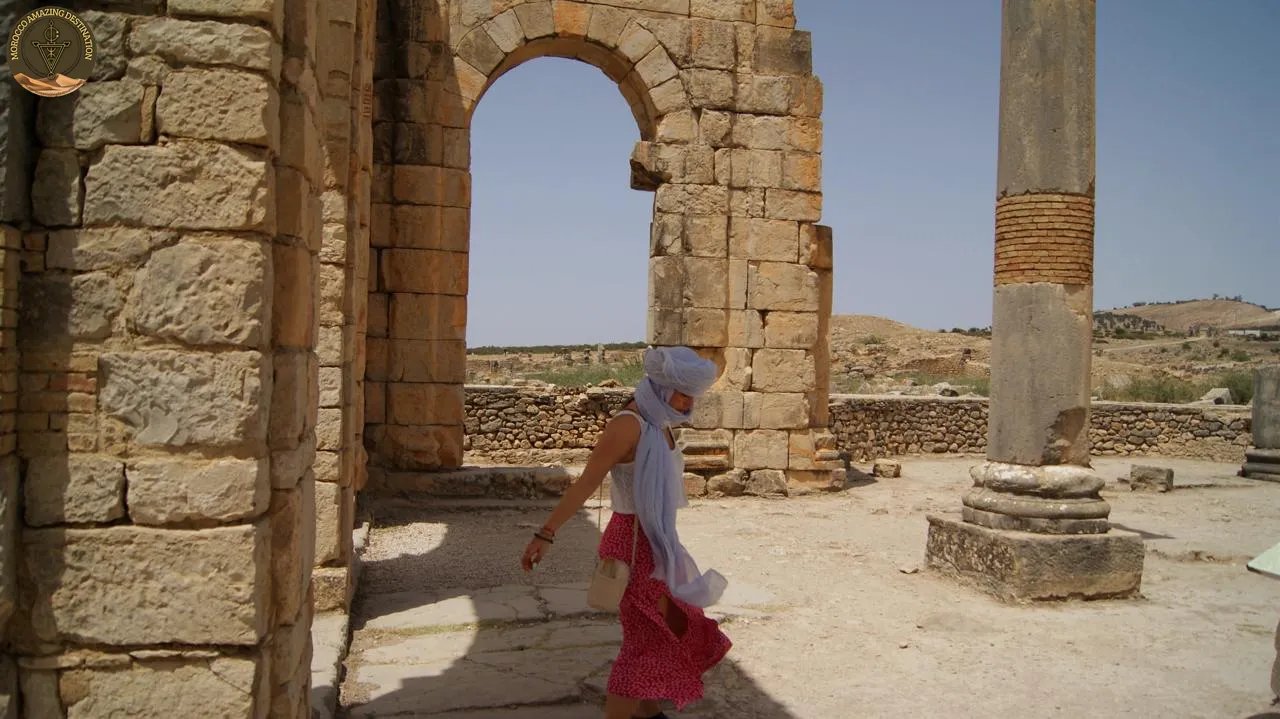
- The Triumphal Arch of Caracalla. Built in AD 217 to honor the emperor Caracalla and his mother Julia Domna, this marble arch stands at the top of the Decumanus Maximus (main street) and serves as the iconic focal point of the site. It is the single most photographed structure in Volubilis.
- The House of the Labors of Hercules. Another outstanding mosaic cycle illustrating the twelve labors of Hercules. The scenes are detailed and surprisingly well-preserved — look for the Nemean lion and the Cretan bull.
- The Decumanus Maximus. Walk the main colonnaded street from the Tangier Gate to the Triumphal Arch. You will pass the remains of shops, oil presses, fountains, and the public baths along what was once a bustling Roman thoroughfare.
- The Capitol and Basilica. The religious and administrative heart of Roman Volubilis, set at the high point of the city. Even in ruins, the scale of the basilica’s columns and the capitol’s podium convey the civic ambition of this frontier city.
- The House of the Ephebe. Look for its mosaic of Bacchus riding a chariot drawn by panthers. The house takes its name from a bronze statue of a young man — the eponymous ephebe — found here and now displayed at the Rabat Archaeological Museum.
Practical Tips for Volubilis
- Start early. The site opens at 8:30 AM and has virtually no shade. Morning light is also far better for photography, with the Zerhoun mountain providing a dramatic backdrop.
- Hire a local guide. Licensed guides wait at the entrance and charge around 100 MAD (€10). They bring the ruins to life with stories about Roman daily life, the olive oil economy, and the meaning behind the mosaics. A good guide is worth every dirham.
- Entrance fee. 70 MAD (€7) for foreign visitors. Students with a valid card get a discount.
- Allow 1.5 to 2 hours for a thorough visit. If you are passionate about Roman history or photography, budget closer to 2.5 hours.
Stop 2: Moulay Idriss Zerhoun — Morocco’s Holiest Town
Just 5 kilometers uphill from Volubilis lies Moulay Idriss Zerhoun, one of the most significant religious sites in Morocco. Founded in AD 789 by Moulay Idriss I — the great-grandson of the Prophet Muhammad — this is the town where Islam first took root in Morocco and where the Idrisid dynasty, the country’s first Islamic ruling family, was born.
The town clings to two hillsides in a cascade of whitewashed houses, green-tiled roofs, and narrow stairways. Its visual drama rivals any Mediterranean hillside village, but the atmosphere here is distinctly Moroccan and deeply spiritual. Until 2005, non-Muslims were not permitted to stay overnight. Today, the town welcomes all visitors, and while the mausoleum remains off-limits to non-Muslims, Moulay Idriss offers a rare glimpse into a side of Morocco few travelers ever see.
What to Do in Moulay Idriss
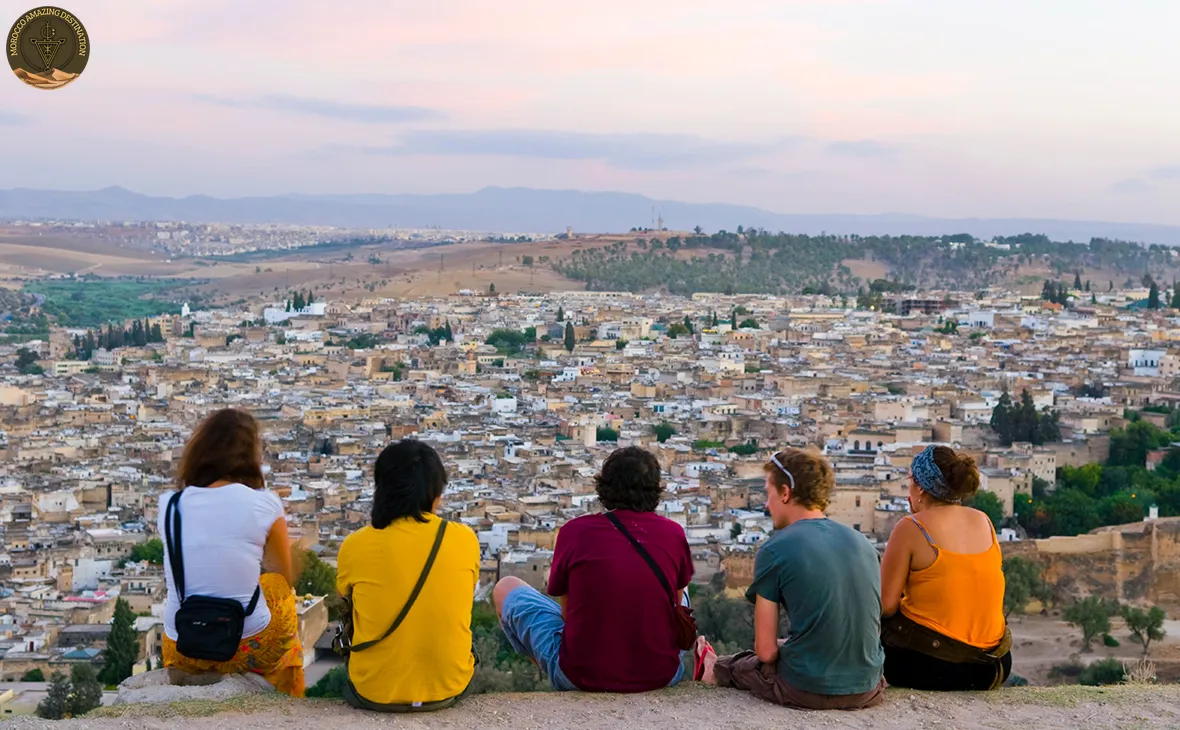
- Climb to the Grande Terrasse. This hilltop viewpoint above the medina delivers the best panoramic view of the town — a sea of white cubes nestled between two green peaks with the Zerhoun mountain behind. Reach it by following the signs from the main square; it is a 10- to 15-minute uphill walk. Go in the mid-morning for the best light.
- Wander the medina. Moulay Idriss has two small, intertwining medinas — Khiber and Tasga — built on the town’s two hills. They are compact, genuine, and completely free of tourist shops. You will see bakers pulling bread from wood-fired ovens, children playing in the alleyways, and butchers, grocers, and spice merchants serving the local community. It is the most authentic medina experience in the region.
- See the Mausoleum of Moulay Idriss I (from the outside). The green-tiled pyramid roof of the mausoleum is visible from several vantage points in town. The surrounding square and the entrance portal are accessible to all. The mausoleum is the final resting place of the founder of Morocco’s first Islamic dynasty and a site of national pilgrimage — you will see Moroccans coming from across the country to pay their respects.
- Notice the cylindrical minaret. The mosque next to the mausoleum features a rare cylindrical minaret — the only one of its kind in Morocco. It is a remnant of earlier Islamic architectural styles that makes Moulay Idriss architecturally distinctive.
- Have lunch. Moulay Idriss has a handful of simple, family-run restaurants serving excellent Moroccan home cooking. Try a traditional tagine or brochette grilled over charcoal. The restaurant with a terrace just off the main square is a reliable choice with good views over the town.
Stop 3: Meknes — The Versailles of Morocco
From Moulay Idriss, it is a 30-minute drive to Meknes, the youngest of Morocco’s four imperial cities and perhaps the most underrated. Built in the 17th century by Sultan Moulay Ismail — a contemporary of Louis XIV — Meknes was designed on a monumental scale to project the power of the Alaouite dynasty. Its nickname, “The Versailles of Morocco,” is well earned. Unlike Marrakech or Fes, Meknes remains relatively uncrowded, allowing you to explore its imperial monuments at a relaxed pace.
What to See in Meknes
- Bab Mansour Gate. Completed in 1732, this is one of the most beautiful gates in North Africa — and arguably the world. Its horseshoe arch is framed by intricate zellij tilework, carved stucco, and black Arabic calligraphy against green ceramic tiles. The gate faces Place el-Hedim, Meknes’s vast central square, which fills with street performers, food stalls, and local families in the late afternoon. Walk through the gate into the medina, then come back and simply stand in front of it for a few minutes — the scale and craftsmanship are humbling.
- Heri es-Souani (Royal Granaries and Stables). Moulay Ismail’s most staggering engineering project. The granaries could store 20 years’ worth of grain, and the adjoining stables housed up to 12,000 horses. The granary hall — a vast, cathedral-like space of thick walls and arched ceilings designed for natural climate control — is the highlight. It is cool, silent, and almost otherworldly. Entrance fee: 70 MAD (€7).
- Mausoleum of Moulay Ismail. One of the few religious sites in Morocco open to non-Muslims, this beautifully restored complex features serene courtyards with zellij tiles, carved stucco, and a green-tiled sanctuary where the sultan is buried. The atmosphere is one of quiet reverence. Dress modestly (covered shoulders and knees) out of respect. Entrance is free, but a small donation to the guardian is appreciated.
- Dar Jamai Museum. Housed in a stunning 19th-century palace, this museum showcases Moroccan decorative arts — ceramics, jewelry, textiles, and woodwork — in a setting that is itself a work of art, with an Andalusian-style garden courtyard. Closed on Tuesdays. Entrance fee: 20 MAD (€2).
- Explore the medina. Meknes’s medina is smaller and far less confusing than Fes el-Bali. Enter through Bab Mansour and wander the souks — you will find a fantastic food market, spice stalls, and artisans working with metal and wood. The Rue Dar Smen is the main artery leading into the heart of the medina. Shopping here is generally more relaxed and less aggressively competitive than in Fes or Marrakech.
Your Day Trip Itinerary: Hour by Hour
Here is a proven timeline that maximizes your time at each site while keeping the pace comfortable:
- 8:00 AM — Depart Fes. Your driver meets you at your riad or hotel. The drive to Volubilis takes about 90 minutes through the Saïss Plain, with views of olive groves and the Middle Atlas foothills.
- 9:30 AM — Arrive at Volubilis. The site is quietest first thing in the morning. Hire a guide at the entrance and spend 1.5 to 2 hours exploring the mosaics, the Triumphal Arch, and the main street.
- 11:30 AM — Drive to Moulay Idriss (5 minutes). Park at the entrance to town and walk up to the Grande Terrasse viewpoint. Spend 30 minutes exploring the medina and photographing the mausoleum from the outside.
- 12:30 PM — Lunch in Moulay Idriss. A leisurely tagine on a terrace overlooking the town. Budget about an hour.
- 1:30 PM — Drive to Meknes (30 minutes). Your driver drops you at Place el-Hedim, right in front of Bab Mansour.
- 2:00 PM — Explore Meknes. Spend 3 to 3.5 hours visiting Bab Mansour, Heri es-Souani, the Mausoleum of Moulay Ismail, and the medina. If you are short on time, prioritize Bab Mansour, the granaries, and the mausoleum. If you want to browse the souks or visit the Dar Jamai Museum, add an extra 30 to 60 minutes.
- 5:30 PM — Depart Meknes. The drive back to Fes takes about 1 hour.
- 6:30 PM — Arrive back in Fes. In time to relax, freshen up, and head out for a well-earned dinner.
Total time door-to-door: approximately 10.5 hours. The pace is full but never rushed — you have quality time at each site and never feel like you are racing a clock.
Practical Tips for Your Day Trip
- Transport. The most convenient option is a private driver from Fes for the day. Your riad or hotel can arrange one, or you can book through a tour operator. Expect to pay 600 to 900 MAD (€55 to €85) for a private vehicle and driver for the full day. This gives you complete flexibility on timing and stops. Grand taxis go to Meknes but cannot take you between Volubilis and Moulay Idriss efficiently — a private driver is the smarter choice for this route.
- Guide. A knowledgeable driver-guide who can accompany you for the entire day adds tremendous value. They explain the history, handle entrance fees, recommend lunch spots, and ensure you navigate efficiently. Many tour operators in Fes offer this as a package.
- What to wear. Comfortable walking shoes are essential — Volubilis has uneven stone paths and you will be on your feet most of the day. Bring a hat, sunglasses, and sunscreen for Volubilis (no shade). Layers work well: a light jacket is useful for the morning drive, and you will want to remove it by midday. For the Mausoleum of Moulay Ismail, dress modestly with covered shoulders and knees.
- What to bring. A reusable water bottle (you can refill it at lunch), cash in Moroccan dirhams for entrance fees, lunch, guide tips, and any handicrafts you might buy in the Meknes medina, and a fully charged phone or camera — every site on this trip is remarkably photogenic.
- Best time to visit. Spring (March–May) and autumn (September–November) are ideal, with daytime temperatures between 20°C and 28°C (68°F–82°F). Summer visits are best started an hour earlier (7:00 AM departure) to beat the midday heat at Volubilis.
- Entrance fees summary. Volubilis is 70 MAD (€7), Heri es-Souani is 70 MAD (€7), Dar Jamai Museum is 20 MAD (€2). The Mausoleum of Moulay Ismail is free. A Volubilis guide costs approximately 100 MAD (€10).
- Lunch cost. Budget around 80 to 120 MAD (€8 to €12) per person for a sit-down tagine lunch with drinks, especially in Moulay Idriss where prices are reasonable.
Ready to Step Through 2,000 Years of History?
A Meknes and Volubilis day trip from Fes is not just a sightseeing checklist — it is a journey through the layers of Moroccan civilization. In a single, comfortable day you walk the streets of a Roman provincial capital, stand in the town where Moroccan Islam was born, and enter the monumental gates of an imperial city built to rival Versailles. Few day trips anywhere in the world offer this density of history, culture, and sheer visual beauty.
Whether you are a history enthusiast, a photographer, or a traveler who simply wants to see the very best of northern Morocco, this Volubilis, Moulay Idriss and Meknes day tour delivers an experience that stays with you long after you return to the alleyways of Fes.
Extend Your Moroccan Adventure
If this day trip has whetted your appetite for more, consider one of these multi-day tours departing from Fes:
-
2-Day Desert Tour from Fes to Merzouga → — Cross the Middle Atlas, pass through the Ziz Valley palm groves, ride a camel across the Erg Chebbi dunes at sunset, and spend the night in a luxury Berber desert camp under an ocean of stars. The perfect short Sahara escape.
-
7-Day Morocco Tour from Fes → — The complete northern Morocco itinerary. Journey from Fes through the Sahara Desert, revisit Meknes and Volubilis with more time to explore, wander the blue streets of Chefchaouen, and discover the imperial grandeur of Rabat. Seven unforgettable days covering culture, nature, and landscapes.
Prefer a custom itinerary? We design private tours tailored to your interests, pace, and travel dates — get in touch to plan your personalized Moroccan adventure.
Frequently Asked Questions
How far are Volubilis and Meknes from Fes?
Volubilis is approximately 80 kilometers (50 miles) from Fes, about a 1.5-hour drive. Meknes is roughly 60 kilometers (37 miles), about 1 hour. Moulay Idriss is just 5 kilometers beyond Volubilis. All three are easily reachable in a single day trip from Fes.
Can I visit Volubilis, Moulay Idriss, and Meknes in a single day?
Yes, absolutely. This is one of the most popular day trips from Fes. Start at Volubilis in the morning when temperatures are cooler, spend a couple of hours exploring the Roman ruins, then visit Moulay Idriss for a stroll and panoramic views, and finish the afternoon in Meknes exploring its imperial monuments, medina, and enjoying dinner before returning to Fes by early evening.
Do I need a guide at Volubilis?
While you can explore Volubilis independently with a map, hiring a licensed local guide at the entrance (around 100 MAD / €10) brings the ruins to life. Guides explain the stories behind the mosaics, daily life in Roman Mauretania, and architectural details you would otherwise miss. For the best experience, a private driver-guide from Fes can accompany you for the entire day.
Can non-Muslims visit Moulay Idriss Zerhoun?
Yes, the town of Moulay Idriss Zerhoun is fully open to all visitors. While non-Muslims cannot enter the mausoleum of Moulay Idriss I, you can explore the town's charming streets, visit the Grande Terrasse viewpoint for panoramic photos, and enjoy the authentic, untouristed atmosphere. The town is known for its warm hospitality and has become much more welcoming to international visitors in recent years.
What is the best time of year for this day trip?
Spring (March–May) and autumn (September–November) offer the most pleasant temperatures for exploring Volubilis, which is an open-air site with limited shade. Summer months (June–August) can be very hot at the ruins — if visiting in summer, start early and bring plenty of water, sunscreen, and a hat. Winter is mild and perfectly fine, though mornings can be chilly. The site is open year-round.
What our travelers say
Reviews from TripAdvisor
The best tour guide you'll find!
I don't normally give reviews let alone 5 star ones but Hassan and his team have gone so far above my expectations from a tour company I thought they more then deserved it. As a Solo traveler I was or course concerned about safety. So what made me go with them? Morocco amazing destinations was responsive on the phone transparent and fair with their prices, but it was more than that. They gave me traveling tips and we're always a phone call away if I had a question or needed a place to stay. Unfortunately the first few days of my trip I was sick I wasn't feeling well enough to start the tour when I communicated this to the company their primary concern was me feeling better and enjoying my trip and they didn't even ask for a compensation fee even though they had driven all the way out there. I was really touched by this and called them a couple days later to continue the tour. The tour guide takes you in like one of his family showing you his home his community and tradition. Something I can say as an American we don't really have an abundance. The openness of the people to share what they have connect to you and how they live with one another was really an experience for me. If any of what I'm saying speaks to you book your tour with them and no further for a good experience in Morocco.


Do you want Quality Service? Would you like to feel welcomed? Choose this company, you won't be disappointed 🙏🏾🫶🏾
If I could rate this company with 20 stars that would not be enough!!! From the moment we arrived they treated us with so much respect and you can tell they take pride in the service they provide. Hamid my expert driver and friend was nothing short of extraordinary. His attention to detail and character blew me away. I found myself getting emotional any time he would go above and beyond to ensure my comfortability. Hamid I cannot thank you enough, you my friend are something special. To your boss Hassan, thank you for pairing me with this talented young man. We will be back God willing in July but ONLY if Hamid will accommodate us. I will name my son after him - The real Fatimah

Spectacular experience 100% recommended
The service of our guide Hassan has been excellent. At all times we have felt accompanied by him, feeling him as a friend who has made the journey with us and who has transmitted to us the passion for his work, his country, his people and especially his Berber culture.

Ready for an Adventure?
Have questions? Feel free to contact us using the form below. We're here to help!