Morocco Amazing Destination
Ait Ben Haddou Day Trip from Marrakech: UNESCO Ksar Guide
Escape Marrakech bustle for Atlas serenity and a UNESCO ksar in one seamless private day — hairpin passes, earthen towers and film-famous ramparts.
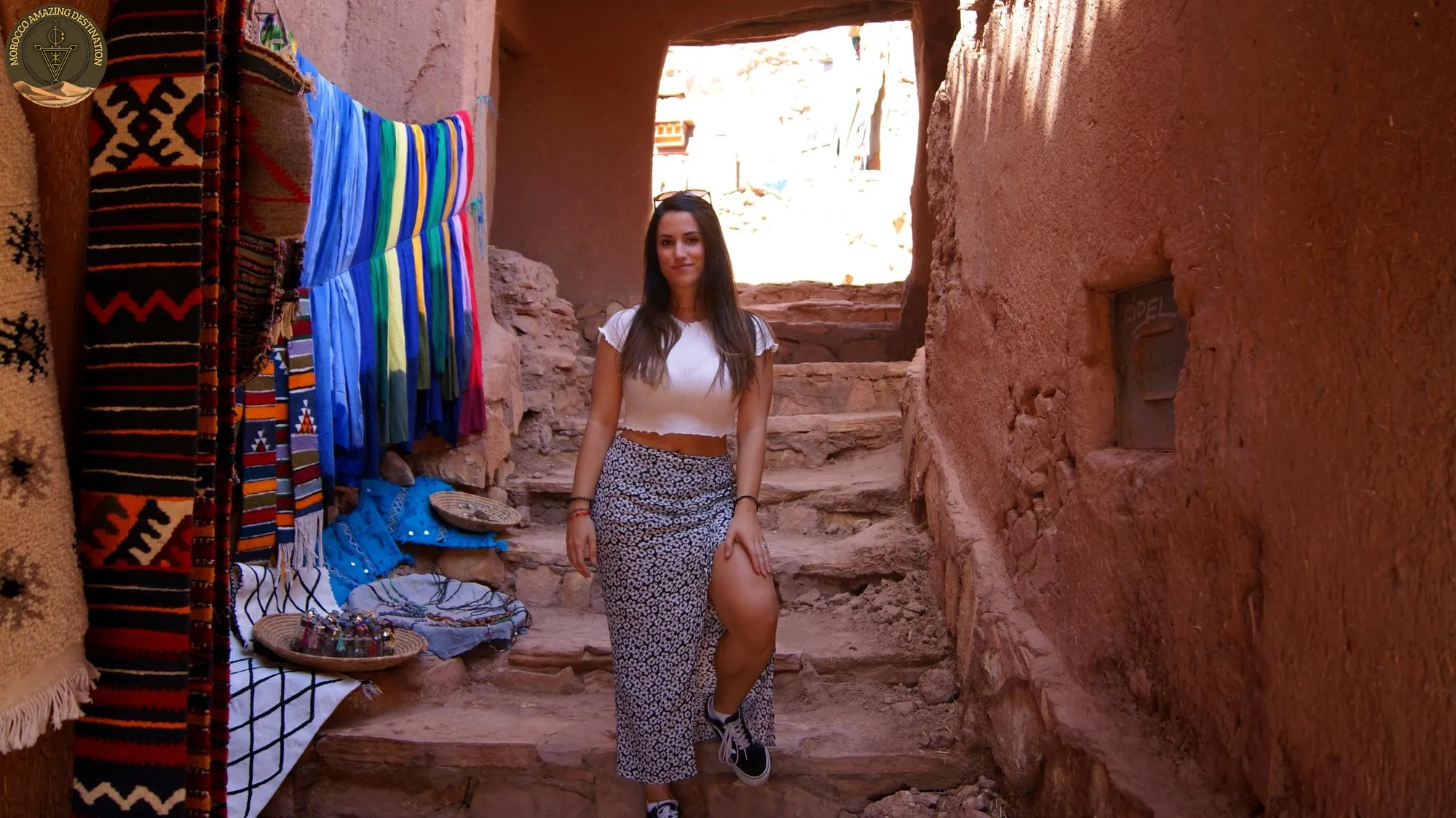
An ait ben haddou day trip from marrakech trades Medina crowds for mountain air and earthen ramparts in a single, well-planned day. You cross the High Atlas in the morning, walk a living UNESCO ksar by midday, and return to Marrakech by evening with a clear taste of the caravan route to the Sahara. If you only have one day to sample the desert corridor, this is the most culture-rich way to do it.
This guide covers what the ksar actually is, how far it lies and how the drive feels, how a private day unfolds step by step, what to expect inside the walls, whether to add ouarzazate on the same run, and how a day trip from marrakech to ait ben haddou compares with spending a night or joining a longer desert tour.
What Is the Ait Benhaddou Kasbah?
The ait benhaddou kasbah is more accurately a ksar — a fortified village of clustered earthen dwellings rather than a single fort. Built in rammed earth and adobe with corner towers decorated in geometric clay-brick motifs, it rises on a hillside above the Ounila River with defensive walls, a baffle gate and a collective granary at the top.
UNESCO lists the Ksar of Ait-Ben-Haddou as a World Heritage site under criteria iv and v for its outstanding example of pre-Saharan earthen architecture and its vulnerable traditional habitat. The protected property covers around 3.03 hectares with a buffer of around 16.32 hectares, according to UNESCO World Heritage Centre records. Fortification on the site goes back to the Almoravid period, while the oldest surviving houses visible today are reported to date no earlier than the 17th century. A handful of families — often reported as four to five — still live inside the walls, with most residents now in the modern village across the river. Sources: UNESCO World Heritage Centre; MoroccoMuseum.
- Ksar, not just kasbah: a collective village with homes, mosque, square and granary (agadir), not a single family fortress.
- Material: earthen architecture in pisé and adobe, maintained by seasonal re-plastering after rain.
- Defence: perimeter walls, angled gateway and high granary viewpoint that also serves as the best photo point.
How Far Is Ait Ben Haddou from Marrakech? Crossing the Tizi Ntichka Pass
The tizi ntichka pass is the reason this day trip feels like a journey, not just a transfer. It is the highest paved pass in North Africa, signed at around 2,260 meters, though GPS readings sometimes report around 2,205 meters — treat the figure as around 2,260 meters and verify locally on signs.
Distance from Marrakech to the ksar via the N9 is around 180 to 190 km, with Ouarzazate about 200 km. Driving time is around 3.5 to 4 hours each way without long stops, and around 4 to 5 hours with photo, coffee and lunch breaks. Plan for a 10 to 12 hour door-to-door day with at least 7 hours in the vehicle. The pass has many hairpins, limited mobile signal between Taddert and the southern slope, and can close for a few days in winter when snow is heavy.
Leg-by-leg timing (reported averages, verify locally):
- Marrakech to Ait Ourir: around 37 km, around 45 minutes
- Climb to the Tizi nTichka summit: around 63 km, around 1.5 hours with viewpoints
- Summit to Ait Ben Haddou: around 60 km, around 1.25 hours via the Ounila Valley turnoff
- Ait Ben Haddou to ouarzazate: around 30 km, around 30 minutes
Best light is sunrise and the last hour before sunset when the earth glows amber and crowds thin. Spring and autumn offer the most comfortable balance for walking; summer afternoons are very hot on the Ouarzazate side, winter mornings can be crisp at the pass and ksar.
How a Private Ait Ben Haddou Day Trip from Marrakech Works: Step by Step
A private ait ben haddou day trip from marrakech follows a simple rhythm that keeps the long drive humane. You leave early, break the climb into short scenic blocks, spend unhurried time inside the ksar, and return with flexible stops rather than a fixed bus schedule. With a private driver-guide you can pause for the viewpoints that matter to you and adjust lunch timing around light and crowds.
- Early pickup in Marrakech. Depart around first light from your riad or hotel in a private air-conditioned vehicle with driver-guide. The first stretch crosses the Haouz plain to Ait Ourir, then the road begins to climb.
- Taddert coffee and first Atlas views. Short break near Taddert for tea and a wide valley view before the tightest hairpins.
- Tizi nTichka summit photo stop. Pause near the summit around 2,260 meters for photos of switchbacks and, on clear days, the contrast between olive foothills and arid peaks.
- Descent into the Ounila Valley. Follow the 40 km valley linking Telouet to Ait Ben Haddou, with Telouet Kasbah visible if you choose the detour.
- Guided walk inside the ksar — 1.5 to 2 hours. Cross the Ounila River (modern bridge or seasonal footbridge where a small contribution of around 10 MAD is sometimes collected), enter through the gate, climb to the granary viewpoint, and learn the ksar-versus-kasbah distinction and earthen building techniques.
- Lunch overlooking the valley. Tagine or grilled options near the lower village or toward Ouarzazate, with time to browse small craft displays without pressure.
- Optional Ouarzazate extension or direct return. If time allows, add a brief stop at Taourirt Kasbah in Ouarzazate or keep the return direct for an earlier arrival in Marrakech. Expect return around early evening depending on traffic and stops.
What to Expect Inside the Ksar and When to Visit
The ksar rewards slow looking rather than rushing for a single viewpoint. Allow 1.5 to 2 hours inside, wear sturdy shoes for uneven dirt lanes and steps, and carry water, sun protection and small cash in dirhams. Paths are compacted earth, some steep and slippery when dusty, with low thresholds at doorways.
- Entry and costs: the ksar is generally open and free to wander; the informal footbridge may ask around 10 MAD, and individually restored interiors or small museums inside sometimes charge around 10 to 20 MAD. Guides often charge around 100 to 200 MAD per hour if you want a licensed local explanation inside.
- Film fame without the hype: Lawrence of Arabia, Gladiator, The Mummy, Kingdom of Heaven and Game of Thrones as Yunkai all filmed here, reusing walls and adding temporary sets. Treat cinema as a fun layer, not the main reason to visit.
- Best light and season: sunrise and late afternoon give the warmest color and thinnest crowds. Spring and autumn are ideal for comfortable walking; spring also brings clearer air over the pass.
- Respect for residents: a few families still live inside — keep voices low, ask before photographing people, and stay on marked lanes.
Our local team — Hassan, Hamid and Andrea — often advises private guests to time the ksar for late morning light on the drive down, or for last light if you plan to overnight in Ouarzazate. Either way, you avoid the harsh midday sun on the climb to the granary.
Should You Combine Ouarzazate, Telouet and the Ounila Valley?
The ksar does not stand alone. The tizi ntichka pass feeds into the Ounila Valley, a 40 km corridor of oases and kasbahs between Telouet and Ait Ben Haddou, with ouarzazate as the gateway city beyond. Combining is possible in a day, but each add-on costs time on an already long day.
- Ounila Valley: the most rewarding add-on without much detour. The road itself is the sight — layered earth villages, palm pockets and the riverbed that explains why the caravan route ran here.
- Telouet Kasbah: former seat of the Glaoui family, set above the valley. Its reception rooms keep richly decorated plaster and tile, but the structure is largely unrestored since looting and interior access can be irregular — confirm via your guide on the day and allow around 40 minutes extra round-trip from the N9 if you divert.
- Ouarzazate: around 30 km beyond the ksar, known as the city of cinema for nearby Atlas Studios and home to Taourirt Kasbah, a 19th-century palace complex on the edge of town. Studios add a guided visit of sets and props but stretch timing; many day-trippers choose a short Taourirt photo stop and save studios for a multi-day tour.
- When to add: if you left Marrakech early, kept lunch light and accept a later return, a brief Ouarzazate stop works. If you prefer a relaxed pace at the ksar, keep the valley as your scenic context and leave the city for another itinerary.
Day Trip vs Overnight vs Multi-Day Desert Tour: Which Is Right for You?
Use this comparison to decide whether a day trip from marrakech to ait ben haddou is enough or whether a night away or a full desert loop suits you better. Private travel in all cases keeps driving blocks and viewpoints flexible, which matters more on this corridor than on shorter Marrakech escapes.
| Option | Time | Depth at Ksar | Pace | Best for |
|---|---|---|---|---|
| Day trip from Marrakech | 10–12 h door-to-door, 7 h in vehicle | 1.5–2 h guided walk + granary climb | Full but seamless with private driver; limited stops | Time-pressed travelers who want a UNESCO highlight without an overnight |
| Overnight in Ouarzazate | 2 days, 1 night | Sunset and sunrise light, relaxed valley stops | Easy, with time for Telouet and Taourirt | Photographers and families who want golden-hour light without rushing |
| 3-Day Marrakech to Merzouga | 3 days, 2 nights | Same ksar visit on Day 1, then Dades and Merzouga dunes | Balanced with early starts | First desert taste with camel trek and luxury camp night in one loop |
| 4-Day Marrakech Desert Loop | 4 days, 3 nights | More time in Ounila Valley and ksar surrounds | Most relaxed; two nights near Merzouga | Travelers who want to maximize journey while keeping daily drives shorter |
Day trips capture the Atlas drama efficiently; overnight and multi-day tours unlock sunset color, quieter moments inside the ksar, and the Sahara dunes beyond Ouarzazate.
By the Numbers: Ait Ben Haddou at a Glance
| Fact | Detail | Source |
|---|---|---|
| Distance Marrakech–Ait Ben Haddou | Around 180–190 km via N9 | Local guide reports |
| Driving time each way | Around 3.5–4 h without long stops | Local guide reports |
| Total day-trip duration | Around 10–12 h door-to-door | Local guide reports |
| Tizi nTichka summit | Around 2,260 m (around 2,205 m on some GPS) | Road signs; local guides (flag variance) |
| UNESCO site area | 3.03 ha with 16.32 ha buffer, criteria iv/v | UNESCO World Heritage Centre |
| Time inside ksar | Around 1.5–2 h | Local guide reports |
| Families still inside walls | Around 4–5 | UNESCO and local reports |
Numbers vary by traffic, weather and exact start point in Marrakech — treat them as planning ranges and confirm locally on the day.
Practical Tips: Tickets, Guides, What to Bring and Film Locations
A little preparation makes the ksar more enjoyable and less slippery underfoot. The site is outdoors, exposed and uneven, with little shade inside the walls.
- What to wear and bring: sturdy closed shoes, sun hat, sunscreen, light layers for the pass, water, and small cash in dirhams. A scarf helps in wind on the summit.
- Tickets and guides: no general entry ticket for the ksar; footbridge contribution around 10 MAD when collected, small museums around 10 to 20 MAD, local guide around 100 to 200 MAD per hour if you want one. Verify locally as collectors and prices shift.
- Safety and comfort: climb steadily to the granary, pause for photos on the way rather than rushing, and keep back from unstable ruin walls at Telouet if you divert.
- Film locations: look for the main gate alley, the hillside stairway to the granary, and the open square — all frequently dressed for shoots. Ask your guide to point out where temporary sets from Gladiator and other productions were placed, then re-removed.
- When crowds are lightest: early morning shortly after opening and the last hour before sunset, especially outside peak travel periods.
If you hoped to stay for sunset color without driving back after dark, consider turning the day into an overnight in Ouarzazate or rolling onward into a desert loop — the private format lets you decide on the road with your driver-guide.
If this UNESCO day leaves you wanting more Sahara, consider extending along the same corridor. The 3-Day Trip from Marrakech to Merzouga follows the same Tizi nTichka pass to the ksar on Day 1, then continues through Dades Valley to Merzouga for a camel trek and night in a luxury desert camp. For a more relaxed pace with extra time in the valleys, the 4-Day Morocco Desert Tour from Marrakech adds a second desert night and a fuller Ounila Valley experience while keeping daily drives shorter.
We can customize a tour to match your needs — design your perfect itinerary
Frequently Asked Questions
Is an Ait Ben Haddou day trip from Marrakech worth the long drive?
For many travelers it is — you trade a long driving day for a rare combination of High Atlas scenery over the Tizi nTichka pass and a UNESCO World Heritage ksar you cannot see elsewhere near Marrakech. A private driver makes the hairpins and photo stops relaxed, and the route previews the Sahara corridor you would follow on a multi-day tour.
Is there an entry fee or opening hours for Ait Ben Haddou?
The ksar itself is generally open and free to walk through. You may be asked for a small contribution of around 10 MAD at the footbridge, and individually restored kasbahs or small museums inside sometimes charge around 10–20 MAD. There is no gated ticket office — allow 1.5 to 2 hours on site and bring small cash.
Which movies and series were filmed at Ait Ben Haddou?
The ksar is known as a filming location for Lawrence of Arabia, Gladiator, The Mummy, Kingdom of Heaven and Game of Thrones where it stood in for the city of Yunkai. Productions value its intact earthen architecture and desert-mountain backdrop, though heritage remains the primary reason to visit.
Should I combine Ait Ben Haddou with Ouarzazate on the same day trip?
You can — Ouarzazate lies about 30 km beyond the ksar and adds Taourirt Kasbah and the cinema studios. It stretches an already long day, so many private guests add only a brief Ouarzazate photo stop and save Atlas Studios for a multi-day itinerary. Your driver-guide helps you decide based on departure time and pace.
What our travelers say
Reviews from TripAdvisor
The best tour guide you'll find!
I don't normally give reviews let alone 5 star ones but Hassan and his team have gone so far above my expectations from a tour company I thought they more then deserved it. As a Solo traveler I was or course concerned about safety. So what made me go with them? Morocco amazing destinations was responsive on the phone transparent and fair with their prices, but it was more than that. They gave me traveling tips and we're always a phone call away if I had a question or needed a place to stay. Unfortunately the first few days of my trip I was sick I wasn't feeling well enough to start the tour when I communicated this to the company their primary concern was me feeling better and enjoying my trip and they didn't even ask for a compensation fee even though they had driven all the way out there. I was really touched by this and called them a couple days later to continue the tour. The tour guide takes you in like one of his family showing you his home his community and tradition. Something I can say as an American we don't really have an abundance. The openness of the people to share what they have connect to you and how they live with one another was really an experience for me. If any of what I'm saying speaks to you book your tour with them and no further for a good experience in Morocco.


Do you want Quality Service? Would you like to feel welcomed? Choose this company, you won't be disappointed 🙏🏾🫶🏾
If I could rate this company with 20 stars that would not be enough!!! From the moment we arrived they treated us with so much respect and you can tell they take pride in the service they provide. Hamid my expert driver and friend was nothing short of extraordinary. His attention to detail and character blew me away. I found myself getting emotional any time he would go above and beyond to ensure my comfortability. Hamid I cannot thank you enough, you my friend are something special. To your boss Hassan, thank you for pairing me with this talented young man. We will be back God willing in July but ONLY if Hamid will accommodate us. I will name my son after him - The real Fatimah

Spectacular experience 100% recommended
The service of our guide Hassan has been excellent. At all times we have felt accompanied by him, feeling him as a friend who has made the journey with us and who has transmitted to us the passion for his work, his country, his people and especially his Berber culture.

Ready for an Adventure?
Have questions? Feel free to contact us using the form below. We're here to help!