· Travel · 5 min read
When Did Morocco Gain Independence? 1956 Date Explained
When did Morocco gain independence? On 2 March and 7 April 1956 — explore the story and visit it.
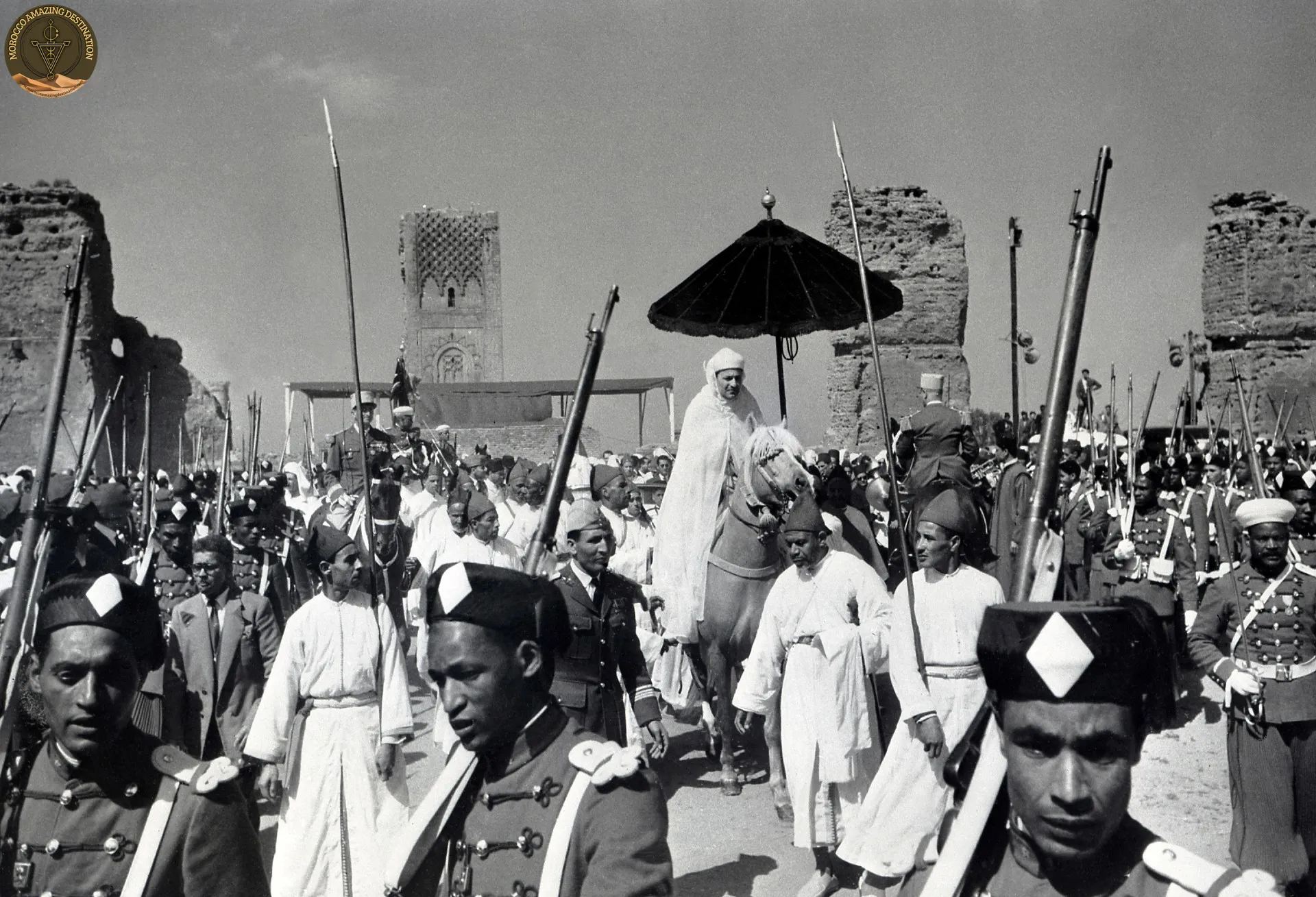
Many travelers arrive in Rabat or Fes, admire the grand boulevards and ancient medinas, and quietly wonder when did Morocco gain independence. The answer is 1956, given in two steps: on 2 March France ended its protectorate, and on 7 April Spain ended its northern zone.
In this guide, we will break down the Morocco independence date, how the protectorates ended, and how you can visit the story on a private tour. The short answer fits in one line, but the full story spans a 1944 manifesto, an exiled sultan, and a triumphant return.
The Short Answer: Two Dates in 1956
The Morocco independence date is not a single day but a pair of declarations. On 2 March 1956, France and Morocco signed a joint declaration ending the French protectorate established by the Treaty of Fes. Morocco recovered full sovereignty, including its own diplomacy and army.
Five weeks later, on 7 April 1956, a second joint declaration in Madrid ended the Spanish protectorate zone in the north. Together, these two acts made Morocco an independent state again after more than four decades of colonial rule. When people say 1956, they mean both dates.
This two-step ending explains why history books sometimes cite March and sometimes April. France controlled the largest zone, so 2 March gets the most attention. But full independence required the Spanish agreement too, which is why the April date matters as much. Both texts are short diplomatic notes rather than long constitutions, and each one names the earlier treaty it cancels.
How the French Protectorate in Morocco Ended
The French protectorate in Morocco began with the Treaty of Fes, signed on 30 March 1912. France took charge of foreign affairs, defense, and major reforms, while the sultan remained the religious and symbolic head of state. France moved the capital to Rabat and built broad new boulevards beside the old medinas, a split you can still see on foot today. A separate convention later that year assigned Spain a northern zone and a southern strip.
The colonial map had three pieces, and each one ended on its own schedule:
- French zone: covered most of the country and ended 2 March 1956.
- Spanish zone: covered the Rif, Tetouan, and Tarfaya strip, ending 7 April 1956.
- Tangier zone: ruled internationally from 1923 and rejoined Morocco later in 1956.
The 2 March declaration formally annulled the Treaty of Fes. It confirmed Morocco as a sovereign state, set talks on practical matters such as troops and property rights, and opened the way for the Spanish agreement that followed. A large French garrison still stood on Moroccan soil at the signing, so the text arranged an orderly transition for soldiers, officials, and settlers.
The Road to Freedom: 1944 to 1955
The final push began on 11 January 1944, when nationalist leaders presented the Manifesto of Independence. Dozens of signatories, gathered around the Istiqlal movement, demanded full independence under Sultan Mohammed V. The sultan’s famous Tangier speech three years later gave the cause royal weight.
France answered with repression. On 20 August 1953, the authorities deposed Mohammed V, exiled him, and placed Ben Arafa on the throne. Instead of calming the country, the move ignited the Revolution of the King and the People, a wave of protests, strikes, and resistance that made the protectorate unworkable. Pressure stayed high through the following years, until Paris accepted that only the exiled sultan could sign a lasting settlement.
Negotiations at La Celle-Saint-Cloud in early November 1955 promised independence and restored the legitimate sultan. Mohammed V returned on 16 November to enormous crowds. Talks through February 1956 then produced the text signed on 2 March, closing the French chapter for good.
What 1956 Did Not Finish
Independence came in stages, and several territories followed later. Tangier, long run as an international zone, rejoined Morocco through a conference in October 1956. The southern town of Tarfaya returned in 1958, and the Ifni enclave followed in 1969 after a formal treaty. Each return had its own ceremony and paperwork, which is why timelines list them as separate milestones after 1956.
Here is the timeline travelers find most useful:
- Tangier rejoins: international zone ends in October 1956.
- Tarfaya returns: southern strip handed back in 1958.
- Ifni returns: coastal enclave transferred in 1969.
- Holiday note: Independence Day falls on 18 November, honoring the 1955 return.
One common confusion deserves a clear answer. The national holiday on 18 November celebrates the sultan’s return and throne speech, not the March declaration. Later southern questions, including Western Sahara after 1975, belong to a different chapter and sit outside this story. Meanwhile, Ceuta and Melilla remain under Spanish administration, a separate matter noted here in one neutral sentence.
Walk Through Independence History on Tour
The independence story lives in the cities you can still visit today. Rabat holds the Mausoleum of Mohammed V, the resting place of the independence sultan and his sons. Fes carries the memory of the 1944 Manifesto, while Tangier and Tetouan recall the Spanish zone and the famous 1947 speech.
A private guide brings these places to life with stories you will not find on plaques. Your driver handles the long distances while your guide tailors each stop to your pace, so you maximize your journey without stress:
- Rabat: the Mausoleum, Hassan Tower, and the Kasbah of the Udayas.
- Fes: the old medina quarters tied to the nationalist movement.
- Tangier and Tetouan: boulevards and squares shaped by the northern zone.
For a hassle-free journey through the real Morocco, consider our 8-Day Tour from Casablanca to Morocco Imperial Cities, which loops through Rabat, Fes, Meknes, and Marrakech with a local driver-guide. If you want history plus the Sahara in one seamless trip, our 8-Day Imperial Cities and Desert Tour from Casablanca adds camel trekking and a luxury desert camp.
We can customize a tour to match your needs — design your perfect itinerary
If you found this helpful, add us as your preferred source on Google.
Frequently Asked Questions
When did Morocco gain independence?
Morocco gained independence in 1956 through two declarations: on 2 March France ended its protectorate, and on 7 April Spain ended its northern zone. Together they restored full Moroccan sovereignty.
Who led Morocco to independence?
Sultan Mohammed V led the country to independence, backed by the Istiqlal nationalist movement. Exiled in 1953, he returned triumphantly in November 1955 and signed the 1956 declarations.
When did the Spanish zone in Morocco end?
The Spanish zone ended on 7 April 1956 with a joint declaration in Madrid, about five weeks after the French protectorate ended. Tangier, Tarfaya, and Ifni rejoined Morocco in later stages.
Is Independence Day 18 November or 2 March?
Morocco celebrates Independence Day on 18 November, marking the sultan's 1955 return and throne speech. The 2 March date marks the legal end of the French protectorate, not the national holiday.
Ready for an Adventure?
Have questions? Feel free to contact us using the form below. We're here to help!