· Travel · 8 min read
What to See in Morocco in 7 Days: The Ultimate One-Week Itinerary
Plan your perfect 7-day Morocco itinerary. Discover the Imperial Cities, Sahara Desert, Atlas Mountains, and hidden gems in one unforgettable week.
So you have one precious week of vacation and you are wondering what to see in Morocco in 7 days. You are in the right place. Morocco packs an astonishing variety of landscapes, cultures, and experiences into a country roughly the size of California. With a smart 7-day Morocco itinerary, you can taste the chaos of Marrakech’s medina, sleep under a blanket of Sahara stars, and wander the ancient alleyways of Fes — all in a single, unforgettable week.
This guide lays out the perfect day-by-day route, answers the most common questions, and shares practical tips to help you make every hour count.
Why 7 Days is the Sweet Spot for Morocco
Seven days is the minimum amount of time needed to experience Morocco beyond its airports and hotel lobbies. It is long enough to travel from the red city walls of Marrakech to the golden dunes of Merzouga and the blue-tiled fountains of Fes — without feeling like you are living out of a suitcase.
A week also gives you the chance to slow down, sip mint tea with a Berber family, and appreciate the silence of the desert. You will leave wanting more, but you will leave having truly seen Morocco.
The Ultimate 7-Day Morocco Itinerary
This classic loop starts in Marrakech and ends in Fes, covering roughly 1,100 kilometers of jaw-dropping scenery. It is the most popular route for a reason: it hits all the must-see destinations efficiently and leaves room for spontaneity.
Day 1: Arrive in Marrakech — The Red City
Touch down in Marrakech and dive straight into the city that Winston Churchill called “the most lovely spot in the whole world.”
- Jemaa el-Fnaa: The beating heart of the medina. By day it is a tangle of snake charmers, henna artists, and fresh orange juice carts. By night it transforms into a giant open-air food market.
- Koutoubia Mosque: The 12th-century minaret that defines Marrakech’s skyline. You cannot enter unless you are Muslim, but the gardens around it are a peaceful retreat.
- Evening: Head to a rooftop terrace overlooking the square. Order a tagine, sip sweet mint tea, and watch the city come alive as the call to prayer echoes across the rooftops.
Pro tip: Stay in a traditional riad inside the medina. The experience of waking up to birdsong in a central courtyard, three floors below the open sky, is worth the slightly confusing walk from the taxi drop-off.
Day 2: Marrakech — Gardens, Palaces, and Souks
Your first full day is dedicated to understanding Marrakech beyond its surface chaos.
- Bahia Palace: A 19th-century masterpiece of Moroccan craftsmanship. The intricate zellige tilework, carved cedar ceilings, and serene courtyards will set the tone for your trip.
- Majorelle Garden: Created by French painter Jacques Majorelle and later restored by Yves Saint Laurent, this cobalt-blue villa surrounded by exotic cacti and bamboo is an oasis of calm.
- The Souks: Lose yourself in the labyrinth of merchants selling everything from handwoven rugs to spices piled in vibrant pyramids. Embrace the art of haggling — it is expected and, honestly, part of the fun.
Day 3: Atlas Mountains and Ait Benhaddou
This is where the journey truly begins. After breakfast, your driver navigates the winding Tizi n’Tichka pass, which climbs to 2,260 meters through the High Atlas. The views are staggering — terraced Berber villages cling to mountainsides, and the air grows noticeably cooler.
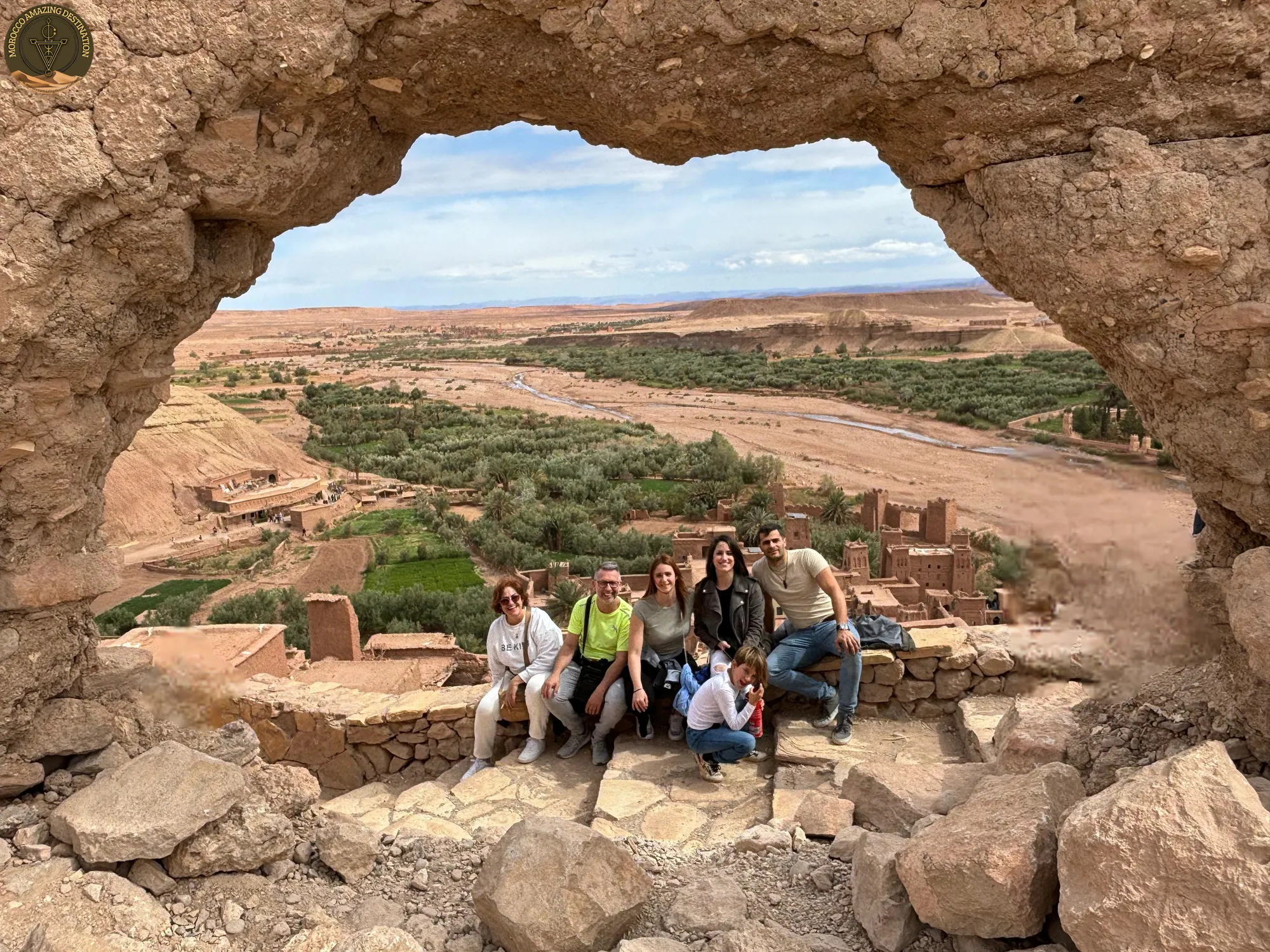
Your main stop is Ait Benhaddou, a UNESCO World Heritage site and Morocco’s most famous ksar (fortified village). You have seen it before — it served as the backdrop for Gladiator, Game of Thrones, and Lawrence of Arabia. Walk the narrow pathways, climb to the granary at the top, and look out over a landscape that feels suspended in time.
Overnight in the Dades Valley, where rose-scented gardens line the river and the evening light turns the canyon walls pink and orange.
Day 4: Todra Gorge and Merzouga — Into the Sahara
Start the morning with a short walk through the Todra Gorge, a canyon where sheer limestone walls rise 300 meters on either side. It is a rock climber’s paradise, but even a ten-minute stroll along the crystal-clear river will make you feel wonderfully small.
By mid-afternoon you will reach Merzouga, a dusty frontier town on the edge of the Sahara. Park your luggage, pack a small overnight bag, and climb onto a camel. The trek takes about an hour as the sun sinks toward the horizon, painting the Erg Chebbi dunes in shades of amber and gold.
You will sleep in a Berber camp — comfortable tents with real beds, Moroccan lanterns, and a campfire under the most spectacular starry sky you have ever seen.
Day 5: Sahara Sunrise and the Road to Fes
Wake before dawn to watch the sunrise from the top of the dunes. The silence is absolute, broken only by the whisper of wind over sand. After breakfast back at camp, you begin the long but scenic drive north to Fes.
The landscape shifts hour by hour: desert gives way to the palm groves of the Ziz Valley, then to the cedar forests of the Middle Atlas, where wild Barbary macaques may dart across the road. You will pass through Ifrane, a surprising Alpine-style town known as the “Switzerland of Morocco,” before descending into Fes.
Arrive in Fes by evening and settle into your riad. Tomorrow you explore the oldest of Morocco’s Imperial Cities.
Day 6: Fes — The Cultural and Spiritual Capital
Fes el-Bali is the largest car-free urban area in the world. Over 9,000 alleyways twist through a medieval cityscape that has barely changed in a thousand years. You will get lost. That is the point.
- Al-Attarine Madrasa: A 14th-century theological college with some of the finest zellige and carved stucco in the Islamic world.
- Chouara Tannery: The iconic view over dye-filled stone vats where leather has been processed the same way since the 11th century. Pro tip: grab a sprig of mint for your nose — the smell is authentic.
- Bou Inania Madrasa: The only madrasa in Fes with a full minaret and a functioning mosque, offering a rare glimpse into the rhythm of religious life.
- The Mellah: The historic Jewish quarter with distinctive balconied architecture and a cemetery overlooking the medina.
End your day at a rooftop restaurant in the medina. The sunset call to prayer, echoing from dozens of minarets simultaneously, is a moment you will not forget.
Day 7: Fes to Casablanca or Back to Marrakech
Your final day depends on where your flight departs. From Fes you can reach Casablanca in about three hours by train, giving you a chance to see the monumental Hassan II Mosque — one of the largest in the world and one of the few open to non-Muslims — before your flight.
Alternatively, if you are flying out of Marrakech, a direct highway connects Fes to the red city in about six hours. Many travelers choose this option to close the loop.
Alternative 7-Day Morocco Routes
Not everyone starts in Marrakech. Here are two other popular one-week itineraries:
Option A: Tangier to the Sahara (7 Days) Start in Tangier, visit the blue city of Chefchaouen, explore Fes, then head south to the Sahara Desert at Merzouga. This route works especially well if you are arriving by ferry from Spain.
Option B: Casablanca to Marrakech via the Desert (7 Days) Fly into Casablanca, head directly to Fes, then follow the desert route south to Merzouga, cross the Atlas Mountains, and finish in Marrakech. Ideal for travelers who want to see the Hassan II Mosque without doubling back.
Essential Tips for Your 7 Days in Morocco
- Currency: The Moroccan Dirham (MAD). ATMs are available in all major cities, but carry cash for smaller towns and souks.
- Dress code: Morocco is moderate but traditional. Shoulders and knees covered go a long way toward showing respect, especially for women.
- Water: Stick to bottled or filtered water. Avoid ice in street-side stalls unless you are certain it is made from purified water.
- Transport: For the desert portion, renting a car is possible but a private driver or small group tour saves hours of stress. Mountain roads are winding, and desert navigation requires local knowledge.
- Language: Arabic and Berber are official, but French is the lingua franca. English is increasingly common in tourist areas. Learning “shukran” (thank you) and “salaam alaikum” (peace be upon you) goes a long way.
Conclusion
Figuring out what to see in Morocco in 7 days does not have to be overwhelming. With this itinerary, you will journey from the chaotic souks of Marrakech to the silent Sahara, from the cinematic kasbahs of Ait Benhaddou to the timeless medina of Fes — all in one extraordinary week.
Morocco is the kind of place that changes you. It sharpens your senses and reminds you what adventure feels like. Go with an open mind, a flexible spirit, and an empty stomach. You will leave with a full heart and a camera roll you will scroll through for years.
Ready to Explore Morocco?
If you would rather focus on the experience than the logistics, our Morocco 7-Day Imperial Cities and Desert Tour covers this entire route with expert local guides, comfortable transport, and carefully selected riads and desert camps. Everything is handled — you just show up and soak it in.
Prefer to start your journey from the north? Check out our 7-Day Morocco Tour from Tangier to Sahara, which includes Chefchaouen, the blue pearl of the Rif Mountains, along with Fes and the desert.
If you found this helpful, add us as your preferred source on Google.
Frequently Asked Questions
Is 7 days enough to visit Morocco?
Yes, one week is enough to experience Morocco's highlights. A well-planned 7-day itinerary can cover Marrakech, the High Atlas Mountains, the Sahara Desert at Merzouga, and the Imperial City of Fes, giving you a rich taste of Morocco's culture, landscapes, and cuisine.
What is the best 7-day itinerary for Morocco?
The best 7-day Morocco route starts in Marrakech, crosses the Atlas Mountains via Ait Benhaddou, reaches the Sahara Desert at Merzouga for a camel trek and desert camp, continues through the Todra Gorges and Dades Valley, and ends in Fes. This loop is the most popular and showcases the country's greatest hits.
Can I visit the Sahara Desert in 7 days?
Absolutely. Most 7-day Morocco itineraries dedicate at least one full day to the Sahara Desert, including a sunset camel ride over the Erg Chebbi dunes and an overnight stay in a Berber desert camp under the stars.
When is the best time for a 7-day trip to Morocco?
Spring (March to May) and autumn (September to November) offer the most pleasant weather for a 7-day trip. Temperatures are warm but comfortable in the cities and mild in the desert, making them ideal for sightseeing, camel trekking, and overnight camping.
- morocco-itinerary
- 1-week-itinerary
- 7-day-itinerary
- travel-guide
- imperial-cities
- sahara-desert
- morocco-what-to-see
- what-to-visit-in-morocco
- morocco-travel-guide
- morocco
- atlas-mountains
Ready for an Adventure?
Have questions? Feel free to contact us using the form below. We're here to help!