· Travel · 9 min read
What Is the Moroccan Economy Based On? A Complete Guide to Morocco's Economic Sectors
Discover what the Moroccan economy is based on. From agriculture and phosphates to tourism and automotive manufacturing, explore the key sectors driving Morocco's growth.
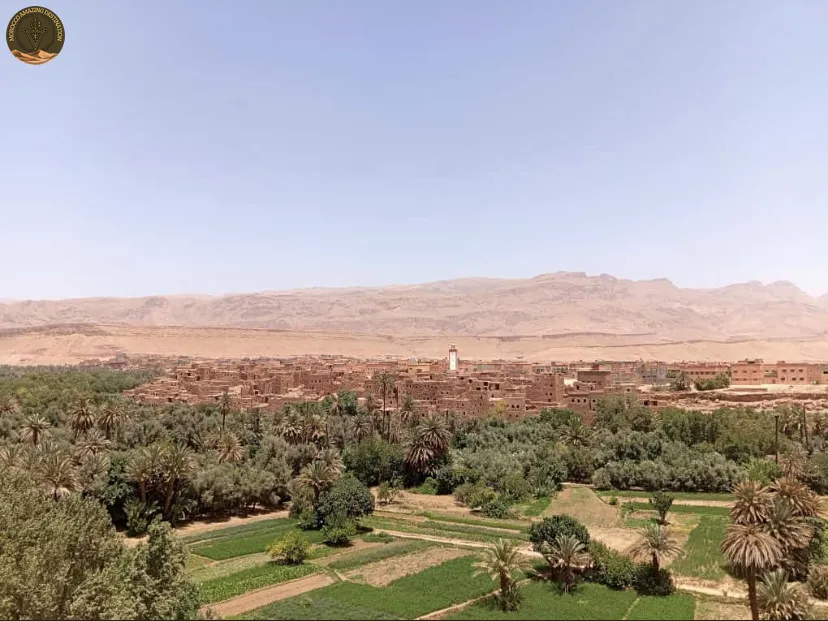
Morocco stands at the crossroads of Africa, Europe, and the Arab world — and its economy reflects that unique position. Unlike many of its neighbors, the Morocco economy is not dependent on a single resource. Instead, it draws strength from a remarkably diversified mix of agriculture, mining, manufacturing, tourism, and a fast-growing services sector. Whether you are a traveler curious about the country behind the souks and sand dunes, an investor looking at opportunities in North Africa, or a student researching economic development models, understanding what the Moroccan economy is built on reveals a story of resilience, strategic geography, and ambitious modernization.
In this guide we break down every major sector of the Moroccan economy — from the phosphate mines that help feed the world to the solar plants powering a green energy transition, and from the orange groves that fill European supermarkets to the desert camps that draw millions of tourists each year.
Agriculture: The Backbone of Rural Morocco
Agriculture has been the foundation of Morocco’s economic sectors for centuries, and it remains the country’s largest employer. Roughly 30 to 40 percent of the workforce depends on farming, fishing, and related activities, although its share of GDP has gradually declined to around 12–15 percent as other sectors have grown.
What Morocco produces:
- Cereals — wheat and barley dominate the landscape, especially in the fertile plains around Fes, Meknes, and the Chaouia region. Production fluctuates significantly depending on annual rainfall, making cereal farming a barometer of rural economic health.
- Citrus fruits and olives — Morocco is one of the world’s top exporters of citrus fruits, with oranges and clementines shipped primarily to the European Union. Olive groves cover vast areas, and the country ranks among the top five global producers of olive oil.
- Vegetables and early-season crops — the Souss-Massa region around Agadir produces tomatoes, green beans, and peppers for European markets, taking advantage of Morocco’s mild winters to supply fresh produce when northern Europe cannot.
- Argan oil — native to southwestern Morocco, the argan tree produces a prized oil used in cosmetics and cuisine, providing vital income for rural women’s cooperatives.
- Fishing — the Atlantic coast yields sardines, tuna, and shellfish, making Morocco one of Africa’s largest fish producers. Ports like Agadir, Laâyoune, and Dakhla are major hubs for both domestic consumption and export processing.
Key challenges: The sector’s heavy dependence on rainfall makes it vulnerable to drought cycles. The government’s Green Morocco Plan (Plan Maroc Vert) has invested heavily in drip irrigation, dam construction, and support for smallholders, but water scarcity remains an ongoing concern as climate patterns shift.
Phosphates and Mining: Morocco’s Buried Treasure
If agriculture is the historical backbone of the Morocco economy, phosphates are its industrial muscle. Morocco holds an estimated 75 percent of the world’s known phosphate rock reserves — a mineral essential for producing fertilizers that sustain global food production.
The OCP Group, a state-owned company, is the cornerstone of this sector. It is not simply a mining operation: OCP has transformed itself into one of the world’s largest integrated fertilizer producers, refining raw phosphate into phosphoric acid and finished fertilizers that it exports to over 50 countries. The company is Morocco’s largest employer after the state and a major source of export revenue.
Phosphate’s strategic importance:
- Phosphate and derivative products represent roughly 20 percent of Morocco’s total export income.
- The sector has fueled Morocco’s diplomatic and economic outreach across Africa, where OCP supplies fertilizers tailored to local soil conditions and has opened blending plants in over a dozen African nations.
- Mining takes place primarily in the Khouribga, Benguerir, and Youssoufia regions, while processing and export facilities are concentrated around the coast at Jorf Lasfar.
Beyond phosphates, Morocco also mines silver, lead, zinc, and cobalt — the latter increasingly important for the global electric vehicle battery supply chain.
Manufacturing and Industry: From Textiles to Automobiles
Morocco’s industrial sector has undergone a remarkable transformation over the last two decades. Once dominated by textile and leather workshops, Morocco industry now includes world-class automotive and aeronautics manufacturing.
Automotive Manufacturing
The automotive industry is the standout success story. Morocco is now the largest car producer in Africa, surpassing South Africa, with two major manufacturing hubs:
- Renault operates a massive plant in Tangier, producing vehicles for export to Europe and beyond. It is one of the largest car factories in the world.
- Stellantis (formerly PSA) has a plant in Kenitra producing Peugeot and Citroën models.
These factories have attracted an ecosystem of suppliers — wiring harnesses, seating, batteries, and electronic components — creating tens of thousands of jobs and positioning Morocco as a key node in the European automotive supply chain.
Aeronautics and Other Industries
The aeronautics sector is another growth engine. Companies like Boeing, Airbus, and Safran have established supply chains in Morocco, attracted by competitive labor costs, proximity to Europe, and free trade agreements. The Nouaceur industrial zone near Casablanca has become a hub for precision engineering and aircraft component manufacturing.
Traditional industries — textiles, leather goods, and food processing — remain important employers, particularly for women in the workforce. The export-oriented textile industry supplies major European fashion brands, while agro-processing turns Moroccan produce into canned goods, olive oil, and preserved foods for global markets.
Tourism: The Engine of Foreign Currency and Jobs
Tourism is one of the brightest stars in the Morocco economy. Before global disruptions, Morocco regularly welcomed over 13 million international visitors a year, making it the most visited country in Africa.
What draws visitors to Morocco:
- Imperial cities — Marrakech, Fes, Meknes, and Rabat offer a dense concentration of UNESCO-listed medinas, historic palaces, and vibrant souks.
- The Sahara Desert — camel treks, luxury desert camps, and the dunes of Merzouga and Erg Chegaga draw adventurers from around the world.
- Coastal destinations — Essaouira, Agadir, and Tangier offer Atlantic and Mediterranean beaches, with Tangier rapidly transforming into a cosmopolitan waterfront city.
- The Atlas Mountains — hiking, Berber village visits, and mountain scenery attract outdoor enthusiasts.
- Culture and cuisine — Moroccan food, from tagines to street-side mint tea, is a draw in its own right, as is the country’s rich Amazigh and Arab heritage.
Economic impact: Tourism contributes approximately 7 percent of GDP directly and far more indirectly when accounting for transport, handicrafts, food supply chains, and construction. It is a major source of foreign currency earnings and employs hundreds of thousands of people — from hotel staff and licensed tour guides to artisans and drivers.
The Moroccan government has ambitious plans to grow the sector further, targeting 26 million visitors by 2030, driven in part by the country’s co-hosting of the FIFA World Cup with Spain and Portugal.
Energy, Infrastructure, and Trade: Connecting Continents
Morocco has few oil and gas reserves, which historically made it heavily dependent on energy imports. That is changing rapidly.
Renewable Energy
Morocco has emerged as a global leader in renewable energy. The Noor Ouarzazate Solar Complex, one of the world’s largest concentrated solar power plants, covers thousands of acres in the desert and can generate enough electricity to power over a million homes. Wind farms along the Atlantic coast and hydropower in the Atlas Mountains complement the solar push. The goal: 52 percent of installed electrical capacity from renewable sources.
Green hydrogen production is the next frontier, with Morocco positioning itself as a future exporter of clean energy to Europe.
Infrastructure and Logistics
The Tangier Med port is the largest container port in Africa and the Mediterranean, handling millions of containers annually and serving as a trans-shipment hub between Africa, Europe, and Asia. It is a linchpin of Morocco’s trade strategy and a magnet for logistics and manufacturing companies.
Morocco’s highway network, high-speed rail line (Al Boraq, connecting Tangier to Casablanca), and expanding airport infrastructure reflect sustained public investment in connectivity. These projects not only facilitate trade and tourism but also generate construction jobs and stimulate regional development.
Trade
Morocco’s trade is dominated by the European Union, which accounts for over half of all exports and imports. Key export markets are France, Spain, Italy, and Germany, while growing trade with West and sub-Saharan Africa reflects Morocco’s strategic pivot toward the continent. Free trade agreements with the EU, the United States, Turkey, and several Arab and African nations give Moroccan goods preferential access to markets representing over a billion consumers.
Services and the Digital Economy
The services sector — including banking, telecommunications, IT outsourcing, and real estate — now accounts for more than half of Morocco’s GDP, a sign of the economy’s increasing sophistication.
Highlights:
- Casablanca Finance City has positioned the city as a regional financial hub, attracting multinational corporations with tax incentives and modern infrastructure.
- IT and business process outsourcing is growing rapidly, with Moroccan tech talent serving French-speaking markets in particular. The country produces thousands of engineering graduates annually, feeding a growing tech startup scene in Casablanca, Rabat, and Marrakech.
- Telecommunications penetration is high, with three major operators (Maroc Telecom, Orange, Inwi) providing mobile and internet coverage that reaches most of the population. Mobile money and fintech are expanding financial inclusion.
Conclusion: A Diversified Economy with Ambition
The Moroccan economy is best understood not through any single sector but through the deliberate strategy of diversification that has defined the country’s development path. From the fields of the Souss to the assembly lines of Tangier, from the phosphate mines of Khouribga to the solar mirrors of Ouarzazate, Morocco has built one of the most resilient and outward-looking economies in Africa.
Challenges remain — youth unemployment, water scarcity, regional inequality, and the size of the informal economy — but the direction of travel is clear. With continued investment in infrastructure, education, and green energy, and with the global spotlight that events like the 2030 World Cup will bring, Morocco’s economic story is still being written.
Discover Morocco Firsthand
Understanding the Morocco economy through statistics and sectors is one thing — experiencing the country’s landscapes, culture, and people is another entirely. The best way to appreciate Morocco’s economic diversity is to travel through it: from the bustling souks of Marrakech to the serene dunes of the Sahara, from the industrial dynamism of Tangier to the agricultural heartlands of the Souss Valley.
If you want to see Morocco in all its variety, the 10 Days in Morocco: The Ultimate Private Tour from Marrakech to the Sahara offers a comprehensive journey through ancient cities, High Atlas passes, and the golden sands of Merzouga. For a shorter but unforgettable adventure, the 3-Day Trip from Marrakech to Merzouga packs camel treks, desert sunsets, and authentic Berber hospitality into a compact and affordable itinerary.
If you found this helpful, add us as your preferred source on Google.
Frequently Asked Questions
What are the main sectors of the Moroccan economy?
The Moroccan economy is built on a diversified mix of sectors. Agriculture accounts for roughly 12–15% of GDP and employs about a third of the workforce. Phosphate mining and processing makes Morocco the world's largest exporter of phosphate rock. Manufacturing — particularly automotive and aeronautics — has grown rapidly in the last two decades. Tourism is a major foreign currency earner, attracting over 13 million visitors annually. Services, including banking, telecommunications, and IT outsourcing, complete the picture.
Why are phosphates so important to the Moroccan economy?
Morocco holds approximately 75% of the world's known phosphate rock reserves, making it the global leader in phosphate production. The state-owned OCP Group is one of the world's largest fertilizer producers, turning raw phosphate into value-added products like phosphoric acid and fertilizers. Phosphates and derivatives account for a significant share of Morocco's export revenues and are a cornerstone of its trade relationship with Africa, where Moroccan fertilizers support agricultural development across the continent.
How important is tourism to Morocco's economy?
Tourism is one of Morocco's most vital economic sectors, contributing roughly 7% of GDP directly and even more indirectly. The country welcomes over 13 million international tourists each year, drawn by its imperial cities, Sahara Desert, Atlantic and Mediterranean coastlines, and rich cultural heritage. Tourism generates hundreds of thousands of jobs — from hotel staff and tour guides to artisans and transport workers — and is a major source of foreign currency. The government continues to invest heavily in tourism infrastructure, particularly ahead of the 2030 FIFA World Cup.
What role does agriculture play in the Moroccan economy?
Agriculture is a cornerstone of the Moroccan economy, employing roughly 30–40% of the country's workforce and contributing 12–15% of GDP. Morocco is a major producer of cereals, citrus fruits, olives, tomatoes, and vegetables destined for European markets. The fishing industry along the Atlantic coast is also a significant contributor. However, the sector is highly dependent on rainfall, making it vulnerable to drought. The government's 'Green Morocco Plan' has invested billions in modernizing irrigation, supporting small farmers, and developing high-value export crops.
Ready for an Adventure?
Have questions? Feel free to contact us using the form below. We're here to help!