
· Travel · 4 min read
What Is a Riad in Morocco? History, Design & Stay Guide
What is a riad in Morocco? Learn its garden meaning, history, design and what staying inside feels like — plus how to choose yours.
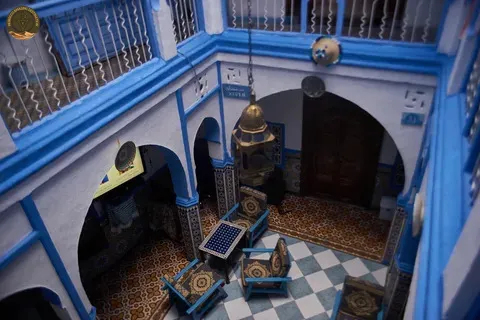
Step through a heavy wooden door in Marrakech or Fes and the street fades. Inside is orange blossom and a quiet courtyard open to the sky. So what is a riad in morocco? It is a traditional house built around an inward garden. The word means gardens, and every room looks to a planted centre with a fountain.
This guide explains what makes a riad a riad. It covers history, key design elements, how it differs from a dar and a hotel, and what to expect when you stay.
What Makes a Riad a Riad
A riad is defined by its garden courtyard, the centre of the house. The street facade is plain and windowless, often in rammed earth, with a bent entrance for privacy. Inside, the house opens inward. The courtyard brings light, air and quiet to every room. Thick walls hold cool air, while the open centre works as a light well and ventilation shaft.
Key features that define a riad:
- Garden courtyard: Four planted beds around a central fountain, often citrus, jasmine and mint.
- Inward rooms: Salons and bedrooms open only onto the courtyard, linked by arcaded galleries.
- Plain exterior, rich interior: Austere outside, richly decorated inside.
- Roof terrace: Flat roof for breakfast, sunset and quiet above the medina.
A Short History: From Paradise Garden to Medina Townhouse
Understanding riad history morocco explains the form. It comes from the Islamic paradise garden — a garden divided into four by channels meeting at a centre. The idea travelled from Persian gardens to courtyard houses and took root in Morocco.
Flat land and warm climate made large courtyards practical in Marrakech, while tighter slopes in Fes produced more vertical houses. Later dynasties refined the model. Palaces showed the full vision, merchants adapted it to townhouse scale. After families moved outside the walls, many houses stood empty. In recent decades careful restoration returned them as guesthouses and revived craft in the UNESCO World Heritage medinas of Marrakech and Fes.
Inside the Design: Courtyard, Zellige, Tadelakt and Cedar
The beauty of traditional moroccan riad design is layered craft plus climate logic. Water and planting cool the air. The tall open centre lifts hot air and pulls cooler air through rooms. Light arrives indirectly, bouncing off walls and water.
Decoration follows a vertical order, each layer using a different skill. Rooms are narrow and tall with twin doors to the gallery. They never connect directly — you always cross the courtyard.
Signature elements inside:
- Zellige: Hand-cut glazed tiles in geometric stars, usually to chest height.
- Carved stucco: Floral and calligraphic plaster above the tile line.
- Painted cedar: Carved wood for ceilings and doors, often Atlas cedar.
- Tadelakt: Polished lime plaster for fountains and bathrooms.
- Fountain and planting: Central water with citrus or jasmine beds.
Upper floors hold bedrooms reached by winding stairs, plus the roof terrace. Ground-floor salons often have a raised alcove facing the garden.
Riad vs Dar — and How Both Differ from a Hotel
Travellers often ask about the riad vs dar difference. Both are inward-facing medina houses, but the courtyard defines them. A riad centres on a garden courtyard with planting and a fountain. A dar centres on a smaller, paved courtyard without a full garden. Many guesthouses called riads are technically dars restored with care — the garden is the clue.
Hotels are larger, purpose-built buildings with outward windows, corridors and standard rooms. Riads and dars are converted homes with few rooms and a family-run rhythm. That brings quieter, immersive stays inside the walls, with home breakfast and mint tea.
If calm and medina immersion matter most, a riad or dar delivers. If you prefer elevators and street views, a hotel outside the medina may suit better.
Staying in a Riad Today: What to Expect and How to Choose
Staying in a riad feels personal and unhurried. You enter from a quiet lane, often with a porter. Days start with breakfast on the terrace and end with tea in the courtyard.
Rooms face inward, so sound carries more than in a hotel. Light sleepers may prefer an upper floor. Ground floors are lovely for gathering but less private. Every riad is a restored house, so no two layouts are alike.
What to expect and how to choose:
- Personal hospitality: Small team, home breakfast, help with guides and transfers.
- Craft authenticity: Look for irregular glaze in zellige, waxy tadelakt and hand-carved cedar.
- Medina access: Pedestrian lanes, short walks to souks, driver meets at the nearest gate.
- Comfort balance: Upper rooms are often more airy and private.
Morocco’s riads turn a stay into an experience — a calm garden inside the medina.
For a journey that pairs medina riads with desert nights, consider our 4-Day Morocco Desert Tour from Marrakech with hand-picked riads and a luxury camp. Or choose our 8 Days Tour from Casablanca to Marrakech through imperial cities and the Sahara.
We can customize a tour to match your needs — design your perfect itinerary
If you found this helpful, add us as your preferred source on Google.
Frequently Asked Questions
What is a riad in Morocco?
A riad is a traditional Moroccan house built around an inward-facing garden courtyard. The word comes from Arabic riyad, meaning gardens. Today most riads in medinas host guests as intimate, family-run boutique stays.
What does riad mean and where does the design come from?
Riad means gardens and refers to the four-part paradise garden with a central fountain. The form blends Persian garden ideas with Islamic architecture and climate-smart courtyard logic developed in Marrakech and Fes.
What is inside a traditional moroccan riad design?
Inside you find a planted courtyard with fountain, arcaded gallery, salon rooms facing inward, zellige tilework, carved stucco, painted cedar ceilings and tadelakt plaster, plus a roof terrace for breakfast and sunset.
What is the riad vs dar difference and how do they compare to a hotel?
A riad has a garden courtyard with trees and planting; a dar has a smaller paved courtyard without a garden. Both are inward-facing medina houses, while hotels are usually larger, outward-facing buildings outside the old walls with corridors and standard rooms.
Ready for an Adventure?
Have questions? Feel free to contact us using the form below. We're here to help!