· Travel · 6 min read
What Ethnicity Are Moroccans? Amazigh Roots & Arab Identity
What ethnicity are Moroccans? Learn Amazigh roots, Arabized identity & what it means for travelers today.
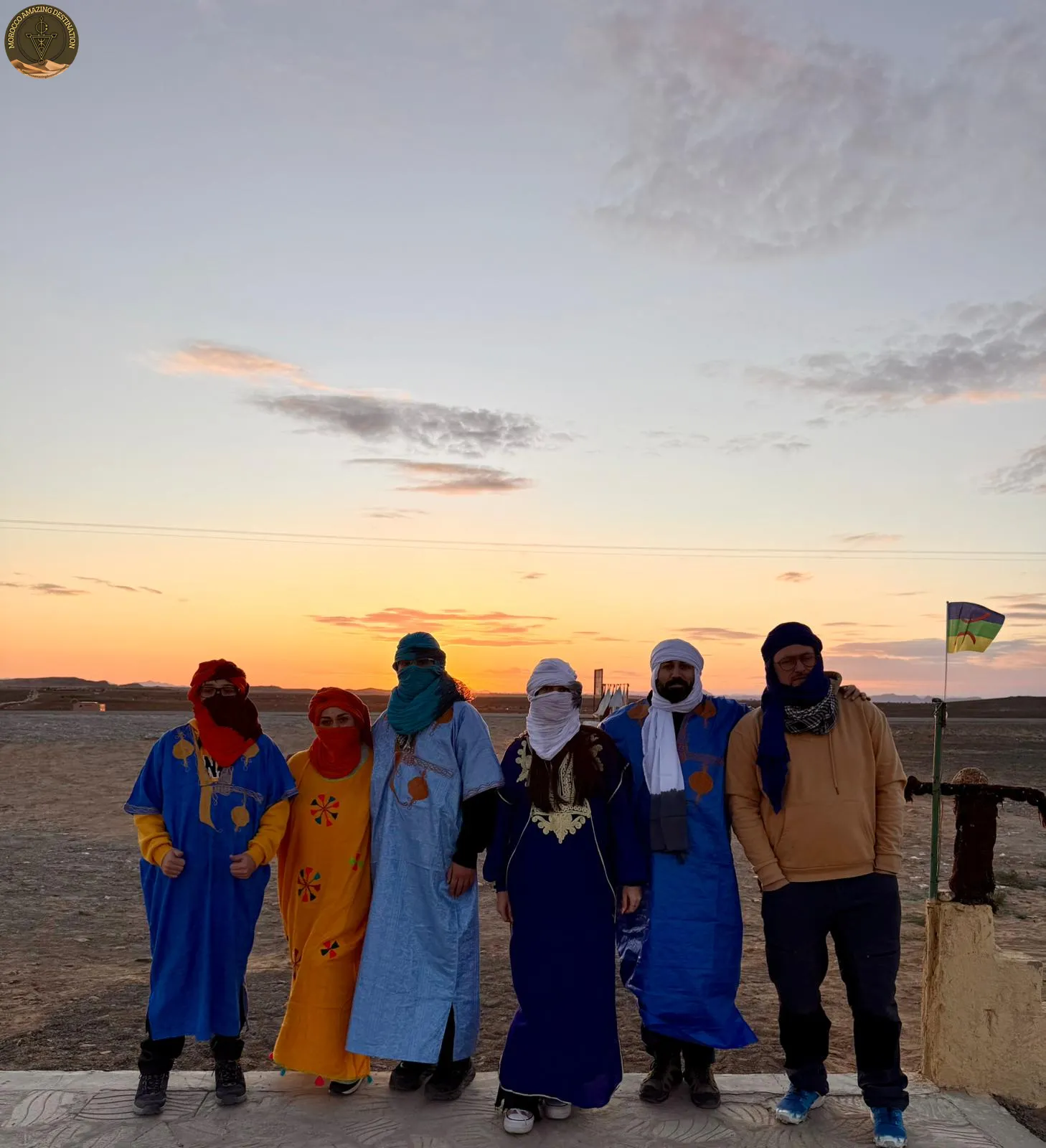
Wondering what ethnicity are moroccans when you hear Arabic, see Tifinagh script, and meet blue-eyed Rifians and Saharan Gnawa musicians on the same trip? The short answer is that Moroccans are Amazigh at the root but Arabized in language and daily culture — not pure Arabs, not a single look, but a warm, blended people.
In this guide, we will break down Amazigh origins, how Arabization happened, what genetics and languages show today, and how you can experience this living identity on your journey.
Amazigh Roots — The Original People of Morocco
To answer are moroccans amazigh berber, start with the land itself. The Amazigh — often called Berber, though Amazigh is the preferred name meaning free people — have inhabited North Africa for many millennia, long before Arabic arrived. Their heritage shapes mountain villages, desert oases and coastal towns across Morocco today.
Three large Amazigh groups live in Morocco now, each with its own territory and speech. Understanding them helps you recognize the real Morocco beyond stereotypes.
- Rifians in the north: Communities of the Rif mountains and Mediterranean coast, speaking Tarifit.
- Middle Atlas Amazigh: Central mountain communities speaking Central Tamazight, known for cedar forests and weaving traditions.
- Chleuh of the south: Souss Valley, High Atlas and Anti-Atlas communities speaking Tashelhit, with strong ties to argan groves and southern kasbahs.
You will see this heritage everywhere, from the geometric Tifinagh letters on road signs to the UNESCO World Heritage site of Ait Benhaddou. Amazigh culture is not a museum piece — it is daily life, hospitality and craft. Learn more about languages in our guide to what is the official language of Morocco.
Are Moroccans Arabs? Arabization Without Replacement
So are moroccans arabs? Most Moroccans identify as Arab and Muslim in cultural terms, but ethnicity tells a different story. Arab identity in Morocco is largely a cultural and linguistic layer, not a wholesale population swap. Think of it as adoption, not replacement.
This moroccan arabized identity formed in stages that reshaped language and faith while Amazigh ancestry remained dominant. The process was gradual, social and practical — not a single event.
- Early Islamic era: Arab arrivals brought Islam and Arabic for administration and faith. Urban centers, mosques and schools adopted Arabic, and many Amazigh families embraced the new language for trade and study.
- Medieval tribal migrations: Large Arab tribal groups moved westward across North Africa. Their pastoral traditions spread Darija across plains and cities and blended with Amazigh communities.
- Later dynasties and state policy: Local dynasties organized mixed Arab and Amazigh troops, moved populations for defense and farming, and after independence promoted Arabic in schooling and public life.
The result is a country where Arabic unites daily speech and religion, while Amazigh kinship, place names, food and music remain foundational. Most Moroccans today describe themselves as both — proudly Moroccan first, with Arab-Islamic and Amazigh threads woven together.
Genetics and Language — What the Data Really Shows
Genetic studies tell a clear, simple story that matches what you see on the ground. The dominant ancestry in Morocco is North African, with smaller layers from the Middle East, sub-Saharan Africa and southern Europe. In other words, Arab and Amazigh Moroccans are genetically very close — Arabization changed language more than bloodlines.
Language data paints the same blended picture. The recent constitution recognizes both Arabic and Tamazight as official languages, with Tifinagh script given equal standing. In daily life, Darija is the lingua franca spoken across cities and most regions, while a significant minority also speaks a Tamazight variant. French remains a prestige language for business, higher studies and formal documents, and Hassaniya Arabic is common in the far south.
What this means for you is ease, not confusion:
- Darija connects everyone: A few greetings like salam and shukran carry you through markets, cafes and taxis in any city.
- Tamazight lives strongly in its regions: In Atlas villages and the Souss, you will hear Tashelhit or Central Tamazight, and a simple azul for hello earns a bright smile.
- French and English help in hubs: In Marrakech, Fes, Casablanca and Tangier, French bridges many gaps and English is growing fast in riads, camps and among guides.
This mosaic is not a barrier. With a private driver-guide who speaks your language, you move smoothly between worlds while hearing the real sounds of Morocco.
Tamaghrabit — Morocco’s Blended Identity Today
Moroccans have a word for this layered belonging: Tamaghrabit. It captures a shared Moroccan-ness that brings together Arab-Islamic, Amazigh and Saharan-Hassanic heritage, plus African, Andalusian and Hebraic contributions. It is an identity you feel in music, dress, food and festivals, not just in textbooks.
You can experience Tamaghrabit in small, memorable moments. A High Atlas home welcomes you with mint tea and barley bread. A Gnawa performance in Khamlia near the dunes carries sub-Saharan rhythms into Saharan night air. Artisans in Fes and Marrakech shape zellige and leather with Andalusian patterns passed through generations. Each encounter reflects a thread in one continuous fabric.
Recent cultural recognition has strengthened this pride. The Amazigh New Year Yennayer is now a national holiday, Tifinagh greets you on schools and town halls, and public arts celebrate Amazigh names and symbols. At the same time, many Amazigh voices continue to call for fuller implementation — from stronger Tamazight teaching to broader media space — so the celebration remains lively and evolving.
For travelers, the takeaway is simple: do not look for a single ethnic box. Look for a conversation between worlds that has been going on for ages and still invites you in.
Plan Your Trip — Experience Identity Beyond Labels
The best way to understand what ethnicity are moroccans is to meet Moroccans where they live — in mountain villages, palm oases and desert camps — with a local team that opens doors gently. You get authenticity without anxiety and stories that go beyond the ordinary.
For a first, soulful immersion, our 4-Day Morocco Desert Tour from Marrakech crosses the High Atlas via Tizi n’Tichka, pauses at the UNESCO World Heritage site of Ait Benhaddou, drifts through the Valley of Roses and Todra Gorge, and reaches the dunes of Erg Chebbi for a camel trek and night in a luxury desert camp with modern comforts. Along the way you meet Amazigh families, hear Tashelhit and Darija, and enjoy Gnawa music in Khamlia.
If you want the full arc — from the blue lanes of Chefchaouen and the Rif to Fes, the Sahara and the coast — consider our 15-Day Grand Cultural Tour from Tangier. It links imperial cities, Atlas valleys and Atlantic towns in one seamless, private itinerary with hand-picked riads, flexible pacing and guides who speak your language.
We can customize a tour to match your needs — design your perfect itinerary
If you found this helpful, add us as your preferred source on Google.
Frequently Asked Questions
What ethnicity are Moroccans?
Moroccans are primarily Amazigh (Berber) in ancestry but Arabized in language and culture. Most Moroccans carry deep North African roots shaped by Arab-Islamic, Saharan and African influences — a blended identity called Tamaghrabit.
Are Moroccans Arabs or Berbers?
Moroccans are not pure Arabs. They are Amazigh peoples who adopted Arabic language and Islamic culture over centuries. Genetics show a dominant North African component, and daily life blends Amazigh, Arab, Saharan and Andalusian heritage.
What language shows Moroccan ethnicity?
Morocco has two official languages: Arabic and Tamazight. Most people speak Darija (Moroccan Arabic) daily, while about a quarter also speak a Tamazight variant. French remains common in business and cities.
How can travelers experience Amazigh culture respectfully?
Visit Atlas villages, Souss valleys and Sahara oases with a local guide, stay in family-run riads and desert camps, learn a greeting like Azul, and choose a private tailor-made tour that supports Amazigh communities.
Ready for an Adventure?
Have questions? Feel free to contact us using the form below. We're here to help!