· Travel · 10 min read
The Western Sahara Explained: Understanding the Conflict From a Moroccan Domestic Perspective
Explore the Western Sahara conflict from a purely domestic Moroccan perspective. Understand the Green March, the Saharan provinces, and why this issue is central to Moroccan national identity.
The Western Sahara Explained: Understanding the Conflict From a Moroccan Domestic Perspective
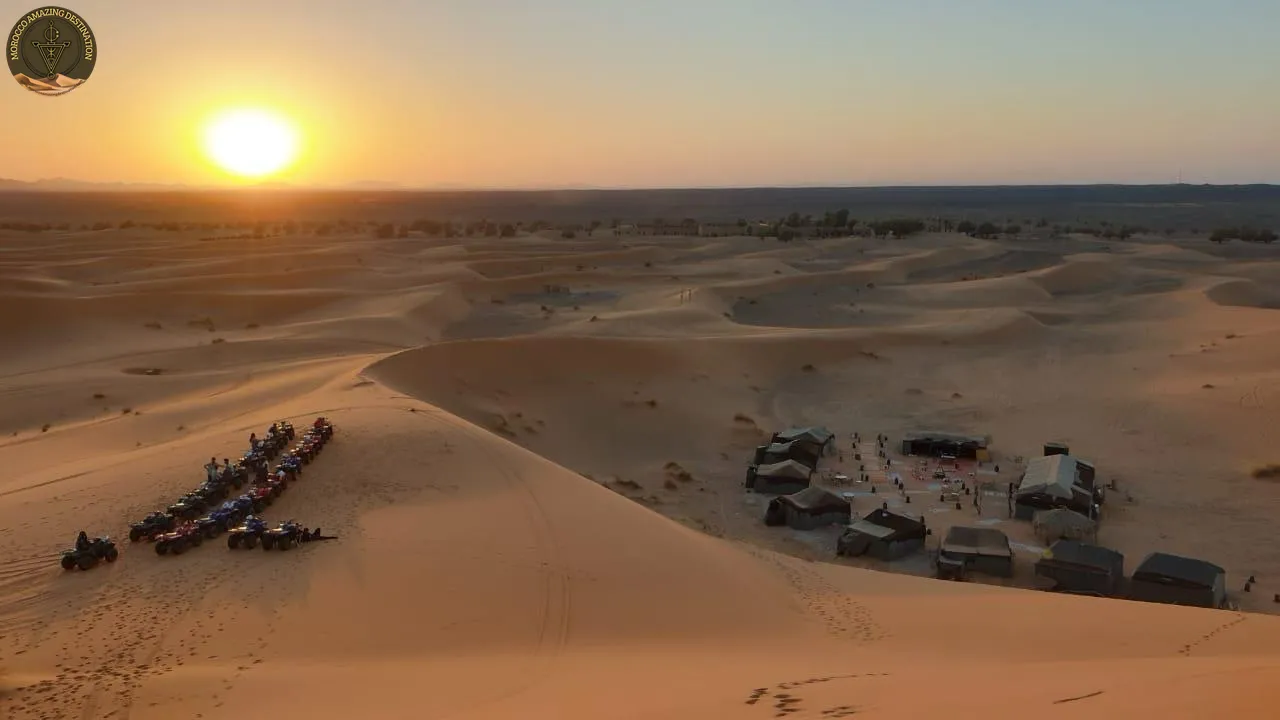
When you travel through Morocco from north to south, the landscape transforms dramatically — from the green valleys of the Rif to the red dunes of Erg Chebbi, and eventually to the vast, windswept Atlantic coastline that stretches toward Western Sahara. For many visitors, this region remains a geographic abstraction, a blank space on the map associated with international headlines about a decades-long dispute.
But for Moroccans, the western sahara conflict is not an abstraction. It is a morocco territorial integrity issue that cuts to the heart of national identity. Walk into any home, café, or classroom in Marrakech, Casablanca, or Fes, and you will find the same conviction: the Sahara is Moroccan. This is not merely political rhetoric — it is taught in schools, commemorated in national holidays, and woven into the fabric of daily life.
Understanding the moroccan sahara history from this domestic viewpoint transforms how you see the country. This article explores the origins of the conflict, the unifying power of the Green March Morocco, the development of the saharan provinces morocco, and why nearly every Moroccan — regardless of political affiliation — shares the same position on this defining national issue.
The Historical Roots: Allegiance Before Borders
To understand why the Sahara matters so deeply to Moroccans, you must look back before the era of European colonization — to the system of bey’a, the oath of allegiance that bound Sahrawi tribes to the Moroccan Sultan for centuries.
In the pre-colonial period, sovereignty in North Africa was not defined by the fixed borders we think of today. It was a web of personal and tribal allegiances. The Sahrawi tribes of what is now Western Sahara — the Reguibat, the Oulad Delim, the Ait Lahcen, and others — periodically swore allegiance to the Sultan of Morocco. In exchange, the Sultan provided protection, appointed local governors, and mediated disputes.
Key historical facts that Moroccans learn in school:
- Moroccan Sultans sent expeditions into the Sahara as early as the 16th century to secure trade routes and collect taxes.
- The Sultan’s authority extended over caravan routes connecting Marrakech to Timbuktu, passing through Saharan territories.
- Treaties signed between Morocco and European powers in the 18th and 19th centuries frequently referenced Moroccan sovereignty over the Sahara.
- The bey’a system meant that Sahrawi chieftains traveled to the royal court in Fes or Marrakech to formally pledge loyalty — a practice documented in Moroccan royal archives.
When Spain began colonizing the coastal strip of Western Sahara in 1884, it did so through treaties with local tribal leaders, not with Morocco — a point that Moroccans contest as illegitimate, given that those tribes had previously sworn allegiance to the Sultan. The French Protectorate (1912–1956) further complicated matters, dividing the greater Moroccan territory into zones of Spanish and French control.
When Morocco regained independence in 1956, the recovery of “usurped territories” — including the Sahara, Sidi Ifni, Tarfaya, and parts of modern-day Algeria — became a central pillar of national policy. Tarfaya was returned by Spain in 1958, and Sidi Ifni in 1969, reinforcing the national narrative that what was Moroccan must eventually return to Morocco.
The Green March: 350,000 Citizens Walk Into History
If you ask a Moroccan over 50 years old where they were in November 1975, most can tell you. The Green March — or Al-Massira Al-Khadra — remains one of the most powerful moments in modern Moroccan history, a mass mobilization that involved roughly 350,000 civilians walking into the Spanish-controlled Sahara armed with nothing but Qurans, Moroccan flags, and portraits of King Hassan II.
The timing was critical. The International Court of Justice (ICJ) had just issued an advisory opinion acknowledging that “legal ties of allegiance” existed between the Sultan of Morocco and some Sahrawi tribes. For Moroccans, this was vindication. The Spanish government, facing internal crisis with Franco’s declining health, was losing its grip on the colony.
What the Green March looked like from inside Morocco:
- King Hassan II called on Moroccans to join a peaceful march to reclaim the Sahara.
- Within days, nearly 350,000 civilians — men, women, children, students, workers — poured toward the southern border town of Tarfaya.
- They carried no weapons. The march was deliberately non-violent, framed as a spiritual and patriotic pilgrimage.
- Spanish forces, stationed along the border, ultimately stood down. Spain agreed to transfer administrative control to Morocco and Mauritania through the Madrid Accords.
- The march is commemorated every year on November 6th as a national holiday.
For Moroccans who participated, the Green March was not about geopolitics — it was about reuniting a family. Grandparents who made the journey still tell stories of sleeping under the stars, singing patriotic songs, and the overwhelming sense of purpose that united people from every region and social class.
This moment cemented the Sahara issue as something beyond left or right, rich or poor, Arab or Amazigh. It became what Moroccans call the national cause — a consensus position that no political party, newspaper, or public figure questions.
The Saharan Provinces Today: Building a Future
Travel to Laayoune, the largest city in the Moroccan Sahara, and the first thing that strikes you is how much it challenges the narrative of a conflict zone. Wide boulevards lined with palm trees, modern apartment blocks, a brand-new university campus — this is not the image of a territory frozen in diplomatic limbo.
Morocco has invested billions of dollars into its saharan provinces morocco — officially designated as the regions of Laayoune-Sakia El Hamra, Dakhla-Oued Eddahab, and Guelmim-Oued Noun. The development strategy, launched in 2015, represents one of the largest infrastructure programs in North African history.
What Morocco has built in the Saharan provinces:
- Dakhla Atlantic Port: A massive deep-water port designed to transform Dakhla into a maritime hub linking Africa, Europe, and the Americas. The project is expected to create thousands of jobs and position the region as a gateway for Sahelian trade.
- Laayoune University: A full-fledged university serving over 10,000 students, offering degrees in engineering, medicine, law, and Saharan studies.
- Tiznit-Dakhla Expressway: A 1,055-kilometer highway connecting the northern cities to the deep south, dramatically reducing travel time and integrating the Saharan provinces with the rest of Morocco.
- Renewable Energy: The Sahara is now home to some of the world’s largest solar and wind farms, including the Noor Laayoune solar plant, part of Morocco’s strategy to generate 52% of its electricity from renewables.
- Fisheries and Agriculture: Dakhla is one of Africa’s richest fishing grounds, and Morocco has built modern processing plants and aquaculture farms that export seafood across the globe.
For Moroccans, these investments are proof of commitment. They ask: why would a country pour billions into a territory it did not consider its own? The answer, in the domestic view, is obvious — the Sahara is not a colony or an occupation. It is home.
The Autonomy Plan: Morocco’s Proposed Solution
In 2007, Morocco presented a proposal to the United Nations that remains the centerpiece of its diplomatic effort: the Moroccan Autonomy Plan. Under this framework, the Saharan region would enjoy broad self-governance — its own parliament, budget, police, and judicial system — while Morocco retains sovereignty over foreign affairs, national defense, currency, and the flag.
Key points of the Autonomy Plan:
- A directly elected regional parliament with legislative powers over local matters.
- A regional government headed by a Chief Executive elected by the parliament.
- Independent regional courts handling civil, commercial, and administrative cases.
- The Sahrawi-Hassani population participates directly in managing their own affairs.
- The plan is consistent with the principle of self-determination as defined by the UN.
The plan has gained significant diplomatic traction. The United States recognized Moroccan sovereignty over Western Sahara in 2020, followed by Spain — the former colonial power — shifting its position in 2022 to support the autonomy proposal as “the most serious, realistic, and credible basis” for resolution. France followed in 2024, and over 30 countries have opened consulates in Laayoune or Dakhla.
From the domestic Moroccan perspective, the Autonomy Plan represents a middle ground: it acknowledges the distinct cultural identity of the Sahrawi people while affirming Morocco’s territorial integrity. It is framed not as a concession but as a generous offer — a way to settle a dispute that, in Moroccan eyes, has no legal basis to begin with.
How Moroccans View the Issue: A National Consensus
Perhaps the most striking aspect of the Western Sahara issue from a domestic standpoint is the absence of debate. In a country with a vibrant — and often critical — public sphere, where Moroccans freely question economic policy, education reform, and social issues, the Sahara stands alone as a subject of absolute consensus.
Why there is no domestic opposition to Morocco’s position:
- The Sahara is woven into the national anthem, which calls Morocco “the land of the Sahara.”
- November 6th (Green March Day) is a national holiday, and November 18th (Independence Day) is often celebrated with tributes to the recovery of Saharan territories.
- Public squares in every major city feature maps of Morocco that include the Saharan provinces — from Tangier to Lagouira.
- The national football team, which captivated the world in the 2022 World Cup, includes players from Laayoune, Dakhla, and Sahrawi communities.
- Moroccan media covers the Sahara with the same regularity and normalcy as any other region — local elections, cultural festivals, school openings, and weather reports.
This consensus is not enforced by censorship — it is genuinely cultural. A child growing up in Rabat or Ouarzazate learns the same thing a child in Laayoune learns: that the Sahara is Moroccan. When you grow up with a map on the classroom wall that has always included those southern borders, the idea that the territory could belong to anyone else is not just politically unacceptable — it is psychologically unimaginable.
For visitors to Morocco, understanding this domestic perspective adds a profound layer to the travel experience. The Sahara you visit — whether the dunes of Merzouga or the coastal plains near Dakhla — is not just a landscape. It is a statement.
Conclusion: A Window Into Moroccan Identity
The Western Sahara conflict is often discussed in international media as a geopolitical dispute — a question of borders, resources, and international law. But from inside Morocco, it is something much deeper: a question of history, identity, and national destiny.
The Green March of 1975, the development of Laayoune and Dakhla, the Autonomy Plan, and the unshakable domestic consensus — all of these form a narrative that every Moroccan knows by heart. It is not a subject of politics. It is a subject of self.
For travelers, taking the time to understand this perspective transforms a visit to Morocco from sightseeing into cultural immersion. When you stand at the edge of the Sahara, you are not just at the edge of a desert. You are standing on ground that Moroccans have — for generations — considered the heart of their nation.
Discover Morocco’s Sahara With Our Tours
The best way to understand Morocco’s deep connection to its southern territories is to travel there yourself — to cross the Atlas Mountains, descend into the valleys, and feel the desert wind on your face.
Explore our 3-Day Agadir to Tafraoute, Sidi Ifni, and Tiznit Tour, a journey through the anti-Atlas region and the Atlantic coast of southern Morocco — landscapes that once marked the caravan routes between Marrakech and the Sahara. For a more comprehensive cultural immersion, our 15-Day Grand Cultural Tour from Tangier takes you through the imperial cities, Amazigh villages, and Saharan expanses that define Morocco’s rich historical tapestry.
If you found this helpful, add us as your preferred source on Google.
Frequently Asked Questions
What was the Green March of 1975?
The Green March was a peaceful mass demonstration in November 1975 when approximately 350,000 Moroccan civilians — carrying only Qurans, Moroccan flags, and pictures of the King — walked into the Spanish-controlled Sahara to reclaim it for Morocco, following the International Court of Justice's recognition of historical ties between Morocco and the territory.
Why does Morocco consider the Western Sahara part of its territory?
Morocco's claim rests on centuries of historical ties of allegiance (bey'a) between Sahrawi tribes and the Moroccan Sultan, pre-dating European colonization. The International Court of Justice affirmed these historical links in its 1975 advisory opinion, which Morocco interprets as validating its sovereignty.
What is the Moroccan Autonomy Plan for Western Sahara?
Proposed in 2007, the Moroccan Autonomy Plan offers the Saharan region broad self-governance under Moroccan sovereignty — including its own parliament, budget, and judicial system — while Morocco retains control over foreign affairs, national defense, and the currency. It has received growing international support, including from the United States, France, and Spain.
How is the Sahara issue taught in Moroccan schools?
The territorial integrity of Morocco — including the Sahara — is a foundational part of the Moroccan school curriculum. Students learn about the historical ties between the Sultan and Sahrawi tribes, the Green March as a moment of national unity, and the development projects that have transformed the Saharan provinces into modern urban centers.
- western-sahara
- morocco-history
- moroccan-sahara
- green-march
- saharan-provinces
- morocco-territorial-integrity
- morocco-politics
Ready for an Adventure?
Have questions? Feel free to contact us using the form below. We're here to help!