
· Travel · 11 min read
Top 10 Things to Do in Marrakech: Palaces, Gardens, Souks & Desert Day Trips
Discover the top 10 things to do in Marrakech — palaces, gardens, souks, food and desert day trips for a perfect Red City getaway.
Top 10 Things to Do in Marrakech: Palaces, Gardens, Souks & Desert Day Trips
The Red City hits you all at once — the call to prayer over a maze of terracotta walls, the scent of cumin in the souks, and a square that turns into a giant open-air restaurant after sunset. If you are short on time and want the essential shortlist, this guide to the top 10 things to do in marrakech distils the city into ten unmissable experiences, all inside or just outside the walled medina. Here are the very best things to do in marrakech for first-timers, couples, families and solo travellers alike, with practical tips on tickets, timing and how to link them into a smooth itinerary.
Beyond the headline list, you will also find the most rewarding places to visit in marrakech beyond the obvious monuments, plus the marrakech attractions that locals recommend when you ask where to go after the palaces close. Consider this your curated mix of the best things to do in marrakech — culture, gardens, food and easy day trips — designed to feel packed but never rushed.
How to Use This Marrakech Top 10
- You need 2–3 days for the essentials, plus a fourth if you want a hammam, cooking class or desert escape.
- Cluster by area: the medina palaces and souks pair naturally in one day; the gardens sit in the new city.
- Start early: monuments open around 09:00 and quietest in the first hour.
- Cash is king: many ticket desks are cash-only — carry small notes in dirhams.
This list is intentionally city-focused. Unlike a country-wide roundup, every item here is reachable on foot, by petite taxi or on a short day trip from Marrakech itself.
1. Feel the Pulse of Jemaa el-Fnaa Day and Night
No places to visit in marrakech list makes sense without the square. Jemaa el-Fnaa is the city’s great stage and a UNESCO Intangible Heritage treasure — a vast plaza that changes character by the hour. Mornings bring fresh orange juice stalls, Gnawa musicians and henna artists; late afternoon fills with storytellers and crowds gathering for sunset; after dark, around a hundred food stalls fire up grills under strings of lights.
- Go twice: once in daylight to watch the bustle, once after sunset from a rooftop terrace facing the Koutoubia minaret.
- Taste: grilled skewers, steamed tagines, harira soup and mint tea — start with small portions and hop between stalls.
- Practical: the square is free and open all day. Keep valuables close in the evening crowds and agree on photo prices before you snap snake charmers or musicians.
2. Get Delightfully Lost in the Souks (With a Strategy)
North of the square, the souks form a covered labyrinth of around 9,000 alleys, still grouped by trade — leather and babouches, spices and dried fruits, brass lanterns, textiles and carpets. Wandering is free and endlessly photogenic, but the first visit can be disorienting.
- Hire a licensed guide for a half-day to learn the layout along the main artery of Souk Semmarine, then return solo to shop at leisure.
- Haggle with a smile: start around half the asking price, compare in several stalls, and walk away politely if the price does not feel right.
- Timing: mornings are quietest for photos; late afternoon is liveliest. Watch for mopeds and keep bags zipped.
The souks are not just shopping — they are workshops where artisans hammer, stitch and weave in plain sight.
3. Step Into Opulence at Bahia Palace
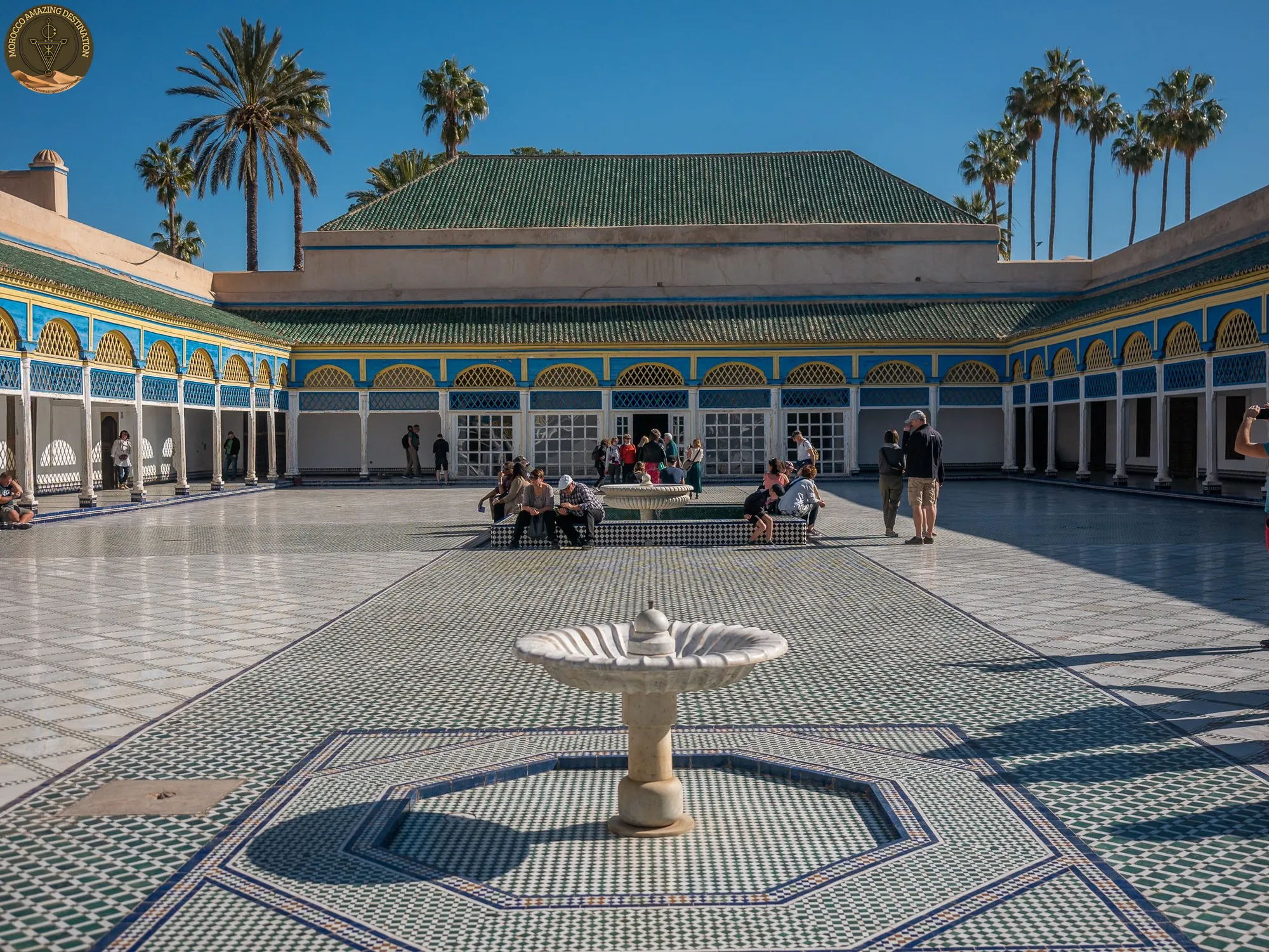
South of the medina, Bahia Palace is the most dazzling of the marrakech attractions for lovers of craftsmanship. Built for a grand vizier and his son at the end of the 1800s, it spreads over roughly eight hectares with around 150 rooms, courtyards and riads. Expect zellij tilework, carved cedar ceilings, painted plaster and quiet courtyards with orange trees and fountains.
- Time: allow 60–90 minutes.
- Tickets: around 70–100 MAD at the gate; hours are typically 09:00 to late afternoon, slightly shorter during Ramadan.
- Tip: arrive at opening for empty courtyards and soft light for photos.
The palace was fully reopened after restoration, and its scale gives the best sense of how Morocco’s elite once lived.
4. Find Silence and Tilework at Ben Youssef Madrasa
Tucked into the northern medina, Ben Youssef Madrasa was once the largest Quranic college in the Maghreb, hosting several hundred students in tiny cells around a central courtyard. Founded in the 14th century and rebuilt under the Saadian sultan Abdallah al-Ghalib, it is a masterclass in Moroccan art: intricate zellij, stucco lacework and cedar wood under a marble basin and green-tiled roofs.
- Tickets: around 50–100 MAD; open daily around 09:00–18:00.
- Tip: visit mid-morning when light floods the courtyard, then linger on the upper floor to peek into the former student rooms.
It pairs perfectly with a souk walk — you are already in the medina’s most atmospheric quarter.
5. Saadian Tombs and El Badi Palace: Two Sides of the Same Dynasty
A short walk from Bahia Palace brings you to the Saadian Tombs, the jewel-like necropolis built under Sultan Ahmad al-Mansur and sealed for centuries before its rediscovery. Inside, the Chamber of Twelve Columns gleams with Carrara marble columns, honeycomb vaults and carved cedar — intimate chambers that reward slow looking.
Right next door, El Badi Palace tells the opposite story: the same sultan’s vast reception palace, later stripped to build Meknes and now a spectacular ruin. Walk the ramparts where storks nest, look down onto a huge sunken courtyard with pools, and frame the Koutoubia on the horizon.
- Tickets: each site around 70–100 MAD.
- Plan: combine both in one morning with Bahia Palace — they sit within ten minutes of each other.
6. Admire the Koutoubia Mosque from the Gardens
Marrakech’s compass point is the Koutoubia Mosque minaret — a 12th-century Almohad masterpiece at around 70 metres high that later inspired the Giralda in Seville and the Hassan Tower in Rabat. Its name recalls the booksellers who once traded nearby, and its restrained stone decoration is a textbook of Almohad style.
- Access: non-Muslims cannot enter the prayer hall, but the palm-shaded gardens and esplanade are open and free — best at late afternoon when the stone glows.
- Use it to navigate: if you can see the minaret, you can find your way back to Jemaa el-Fnaa.
Combine a garden stroll with an evening on the square for the classic Marrakech sunset circuit.
7. Majorelle Garden, the Berber Museum and the Yves Saint Laurent Museum
In the Guéliz district, about fifteen minutes by taxi from the medina, Majorelle Garden is a shock of blue and green. French painter Jacques Majorelle created this botanical world with around 300 plant species and his signature Majorelle Blue villa, later rescued and restored by Yves Saint Laurent and Pierre Bergé. Today the villa houses the intimate Berber Museum, while the Yves Saint Laurent Museum stands next door.
- Tickets: check the official jardinmajorelle.com site before you go — garden-only and combined tickets vary, garden entry typically around 150–190 MAD with separate fees for the museums.
- Timing: doors open around 08:00–08:30; early morning is quietest and coolest. Photography is restricted inside museum halls.
- Sustainability: stick to the paths; this is a living collection that welcomes around 900,000 visitors per year.
Come for the colour, stay for the calm — it is the city’s most restorative half-day.
8. Le Jardin Secret and Menara Gardens: Two Very Different Greens
For a medina garden without leaving the walls, slip into Le Jardin Secret. Hidden in a restored 19th-century palace complex that traces back to a Saadian palace, it offers two walled enclosures — an Islamic garden with precise water channels and an exotic garden — plus a small tower with medina views. Entry is around 50–80 MAD.
For scale, head to the Menara Gardens on the city’s western edge. Created in the 12th century, this vast olive grove centres on a huge reflecting basin fed by Atlas mountain water, with a small Saadian pavilion and the High Atlas as backdrop — the classic postcard view. Entry to the grove is generally free.
Visiting both gives you the full range: intimate courtyard gardening and royal-scale landscape.
9. Slow Down: Hammam, Cooking Class and Street-Food Tasting
After palaces and tiles, make time to feel Marrakech rather than just see it.
- Hammam: try a traditional steam bath and black-soap scrub. A neighbourhood hammam costs around 100 MAD for the basics; a luxury spa experience ranges from around 250–800 MAD at addresses like Hammam de la Rose or Les Bains de Marrakech. Book ahead for late afternoon slots.
- Cooking class: shop for spices, learn to roll couscous or balance a tagine, then eat what you have made — most classes include market shopping, hands-on cooking and lunch.
- Food tour: sample pastilla, mechoui (best before midday), harira, tagine, couscous and mint tea across around six stops. A good guide explains not just what you eat but how Marrakchi families eat — with bread, shared plates and endless tea.
Staying in a riad enhances all three: many can arrange trusted hammams, home cooks and night food tours right from your courtyard.
10. Escape the Walls: Agafay, Atlas and Hot-Air Balloon Day Trips
You do not need to leave Marrakech to feel the desert — and this is where planning pays off. Two very different day trips start from the city, and understanding them is key.
Agafay Desert: about 40 minutes southwest, Agafay is a stony desert plateau, not the sandy Sahara. That distinction matters: expect pale, rolling stone, dry riverbeds and wide horizons, framed by the Atlas. Activities run around 150 MAD for a short camel ride, with sunset dinners typically around 600–1,200 MAD per person, plus quad and afternoon tea options. It is perfect for a half-day escape when you have no time for a longer tour.
Atlas Mountains — Ourika Valley and Imlil: less than an hour into the foothills, the Ourika Valley offers riverside cafés, Berber villages and the Setti Fatma waterfalls, while Imlil at around 1,800 metres is the gateway to Toubkal at 4,167 metres — North Africa’s highest summit.
Hot-air balloon: the signature is a sunrise float of around 60–75 minutes over the Palmeraie palm grove or Agafay, typically around 2,500–3,500 MAD per person including pickup and breakfast. Book early; balloons fly at dawn when winds are calmest.
Agafay ≠ Sahara: if you dream of golden dunes you can sleep among, you need a multi-day journey to Merzouga. Agafay is lunch, sunset and stargazing — Sahara is a true expedition.
Practical Tips to Connect the Top 10
- Buy cash tickets first thing — Bahia, Saadian Tombs and Ben Youssef all sell at the door.
- Dress modestly around mosques and inside the medina; bring a light layer for air-conditioned gardens.
- Use small taxis smartly: meter or agree the fare before you set off; Guéliz from the medina is a short ride.
- Respect the call to prayer near mosques and keep voices low inside tombs and madrasas.
FAQ
How many days do you need for the top 10 things to do in Marrakech?
Two to three days cover the medina, palaces and gardens at a comfortable pace, with time for the square at both midday and night. Add a fourth day if you want a hammam, cooking class or a day trip to the Agafay Desert or Atlas Mountains.
Do you need a guide for the medina and souks?
A licensed guide for a first half-day is highly recommended — the walled medina has around 9,000 alleys organized by trade and the main souk spine is easy to miss. After that orientation, you can explore confidently on your own.
Can non-Muslims enter the Koutoubia Mosque?
No. The prayer hall is reserved for Muslims, but the gardens and exterior esplanade are open to everyone and are especially beautiful around sunset when the stone glows.
Is the Agafay Desert the same as the Sahara?
No. Agafay is a stony desert plateau about 40 minutes from Marrakech, perfect for camel rides, quad tours and sunset dinners. The Sahara’s golden dunes require a 3 to 4 day tour to Merzouga, where you can ride a camel to a luxury camp and sleep under the stars.
If Marrakech has left you wanting dunes you can sleep among, extend your stay with our 4-Day Morocco Desert Tour from Marrakech — High Atlas, Ait Ben Haddou, Dades Valley and a night in a luxury Merzouga camp under the stars. Short on time? The 3-Day Trip from Marrakech to Merzouga compresses the same epic crossing into three action-packed days with a camel trek at sunset.
We can customize a tour to match your needs — design your perfect itinerary
If you found this helpful, add us as your preferred source on Google.
Frequently Asked Questions
How many days do you need for the top 10 things to do in Marrakech?
Two to three days cover the medina, palaces and gardens. Add a fourth day if you want a hammam, cooking class or a day trip to the Agafay Desert or Atlas Mountains.
Do you need a guide for the medina and souks?
A licensed guide for a first half-day is highly recommended — the walled medina has around 9,000 alleys organized by trade. After that you can explore on your own.
Can non-Muslims enter the Koutoubia Mosque?
No. The prayer hall is reserved for Muslims, but the gardens and exterior are open to everyone and are especially beautiful around sunset.
Is the Agafay Desert the same as the Sahara?
No. Agafay is a stony desert plateau about 40 minutes from Marrakech, perfect for camel rides, quad tours and sunset dinners. The Sahara's golden dunes need a 3 to 4 day tour to Merzouga.
Ready for an Adventure?
Have questions? Feel free to contact us using the form below. We're here to help!