· Travel · 5 min read
Things to Know Before Visiting Morocco: Essential Guide
Essential things to know before visiting Morocco — dress, money, transport, safety and food tips to travel with confidence.
Planning your first trip to North Africa is exciting, and a little preparation goes a long way. The things to know before visiting morocco are simple once you learn them: modest dress, cash-based medinas, varied transport, and warm hospitality shape daily life. Visiting Morocco is straightforward if you respect local etiquette, carry small cash, and plan logistics in advance.
In this guide, we will break down culture and what to wear, how money, language and connectivity work, and how to get around safely while enjoying food and water with confidence.
Culture, Etiquette and What to Wear in Morocco
Morocco blends Amazigh and Arab traditions with a welcoming Muslim culture. A greeting like Salam Alaikum opens doors, and a smile goes further than a hard sell. During Ramadan, days are quieter and evenings more festive around the fast-breaking meal; as a visitor, eat and drink discreetly in public.
Most mosques are closed to non-Muslims. The Hassan II Mosque in Casablanca is the notable exception with guided visits, while others are best admired from outside. Always ask before photographing people, stalls, or workshops, and use your right hand to give and receive.
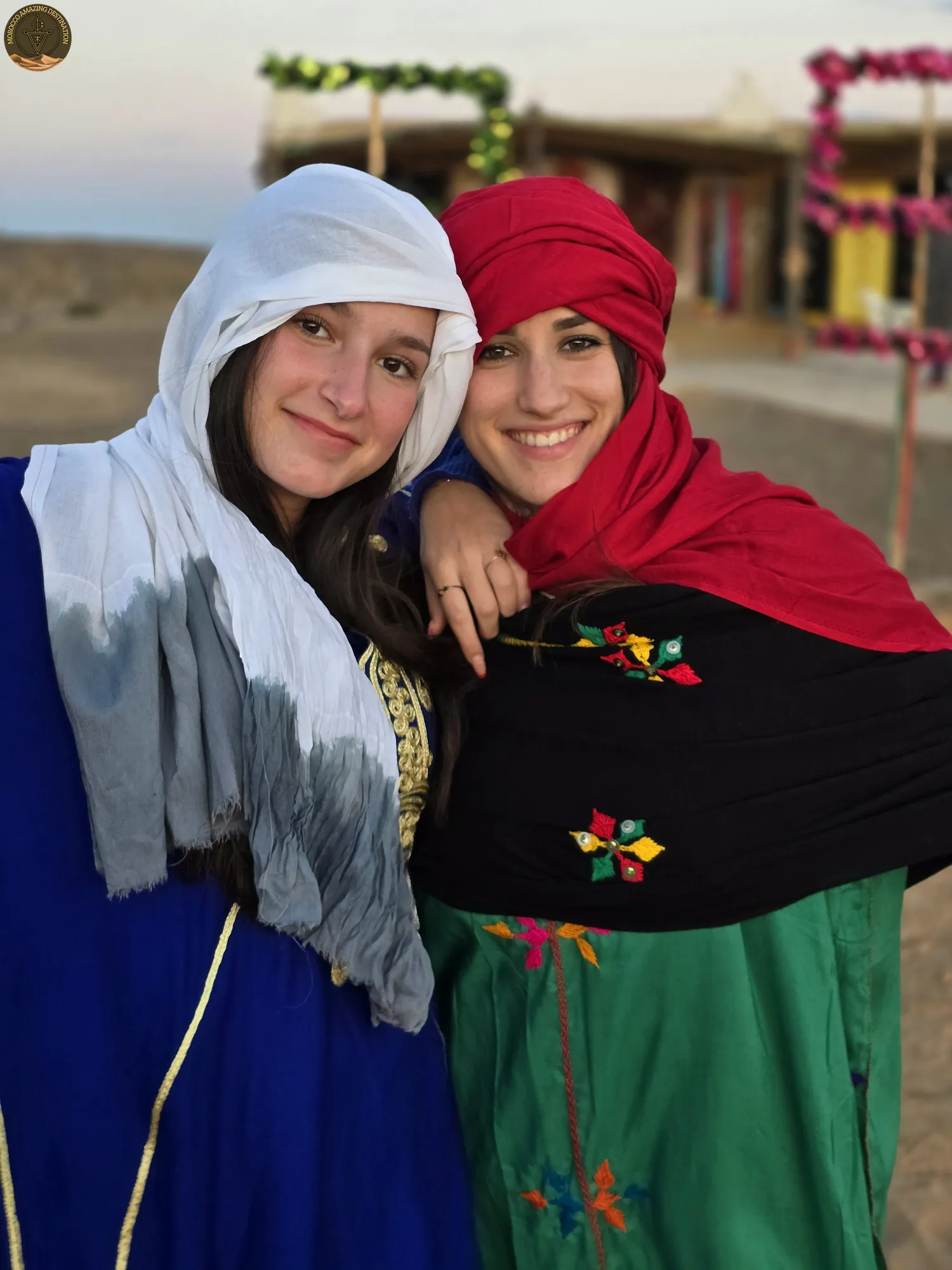
Wondering what to wear in morocco? Choose modest, breathable comfort. Locals appreciate shoulders and knees covered, especially in medinas. You do not need to cover your head, but a light scarf helps for sun and cooler evenings.
Packing essentials:
- Loose layers: Long skirts, flowing pants, short-sleeve tops with a light overshirt, and linen or cotton shirts.
- Light scarf or shawl: Useful for sun, wind, and extra modesty when needed.
- Comfortable walking shoes: Medinas mean cobblestones and riad stairs; closed, breathable shoes beat flip-flops.
Money, Language and Staying Connected
Money is one of the most practical morocco travel tips to master. The Moroccan dirham, or MAD, is a closed currency you exchange after arrival. Rates hover around ten to eleven dirhams per euro, but check near departure as rates shift. ATMs are common inside bank branches at airports and in city centers, often with limits around 2,000 to 4,000 MAD per withdrawal.
Cash remains king in medinas. Souks, Jemaa el-Fnaa stalls, petit taxis and many riads are cash-only, so carry 500 to 1,000 MAD for daily spending and request small notes for taxis, tips and markets. Cards work reliably in larger hotels, supermarkets and modern districts, yet assuming cash keeps you moving.
Money and tipping tips:
- Use indoor ATMs: Prefer machines attached to bank branches and notify your bank before travel.
- Break large notes: Small denominations save time when bargaining and tipping.
- Tip with ease: Round up taxi fares; leave 10 to 20 MAD in cafes when service is good; add 50 to 150 MAD for a helpful driver-guide day.
Language is flexible. Arabic and Tamazight are official, French is widespread, and English grows in tourist areas. A few Darija phrases earn goodwill fast. Connectivity is easy: a local SIM often costs 20 to 30 MAD with about 10 MAD per gigabyte, and 4G is solid in cities though patchier in the Atlas and dunes. Wi-Fi is standard in riads and cafes.
Getting Around Morocco: Transport, Safety, Food and Water
Morocco rewards travelers who mix transport modes. Trains by ONCF link major cities, including the fast Al Boraq between Casablanca and Tangier, while CTM and Supratours buses reach smaller towns. Inside cities, beige petit taxis handle short hops on the meter or by agreed price if the meter stays off. Medinas are walking-only.
Safety is about awareness, not worry. Tourist police are visible in medinas and violent crime is rare. The usual hassle is soft pressure: unsolicited guides, detours to shops, or inflated first prices. A calm, firm La, shukran and keep walking works well.
Stay comfortable and secure:
- Keep valuables discreet: Use a crossbody bag, store your phone when filming, and avoid flashing large cash.
- Phone and bag awareness: Hold your phone firmly in crowds and on squares, especially at night.
- Solo and women travelers: Modest dress, confident pace and sitting near families in cafes help; step into a shop or cafe if you feel uneasy.
Food and water are delicious when you choose wisely. Tagine, couscous on Fridays, harira soup and mint tea are daily joys. Pick busy stalls that cook to order and hand over items with your right hand. Drink only sealed bottled water, including when brushing teeth if you are sensitive, and skip tap water and ice outside established restaurants.
Why These Morocco Travel Tips Save Time and Stress
These morocco travel tips turn small unknowns into easy routines. Knowing the dirham is closed, that cards are limited, and that medinas run on cash prevents delays at markets and taxis. Understanding dress expectations and greetings helps you feel at ease and welcomed.
Transport knowledge maximizes your days. Trains and buses run on reliable schedules, but booking ahead in peak seasons avoids sold-out departures. In taxis, confirming the meter or price before moving off avoids debate later. For bargaining, think friendly negotiation: browse a full section to learn price ranges, start around 30 to 40 percent of the first ask, and settle near half if you love the piece.
Awareness of soft scams saves energy. Common lines include offers to guide you to your riad or show a hidden viewpoint that ends in a shop. Polite firmness plus a local driver-guide who knows every shortcut keeps your itinerary smooth. That calm, well-informed pace is what lets you enjoy the call to prayer, the scent of spices, and the glow over the dunes without rushing.
Plan Your Morocco Trip With Confidence
Morocco is made for thoughtful, flexible travel. Hand-picked riads, clear inclusions, and a private driver-guide turn long distances into scenic drives with panoramic stops and real local encounters.
Explore the Sahara in depth with our 4-Day Morocco Desert Tour from Marrakech, crossing the High Atlas via Tizi n’Tichka, the UNESCO World Heritage site of Ait Benhaddou, and the Dades Valley to Merzouga for a sunset camel trek and luxury camp night. For a wider loop, the 12-Day Morocco Grand Tour links Casablanca and the Hassan II Mosque with Chefchaouen, Fes, the desert, and Marrakech to Essaouira.
We can customize a tour to match your needs — design your perfect itinerary
If you found this helpful, add us as your preferred source on Google.
Frequently Asked Questions
Can you drink tap water in Morocco?
No. Stick to sealed bottled water for drinking and brushing teeth if you are sensitive. Cooked foods and busy street stalls are generally fine, but avoid ice and unwashed salads away from established restaurants.
What should I wear in Morocco as a visitor?
Dress modestly and comfortably. Cover shoulders and knees with loose, breathable layers like linen or cotton. You do not need to cover your head, but modest dress is appreciated in medinas, souks and near religious sites.
Should I bring cash or can I use a card in Morocco?
Bring cash. The Moroccan dirham is a closed currency you exchange on arrival. Souks, petit taxis, small cafes and many riads are cash-only. Cards work mainly in larger hotels, supermarkets and modern neighborhoods.
Is Morocco safe for first-time visitors?
Yes, Morocco is generally safe for tourists with normal precautions. Violent crime is rare and tourist police are present in medinas. Stay aware in crowds, keep valuables discreet, and politely decline unwanted help with a firm 'La, shukran.'
Ready for an Adventure?
Have questions? Feel free to contact us using the form below. We're here to help!