
· Travel · 6 min read
Surfing in Agadir: Lessons, Camps and Gear, Explained
Surfing in Agadir explained: lesson costs, gear and transfers included, wetsuit thickness by season, and how to choose a lesson, course or camp week.
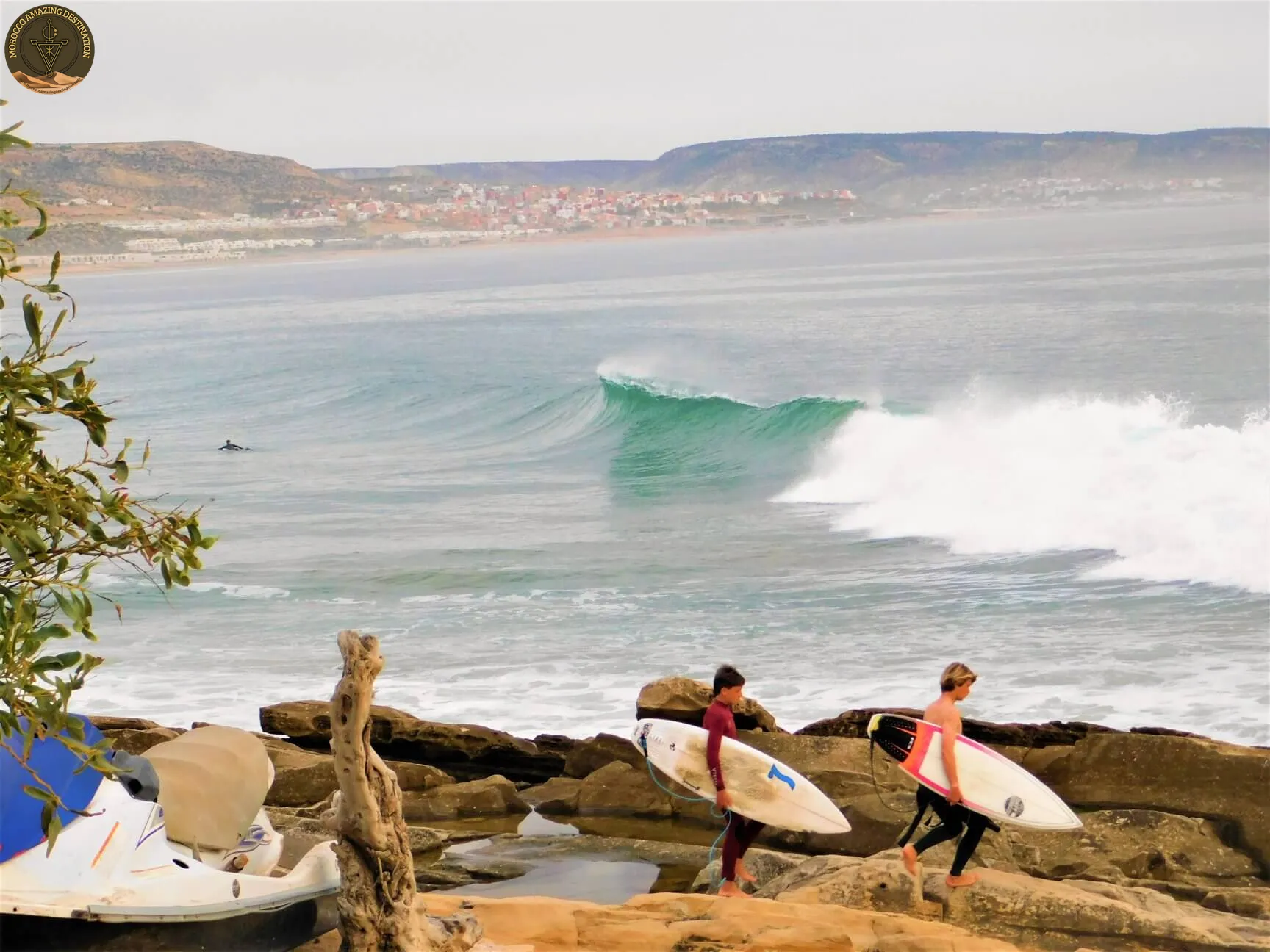
Most people book surfing in Agadir through their hotel the night before, then stand at the gate in the morning wondering whether a van is coming. The numbers are easy enough to plan around: a lesson runs two to two and a half hours and costs €25 to €30 in a group, or €45 to €60 private, with the board, wetsuit and safety briefing usually included.
In this guide, we will break down how a single lesson, a short course and a camp week differ, what schools put in the price, and how to line the gear, the season and the break up with your level.
Lesson, Course or Camp Week: Choosing the Format
You can give surfing two hours of a holiday or most of a week, and the format shapes the trip more than the beach you end up on does. Nearly all surf lessons in Agadir are sold in three shapes.
- Single lesson: two to two and a half hours, €25–€30 in a group or €45–€60 one to one. Enough time to learn whether you enjoy being in the water with a board attached.
- Two- or three-day course: around €45 for two days of two-hour sessions, roughly €65 for three. The second session is usually where standing up stops being luck.
- Camp week: what most surf camps in Taghazout and Tamraght put together, with six or seven nights, meals, six or seven coached sessions, gear and daily transfers to the day’s spot. Five-night packages start near €300, and full-board seven-night weeks land between €500 and €650. Yoga and airport transfers are common additions.
Group size decides how much coaching you get. Schools cap groups at about six surfers per instructor and charge roughly half the private rate, so most waves bring a correction. Pay for one-to-one when you want attention on every attempt, and book a few days ahead in high season if you need a hotel pickup.
What a Beginner Surf Lesson in Agadir Includes
A soft-top board matched to your size, a wetsuit and a briefing on currents come with almost every lesson sold on this coast. Most schools add a rash vest and a bottle of water, and you bring swimwear, a towel and sunscreen.
The drive is where offers separate:
- Transfer included: the school reads the morning’s swell and tide, picks the beach and drives you there.
- Shop meet-up: you make your own way to a surf village and pay around €10 for pickup.
- Hotel collection: available from the Agadir resort strip, usually on request rather than as standard.
Two questions settle it before you pay: where do we meet, and is the drive included. Taghazout is 25 to 30 minutes from the city, about 20 km, and Tamraght 20 to 25 minutes, both simple in a van and awkward with a board on your knee at eight in the morning. Imsouane, at 90 minutes to two hours, belongs in a day out rather than a lesson slot.
Tell the school your weight when you book, since boards are sized by kilos. Cash is normal here and €1 buys about 11 dirham, so bring euros or change money on arrival. Our guide to Taghazout and the coast north of Agadir covers the villages if you would rather sleep near the water.
Wetsuits, Water Temperature and the Best Time to Surf
Water temperature decides your gear far more than the air does. From December to April the Atlantic sits at 17–18 °C, and you want a 4/3 mm full suit. July to November it climbs to 20–22 °C, which is 3/2 mm weather, or a shorty if you run warm.
The best time to surf in Agadir depends on what you want from the water. Autumn through spring brings the steady Atlantic swell this coast is known for. Summer is smaller, softer and easier on beginners. Surfing runs all year, and on a sheltered sandy beach a small summer day makes a better classroom than a pumping winter one.
Mornings are cleaner before the wind fills in, and schools plan around that. Ask what time the van leaves, because a nine o’clock departure gives you two hours of glass and an eleven o’clock start does not.
Matching the Break to Your Level, and Staying Safe
What the wave breaks over decides how the session goes. Sand is forgiving and breaks softer, so a fall costs you a mouthful of water. Rock reef is sharper and less predictable. A long peeling point rewards people who can already turn and paddle out without help.
Beginners belong on soft boards in shallow water over sand. Improvers move out to unbroken green waves and learn to read the ocean. Points and reefs come after a season, not after a week. Children can take private lessons from seven or eight, and some schools run women-only sessions on request.
Safety on this coast comes down to a short list:
- Rips: paddle parallel to the shore until the current lets you go, and keep breathing. Fighting it head-on is what tires people out.
- Your board: hold on to it in a crowd. It floats, and it is heavy enough to hurt whoever is behind you.
- Right of way: the surfer closest to the peak goes. No drop-ins, and paddle wide around the take-off zone.
If a school cannot say what the bottom is like at the spot it plans to use, ask somewhere else.
Plan the Rest of Your Trip Around the Waves
Surf mornings leave afternoons open, and Agadir works as a base for both halves of the day. Our guide to what else to do in Agadir covers the souks, the coast and the day trips within reach, so a week here is not only salt water and wet neoprene.
Two of our tours fit around a surf block. The 3-Day Tour from Agadir to Tafraoute, Sidi Ifni and Tiznit heads inland to the granite country of the Anti-Atlas with a private driver, which works well as a rest day between sessions.
For a bigger contrast, the 7-Day Agadir to Merzouga Desert Tour crosses the Atlas to the dunes and back, so you get Atlantic swell at one end of the trip and Sahara quiet at the other.
We can customize a tour to match your needs - design your perfect itinerary
If you found this helpful, add us as your preferred source on Google.
Frequently Asked Questions
How much does a surf lesson in Agadir cost?
A group lesson of two to two and a half hours costs around €25 to €30, and a private lesson €45 to €60. The board, wetsuit and safety briefing are usually included, and schools accept cash in euros or dirhams.
Do I need my own surfboard and wetsuit?
No. Schools supply a soft-top board and a wetsuit in your size as part of the lesson or camp price. Bring swimwear, a towel, sunscreen and something warm for the drive back.
Should I book a single lesson or a surf camp week?
A single lesson tells you whether you enjoy surfing. A two- or three-day course gives you enough water time to stand up with some consistency. A camp week suits people who want nights, meals and daily transfers handled in one reservation.
Is it better to learn in Agadir itself or at the breaks north of the city?
The sand-bottomed beach breaks north of the city, around Taghazout and Tamraght, are more forgiving for a first week. Surf schools run transfers from Agadir, so you can stay in the resort and still reach them in 20 to 30 minutes.
Ready for an Adventure?
Have questions? Feel free to contact us using the form below. We're here to help!