· Travel · 5 min read
Sand Bath Sahara: Inside Merzouga's Desert Heat Ritual
How a sand bath in the Sahara works at Erg Chebbi: heat timing, hygiene, real benefits, who should skip it and how it fits a Merzouga camp night.
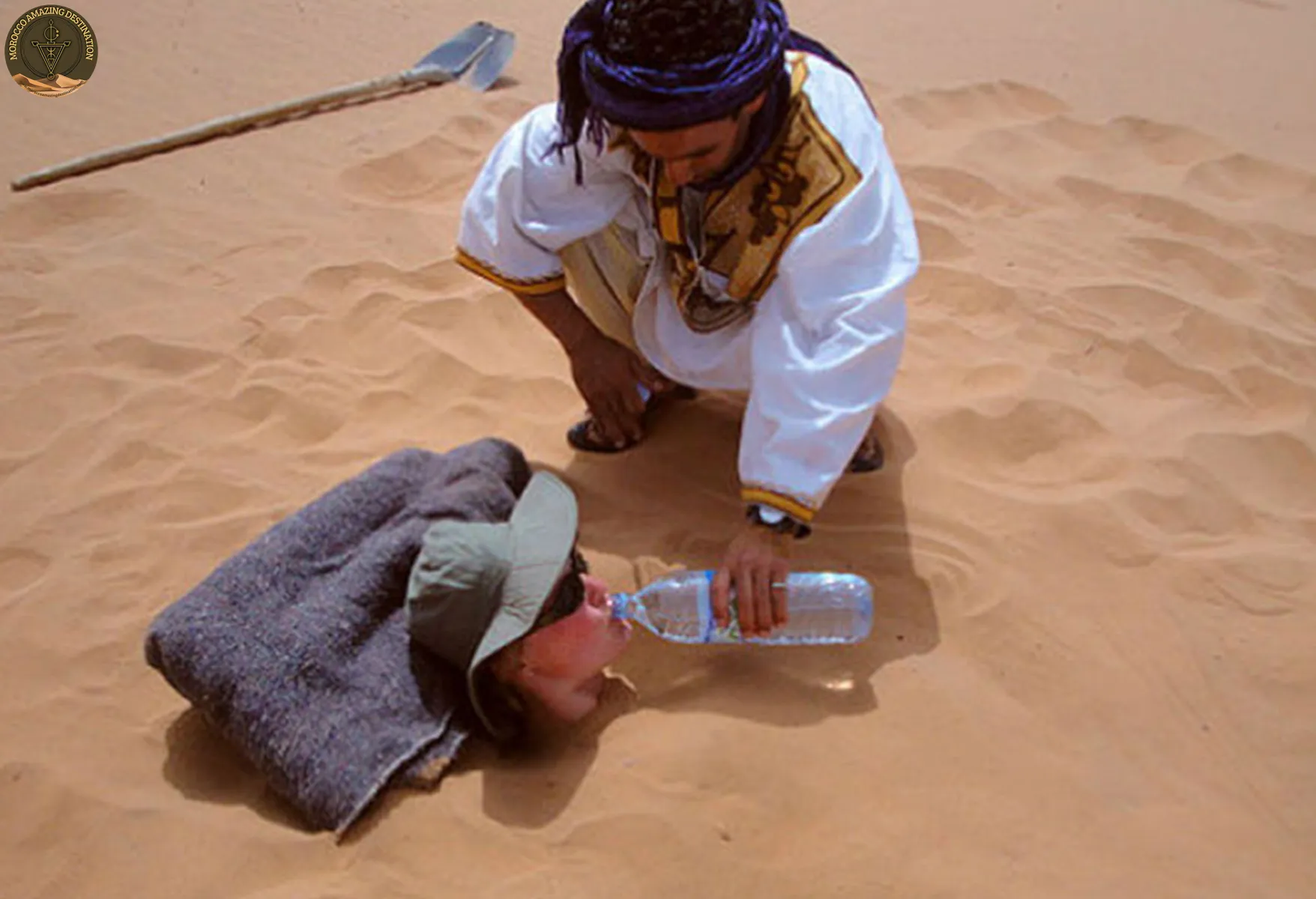
The sand bath sahara experience is a summer ritual with hard limits. You lie in a hollow of sun-heated dune sand in Erg Chebbi, covered to the neck, for 5 to 15 minutes on a first visit, with a camp supervisor beside you throughout. It only works from June to September, when the surface sand sits at 40-65C, and only in daylight.
In this guide, we will break down what psammatotherapy involves, how a session runs from the first shovel of sand to the mint tea, what the evidence says about sand bath therapy benefits, and who should skip it.
Sand Bath in the Sahara - What Psammatotherapy Is
Psammatotherapy is the clinical term for treating the body with hot dry sand, from the Greek psámmos. Merzouga became the main site for it in North Africa because Erg Chebbi’s dunes run about 20 to 22 km long and 5 to 6 km wide, with crests close to 150 m. Sand that deep heats fast in summer and still holds warmth late in the afternoon.
The practice carries several names, and camps use whichever one fits the guest:
- hammam raml or arremal: the Arabic and Amazigh names you will hear in Merzouga.
- bain de sable: the French phrase still common in Moroccan tourism.
- psammatotherapy: the clinical term used in European spa and research writing.
Moroccan families from Casablanca, Rabat and Tangier have come to Merzouga for summer sand cures for decades. That domestic peak falls in the months when international arrivals are lowest, which is why camps sell the bath as a summer extra.
Inside a Session - The Hollow, the Heat, the Blanket
Preparation starts well before you lie down. Staff dig a hollow about 20 cm deep and leave it open for roughly 30 minutes so the sun charges the sand. You lie in it and get covered to the neck in a 3 to 7 cm layer, head shaded, with noticeably less sand over the chest and heart.
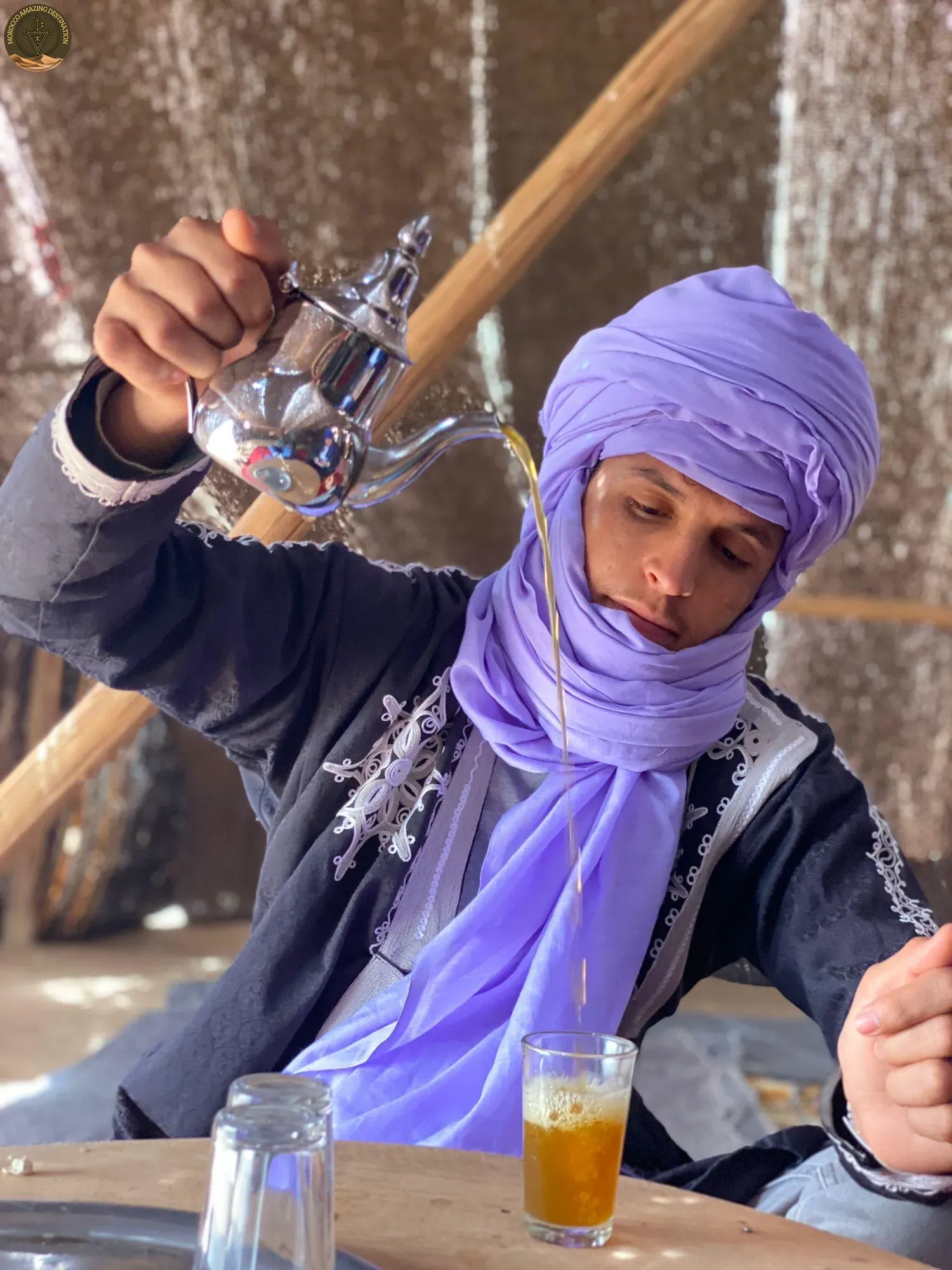
A first session runs 5 to 15 minutes; people who do it every summer stay in for 20 to 30. The supervisor stays with you, watches your face and breathing, and offers water. Afterwards you are wrapped in a warm blanket for 30 to 45 minutes while sweat and sand dry into a mud-like film, then rinsed and handed mint tea.
Bring a swimsuit or light cotton, a towel and a change of clothes, because sand gets into everything. Sources differ on shower temperature: some camps rinse you straight away, others wait until you have cooled. Follow the camp’s instruction and skip a cold shower immediately after.
Sand Bath Therapy Benefits and the Honest Limits
Traditional use in Merzouga targets rheumatism, arthritis, back and sciatic pain, stiff joints, circulation and plain relaxation. The sand bath therapy benefits most guests describe are looser muscles, an easier night’s sleep and a long enforced lie-down. That is believable, since dry heat and stillness do loosen a tight back for a while.
Clinical proof is thinner. A 2018 systematic review in Complementary Therapies in Medicine found only three eligible studies of hot sand baths and concluded that no conclusion could be drawn on efficacy. Egyptian trial work used a different protocol in a different setting, so it does not settle the question for a dune in Merzouga.
What the sand does not do is detoxify you, burn fat or fire infrared rays into tissue. Camps repeat those lines anyway. Come for heat, rest and an old local habit, and you will get your money’s worth.
Heat Windows and Who Should Skip It
The season runs June to September, peaking in July and August, when surface sand reaches 40-65C. Camps work the window from roughly 11:00 to 16:00. A merzouga sand bath cannot be arranged at night after dinner: the sand has cooled, and the method depends on stored solar heat. Guests travelling between October and April cannot get a real dune sand bath, whatever a booking page suggests.
Dry heat at that intensity is not for everyone. Some camps refuse or refer guests to a local doctor when there is a heart condition, high blood pressure, diabetes, asthma or other respiratory disease, kidney or liver disease, pregnancy, open wounds, sunburn or poor heat tolerance.
Heat stroke is the hazard, and supervisors end sessions early. Get out and cool down if you notice:
- Dizziness or blurred vision: sit in shade and drink water.
- Nausea: an early sign of overheating, not something to push through.
- A racing heart: tell the supervisor immediately.
- Confusion or slurred speech: treat it as an emergency and get medical help.
Anyone advised against dry heat can take the steam route instead; our guide to the hammam in Fes covers that ritual step by step.
Merzouga Camp Night, Mint Tea and What It Costs
Expect roughly 10 to 30 EUR per person, and some camp packages throw it in free. The sahara desert wellness side of a Merzouga stay peaks with the Moroccan summer holiday, so tents and sessions fill early in July and August.
Book it as an add-on to a camp night rather than a standalone product. What the price usually covers:
- The hollow: staff dig and pre-heat the sand an hour or so ahead.
- Supervision and water: someone stays with you for the whole session.
- Blanket, rinse and tea: the cooling phase counts as treatment time.
Our 3-day desert tour from Fes to Merzouga and 5-day trip from Marrakech to Merzouga end at camps where a sand bath can be arranged in season as an add-on, subject to health screening. We will say so if your dates fall outside the window.
We can customize a tour to match your needs - design your perfect itinerary
If you found this helpful, add us as your preferred source on Google.
Frequently Asked Questions
What is a sand bath in the Sahara, and where can you do it?
A sand bath means lying covered in sun-heated dune sand, and in Morocco the place for it is Merzouga, in the Erg Chebbi dunes. Camp staff dig a hollow about 20 cm deep, leave it to charge with heat for roughly 30 minutes, then cover you to the neck for 5 to 15 minutes with a supervisor beside you.
Is a sand bath safe, and who should skip it?
It is safe for healthy adults when someone supervises, but it is dry heat between 40C and 65C and not advised with heart conditions, high blood pressure, diabetes, respiratory disease, kidney or liver disease, pregnancy, open wounds or sunburn. Some camps ask for a doctor's check first, and a session ends at the first sign of dizziness, nausea, a racing heart or confusion.
What is the best season and time of day for a sand bath?
June to September, peaking in July and August, between roughly 11:00 and 16:00 when the surface sand reaches 40C to 65C. It cannot be done at night after dinner, and between October and April there is no real dune sand bath, because the sand never gets hot enough to work with.
How much does a Merzouga sand bath cost, and is it included in a camp night?
Usually around 10 to 30 EUR per person, and some camp packages include it at no extra charge. It is booked as an add-on to a desert camp night rather than a standalone product, so confirm it with the camp when you book your dates.
Ready for an Adventure?
Have questions? Feel free to contact us using the form below. We're here to help!