· Travel · 9 min read
What Is the Religion in Morocco? A Complete Guide to Islam, Religious Diversity, and What Travelers Should Know
Discover the religion in Morocco: from Islam as the state faith to Christian and Jewish minorities. A complete guide to Moroccan religious life, tolerance, and what visitors need to know.
What Is the Religion in Morocco?
If you are planning a trip to North Africa, you have probably asked yourself: what is the religion in Morocco? The answer is both simple and layered. Morocco is an Islamic country — deeply so — but its religious landscape is far more nuanced than a single statistic can capture.
From the five daily calls to prayer echoing across ancient medinas to the synagogues of Casablanca and the churches of Tangier, religion in Morocco is a story of faith, identity, and centuries of coexistence. In this guide, we explore Islam’s role as the state religion, the presence of religious minorities, what the Constitution guarantees, and everything travelers should know to navigate Morocco’s spiritual landscape with respect and curiosity.
Islam: The State Religion of Morocco
Islam is not only the predominant faith in Morocco — it is woven into the very fabric of the nation. Approximately 99% of Moroccans identify as Muslim, and Islam is officially recognized as the state religion in Article 3 of the Moroccan Constitution. This is not merely a symbolic declaration. Islamic principles influence law, education, social norms, and the political structure of the Kingdom.
Sunni Islam and the Maliki School
Morocco follows Sunni Islam, specifically the Maliki school (madhhab) of Islamic jurisprudence. The Maliki tradition, one of the four major Sunni schools, is known for its moderate approach and emphasis on the practices of the people of Medina (amal ahl al-Madina). In Morocco, Maliki teachings are blended with Ash’ari theology and Sufi spirituality — a combination that has shaped a distinctively tolerant and moderate form of Islam that sets Morocco apart in the Muslim world.
Key characteristics of Moroccan Islam:
- Maliki fiqh: A legal school rooted in tradition and community consensus
- Ash’ari theology: A rationalist theological framework that encourages intellectual engagement with faith
- Sufi orders (tariqas): Spiritual brotherhoods such as the Tijaniyya, Qadiriyya, and Boutchichiyya play a major role in Moroccan religious life, organizing dhikr ceremonies, pilgrimages to saint shrines (ziyarat), and community gatherings
The King as Commander of the Faithful
One of the most distinctive features of religion in Morocco is the role of the Monarch. The King of Morocco holds the title Amir al-Mu’minin (Commander of the Faithful), making him both the political head of state and the highest religious authority in the country. This dual role, rooted in the Alaouite dynasty’s claim of descent from the Prophet Muhammad, gives the King:
- Ultimate authority over religious matters
- The power to issue fatwas through the Supreme Council of Ulema
- Responsibility for protecting the faith and ensuring religious unity
- The role as guarantor of free exercise of religion for all recognized faiths
The concept of bay’a (pledge of allegiance) reinforces this bond between the Monarch, the people, and Islam — a tradition dating back centuries and renewed annually.
Religious Minorities in Morocco
While the overwhelming majority of Moroccans are Muslim, the Kingdom is home to vibrant religious minority communities that add richness to its spiritual landscape.
Christianity in Morocco
Christianity is the largest religious minority in Morocco, with an estimated 30,000 to 40,000 Christians, primarily foreigners. The country has:
- Two Catholic archdioceses: Rabat and Tangier, covering the entire country
- Approximately 44 active Catholic churches, from the grand Notre-Dame de Lourdes in Casablanca to St. Peter’s Cathedral in Rabat
- Several Protestant and Anglican congregations, including St. Andrew’s Church in Tangier and the Evangelical Church in Marrakech
- Three Eastern Orthodox parishes, serving Russian, Greek, and other Orthodox communities
- A small but growing number of Moroccan converts who practice discreetly in house churches
Foreign Christians are constitutionally free to attend services, and the government protects churches and their congregations. However, proselytism — attempting to convert Muslims — is strictly illegal and heavily penalized.
Judaism in Morocco
Morocco is home to the largest Jewish community in the Arab world, with approximately 3,000 Jewish Moroccans living mainly in Casablanca. Though a shadow of its pre-1948 population of over 250,000, the community remains culturally and historically significant:
- Casablanca is the heart of Jewish life, with the Museum of Moroccan Judaism (the only Jewish museum in the Arab world), active synagogues, kosher restaurants, and Jewish schools
- Marrakech, Fes, Essaouira, and Tangier each have historic mellahs (Jewish quarters), synagogues, and Jewish cemeteries
- The 2011 Constitution explicitly recognizes the Hebraic component of Moroccan identity as one of the tributaries that enrich national culture
- The King holds the title Protector of the Jewish Community, and the government actively funds the restoration of Jewish heritage sites
Bahá’í Faith and Other Communities
The Bahá’í Faith has had a presence in Morocco since the 1950s and, while relatively small in number, is recognized and active. Small communities of Hindus and Buddhists also exist, primarily among expatriate populations. The Moroccan government does not officially recognize these faiths at the same level as Islam, Christianity, and Judaism, but their followers are generally free to practice privately.
Religious Freedom: What the Constitution Says
Religious freedom in Morocco is a carefully balanced framework. The 2011 Constitution guarantees freedom of thought, opinion, and expression (Article 25) and freedom of worship (Article 3), but with important boundaries:
What is protected:
- The right of non-Muslims to practice their faith freely
- State protection of churches, synagogues, and their congregations
- The freedom to import and distribute religious texts for recognized non-Muslim communities
- Interfaith dialogue and cultural exchange
What is restricted:
- Proselytism targeting Muslims is a criminal offense
- Apostasy from Islam, while not explicitly criminalized in the penal code, carries severe social and legal consequences
- The establishment of new non-recognized religious organizations faces bureaucratic hurdles
- Public criticism of Islam or the King’s religious authority is prohibited under press and penal laws
The practical reality is one of regulated tolerance. Recognized religious minorities enjoy meaningful protections and freedoms, while the Islamic character of the state remains firmly guarded.
Mosques and Islamic Architecture in Morocco
You cannot talk about religion in Morocco without talking about its mosques. With approximately 41,755 mosques spread across the country — roughly one for every 900 inhabitants — the physical landscape of Morocco is inseparable from its spiritual life.
Must-See Mosques and Religious Sites
| Site | Location | Highlights |
|---|---|---|
| Hassan II Mosque | Casablanca | The largest mosque in Africa; 210-meter minaret; open to non-Muslim visitors via guided tours |
| Al-Qarawiyyin | Fes | Founded in 859 CE; considered the world’s oldest university by UNESCO |
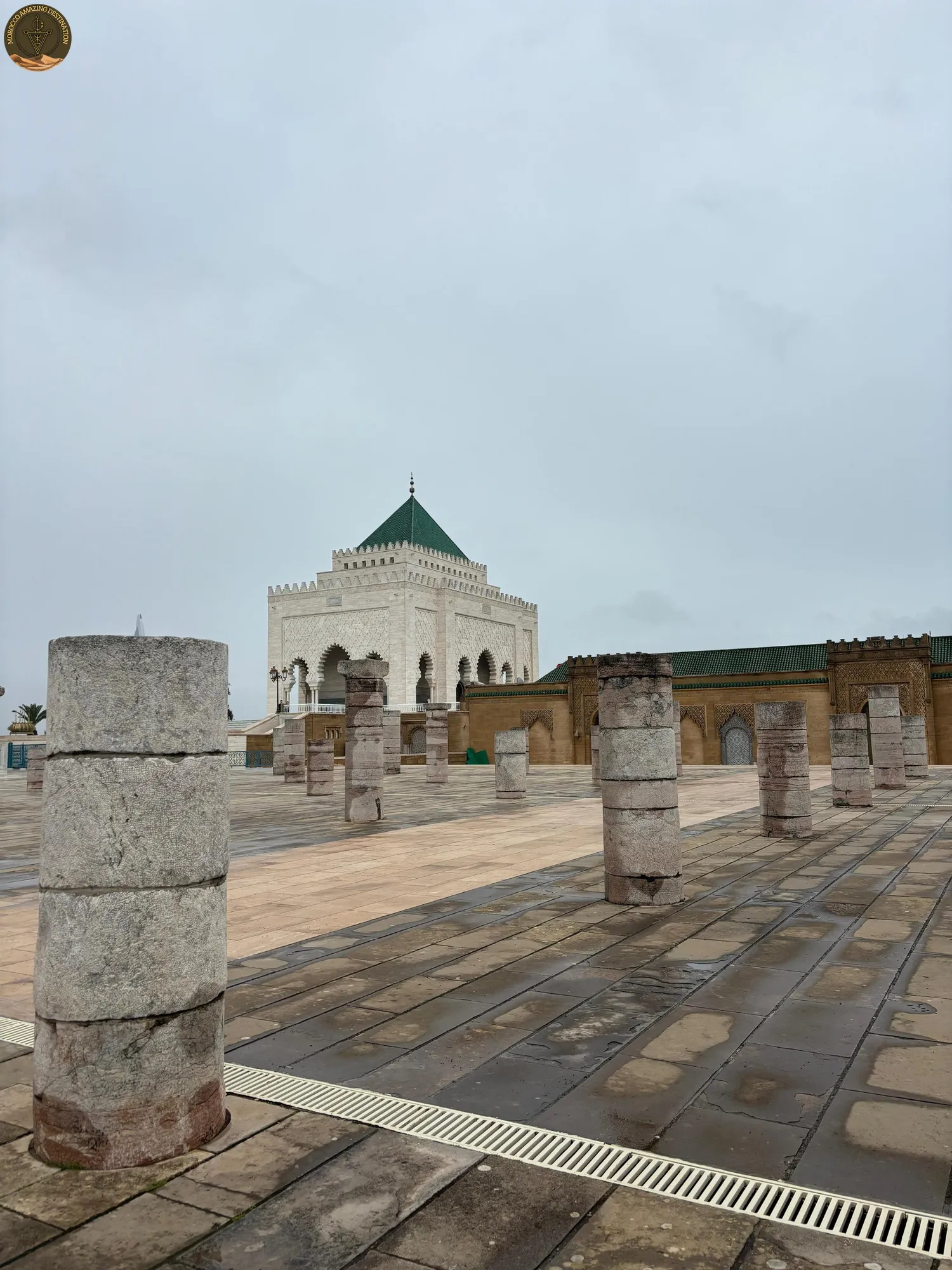
| Hassan Tower | Rabat | 12th-century unfinished minaret of an Almohad mosque; an open historic site |
| Koutoubia Mosque | Marrakech | The city’s landmark; 77-meter minaret visible across the medina |
| Tinmal Mosque | High Atlas | A rare Almohad mosque accessible to non-Muslims as a historic monument |
Islamic architecture in Morocco is distinguished by elements you will encounter everywhere: intricate zellij tilework, carved stucco, painted cedar wood ceilings, horseshoe arches, and the ever-present square minarets topped with a spire and four copper globes.
Religion in Daily Moroccan Life
Islam does not simply inform Moroccan life — it organizes it. The rhythm of daily existence follows the five daily prayers (salat):
- Fajr — dawn prayer, before sunrise
- Dhuhr — midday prayer
- Asr — afternoon prayer
- Maghrib — sunset prayer
- Isha — night prayer
The call to prayer (adhan), amplified from minarets across every city and village, punctuates the day. On Fridays, the midday Jumu’ah prayer draws crowds to mosques, and many businesses close or operate reduced hours.
Ramadan, the holy month of fasting, transforms the country entirely. From dawn to sunset, observant Muslims abstain from food, drink, and smoking. After sunset, families gather for iftar (the breaking of the fast), and the streets come alive late into the night. For travelers, visiting during Ramadan offers a unique window into Moroccan spirituality — but also requires extra sensitivity.
What Travelers Should Know About Religion in Morocco
Understanding religion in Morocco will not only deepen your travel experience — it will help you navigate the country with confidence and respect.
Dress Code
While Morocco is relatively relaxed compared to some Muslim countries, modesty is appreciated. For both men and women, this means:
- Covering shoulders and knees in public — especially in mosques, medinas, and rural areas
- Women are not required to wear a headscarf, though many Moroccan women choose to do so
- Beachwear is acceptable at the beach and hotel pools but not in town
- Lightweight, loose-fitting clothing is practical and respectful
Visiting Mosques
As noted earlier, most Moroccan mosques are not open to non-Muslim visitors — a rule rooted in a French Protectorate-era policy that has since become tradition. However, the Hassan II Mosque in Casablanca welcomes all visitors with guided tours several times daily, and a few historic sites are accessible.
During Ramadan
If you visit Morocco during Ramadan:
- Avoid eating, drinking, and smoking in public spaces during daylight hours
- Many restaurants close during the day; larger hotels and some tourist-oriented eateries remain open behind discreet screens
- The evening iftar meal is a wonderful experience — many riads and restaurants offer special Ramadan menus
- Be patient: service may be slower as the day progresses, and local schedules shift
Religious Conversations
Moroccans are generally open to discussing religion respectfully. Questions about Islam from curious travelers are often welcomed, but avoid:
- Criticizing the King’s role as Amir al-Mu’minin
- Distributing religious materials or promoting another faith
- Taking photos of people during prayer without permission
A Legacy of Coexistence
What often surprises visitors most about religion in Morocco is not the dominance of Islam but the historical depth of coexistence. For centuries, Morocco has been a crossroads where Muslims, Christians, and Jews lived side by side — not always without tension, but with a degree of mutual respect that stands out in the region.
The 2011 Constitution’s recognition of the Hebraic component of national identity, the King’s patronage of interfaith initiatives, and the government’s investment in restoring synagogues and Jewish cemeteries all point to a country consciously embracing its diverse religious heritage.
Recommended Tours to Discover Morocco’s Religious and Cultural Heritage
If you want to experience the spiritual and cultural richness of Morocco firsthand, our multi-day tours take you through the imperial cities where mosques, medinas, and centuries of religious history come alive.
7-Day Imperial Cities and Desert Tour — Journey through Marrakech, Fes (home to the historic Al-Qarawiyyin), and the Sahara Desert dunes of Merzouga. This tour blends Morocco’s Islamic heritage, imperial history, and breathtaking landscapes into one unforgettable week. Explore the tour
8-Day Imperial Cities and Sahara Desert Tour from Casablanca — Starting from Casablanca, where you can visit the magnificent Hassan II Mosque — one of the few mosques in Morocco open to non-Muslims — this comprehensive itinerary covers Rabat (Hassan Tower), Meknes, Fes, and Marrakech before venturing into the Merzouga desert. A perfect introduction to Morocco’s religious and architectural treasures. View the tour
If you found this helpful, add us as your preferred source on Google.
Frequently Asked Questions
What is the main religion in Morocco?
Islam is the main religion in Morocco, practiced by approximately 99% of the population. Sunni Islam following the Maliki school of jurisprudence is the dominant denomination, and it is enshrined in the Moroccan Constitution as the official state religion. The King of Morocco holds the title Amir al-Mu'minin (Commander of the Faithful), reflecting the deep connection between religious and political authority in the country.
Are there Christians and Jews in Morocco?
Yes. Morocco is home to approximately 30,000 Catholics served by the Archdioceses of Rabat and Tangier, plus several thousand Protestant expatriates. There are also around 3,000 Jewish Moroccans living mainly in Casablanca, Marrakech, and Fes — the largest Jewish community in the Arab world. The Bahá'í Faith also has a small but recognized presence. All these communities are constitutionally protected and free to practice their faith.
Can non-Muslims visit mosques in Morocco?
Most mosques in Morocco are closed to non-Muslim visitors. However, the Hassan II Mosque in Casablanca offers guided tours to visitors of all faiths, the Hassan Tower in Rabat is an open historic site, and the Tinmal Mosque in the High Atlas is accessible as an inactive monument. The Al-Qarawiyyin University Mosque in Fes can be partially viewed from its main entrance.
What should tourists know about religion when visiting Morocco?
Visitors should dress modestly — covering shoulders and knees — especially when near mosques or in conservative areas. During Ramadan, eating, drinking, and smoking in public during daylight hours is discouraged out of respect. Alcohol is available in licensed hotels and restaurants but public intoxication is frowned upon. Showing respect for Islamic customs and traditions will greatly enrich your travel experience and is appreciated by locals.
Ready for an Adventure?
Have questions? Feel free to contact us using the form below. We're here to help!