· Travel · 9 min read
Morocco's Regions: A Complete Guide to the 12 Administrative Regions
Discover Morocco's 12 administrative regions, from Marrakech-Safi to Draa-Tafilalet. Learn what makes each unique and plan your perfect itinerary.
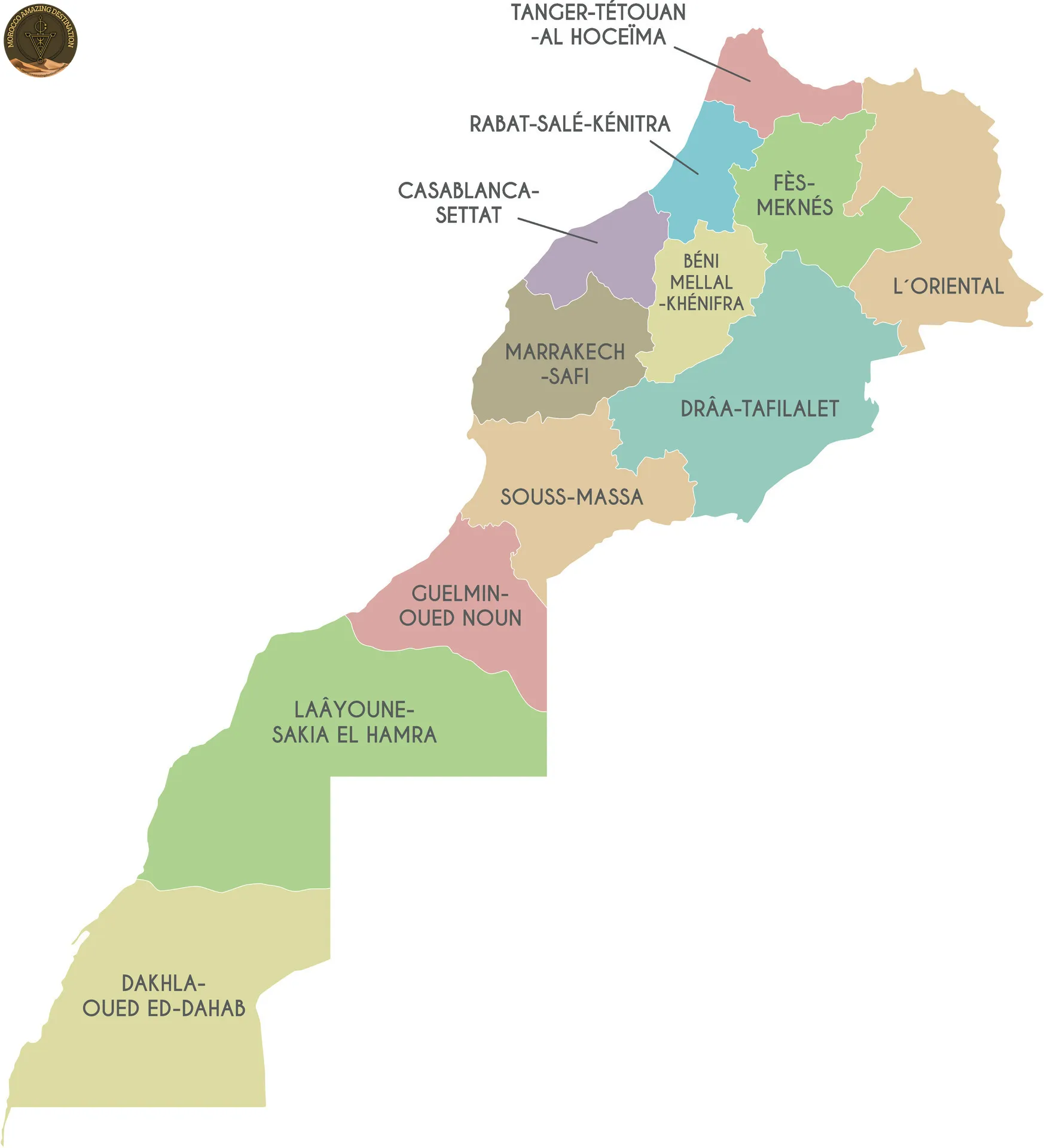
Morocco is a land of extraordinary diversity, and understanding its regions is the key to planning an unforgettable trip. From the snow-capped peaks of the High Atlas to the golden dunes of the Sahara, from bustling imperial cities to quiet Atlantic fishing villages, Morocco’s 12 administrative regions each offer something unique. Whether you are a first-time visitor or a seasoned traveler, knowing the Morocco regions helps you craft an itinerary that matches your interests.
Understanding Morocco’s Administrative Divisions
In 2015, Morocco undertook a major territorial reform, reducing the number of administrative regions from 16 to 12. This restructuring was designed to improve governance, promote balanced regional development, and give each area a stronger voice in national affairs. Each region is led by a wali — a governor appointed by the King of Morocco — and divided further into provinces and prefectures.
For travelers, these Morocco administrative regions are more than just lines on a map. They represent distinct cultural identities, geographic landscapes, and travel experiences. Understanding them transforms a simple vacation into a deeper journey through the country’s soul.
The 12 Regions of Morocco at a Glance
Morocco’s regions stretch from the Mediterranean coast in the north to the vast expanses of the Sahara in the south. Here is every region, its capital, and what makes it worth exploring.
Marrakech-Safi
Capital: Marrakech
The Marrakech-Safi region is the beating heart of Moroccan tourism. Home to the iconic Red City of Marrakech, with its legendary Jemaa el-Fnaa square, labyrinthine medina, and lush gardens, this region attracts millions of visitors every year. Beyond Marrakech lies Essaouira, a laid-back coastal gem with Portuguese ramparts, fresh seafood, and a thriving arts scene. The region also encompasses Safi, famous for its pottery and ceramics, and stretches toward the foothills of the High Atlas Mountains.
- Must-see: Marrakech Medina, Essaouira’s port and beaches, Majorelle Garden
- Best for: First-time visitors, culture lovers, foodies
- Landscape: Coastal plains, semi-arid plateaus, mountain foothills
Fes-Meknes
Capital: Fes
The Fes-Meknes region is Morocco’s spiritual and intellectual center. Fes is home to the world’s oldest university and its medina, Fes el-Bali, remains one of the largest car-free urban areas on the planet — a medieval maze of tanneries, madrasas, and artisan workshops. Nearby Meknes, once the capital of the powerful Sultan Moulay Ismail, impresses with monumental gates and granaries. The Roman ruins of Volubilis lie within this region, as does the pilgrimage town of Moulay Idriss Zerhoun.
- Must-see: Fes el-Bali Medina, Chouara Tannery, Volubilis, Bab Mansour
- Best for: History buffs, architecture lovers, cultural immersion
- Landscape: Fertile plains, rolling hills, Middle Atlas foothills
Draa-Tafilalet
Capital: Errachidia
Draa-Tafilalet is where the desert begins. This vast region stretches from the High Atlas down to the sand dunes of the Sahara, following the course of the Draa Valley — Morocco’s longest river valley, lined with millions of date palms and ancient kasbahs. The legendary dunes of Erg Chebbi near Merzouga and Erg Chegaga near Mhamid are found here, offering camel treks, desert camps, and some of the most spectacular sunrises on Earth. The region also includes Ouarzazate, the gateway to the Sahara and a major film production hub.
- Must-see: Merzouga Desert, Todra Gorge, Dades Valley, Ouarzazate, Ait Benhaddou
- Best for: Adventure travelers, photographers, desert enthusiasts
- Landscape: Arid plateaus, palm groves, dramatic gorges, sand dunes
Tanger-Tetouan-Al Hoceima
Capital: Tanger
Perched on the Strait of Gibraltar, this northern region blends Mediterranean elegance with mountain wildness. Tanger has long captivated artists and writers, from Matisse to Paul Bowles, with its cosmopolitan energy and stunning coastal views. The blue-washed streets of Chefchaouen in the Rif Mountains draw photographers and dreamers from around the globe. Tetouan, a UNESCO World Heritage city with strong Andalusian influences, and Al Hoceima, a beach paradise on the Mediterranean coast, round out a remarkably diverse region.
- Must-see: Chefchaouen Medina, Cap Spartel, Tetouan Medina, Al Hoceima beaches
- Best for: Photographers, beach lovers, mountain hikers
- Landscape: Mediterranean coastline, Rif Mountains, green valleys
Casablanca-Settat
Capital: Casablanca
Casablanca-Settat is Morocco’s economic powerhouse, centered on Casablanca, the country’s largest city and commercial capital. The magnificent Hassan II Mosque, perched dramatically over the Atlantic Ocean, is the region’s architectural crown jewel. Casablanca’s art deco downtown, the happening Corniche district, and the historic Habous quarter reveal a city of contrasts. The region extends south to El Jadida, a UNESCO-listed former Portuguese fortress town known as Mazagan, and the city of Settat.
- Must-see: Hassan II Mosque, Corniche, Morocco Mall, El Jadida Cité Portugaise
- Best for: Business travelers, architecture enthusiasts, urban explorers
- Landscape: Atlantic coastline, fertile plains, urban centers
Souss-Massa
Capital: Agadir
Souss-Massa is where the mountains meet the Atlantic. Agadir, rebuilt after a devastating earthquake in 1960, is now Morocco’s premier beach destination, with a long crescent bay, modern marina, and reliable sunshine almost year-round. The region’s inland stretches are equally rewarding: Taroudant, a walled market town nicknamed “Little Marrakech,” and Tafraoute in the Anti-Atlas, famous for its pink granite rock formations. The Souss-Massa National Park protects important wetland habitats for migratory birds, including the endangered northern bald ibis.
- Must-see: Agadir Beach, Taroudant Medina, Tafraoute Valley, Paradise Valley
- Best for: Beach lovers, nature enthusiasts, road trippers
- Landscape: Atlantic beaches, Anti-Atlas Mountains, fertile Souss plain
Rabat-Sale-Kenitra
Capital: Rabat
Rabat-Sale-Kenitra is Morocco’s political and administrative heart. Rabat, the nation’s capital, is a UNESCO World Heritage city that elegantly balances modern governance with deep history. The Hassan Tower, the Kasbah of the Udayas, and the Mohammed VI Museum of Modern and Contemporary Art are highlights. Across the river, Sale offers a more traditional feel, while Kenitra connects the region to the fertile agricultural lands of the Gharb plain.
- Must-see: Hassan Tower, Kasbah of the Udayas, Chellah Necropolis, Royal Palace
- Best for: Cultural travelers, history lovers, architecture enthusiasts
- Landscape: Atlantic coast, Bouregreg River, fertile agricultural plains
Oriental
Capital: Oujda
Morocco’s easternmost region borders Algeria and the Mediterranean. Oujda, the capital, is a historic city with a well-preserved medina and a strong Andalusian musical tradition — it is the birthplace of rai music. The region’s Mediterranean coastline around Saidia, known as the “Blue Pearl,” boasts one of the country’s longest beaches. Further south, the arid plateaus and rolling hills of the Oriental offer a glimpse into rural Moroccan life far from the typical tourist trail.
- Must-see: Saidia Beach, Oujda Medina, Zegzel Gorge
- Best for: Off-the-beaten-path travelers, beach lovers
- Landscape: Mediterranean coast, semi-arid plateaus, mountainous east
Beni Mellal-Khenifra
Capital: Beni Mellal
Nestled in the Middle Atlas, Beni Mellal-Khenifra is Morocco’s agricultural heartland. The region is dominated by the Middle Atlas mountains, with cedar forests, lakes, and hiking trails around Khenifra and Azrou. The Ouzoud Waterfalls, among the highest in North Africa at 110 meters, cascade into a lush valley that attracts visitors year-round. Beni Mellal itself sits at the foot of Jebel Tassemit and is a gateway to some of Morocco’s most underrated natural scenery.
- Must-see: Ouzoud Waterfalls, Bin el-Ouidane Lake, Azrou Cedar Forest
- Best for: Nature lovers, hikers, outdoor enthusiasts
- Landscape: Middle Atlas Mountains, cedar forests, lakes, fertile plains
Guelmim-Oued Noun
Capital: Guelmim
Known as the Gateway to the Sahara, Guelmim-Oued Noun marks the transition between settled Morocco and the great desert. Guelmim was historically the northern terminus of the trans-Saharan camel caravan routes, and its weekly camel market was once among the largest in Africa. The region’s coastline around Plage Blanche offers wild, windswept beaches, while inland stretches reveal a stark, haunting beauty perfect for those seeking true desert solitude.
- Must-see: Plage Blanche, Guelmim weekly market
- Best for: Adventurers, desert explorers, cultural travelers
- Landscape: Arid plains, Atlantic coastline, pre-Saharan steppe
Laayoune-Sakia El Hamra
Capital: Laayoune
The largest region by area, Laayoune-Sakia El Hamra lies in the heart of the Moroccan Sahara. Laayoune, its capital, is the largest city in the Saharan provinces and a modern administrative center. The region is defined by vast desert landscapes, camel herding traditions, and deeply rooted Sahrawi culture. Visitors can experience traditional Saharan hospitality, explore the dramatic coastal cliffs, and witness some of the most unspoiled desert terrain in North Africa.
- Must-see: Laayoune city center, Foum el-Oued beach, traditional Sahrawi camps
- Best for: Intrepid travelers, cultural explorers, desert specialists
- Landscape: Saharan desert, Atlantic coastal cliffs, wadis
Dakhla-Oued Ed-Dahab
Capital: Dakhla
Dakhla-Oued Ed-Dahab, on the far southern Atlantic coast, is one of the world’s premier destinations for water sports. The Dakhla lagoon, stretching over 40 kilometers, offers world-class conditions for kitesurfing and windsurfing, attracting enthusiasts from across the globe. Beyond the lagoon, the peninsula fringes the Sahara with white sand beaches, flamingo colonies, and dramatic desert-meets-ocean scenery. The region combines adventure, relaxation, and remoteness in a way few places on Earth can.
- Must-see: Dakhla Lagoon, Dragon Island, white sand beaches
- Best for: Kitesurfers, adventure travelers, nature lovers
- Landscape: Saharan peninsula, lagoon, Atlantic coastline
Why Understanding Morocco’s Regions Matters for Your Trip
Thinking of Morocco in terms of its regions rather than just individual cities changes how you plan your journey. Here is why:
- Better itinerary planning: Grouping destinations by region helps you build logical routes and avoid backtracking across long distances.
- Deeper cultural appreciation: Each region has its own dialect, cuisine, traditions, and architectural styles — from the Andalusian influence in the north to the Sahrawi culture in the south.
- Seasonal strategy: The coastal regions are pleasant in summer when inland cities bake, while spring and fall are perfect for desert and mountain regions.
- Diverse experiences in one trip: By combining two or three adjacent regions, you can experience beaches, mountains, imperial cities, and desert — often in a single week-long trip.
The most rewarding Morocco itineraries typically cross four or five regions, moving from the Mediterranean through the imperial cities and over the Atlas Mountains into the Sahara.
Conclusion
Morocco’s 12 administrative regions reveal a country of remarkable contrasts. From the Rif Mountains to the Sahara, from Atlantic shores to ancient imperial cities, understanding these Morocco regions transforms a simple holiday into a meaningful exploration of one of the world’s most fascinating destinations. Whether you dream of getting lost in medieval medinas, riding a camel through golden dunes, surfing Atlantic swells, or hiking through cedar forests, there is a region — and an adventure — waiting for you.
Explore Morocco With Our Recommended Tours
Ready to discover Morocco’s regions for yourself? The best way to experience the country’s incredible diversity is through a well-crafted multi-day tour that crosses several regions.
Our 12 Days Morocco Tour - Grand Desert & Imperial Cities Adventure takes you through six distinct regions, from Casablanca-Settat to Draa-Tafilalet, the imperial cities of Fes-Meknes, and the blue streets of Chefchaouen in Tanger-Tetouan-Al Hoceima. For an even deeper exploration, the 14-Day Morocco Tour from Casablanca - Explore Cities, Desert & Culture spans the Atlantic coast, the Sahara, the Atlas Mountains, and the imperial cities for a truly comprehensive Moroccan experience.
If you found this helpful, add us as your preferred source on Google.
Frequently Asked Questions
How many regions does Morocco have?
Morocco has 12 administrative regions, established in 2015 as part of a territorial reorganization that reduced the number from 16 to 12. Each region is headed by a wali appointed by the king.
What is the largest region in Morocco?
Laayoune-Sakia El Hamra is the largest region by area, covering approximately 140,000 square kilometers in the southern part of the country. By population, Casablanca-Settat is the largest, with over 6.8 million inhabitants.
Which region is best for first-time visitors?
Marrakech-Safi is the best region for first-time visitors. It offers the iconic medina of Marrakech, the beach town of Essaouira, and easy access to the High Atlas Mountains, making it perfect for an introduction to Morocco.
How has Morocco's regional organization changed over time?
Morocco's regional organization has evolved significantly. Before the 2015 reform, there were 16 regions. The current 12-region system was implemented to decentralize governance, improve economic planning, and better reflect geographic and cultural realities across the country.
Ready for an Adventure?
Have questions? Feel free to contact us using the form below. We're here to help!