
· Travel · 5 min read
Reasons to Visit the Atlas Mountains Beyond Marrakech
Discover the reasons to visit the Atlas Mountains in Morocco — Toubkal treks, Berber villages, Ait Benhaddou and how to plan a private trip.
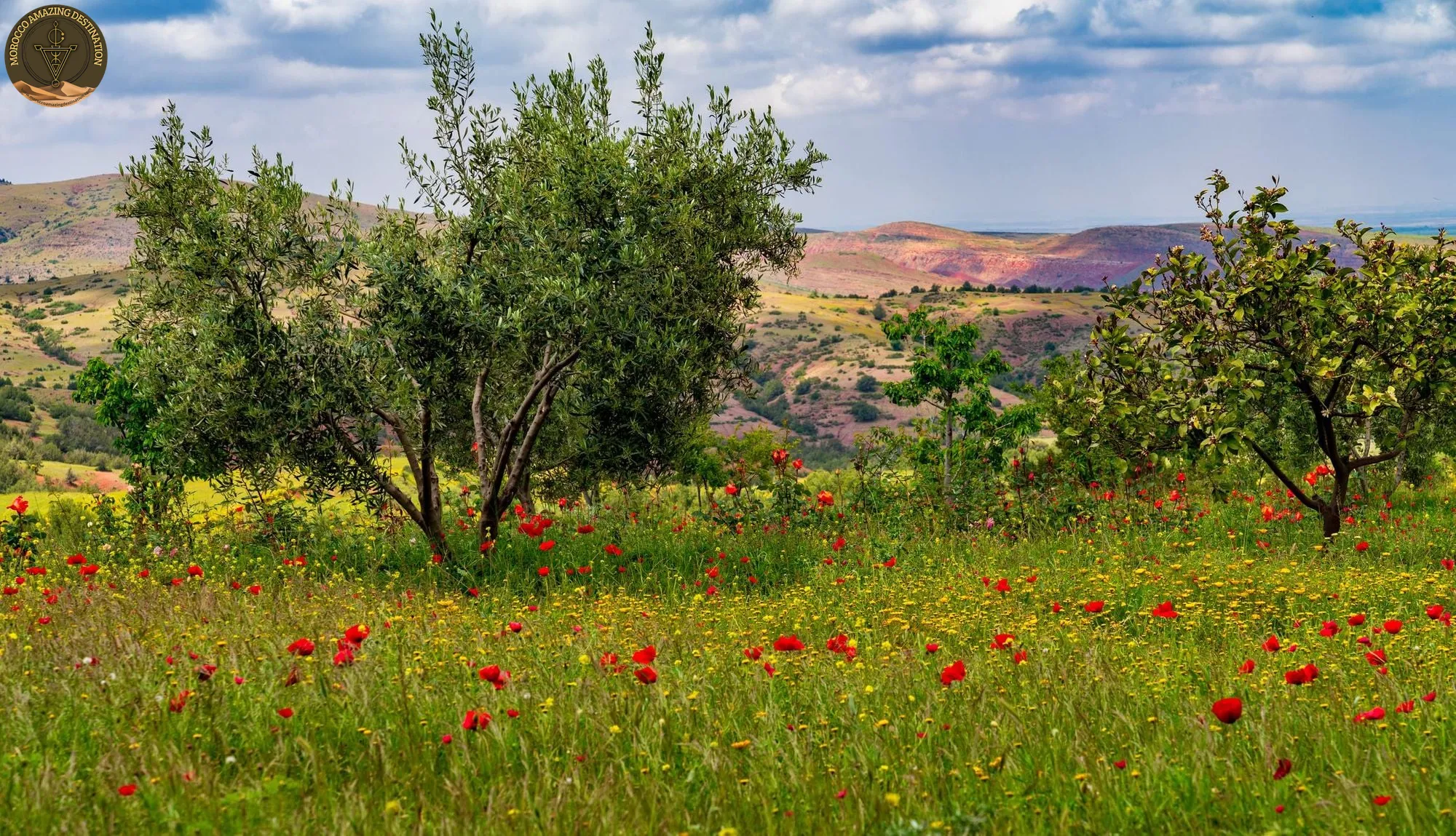
Marrakech hands you heat, noise and orange blossom. About an hour south, the road into the High Atlas delivers juniper air, walnut terraces and snow-dusted ridgelines. The reasons to visit the Atlas Mountains are experiential rather than geographical: this is an alpine world on the doorstep of the Red City. The Atlas Mountains are worth visiting because they pack high trekking, Amazigh village life and kasbah country into one easy drive from Marrakech.
In this guide we break down what makes each part of the High Atlas worth your time, from valley walks and North Africa’s highest summit to village hospitality and the kasbah road south, and how to visit them on a private, tailor-made trip.
Atlas Mountains Just an Hour from Marrakech
The High Atlas rises almost directly behind Marrakech. The Ourika valley entrance is about an hour away, while the trekking village of Imlil sits 60–65 km out, roughly 1.5–2 hours by road. In one morning you trade palm groves for terraced orchards.
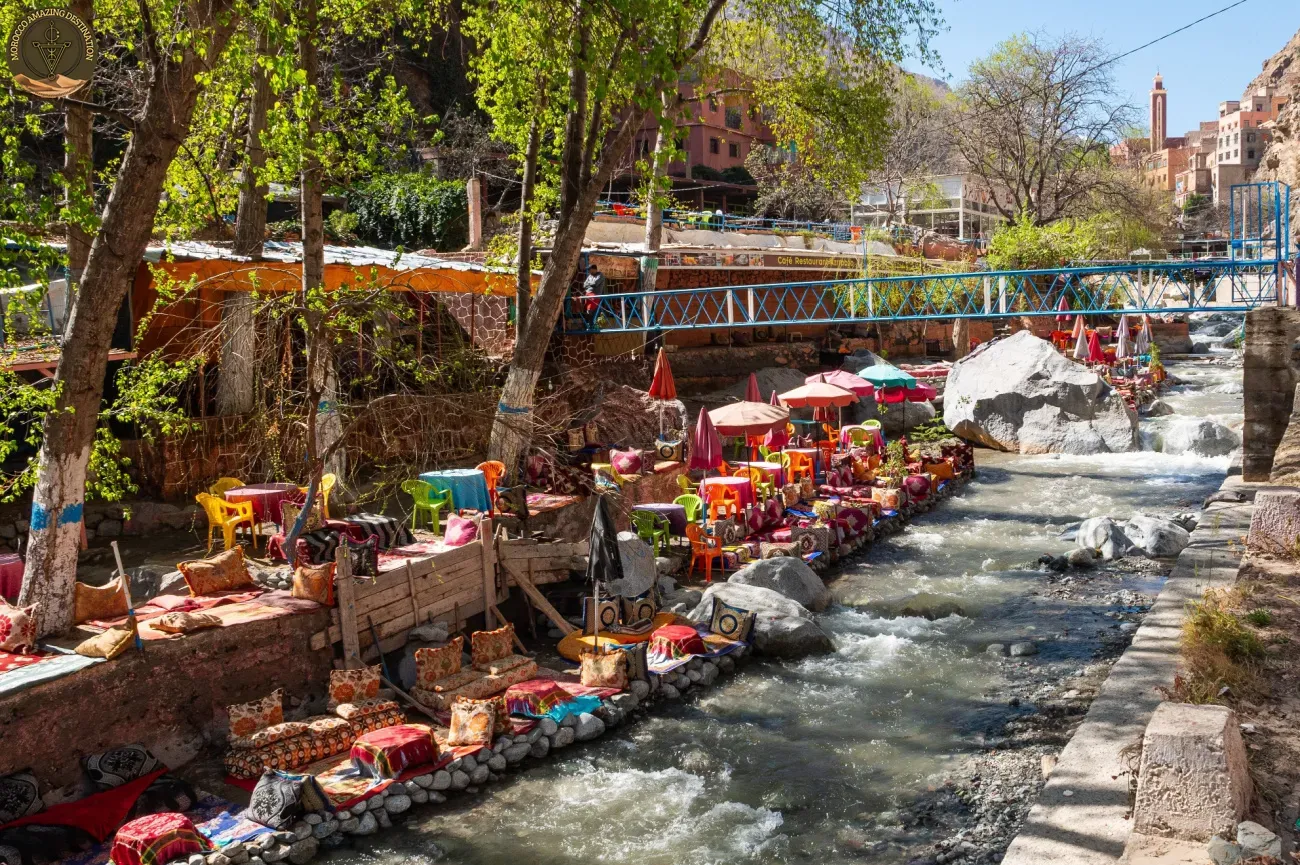
The temperature gap is the real draw. Valley floors run roughly 8–15 °C cooler than the city, which makes the mountains a genuine summer refuge. Pack a light layer, because altitude evenings cool fast.
Oukaïmeden, Africa’s highest ski area, is about 75 km away along the road to the Tizi n’Tichka pass.
Trekking, from Easy Valley Walks to Jbel Toubkal
High Atlas trekking scales to almost any fitness level. A one- to two-hour walk between walnut groves and barley terraces is a complete outing, and the Sidi Chamharouch shrine makes a gentle half-day objective from Imlil.
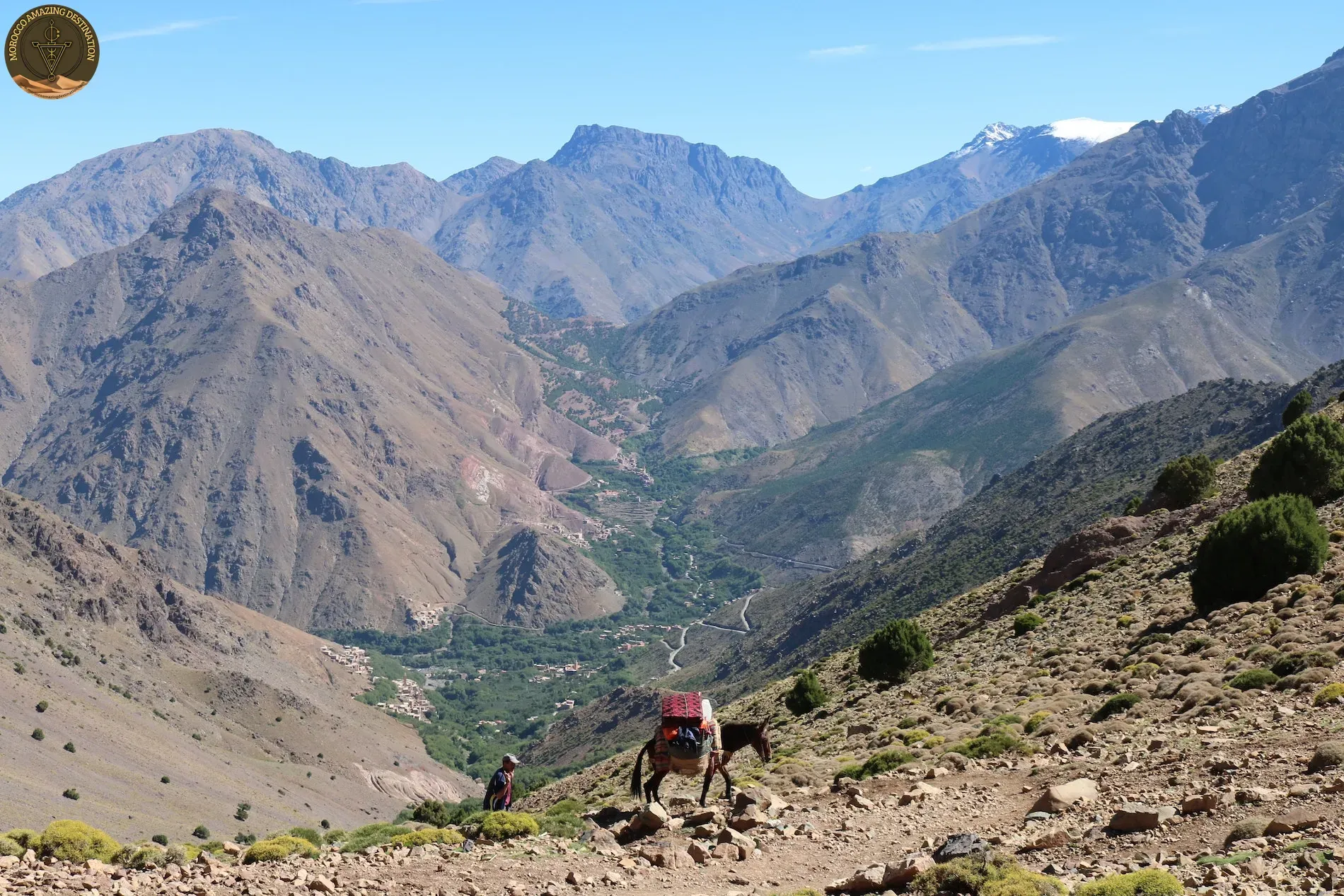
The summit is a different proposition. Jbel Toubkal stands at 4,167 m, the highest point in North Africa and the Arab world, protected inside Toubkal National Park. The classic route starts in Imlil at around 1,740 m and sleeps at the refuge near 3,207 m before a pre-dawn climb on day two.
Toubkal National Park now requires a licensed Moroccan mountain guide. The summer route is non-technical rock and scree, yet it is genuinely strenuous.
Pick your level:
- Village walk: one to two hours through orchards and terraces.
- Azzaden valley: a full day with a local guide and a gîte lunch.
- Toubkal ascent: two days, licensed guide, pre-dawn summit.
Berber Villages and Mountain Hospitality
The Berber villages in Morocco’s High Atlas are Amazigh and Tamazight-speaking, built from stone and mud in flat-roofed clusters above terraced orchards. Walnuts, apples, cherries and almonds grow on those terraces, and mules still carry loads where paths are too narrow for vehicles.
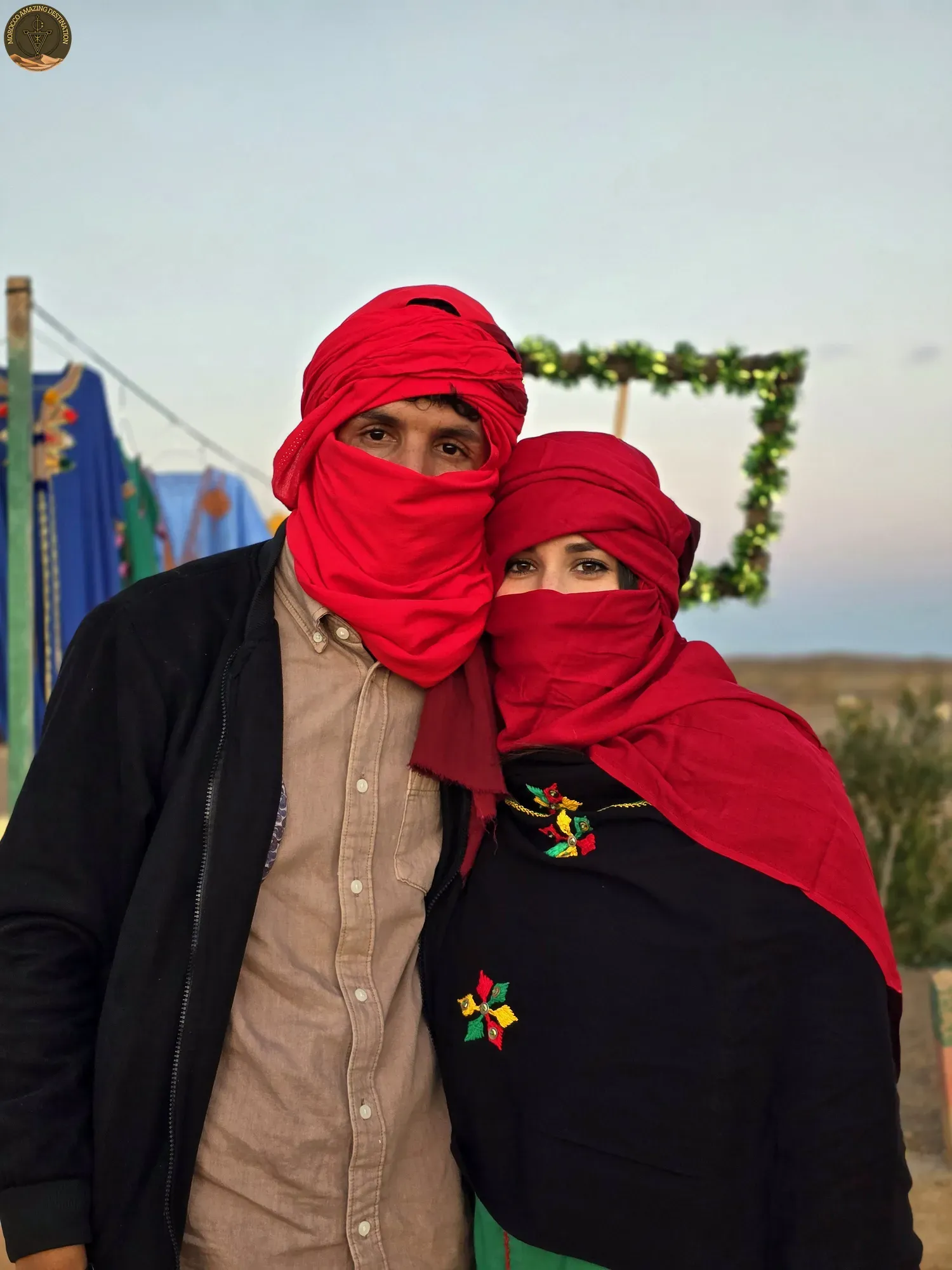
Hospitality is the point of the visit. Weekly markets such as Asni draw valley families with livestock and produce, while village gîtes d’étape serve dinner as a slow-cooked tagine and breakfast as tafarnout flatbread with olive oil, mountain honey and amlou.
Mint tea frames the ritual. It is poured from a height and offered three times, and accepting it turns a visit into a conversation.
What to expect:
- Stays: gîtes d’étape and family guesthouses rather than chain hotels.
- Food: tagine, tafarnout bread, walnut oil, honey and amlou.
- Walks: mule paths linking the Ait Mizane and Azzaden valleys.
Kasbahs and Gorges on the Road to Ait Benhaddou
Crossing the Tizi n’Tichka at roughly 2,260 m flips the scenery. Green Morocco becomes pre-Saharan Morocco: ochre cliffs, terraced villages and roadside stalls selling honey and walnuts. The pass sits about 70 km from Marrakech on the road to Ouarzazate.
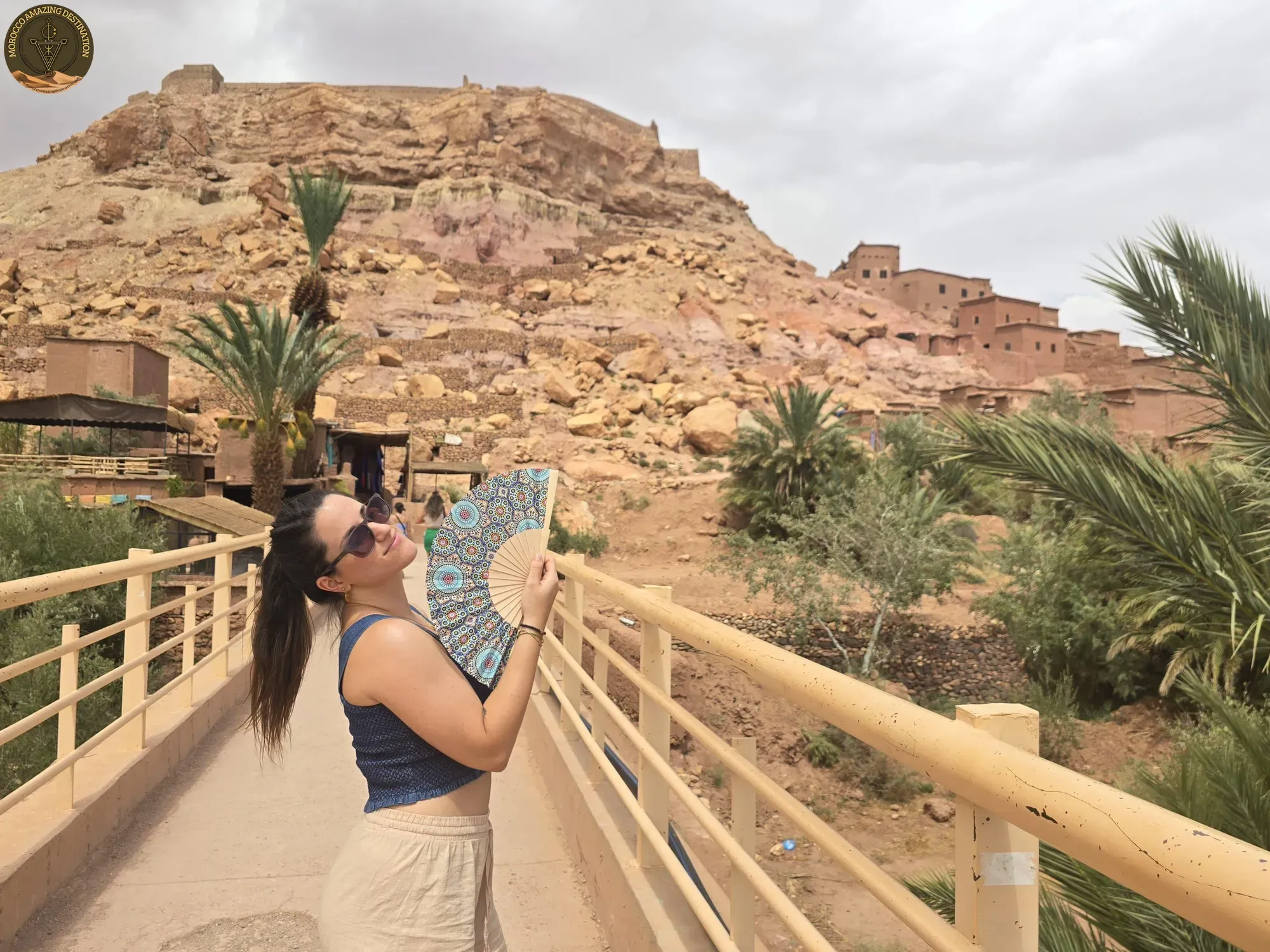
Detour to the Telouet kasbah, then follow the Ounila valley down to the ksar of Ait Benhaddou, the UNESCO World Heritage site where earthen walls are still repaired by hand. It is the finest surviving example of southern Moroccan kasbah architecture.
Sleeping inside one changes the experience. Restored kasbah guesthouses above Imlil and along the southern road put you within the architecture instead of photographing it from outside.
Further south, the Dades and Todra gorges cut deep canyons through the same ochre rock.
Plan Your Atlas Mountains Trip
Any Atlas Mountains travel guide starts with season. Spring and autumn give the best walking weather, summer makes altitude the coolest place in Morocco, and winter brings snow above roughly 2,500 m.
Season at a glance:
- Spring and autumn: prime conditions for trekking and valley walks.
- Summer: head high, because Imlil and Oukaïmeden stay cool.
- Winter: snow-dusted villages and quiet trails; check road conditions.
Travelling privately changes the pacing. A local team handles the pass, the guided trek, the gîte or kasbah night and the meal stops, so adding a village lunch never means renegotiating a fixed schedule.
Our 4-Day Morocco Desert Tour from Marrakech crosses the Tizi n’Tichka with Ait Benhaddou, the Dades Valley and a Merzouga camp. The 5-Day Trip from Marrakech to Merzouga adds valley and village time. For a single day out, our Atlas wildflowers day trip from Marrakech stays in the valleys.
We can customize a tour to match your needs — design your perfect itinerary
If you found this helpful, add us as your preferred source on Google.
Frequently Asked Questions
Are the Atlas Mountains worth visiting?
Yes. They combine alpine scenery, trekking at every level, Amazigh village life and kasbah stays, all within a couple of hours of Marrakech.
What is the best time to visit the Atlas Mountains?
Spring and autumn give the best walking weather, summer is the cool escape at altitude, and winter brings snow above roughly 2,500 m.
Do I need a guide to climb Jbel Toubkal?
Yes. Toubkal National Park now requires a licensed Moroccan mountain guide, and winter conditions call for crampons and an ice axe.
Can I visit the Atlas Mountains without trekking?
Absolutely. Valley and village walks, gîte and kasbah stays, the Tizi n'Tichka drive and the UNESCO World Heritage site of Ait Benhaddou need no serious hiking.
Ready for an Adventure?
Have questions? Feel free to contact us using the form below. We're here to help!