· Travel · 11 min read
Raqqa Filming Locations Morocco: Casablanca & Marrakech
Discover Raqqa filming locations in Casablanca and Marrakech — where the spy thriller doubled Syria, what to see and how to visit on a private tour.
You want the thrill of a spy story with the comfort of a real, welcoming trip. The Raqqa filming locations give you both. This Spanish-Moroccan-German thriller recreates the Syrian city of Raqqa on Moroccan streets, so you can trace cinematic tension through markets and boulevards that feel utterly authentic, then unwind in a hand-picked riad with a private driver waiting to handle every transfer.
This guide shows you exactly Raqqa where was it filmed, what each Moroccan city contributed, how the two main hubs connect as a short private circuit, and how to experience the story without any hassle. No set replicas. Just the real Morocco that made the illusion work.
What Is Raqqa Spy vs Spy?
Raqqa Spy vs Spy, known in Spanish as Raqa, is a recent spy thriller directed by Gerardo Herrero and adapted by Irene Zoe Alameda from the novel Vírgenes y verdugos by Tomás Bárbulo. It follows a Sahrawi spy in Russian service and a Spanish-Moroccan Europol nurse from Ceuta as they infiltrate Raqqa to track a jihadist leader known as El Jordano.
The film was produced as a Spanish-Moroccan-German co-production led by Tornasol Media with Moroccan partner Angle Production and German partner Rexin Film, and distributed with the support of national broadcast and streaming partners. Dialogue runs in Spanish, English and Arabic, and archival inserts help recreate Raqqa without filming in Syria.
Where Was Raqqa Filmed? The Direct Answer
Raqqa where was it filmed has a clear, Morocco-first answer. The majority of the film was shot in Morocco, specifically in Casablanca and Marrakech, which stood in for the Syrian city of Raqqa. Spain provided the complementary semi-desert and interior locations at Bardenas Reales, Tafalla and Pamplona, while Germany contributed financing only via Rexin Film.
For travelers this is ideal. The two confirmed Raqqa Morocco filming locations sit on one of Morocco’s most comfortable and well-served routes, linked by highway and easy domestic connections, with desert-edge visuals available near Marrakech so you feel the spy story’s dual world of dense city and open horizon.
Raqqa Morocco Filming Locations: The Two Confirmed Cities
The production chose two Moroccan cities rather than a single studio backlot, using real neighbourhoods and carefully dressed streets to evoke Raqqa’s layered urban feel. That choice gives visitors distinct, complementary experiences.
Casablanca: Urban Streets That Doubled for Raqqa
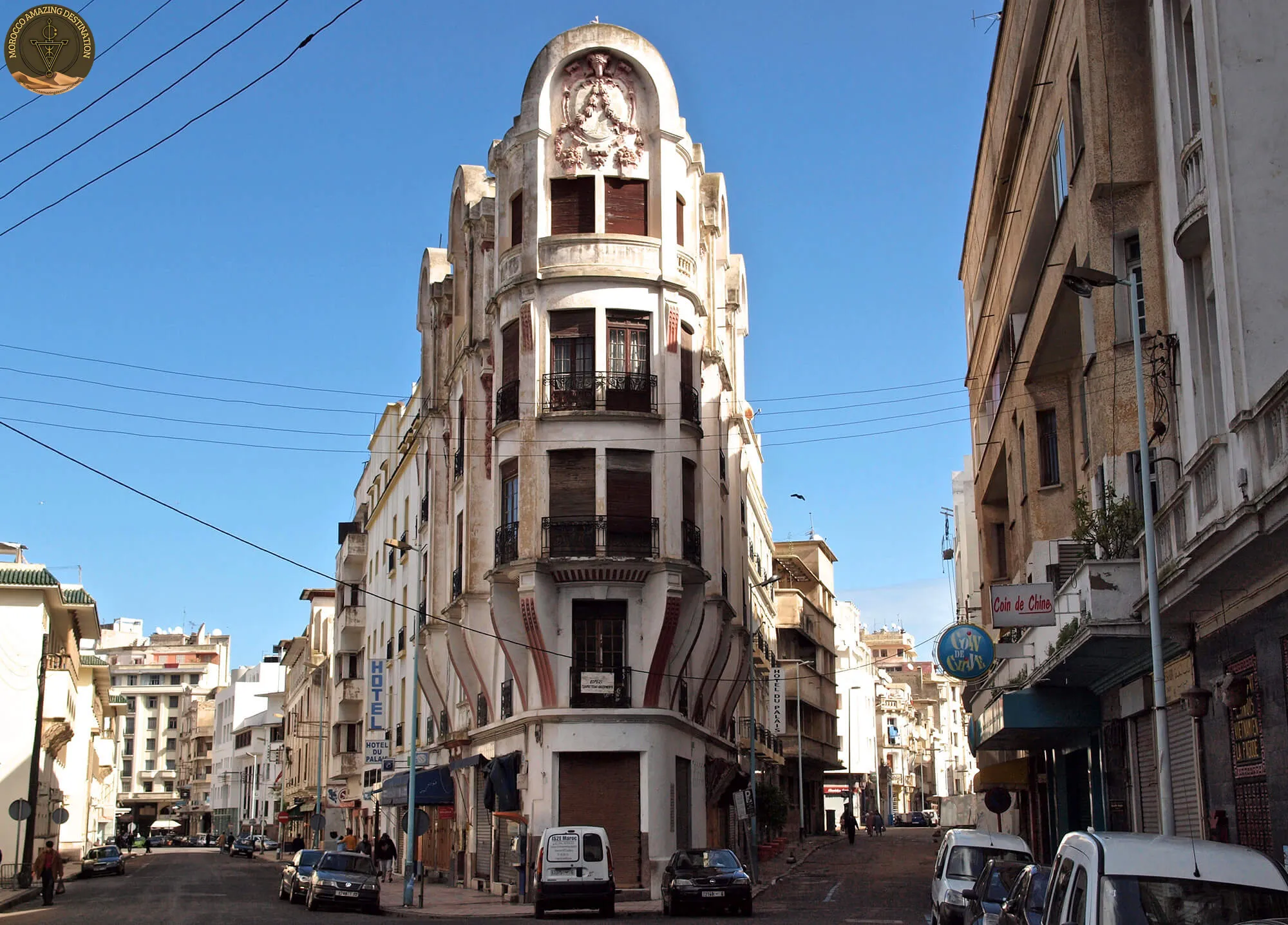
Casablanca provided the modern urban exterior that anchors the film’s city scenes. Production sources describe hospital exteriors, street tension and commercial quarters filmed here, using the same boulevards and alleyways you can walk today.
What the film used versus what you see now:
- What was filmed: Wide avenues, market streets and medical-facility exteriors that served as Raqqa’s contemporary infrastructure.
- What you experience today: The French-era Ville Nouvelle with art deco facades, the Habous quarter with its orderly arcades and craft shops, the Old Medina’s tight alleys, and the Corniche’s ocean backdrop. No address is published at street level, so treat the location at city and neighbourhood scale rather than a single doorstep.
- How to explore hassle-free: A half-day with a licensed local guide and private vehicle lets you move between the Habous, the medina and the Corniche without wasted transit, with clear context on how French-Arab urban layers read as a Syrian city on screen.
Casablanca also works as Morocco’s production-service hub, so local crews and fixers are accustomed to managing discreet street work, which explains why the city could host the bulk of the shoot efficiently.
Marrakech: Medina Lanes and Desert-Edge Visuals
Marrakech supplied the medina texture and the desert fringe that, together with Spain’s Bardenas Reales, created the film’s mixed desert look. Art direction rebuilt Raqqa’s decay from photos, video and archival footage, then layered it onto real Moroccan fabric.
What the film used versus what you see now:
- What was filmed: Narrow souk alleys, square surroundings and Marrakech desert edges that read as the outskirts of Raqqa.
- What you experience today: Jemaa el-Fnaa with its storytellers and food stalls, the labyrinth of souks around the Bahia and Koutoubia areas, and the nearby Palmeraie and Agafay plateau for the open, arid horizon. Sources refer to this broadly as Marrakech desert; treat the precise grove or plateau as inferred rather than GPS-confirmed.
- How to explore without pressure: Stay two to three nights in a central riad, walk the medina with a guide who knows how to navigate the souks at a calm pace, then take a late-afternoon excursion to Agafay for sunset. The contrast mirrors the film’s two-desert technique while keeping you comfortable.
Together, the Raqqa Casablanca Marrakech filming locations form a compact arc: cosmopolitan coast to ochre-walled intensity, with a private driver turning a potentially complex film map into a smooth, immersive circuit.
By the Numbers: The Production Behind the Locations
The scale behind the Raqqa spy thriller Morocco shoot helps explain why Casablanca and Marrakech carry so much screen weight.
- Around 35 shooting days, with the majority in Morocco, specifically Marrakech and Casablanca, as described in the official press dossier.
- Budget estimated near three million euros including significant national film aid, according to reports by Cine y Tele, ICAA records and the Storylines dossier.
- Three languages on set — Spanish, English and Arabic — with the lead actor preparing Arabic with a dedicated coach over an extended period, noted by Noticias de Navarra.
- Archival inserts of Raqqa’s main square sourced via a Spanish documentarian and licensed international news footage, as reported by El Periódico de Aragón.
These details come from production dossiers and Spanish industry press cited by Cineuropa, RTVE and Sensacine, giving confidence that the Morocco-first footprint is not speculative.
The Director Behind the Morocco Choice
Understanding the Gerardo Herrero Raqa Morocco locations connection clarifies why Spain and Morocco share the frame. Gerardo Herrero, serving as both director and producer via Tornasol, has long worked across Spanish and Latin American cinema, with Raqa continuing his focus on contemporary geopolitical stories.
For this project he chose to keep the Syrian setting off-shore, using Moroccan urban fabric for credibility and Spanish Navarre locations for controlled desert and interior work. That creative decision keeps the film’s world culturally coherent while allowing a tight, 35-day schedule across two countries that already share deep historical and linguistic ties.
Morocco vs Spain: Where Each Part Was Filmed
Viewers often ask whether the desert was Morocco or Spain. The answer is both, split by function, as shown below.
| Country | Locations Used | Role in the Film | What You Can Visit |
|---|---|---|---|
| Morocco | Casablanca, Marrakech | Majority of the shoot; city streets, medina alleys, hospital exteriors, desert-edge atmosphere that doubles for Raqqa | Walkable medinas, Habous quarter, Jemaa el-Fnaa, Palmeraie and Agafay for desert horizon |
| Spain | Bardenas Reales semi-desert, Tafalla, Pamplona and Tagala | Semi-desert that paired with Marrakech desert, plus abandoned hospital interiors in Tafalla and support bases in Navarre | Brief mention only; not the focus of this Morocco guide |
| Germany | No location shoot confirmed | Financial co-production via Rexin Film | Not a filming location to visit |
This split means you can experience the heart of Raqqa filming locations entirely within a comfortable Casablanca to Marrakech route, without needing to chase desert units across multiple countries.
What Was Not Filmed Here and What Remains Uncertain
Clear expectations make a film-inspired trip more enjoyable, so here is what not to expect and what remains open.
- Ouarzazate, Atlas Studios, Ait Benhaddou and Merzouga are not confirmed for this title. Morocco’s best-known film desert centre lies southeast of Marrakech, and while many productions use it, the official Raqa dossier does not list it. Mention it only as context for Morocco’s wider film history, not as a location for this story.
- No verified shoots in Rabat, Fez, Essaouira or Tangier for Raqa. Keep your Casablanca and Marrakech focus and add other cities for culture, not for this film’s map.
- No street-level call sheet has been published. Treat both cities as city-level locations. Avoid claims about a specific street number or riad.
- Marrakech desert precision is inferred. References to Marrakech desert likely point to the Palmeraie or Agafay plateau, but no GPS or set address is public. Flag this as inferred rather than confirmed.
- Germany is financing only. If a database lists German cities, treat it as co-production country confusion.
Flagging these gaps, as recommended by sources including the press dossier, Diario de Navarra and Cámara y Luz coverage, preserves trust and keeps your itinerary honest.
How to Visit the Raqqa Filming Locations in Morocco
You can turn the two confirmed cities into a smooth, tailor-made circuit that feels cinematic yet deeply comfortable.
How to visit the Raqqa filming locations in Morocco in five steps: start in Casablanca, transfer to Marrakech by private vehicle or high-speed rail, explore each city with a licensed local guide, add a half-day Agafay desert experience for the film’s open-horizon look, and overnight in character riads with private transfers so you maximize sightseeing and avoid wasted time.
Suggested Steps
- Step 1 — Start in Casablanca: Allow one to two nights. Walk the Habous quarter and Old Medina, view the Hassan II Mosque area, and trace market streets that gave the film its urban edge. A private driver handles medina-to-Corniche transfers so you stay focused on what you see, not how you get there.
- Step 2 — Move to Marrakech: Choose a private vehicle for a scenic road transfer or the efficient rail link, depending on your pace. Your driver meets you at arrival to manage luggage and timing.
- Step 3 — Explore Marrakech medina: Use a local guide for Jemaa el-Fnaa, souk lanes and palace surroundings. Guides decode the layering that art direction used to evoke Raqqa, and they keep the walk calm and respectful.
- Step 4 — Add desert-edge atmosphere: Book an Agafay late-afternoon excursion. The stony plateau and Palmeraie groves give you the open, arid feel that paired with Bardenas Reales on screen, without an overnight in deep dunes unless you want it.
- Step 5 — Stay in hand-picked riads: Choose central riads with quiet courtyards and thoughtful service. They put you within walking distance of the film neighbourhoods while offering a retreat that feels personal, not staged.
Practical Tips for a Hassle-Free Film-Inspired Stay
- Use a private vehicle and driver: The Casablanca to Marrakech corridor benefits from door-to-door service, flexible timing and local knowledge of traffic and parking near medinas.
- Book licensed local guides: For both cities, a guide turns a maze of alleys into a clear narrative, points out film-relevant textures, and helps with respectful photography.
- Pack for city and desert edge: Light layers, comfortable walking shoes, sun protection and a scarf for sun and dust cover both medina walks and Agafay.
- Respect living neighbourhoods: These are working districts, not sets. Ask before photographing shopkeepers, keep voices low in residential alleys, and shop intentionally.
- Combine film interest with culture: Between locations, enjoy rooftop cafes, spice tastings, artisan workshops and garden visits. They explain why Morocco doubles so convincingly on screen — the texture is already there.
Follow the Raqqa Trail with Private Morocco Tours
You do not need a film crew to follow this route. These private, tailor-made itineraries already link the two confirmed Raqqa filming locations with the country’s highlights, using the same city-to-city logic the production used, but with time for real connection.
The 14-Day Morocco Tour from Casablanca begins in Casablanca’s boulevards and Habous quarter, then travels through Chefchaouen, Fes and the Merzouga dunes before returning via Dades, Ouarzazate and Marrakech’s medina and Agafay fringe. It is the most complete way to pair the Raqqa Morocco filming locations with imperial cities, gorges and desert camps, with a private driver and hand-picked riads throughout.
For a tighter frame that mirrors the film’s two-city core, the 8 Days Tour from Casablanca to Marrakech | Imperial Cities & Sahara Desert links Casablanca and Rabat to Fes, the desert corridor and Marrakech in a focused week, with local guides in Fes and Marrakech and a luxury camp night under the stars.
Both options are tailor-made and private, so you experience the real Morocco behind the screen — authentic, immersive and hassle-free — with local experts who feel like family.
FAQ
Where was Raqqa filmed in Morocco?
Raqqa was filmed mainly in Casablanca and Marrakech, which together provided the majority of the footage and doubled for the Syrian city. This Morocco-first footprint comes from the official press dossier, which states the bulk of shooting took place in those two Moroccan cities.
Can you visit the Raqqa filming locations in Casablanca and Marrakech?
Yes. Both cities welcome visitors every day. Walk Casablanca’s Habous and medina alleys and explore Marrakech’s souks and Jemaa el-Fnaa surroundings with a licensed guide and private driver for easy transfers and clear context on what stood in for Raqqa.
Was Raqqa filmed in Ouarzazate or the Sahara?
No verified source lists Ouarzazate, Atlas Studios, Ait Benhaddou or Merzouga for Raqa. The confirmed Morocco locations are Casablanca and Marrakech. Morocco’s broader desert centre remains worth visiting for its own film history, but not as part of this title’s map.
Who directed Raqqa and what is the story about?
Raqqa Spy vs Spy was directed by Gerardo Herrero, from a screenplay by Irene Zoe Alameda based on Tomás Bárbulo’s novel Vírgenes y verdugos. It follows two undercover agents — a Sahrawi spy and a Spanish-Moroccan Europol nurse — who infiltrate Raqqa to hunt the leader known as El Jordano.
We can customize a tour to match your needs — design your perfect itinerary
If you found this helpful, add us as your preferred source on Google.
Frequently Asked Questions
Where was Raqqa filmed in Morocco?
Raqqa was filmed mainly in Casablanca and Marrakech, which doubled for the Syrian city of Raqqa. These two Moroccan cities provided urban streets, medina alleys and desert-edge visuals for the spy thriller.
Can you visit the Raqqa filming locations in Casablanca and Marrakech?
Yes. Both cities are open and welcoming. You can walk Casablanca's Habous and medina quarters and explore Marrakech's souks and Jemaa el-Fnaa area with a local guide and private driver for a smooth, hassle-free visit.
Was Raqqa filmed in Ouarzazate or the Sahara?
No verified source lists Ouarzazate, Atlas Studios, Ait Benhaddou or Merzouga for this production. The Morocco shoot is confirmed only for Casablanca and Marrakech, with desert visuals shared with Spain's Bardenas Reales.
Who directed Raqqa and what is the story about?
Raqqa Spy vs Spy was directed by Gerardo Herrero, written by Irene Zoe Alameda from Tomás Bárbulo's novel Vírgenes y verdugos. It follows two undercover agents hunting an ISIS leader in Raqqa, recreated without filming in Syria.
Ready for an Adventure?
Have questions? Feel free to contact us using the form below. We're here to help!