
· Travel · 6 min read
Paradise Valley Morocco: Pools, Hike & Day Trip Guide
Plan a Paradise Valley Morocco day trip: how to reach the pools from Agadir, the walk between them, water levels, argan co-ops and what to pack.
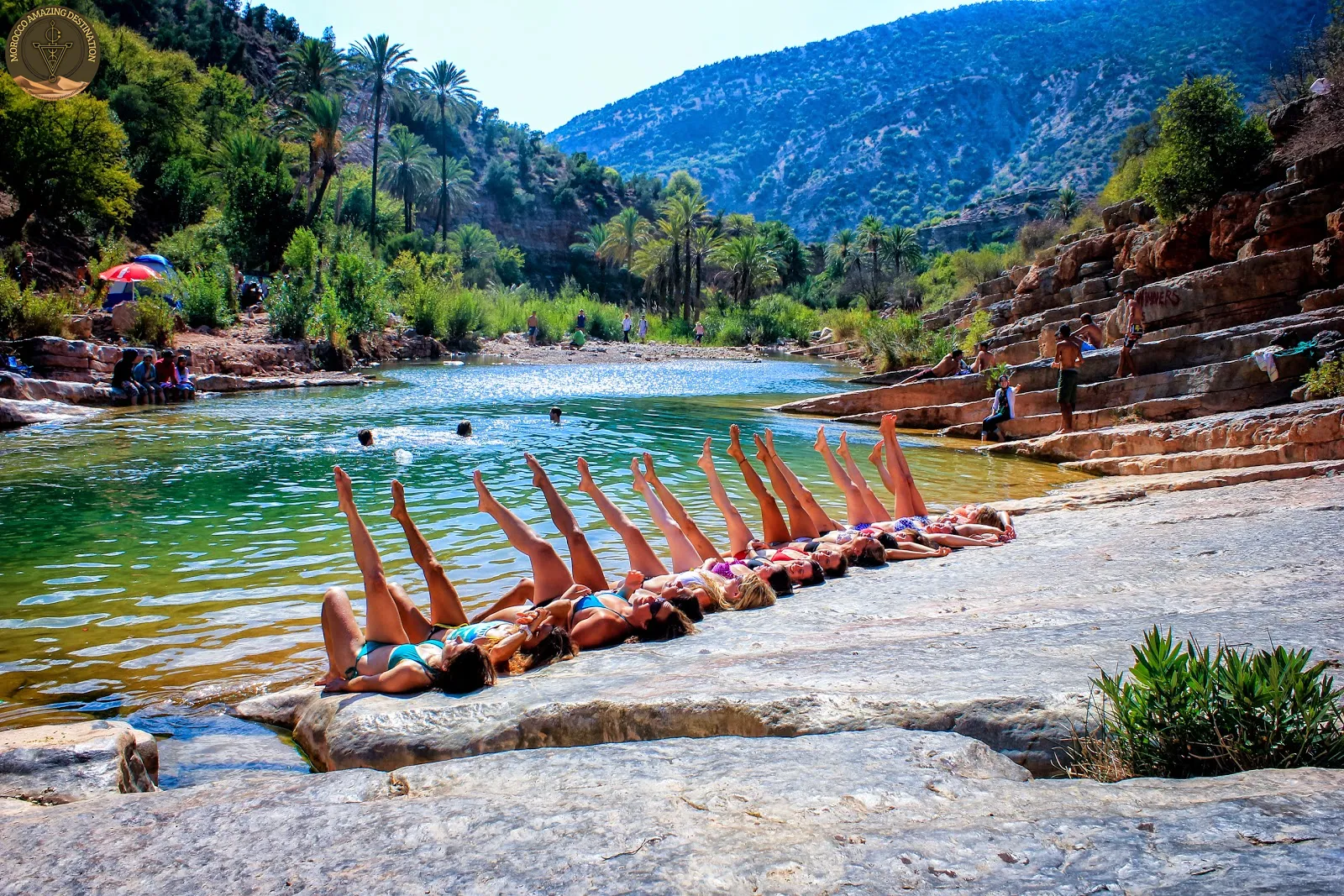
Paradise Valley cuts into the foothills of the High Atlas, close to Agadir. It is near enough for a morning out and remote enough to feel much further away. Cold green pools collect between smooth rock walls and palms lean over the water; the last stretch is on foot, once the tarmac runs out.
Paradise Valley Morocco is roughly 35 km and 45 to 60 minutes from the city. Entry costs nothing, and the walk in decides more about your day than the drive itself. In this guide, we will break down the road, the pools in the order you meet them, water levels through the year and private-driver planning.
Where the Valley Sits - Agadir, Aourir and the P1001 Turn-Off
The Paradise Valley Agadir route is short and hard to get wrong. Head north on the N1 past Tamraght to Aourir, the banana village, where roadside stalls stack green bunches under umbrellas. The roundabout has cash machines, which matters: parking is paid in cash.
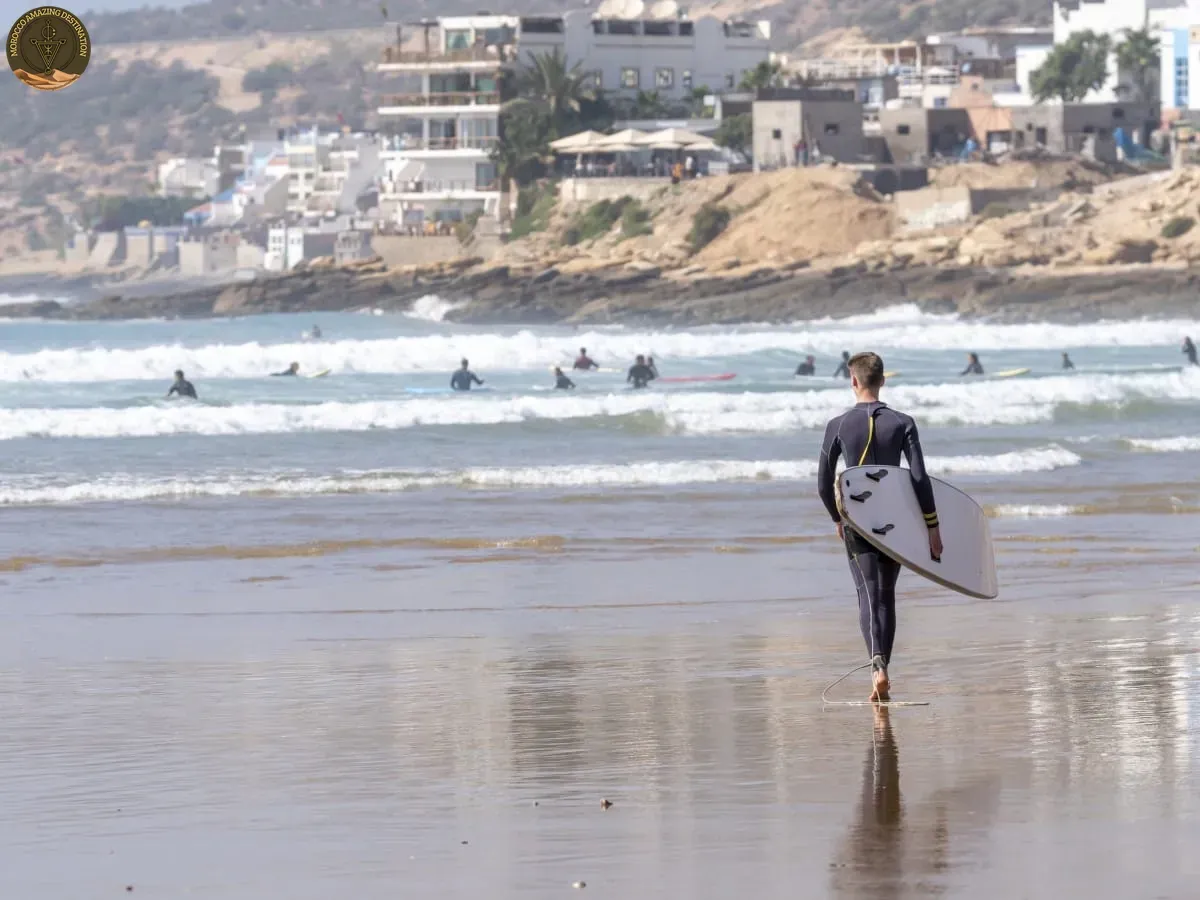
Turn inland on the P1001, signed for the valley and Imouzzer Ida Ou Tanane. It is paved the whole way and a normal car manages it, though the curves arrive fast and the drop sits close on one side. Argan shops, fossil trays and pottery stalls mark the climb; then the land turns rocky and the car park appears.
Attendants wave you in and ask a small cash charge. Past that point everything is on foot. This was a genuine stop on the hippie trail in the sixties, when travellers camped in the gorge for weeks at a time. The Jimi Hendrix naming story is folklore: he came to Morocco once, and no record puts him in this valley.
The Pools in Order - Trailhead to the Last Waterfall
A path runs above the river for 20 to 30 minutes to the first pools. Some basins are ankle-deep, a couple are properly deep, and people launch off the ledges into them. Most groups stop here, so this is the busiest water in the valley.
Keep walking and the crowd thins with every bend:
- First pools (20–30 min in): shallow flats, two deep jump spots, the easiest section for children
- Gorge bowl (10 minutes on): high ledges for jumpers and a sloping slab everyone else can use
- Upper basins (15 minutes over boulders): one thigh-deep wade on the way, with no route around it
- Waterfall pool: a final swim to a plunge pool, the quietest spot of the day
Nothing here is monitored: there are no lifeguards, and nothing marks the depth. The rock is polished by moving water, and Paradise Valley swimming rewards a minute of looking before you leap. Check where you will land, and never dive into water you cannot see through.
Spring Fill, Late-Summer Drawdown: Reading the Water
The pools answer to rain and snowmelt rather than to the calendar. After winter and spring rain the chain fills: every basin holds water and the cascade runs. By late summer it draws down to a few deep basins that still swim well, minus the waterfall.
Temperature catches people out. The gorge stays bracing even in August, because the source sits high and the walls hold the shade. Mornings are quieter and cooler for the climb up, while weekend afternoons bring the crowds.
Ask about flow on the day you plan to go. A week of heavy rain can complicate the upper pools, and a long dry spell changes what is left of them.
The Argan Stop - a Women’s Co-op, Not a Shopping Stop
Several women’s argan co-operatives sit on the P1001 between Aourir and the valley car park. The work inside is slow and manual: women crack the nuts one at a time against a stone, then grind the kernels between millstones. Little about it looks like retail until you reach the counter.
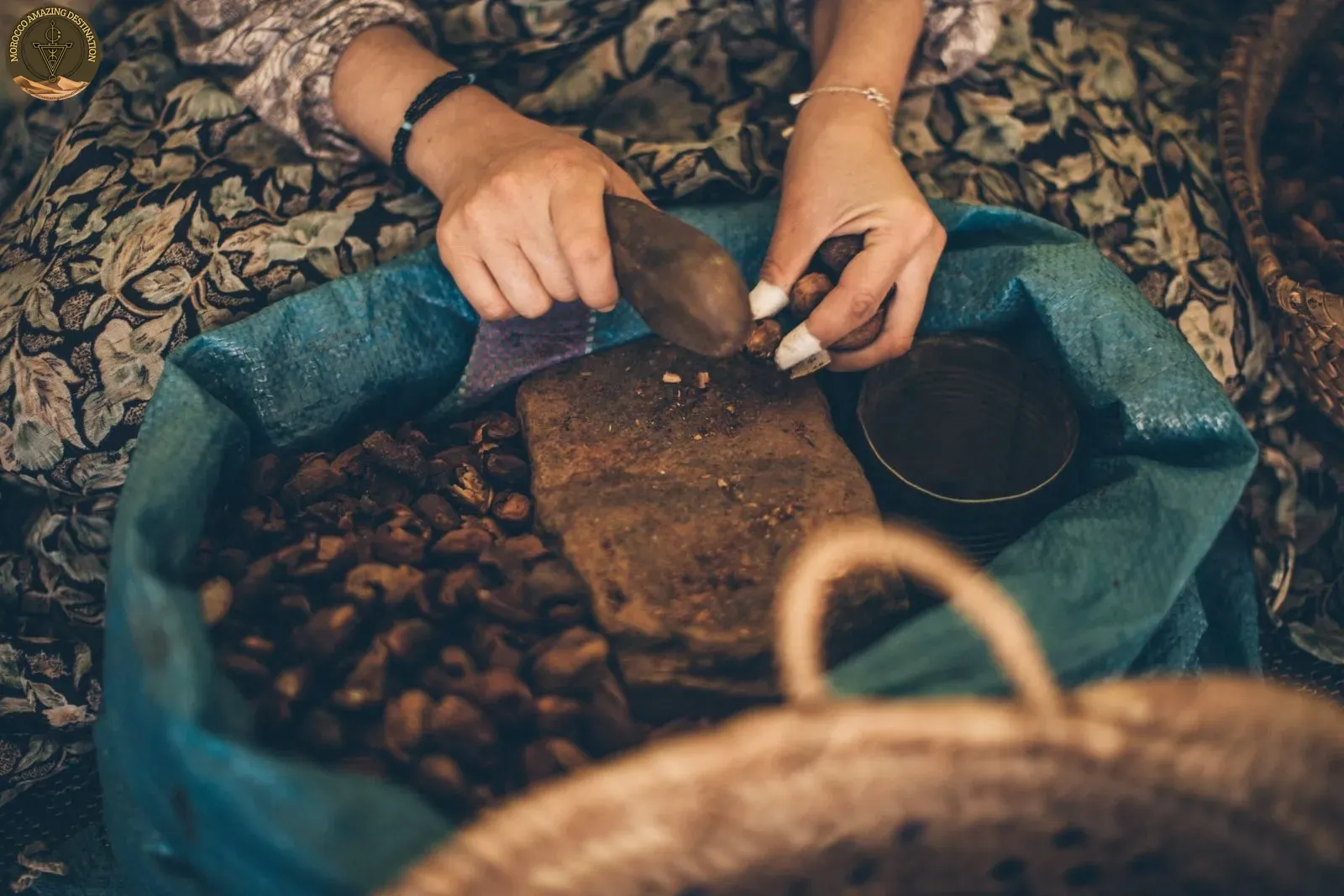
Two oils come from the same fruit, and the difference decides what you carry home:
- Culinary oil: roasted brown kernels, nutty, poured over bread, couscous and salads
- Cosmetic oil: unroasted white kernels, lighter, sold for skin and hair
- Amlou: almonds, argan oil and honey ground together, the breakfast spread worth the luggage space
The co-operatives sit inside the UNESCO Arganeraie Biosphere Reserve, and argan know-how from this region appears on the UNESCO intangible heritage list. Ask before photographing women at work, and buy something small if you take the demonstration. Prices are fixed rather than negotiated, so nobody expects a haggle.
Footwear, Family Fit and Going With a Private Driver
Wear trainers or trail shoes you are happy to soak. The wade near the top is compulsory, and wet rock plus flip-flops is how ankles go. Dry sandals waiting in the car feel luxurious afterwards.
What you carry matters less than people expect:
- On you: swimwear under your clothes, since there are no changing rooms, lockers or showers
- In the bag: a towel, a litre of water each, sun cream, a hat
- Cash: small notes for parking, café mint tea and a cold bottle on the way back
Children do well at the first pools, which are shallow and a short walk from the car park. The upper valley suits confident walkers, and the boulder sections rule out pushchairs, limited mobility and anyone unsteady on uneven ground. Staying in Aourir or Tamraght instead of Agadir city shortens the morning.
A Paradise Valley day trip with a private driver takes the mountain road and the parking negotiation off your plate. We start early, the car waits, and you stay at the top as long as the water holds you there.
If the valley hooks you, the rest of the coast deserves a few more days. Our guide to what else is worth doing in Agadir covers the rest of the city and the coast. For the same limestone country behind the pools, our 3-Day Tour from Agadir to Tafraoute, Sidi Ifni and Tiznit follows the villages and gorges inland. Heading east instead? The 7-Day Agadir to Merzouga Desert Tour crosses the Atlas to the dunes.
We can customize a tour to match your needs - design your perfect itinerary
If you found this helpful, add us as your preferred source on Google.
Frequently Asked Questions
How do you get to Paradise Valley without a tour?
Take the N1 north from Agadir to Aourir, then turn inland on the P1001 toward Imouzzer Ida Ou Tanane. The paved road ends at a car park with attendants, and from there it is a 20 to 30 minute walk to the first pools. Parking is a small cash charge and there is no entrance fee.
Do the pools have water all year?
The pools are rain-fed, so levels move with the weather. They are fullest after winter and spring rain, when the waterfall runs. In late summer and autumn the chain shrinks to a few deep basins that still hold swimmable water, though the cascade usually stops.
Is Paradise Valley safe for children and weak swimmers?
The first pools work well for families: they are shallow in parts and close to the car park. No lifeguards patrol the valley and nothing marks the depth, so stay with children and check the bottom before anyone jumps. The upper valley adds a thigh-deep wade and boulder sections that need confident footing.
What should you wear and bring?
Trainers or trail shoes you can get wet, swimwear worn under your clothes, a towel, water, sun protection and cash for parking and the trailhead cafés. There are no changing rooms or lockers, so travel light and leave valuables in the car.
Ready for an Adventure?
Have questions? Feel free to contact us using the form below. We're here to help!