· Travel · 6 min read
Nomadic Tours Morocco: Berber Camps, Dunes & Living Culture
Discover nomadic tours Morocco with Berber camps, camel treks and Sahara culture. An authentic, locally led guide to the real desert.
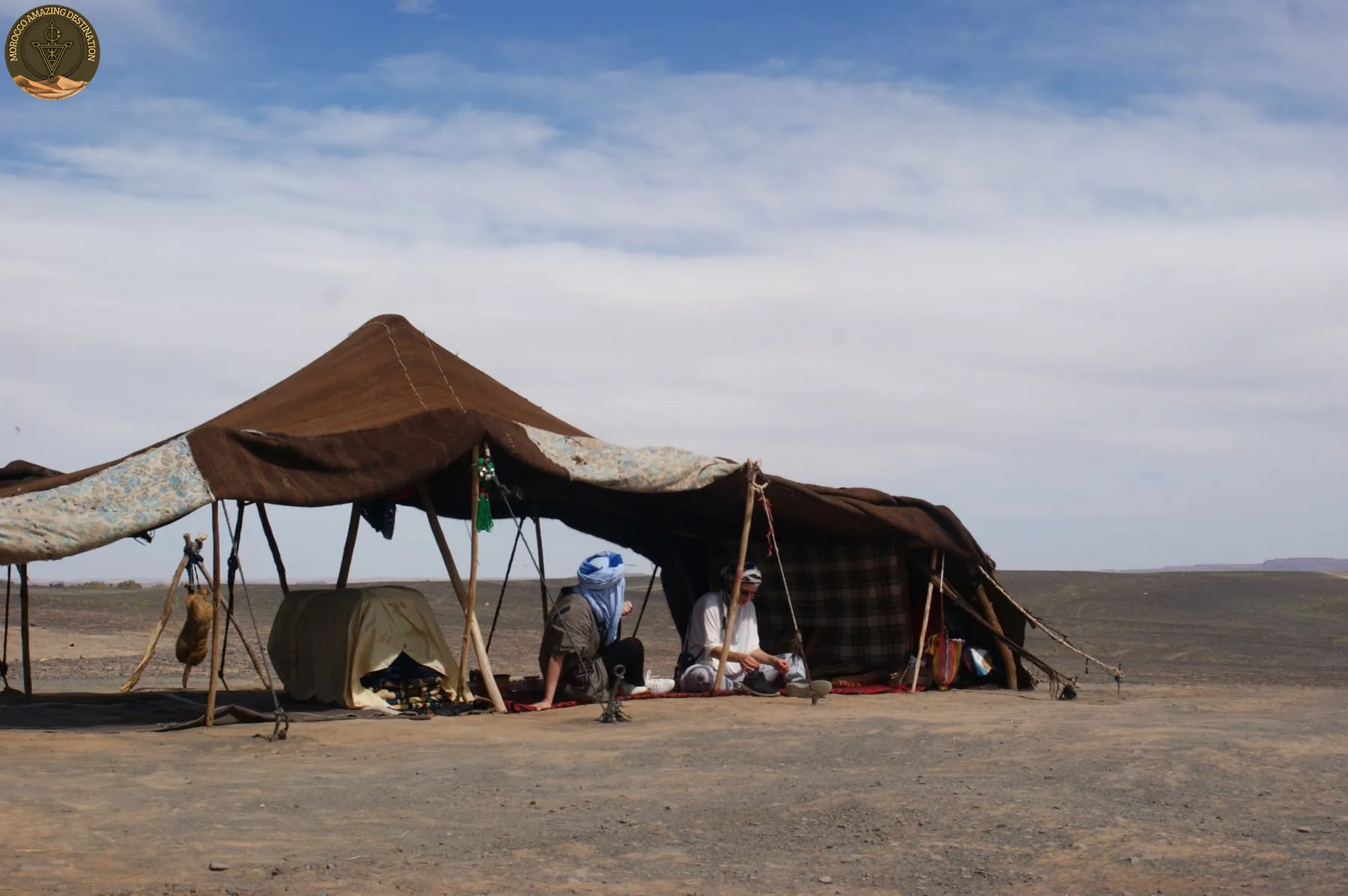
Imagine dunes that glow pink at sunset, a black tent warmed by tea, and stories traded under a sky dense with stars. nomadic tours morocco open that world without turning it into a show, connecting private travel with living Amazigh heritage.
In this guide, we will break down who Morocco’s nomads are, where you can still meet them, what a Sahara nomadic camp feels like, and how to plan a respectful, hassle-free journey.
Who Morocco’s Nomads Are Today
The Amazigh, meaning Free People, have shaped Morocco for thousands of years. Tamazight is now an official language, and southeastern families such as the Ait Atta and Ait Khabbash still hold deep knowledge of desert routes. Their classic home is the khaima, a black tent woven from goat hair that stays cool by day and warm by night and can be moved when pasture calls.
Movement today is lighter and more seasonal. Many families travel between low oases and High Atlas pastures from late spring into late summer, while others camp near wells outside Merzouga or along the Draa Valley. Reasons include drier seasons, deeper wells, schooling for children, and the search for steadier income. Some combine herding with hosting travelers, guiding, or crafting. Hospitality remains central, with tea poured as welcome and stories shared to mark respect.
A berber nomad experience is therefore not a reenactment. It is a brief, human encounter hosted through a local driver and guide, where you learn how tents are built, how herds are managed, and how families navigate by stars and stone markers. You leave with a clearer sense of resilience, not a staged photo.
Where Nomadic Life Still Persists
Sahara, oases, and high pastures form three connected stages where nomadic life continues.
The deep Sahara offers two distinct dune seas. Erg Chebbi near Merzouga rises above one hundred fifty meters, is reached by paved road, and suits first visits with a short camel trek to camp. Erg Chigaga beyond M’Hamid is far wilder, a sixty-kilometre piste past the dry lake of Iriqi and a vast sea of dunes in places up to three hundred meters, prized for Bortle dark skies and deep silence.
Beyond the dunes, life follows water and pasture. Draa and Tafilalet palm corridors, Saharan fringes with wells, and High Atlas commons managed by village assemblies provide summer grazing above two thousand five hundred meters. These agdal commons rest pastures on a set rhythm, with elders deciding when herds may return. Gateways such as Guelmim, Tan-Tan, and the Draa Valley keep market and moussem traditions alive, including the Tan-Tan Moussem, recognized as UNESCO Intangible Heritage for its celebration of nomadic culture, with camel parades, poetry, and music.
Two stages at a glance:
- Erg Chebbi (Merzouga): accessible, dramatic light, ideal for sunset treks and culture days in Khamlia and nearby tents.
- Erg Chigaga (M’Hamid): remote, multi-day 4x4 approach, ultimate isolation and stargazing.
- Oases and Atlas: palm groves, agdal commons, and weekly souks where herders trade and meet.
What a Sahara Nomadic Camp Night Feels Like
A Sahara nomadic camp is your base for sunrise, sunset, and starlight. You arrive by camel as the dunes cool, then settle into lantern-lit tents. Basic camps use thick mattresses and shared facilities, mid-range and luxury add real beds and en-suite comfort, but the sky is equally brilliant for all.
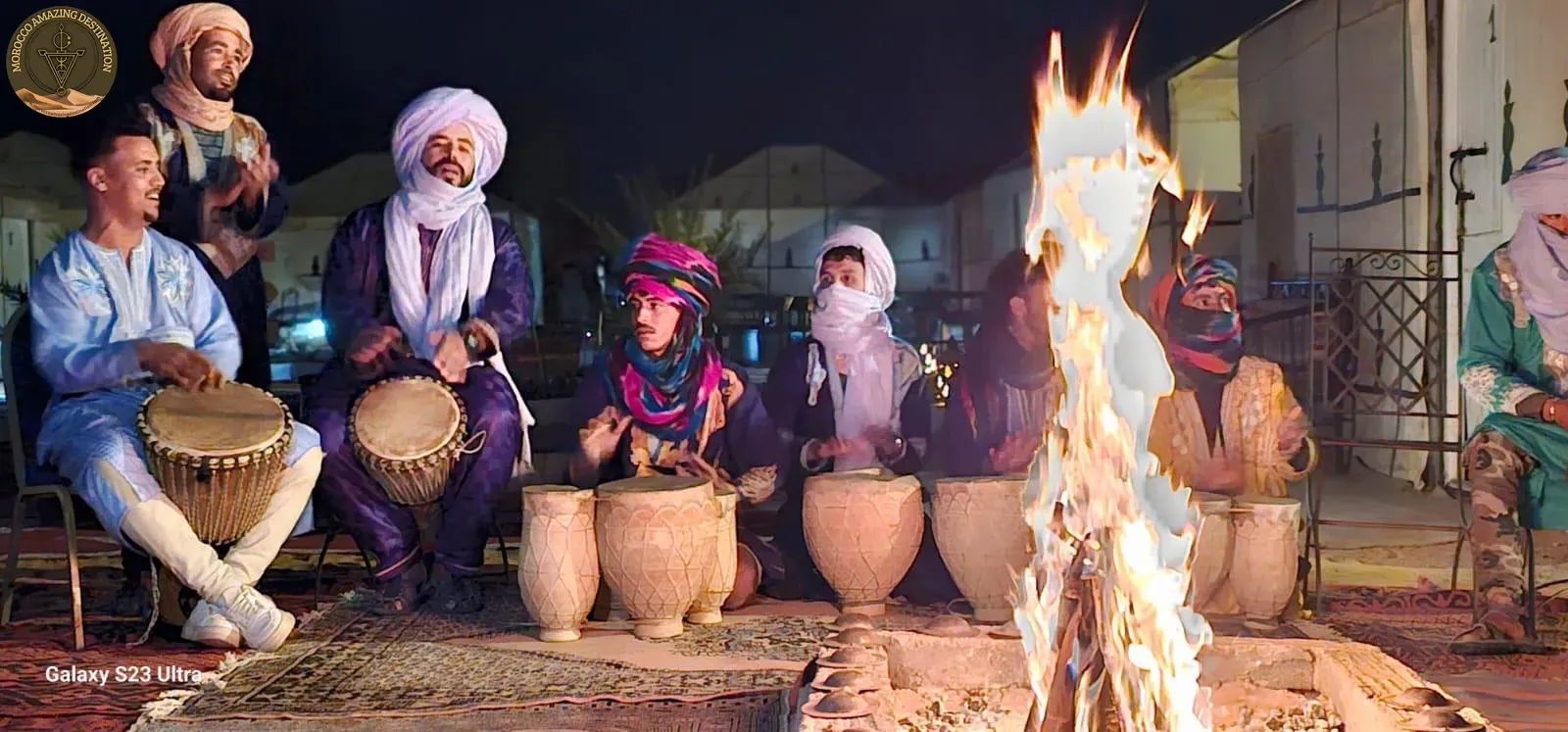
Evenings are simple and soulful. Dinner brings tagine, sand-baked taguella bread, and mint tea, followed by drums around the fire and stories from your Sahrawi hosts. Mornings begin before light for a quiet walk or camel ride to watch the sun lift over the erg.
What to expect:
- Arrival: private 4x4 across the Tizi n’Tichka at 2,260m and the UNESCO World Heritage site of Ait Benhaddou, then camel trek at golden hour.
- At camp: lanterns, warm blankets, music, and clear Milky Way views with no light pollution.
- Nearby adds: Dayet Srji seasonal lake with migratory birds, small fossil workshops, and tea stops with families.
With Hassan’s storytelling, Hamid’s steady hand on trek and camp logistics, and Andrea’s seamless coordination, the night feels both authentic and easy. Private 4x4, flexible timing, and hand-picked riads let you linger for photos or tea without feeling rushed.
A Berber Nomad Experience Done Respectfully
The most meaningful berber nomad experience is quiet, brief, and hosted with care. You step into a khaima by invitation, share tea, and listen. Families may show how wool is spun, how bread is baked under sand, or how herding routes are chosen. These moments work best when kept small and unscripted.
Sustainable visits also keep culture alive beyond tourism. In Khamlia, descendants of sub-Saharan communities share Gnawa music on the guembri and krakeb, a powerful counterpoint to desert silence. Choosing locally owned camps and guides ensures income stays close to families who still move or who have recently settled near Merzouga, Hassilabiad, or Ouarzazate.
How to keep it respectful:
- Choose locally owned: camps and drivers from the region who know families personally.
- Keep it brief: short tea visits led by your guide, not long staged performances.
- Ask and support: ask before taking photos, enjoy music fully, and buy crafts directly if you wish.
This approach protects dignity, keeps traditions honest, and leaves you with a clearer memory of real desert life.
Plan Your Nomadic Tour: Route, Days and Private Comfort
Private travel makes nomadic routes smooth and personal. You ride in your own air-conditioned 4x4 with a driver-guide, stop for panoramas in the High Atlas, and set your pace through valleys, gorges, and palm oases. Hand-picked riads and desert camps balance comfort with character, so families and first-timers feel cared for like family.
If time allows, favor four to five days over a rushed two to three. The extra day creates a full Merzouga culture day for nomad tent visits, Khamlia music, and a slow return via Rissani market and fossil studios near Erfoud. From Marrakech you cross the High Atlas and UNESCO World Heritage site of Ait Benhaddou, overnight in Dades or Todra, then reach the dunes for sunset. From Fes you cut through cedar forests and the Ziz Valley, arriving with time to breathe before the trek.
Two private options fit most travelers. The 4-Day Morocco Desert Tour from Marrakech loops through Atlas, Dades, and Merzouga with a dedicated culture day and luxury camp night. The shorter 3-Day Desert Tour from Fes to Merzouga links Middle Atlas scenery to Erg Chebbi and still includes nomad and Gnawa encounters.
We can customize a tour to match your needs — design your perfect itinerary
If you found this helpful, add us as your preferred source on Google.
Frequently Asked Questions
What is a nomadic tour in Morocco?
A nomadic tour in Morocco is a private journey that follows old caravan routes into the Sahara, with a 4x4, camel trek at sunset and a night in a desert camp, plus respectful visits to nomad families, Gnawa music in Khamlia and oasis markets.
Can you still meet real nomads in the Sahara?
Yes, but in small numbers. A few thousand families still move seasonally between Draa Valley oases and High Atlas pastures or camp near Merzouga and M'Hamid. Visits are brief, in their black goat-hair tents, usually over tea arranged by your local driver.
What is included in a Sahara nomadic camp stay?
A Sahara nomadic camp stay includes a camel trek at sunset, dinner with tagine and sand-baked bread, lantern-lit tents with real beds in mid and luxury camps, shared mats in basic camps, drumming by the fire and sunrise over the dunes. The stars are the same in every category.
How can I visit nomadic culture respectfully?
Choose locally owned camps, keep tea visits short and hosted by your guide, ask before photographing, avoid staged performances, and allow a full day in Merzouga instead of rushing. Your spending on tea, crafts and music directly supports families balancing herding with tourism.
Ready for an Adventure?
Have questions? Feel free to contact us using the form below. We're here to help!