
· Travel · 5 min read
Nkob Morocco: Inside the Kasbah Town of the Draa Valley
Nkob Morocco is the kasbah town most travellers drive past: about 45 earthen kasbahs, two palm oases and a weekend souk on the Draa Valley road.
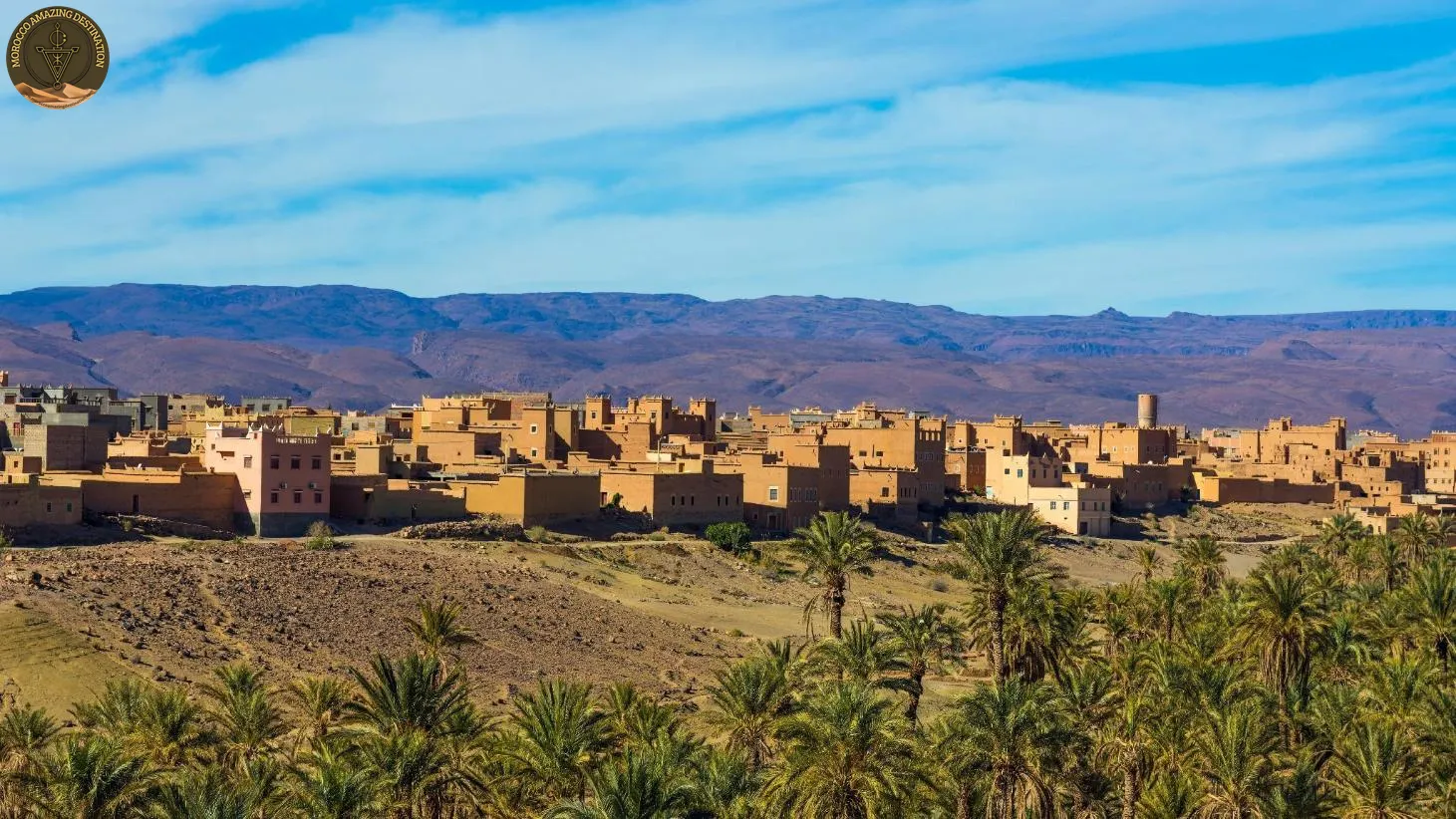
Most travellers heading south from Ouarzazate toward the dunes keep their foot down and drive straight past. Nkob Morocco rewards the ones who stop. This small Amazigh town in Zagora Province wraps itself around roughly 45 earthen kasbahs and two date-palm oases, right at the foot of Jbel Saghro. Nkob sits at about 1,045 metres above sea level on the southern road between Marrakech and the Merzouga dunes.
In this guide, we will break down what Nkob is and what a visit involves. We will also show where it falls on the road south, and how to add a restful stop to a private itinerary.
Nkob, the Kasbah Town Most Travellers Drive Past
Nkob, sometimes written N’Kob, is a rural municipality in Zagora Province, in the Drâa-Tafilalet region of southern Morocco. It sits at about 1,045 metres above sea level, on the N9 between Ouarzazate and Tazzarine, with the Jbel Saghro massif rising to the north.
The village is almost entirely Amazigh, and most residents speak Tashelhiyt alongside Moroccan Arabic and French. The national census counted roughly 7,200 people spread across small douars around the centre.
Its kasbahs are not one monument but a whole quarter of earthen towers and thick-walled houses, old and caravan-era in feel. Several have been restored as small guesthouses, which is why Nkob feels lived-in rather than preserved, and their terraces are the best seat at sunset.
Things to Do in Nkob — Kasbahs, Oases and the Souk
The nkob kasbahs are the reason to come. There are roughly 45 of them, which gives the village its nickname: the valley of 45 kasbahs.
The things to do in nkob are refreshingly low-key. Walk the old quarter, climb a restored rooftop for a full view of the oasis, and drift through the gardens of the two palm oases.
Highlights to plan around:
- The old kasbah quarter: earthen towers and alleyways you can wander without a ticket.
- Rooftop views: climb any restored kasbah and the whole oasis fits in one frame.
- The two palm oases: flat, shaded walks between gardens and old irrigation channels.
- The weekly souk: a weekend market with a lively livestock section, plus henna, almonds, leather sandals and Berber cosmetics.
Paths thread between gardens, irrigation channels and mud walls. Market days vary, so ask at your guesthouse.
Nkob on the Draa Valley Route to Zagora and Merzouga
Nkob sits at the edge of the draa valley corridor, the green ribbon of date palms running south of the High Atlas. It is a landmark on the N9, the road linking Ouarzazate with Tazzarine and the southern oases.
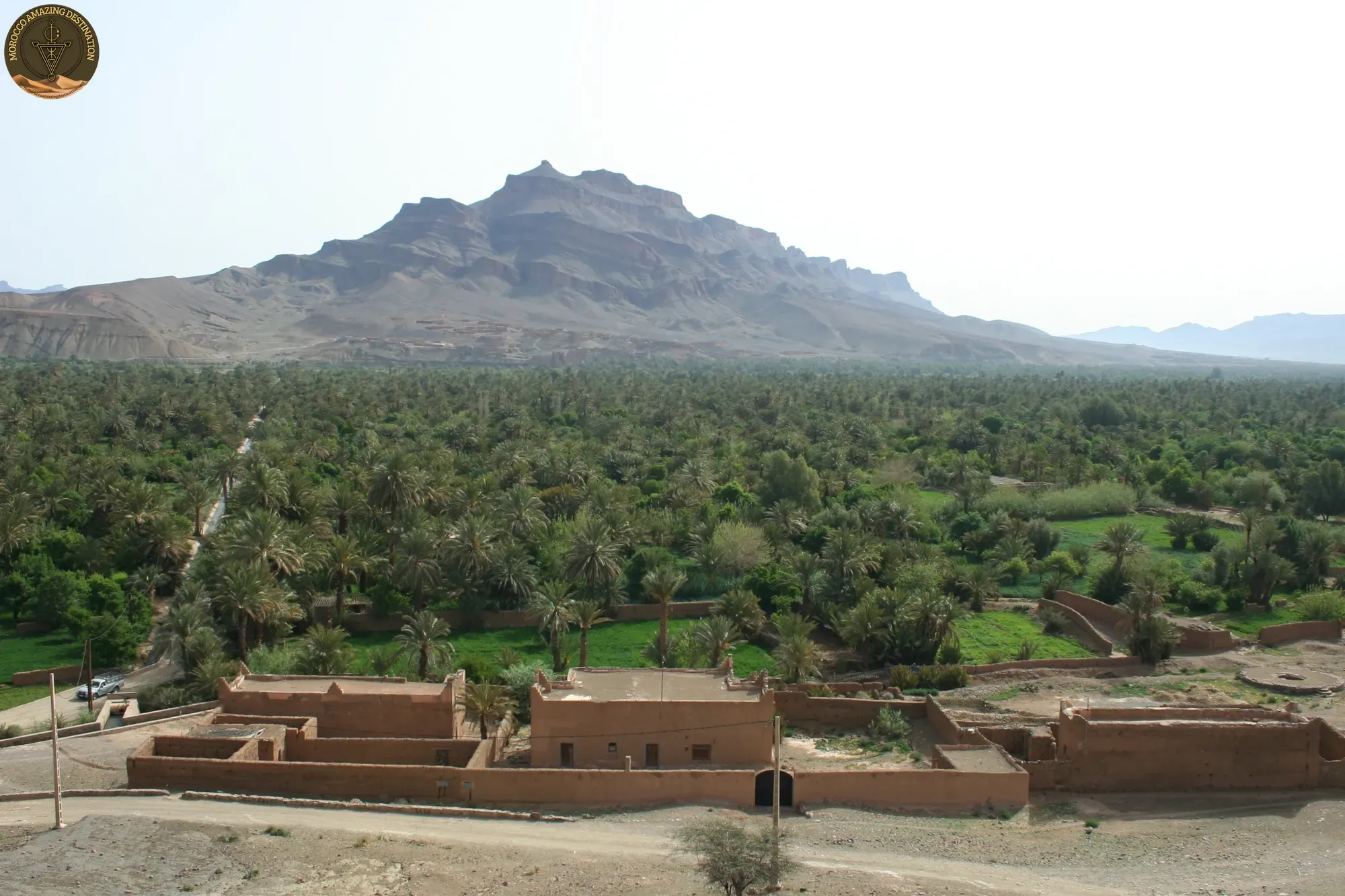
Because the town is small and the road is long, Nkob makes a natural lunch-and-stretch stop. Mint tea on a terrace, a walk through the palms, then back in the car.
Approximate distances from Nkob:
- Ouarzazate: about 140 km west, roughly 2 to 2.5 hours.
- Tazzarine: about 35 km east, around 45 minutes.
- Tansikht junction: about 40 km, where the road meets the Draa Valley.
- Zagora: about 100 km south via the R108, a longer detour rather than a quick side trip.
The drive is part of the appeal: red rock, tamarisk, and irrigation channels running beside the road.
Jbel Saghro Treks and Aït Atta Nomad Country
Immediately north of Nkob rises Jbel Saghro, a volcanic massif forming the eastern extension of the Anti-Atlas. Its high point, Amalou n’Mansour, reaches 2,712 metres, and it is the driest range in the Atlas system: about 100 mm of rain a year.
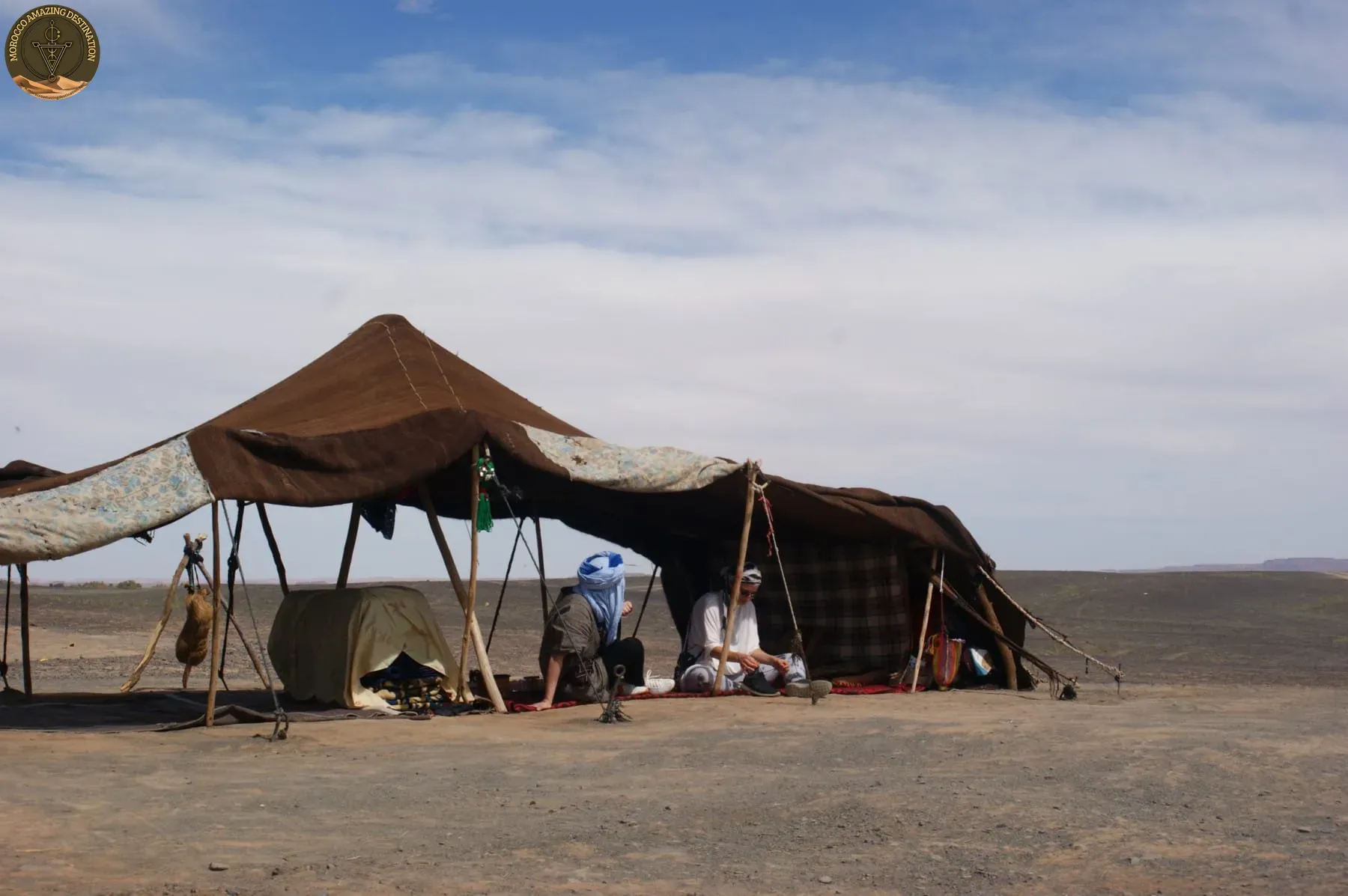
This is Aït Atta country, home to semi-nomadic families who still move with their herds between the slopes and the plain. The tribe resisted French forces for 42 days at Bougafer in these mountains and kept its internal autonomy afterwards.
Nkob is the classic southern trailhead:
- Bab n’Ali: the rock towers that open the trekking country north of town.
- Tizi n’Tazazert pass: a high crossing at roughly 2,250 metres.
- The five-day route: Nkob to Boumalne Dades on foot, sleeping in village houses and camps.
Prehistoric rock engravings survive on exposed rock faces, and half-day walks suit anyone who wants a taste of the massif. Families sometimes welcome walkers for tea in a goat-hair tent.
Stop in Nkob on Your Private Morocco Itinerary
Nkob is not a place you book months ahead. It is a place you are glad your driver slowed down for. On a private, tailor-made trip you shape the stop: an hour for tea and the souk, or a morning in the kasbahs.
Two of our journeys cross this corridor. The 7-Day Agadir to Merzouga Desert Tour spends a day in the Draa Valley and the kasbah country around Nkob.
For a longer loop, the 10 Days in Morocco: The Ultimate Private Tour from Marrakech to the Sahara crosses the Draa and adds an unhurried Nkob stop. Our guide to the southern Draa and its desert gateway covers the wider corridor.
We can customize a tour to match your needs — design your perfect itinerary.
If you found this helpful, add us as your preferred source on Google.
Frequently Asked Questions
Where is Nkob in Morocco?
Nkob sits in Zagora Province, in the Drâa-Tafilalet region of southern Morocco, about 1,045 metres above sea level at the foot of Jbel Saghro.
Is Nkob worth visiting?
Yes, especially if you want real Morocco rather than a staged stop. Nkob has about 45 earthen kasbahs you can walk through, two date-palm oases, a weekend souk and direct access to Jbel Saghro trekking country, all with few visitors.
How many kasbahs does Nkob have?
Nkob is nicknamed the valley of 45 kasbahs. Roughly 45 earthen mud-brick kasbahs stand in and around the village, and several have been restored and now run as small guesthouses.
How do you get to Nkob, and how far is it from Ouarzazate or Merzouga?
Nkob is on the N9 between Ouarzazate and Tazzarine: about 140 km and roughly 2 to 2.5 hours from Ouarzazate, and about 35 km from Tazzarine. On the southern road toward the Merzouga dunes it makes an easy lunch-and-stretch stop, with the R108 branching south toward Zagora.
Ready for an Adventure?
Have questions? Feel free to contact us using the form below. We're here to help!