· Travel · 6 min read
Mountains in Morocco: Atlas, Rif & High Atlas Guide
Discover the mountains in Morocco — Atlas, Rif and Anti-Atlas — with peaks, passes and valleys to help you choose where to go next.
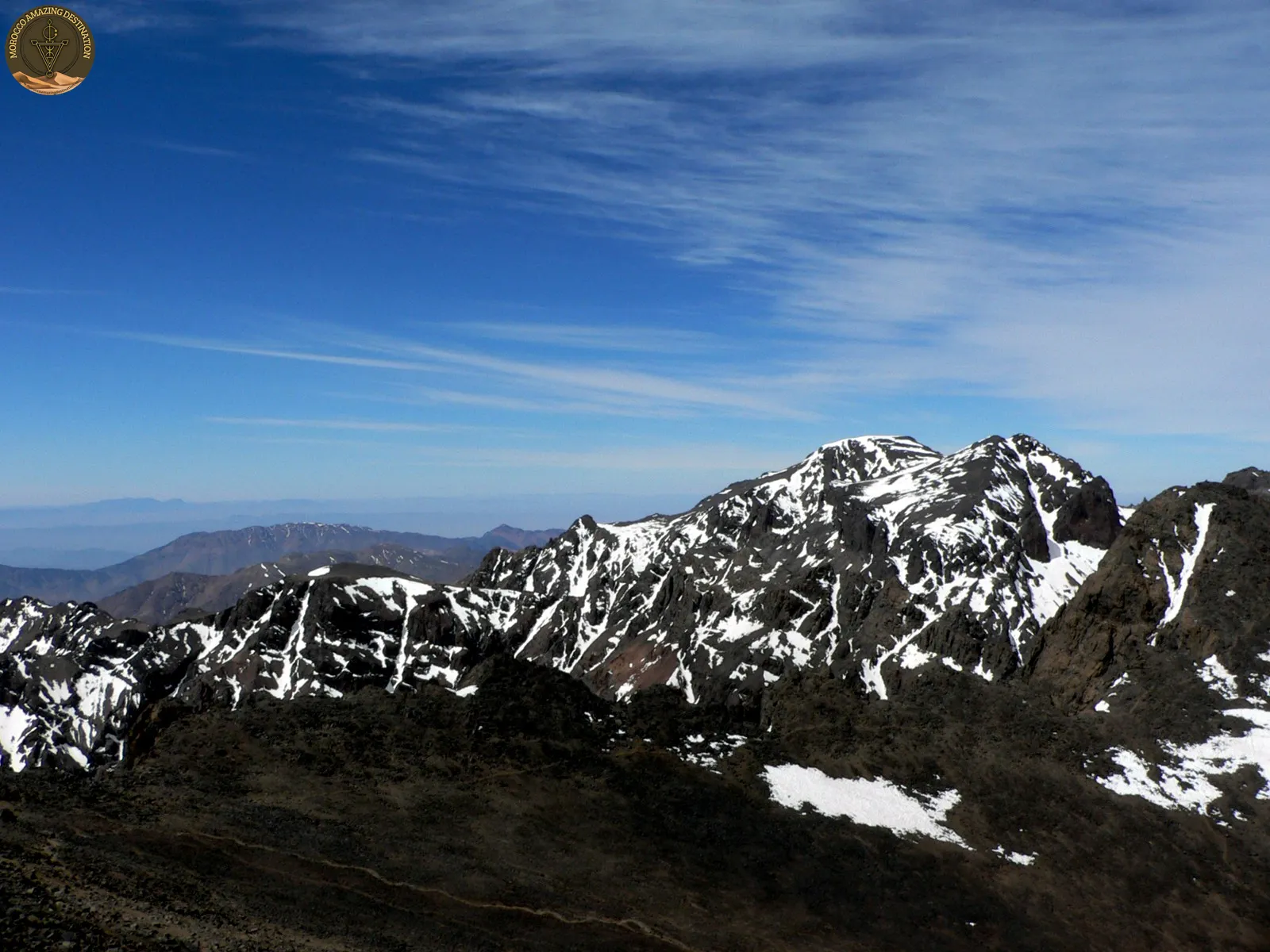
The mountains in Morocco are four distinct ranges — the High Atlas with Mount Toubkal at about 4,167 meters, the green Middle Atlas, the arid Anti-Atlas and the Mediterranean Rif with Jebel Tidirhine at about 2,456 meters. Together they form a backbone that shapes climate, culture and trekking across the country. From snow-capped passes to cedar forests and pink granite valleys, they tell a complete mountain story.
In this guide, we will break down the Atlas system, the High Atlas highlights, the Rif Mountains in the north, and how to choose the right range and season for your trip.
The Atlas System at a Glance
The Atlas Mountains Morocco form a sweeping system that defines much of the country’s geography. The High Atlas stretches about 750 kilometers from the Atlantic coast near Agadir toward the Algerian border. It separates the cooler north from the Saharan south and holds the highest peaks.
The Middle Atlas is the greenest range, running from near Fes toward the High Atlas with cedar and oak forests, alpine lakes and the town of Ifrane at about 1,650 meters. The Anti-Atlas is the oldest and most arid, extending about 500 kilometers across the south with volcanic massifs like Jebel Siroua at about 3,304 meters and the pink granite domes of Tafraoute.
How the three Atlas ranges differ:
- High Atlas: Rugged, high and dramatic, best for classic trekking and iconic passes like Tizi n’Tichka at about 2,260 meters.
- Middle Atlas: Forested and lake-dotted, ideal for gentle hikes, cedar forests and wildlife like Barbary macaques.
- Anti-Atlas: Ancient, dry and sculpted, perfect for quiet valleys, gorges and photography of painted rocks.
For a deeper dive into geology and longer routes, see our detailed guide Mountains of Morocco: Complete Guide to the Atlas, Rif and Beyond.
The High Atlas — Toubkal and Iconic Valleys
The High Atlas Morocco is the star for most first-time visitors, and it is easy to reach from Marrakech. The hub is Imlil, a Berber village at the foot of Toubkal that serves as the gateway for treks, day hikes and winter walks. Ourika Valley offers an even quicker escape, with waterfalls and weekly markets tucked into green foothills.
Toubkal itself is the highest peak in North Africa. The standard route needs two days with an overnight at the refuge, a qualified mountain guide and solid fitness. You do not need ropes, but you do need layers, early starts and steady pacing at altitude.
Key places to know in the High Atlas:
- Imlil and Aroumd: Base villages for Toubkal and valley walks, about 65 to 70 kilometers from Marrakech.
- Ourika Valley: Close day trip with riverside cafes, Berber homes and waterfalls, about 40 kilometers away.
- Tizi n’Tichka Pass: Historic caravan pass linking Marrakech to the south, with wide panoramas and kasbah stops.
- Mgoun and Dades area: High valleys, terraced fields and dramatic gorges for longer traverses.
Private transport makes these contrasts easy. Your driver navigates winding passes while you focus on views, village stops and flexible timing.
The Rif Mountains — Morocco’s Green North
The Rif Mountains Morocco feel completely different from the Atlas. This 290-kilometer crescent hugs the Mediterranean from near Tangier to the Algerian border. Expect limestone cliffs, cork oak and fir forests, and fresh sea air mixed with mountain light.
Chefchaouen sits in the heart of the Rif and is the easiest entry point. Its blue-washed medina, red-tiled roofs and easy trails make it a favorite for relaxed hiking and photography. Just beyond town lies Talassemtane National Park, a protected area of about 589 square kilometers with deep canyons, karst peaks and rich birdlife.
Highlights of the Rif Mountains:
- Chefchaouen medina: Painted streets, artisan shops and rooftop views, with gentle hikes to the Spanish Mosque lookout.
- Talassemtane National Park: Day walks and longer treks through fir and cedar forests, with chances to spot raptors and wild boar.
- Jebel Tidirhine at 2,456 meters: The highest summit in the Rif, offering Mediterranean vistas and quiet Jebala villages.
The Rif suits travelers who want green landscapes, mild coastal influence and a strong sense of local culture without high altitude. Trails are accessible, villages are compact and days mix nature with town life.
When to Go and How to Choose Your Base
Timing shapes your mountain experience more than any other factor. Spring and autumn bring the best hiking conditions, with wildflowers, clear skies and comfortable temperatures. Winter adds snow to the High and Middle Atlas and opens a short ski season. Summer is hot in lower valleys but pleasant at high altitude.
Choose by season:
- Spring and autumn: Best for trekking and photography across all ranges.
- Winter: Snow on high passes, skiing at Oukaimeden in the High Atlas and Michlifen in the Middle Atlas.
- Summer: Early-morning hikes in lower valleys, all-day comfort above 3,000 meters.
Choose by base city:
- Marrakech: Fastest access to Ourika, Imlil and Tizi n’Tichka for High Atlas day trips and Toubkal approaches.
- Fes: Gateway to the Middle Atlas, Ifrane, cedar forests and lakes.
- Agadir: Launch point for the Anti-Atlas and Tafraoute’s pink granite valleys.
- Chefchaouen or Tangier: Perfect for the Rif Mountains and Talassemtane National Park.
Road times stay manageable with a private driver. Marrakech to Ourika is about 45 to 60 minutes, to Imlil about 1.5 to 2 hours, and to Tizi n’Tichka about 4 to 5 hours with scenic stops. You avoid mountain driving stress and keep your schedule flexible for markets, viewpoints and tea breaks.
Explore with a Private Tour
The easiest way to feel the real Morocco in the mountains is with a private, tailor-made journey. You travel with your own driver and local guide, stay in hand-picked riads and move at your pace, with time for hidden valleys, family visits and panoramic pauses.
Cross the High Atlas on the legendary Tizi n’Tichka pass and follow Berber valleys toward the Sahara on our 4-Day Morocco Desert Tour from Marrakech. It links mountain scenery, the UNESCO World Heritage site of Ait Benhaddou and desert dunes in one seamless route. For the Anti-Atlas, our 3-Day Agadir to Tafraoute, Sidi Ifni and Tiznit Tour reveals pink granite domes, the Ameln Valley and Atlantic arches, crafted for authentic southern landscapes.
Want more detail before you decide? Browse our deep guide Mountains of Morocco for extended routes and peaks.
We can customize a tour to match your needs — design your perfect itinerary
If you found this helpful, add us as your preferred source on Google.
Frequently Asked Questions
What are the main mountain ranges in Morocco?
Morocco has four main ranges: the High Atlas, Middle Atlas, Anti-Atlas and Rif Mountains. The High Atlas forms the southern backbone, the Middle Atlas is forested and green, the Anti-Atlas is arid and ancient in the south, and the Rif curves along the Mediterranean coast.
What is the highest mountain in Morocco?
Mount Toubkal is the highest peak in Morocco and North Africa at about 4,167 meters in the High Atlas. It sits near Imlil, about 65 kilometers from Marrakech, and is a popular guided trek that needs good fitness but no technical climbing.
Should I choose the Rif Mountains or the Atlas Mountains?
Choose the Atlas Mountains Morocco for high peaks, Berber valleys and desert passes, and the Rif Mountains Morocco for green hills, Mediterranean views and blue Chefchaouen. For classic trekking pick the High Atlas, for relaxed nature and culture pick the Rif.
When is the best time to visit the mountains in Morocco?
Spring and autumn offer the best hiking with mild days and clear trails. Winter brings snow to the High and Middle Atlas, with skiing at Oukaimeden and Michlifen. Summer suits high-altitude treks above 3,000 meters, while lower valleys are best explored early in the day.
Ready for an Adventure?
Have questions? Feel free to contact us using the form below. We're here to help!