· Travel · 7 min read
Morocco 2030 World Cup: How Morocco is Experiencing a Cultural and Economic Renaissance
Discover Morocco's cultural and economic renaissance ahead of co-hosting the 2030 FIFA World Cup. Stadiums, high-speed rail & more.
Morocco 2030 World Cup: How Morocco is Experiencing a Cultural and Economic Renaissance
Morocco made history when it was announced as a co-host of the Morocco 2030 World Cup alongside Spain and Portugal. For the North African kingdom, this is more than just a football tournament — it marks the beginning of the most ambitious transformation in the nation’s modern history. From Casablanca to Marrakech, Rabat to Fes, a wave of development is reshaping the country’s infrastructure, economy, and cultural identity.
But is Morocco truly experiencing a renaissance? The evidence is everywhere — from new stadiums rising on the outskirts of major cities to high-speed trains connecting ancient imperial capitals. This article explores the Morocco World Cup 2030 preparations that are driving a cultural and economic revival across the nation.
Morocco’s Road to 2030: A Historic Opportunity
The 2030 World Cup represents far more than ninety minutes of football. For Morocco, it is a national project that unites the country’s rich past with its ambitious future. His Majesty King Mohammed VI has positioned the tournament as a catalyst for Morocco’s development strategy, aligning with the broader Morocco 2030 vision infrastructure plans that aim to modernize the nation while preserving its cultural soul.
This historic opportunity places Morocco on a global stage alongside Portugal and Spain — the first time the tournament will span two continents. The Morocco economic development 2030 strategy encompasses everything from transportation networks to hospitality infrastructure, creating a lasting legacy that will benefit Moroccans and visitors alike.
Infrastructure Revolution: Building for Tomorrow
The Morocco 2030 World Cup has already triggered an unprecedented wave of construction and modernization across the country.
Stadiums and Sports Venues
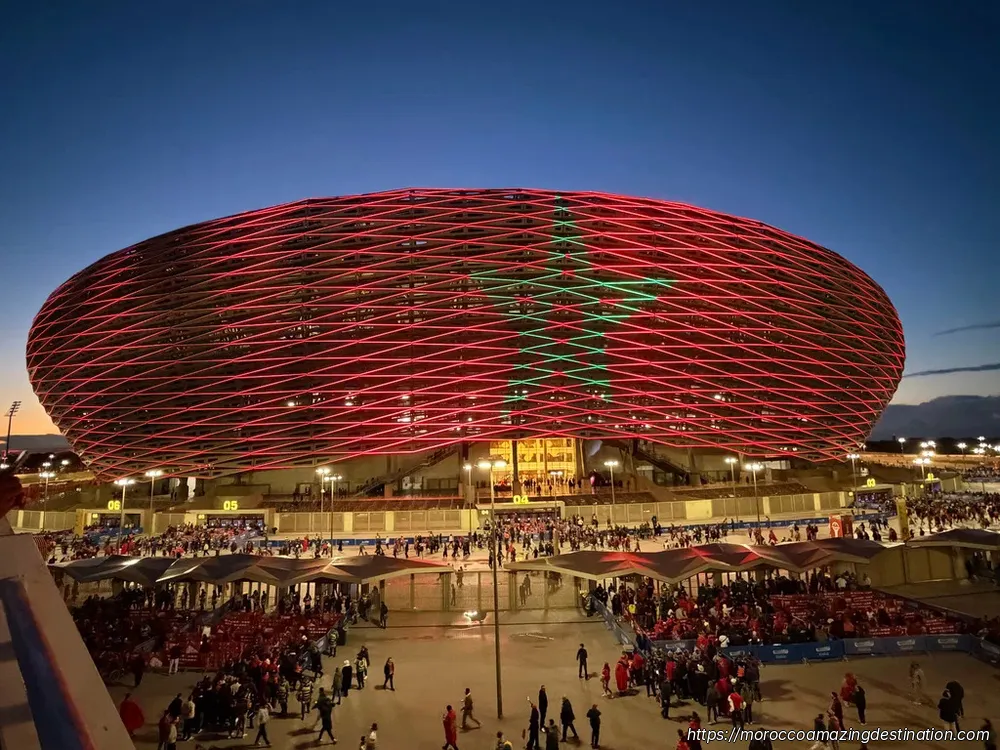
The centerpiece of Morocco’s preparations is the Grand Stade Hassan II in Casablanca. This architectural marvel, designed by the renowned OMA studio, will be one of the largest stadiums in the world with a capacity exceeding 100,000 spectators. Its innovative design — a massive tent-like structure inspired by traditional Moroccan moussem gatherings — reflects the country’s ability to blend modernity with heritage.
Other host cities are receiving significant upgrades:
- Marrakech Stadium — expanded capacity and modern facilities
- Prince Moulay Abdellah Stadium in Rabat — complete renovation
- Adrar Stadium in Agadir — enhanced infrastructure
- Tangier Grand Stadium — upgraded to meet FIFA standards
- Fes Stadium — modernization of existing venue
High-Speed Rail and Transportation
Morocco’s Al Boraq high-speed rail network, already one of Africa’s most advanced, is being expanded to connect all 2030 World Cup host cities Morocco has designated. Travel from Tangier to Marrakech will take under three hours, while Casablanca to Rabat will be a swift thirty-minute journey. New highway projects and urban metro systems in Casablanca and Marrakech will ensure seamless connectivity for visiting fans.
Airport Expansions
Major airports across all six host cities are undergoing significant expansions:
- Casablanca Mohammed V International — new terminal and runway
- Marrakech Menara Airport — capacity doubling
- Rabat-Salé Airport — international gateway upgrades
- Fes-Saïss Airport — expanded terminal
- Tangier Ibn Battouta Airport — increased capacity
- Agadir Al Massira Airport — modernized facilities
The Host Cities: Where History Meets the Future
The Morocco cultural renaissance 2030 is most visible in the host cities themselves, where ancient traditions exist alongside futuristic developments.
Casablanca: The Economic Powerhouse
Morocco’s largest city and economic heart is undergoing its most dramatic transformation since independence. The new Grand Stade Hassan II anchors a massive urban development zone, while the Casa-Anfa project is creating a new city center with green spaces, business districts, and cultural venues. Casablanca’s Art Deco heritage is being preserved even as the city reaches for the sky.
Marrakech: The Red City on the World Stage
Already one of the world’s most visited destinations, Marrakech is preparing for an influx of global visitors. New hotels, expanded airport capacity, and improved transport links will make the Red City more accessible than ever while preserving the magic of its UNESCO-listed medina, the bustling Jemaa el-Fnaa square, and the serene Majorelle Garden.
Rabat: The Capital’s Renaissance
Morocco’s capital is experiencing a cultural renaissance of its own. The Mohammed VI Tower, the new Grand Theatre of Rabat, and the ongoing restoration of the Kasbah of the Oudayas reflect a city that honors its past while embracing the future. As a UNESCO World Heritage city, Rabat offers visitors a more relaxed, authentic Moroccan experience.
Fes: An Ancient City Embracing the Future
Fes, home to the world’s oldest university, is balancing preservation with progress. The ancient medina — a UNESCO site — continues to operate as it has for centuries, while new hotels and cultural centers outside its walls prepare to welcome World Cup visitors. The Morocco cultural renaissance 2030 is perhaps most poignant here, where artisans practice crafts passed down through generations.
Tangier: The Gateway to Africa
Tangier has reinvented itself as a cultural hub. The Tangier Grand Stadium sits at the entrance to the Strait of Gibraltar, symbolizing Morocco’s role as a bridge between Africa and Europe. The city’s cosmopolitan heritage — from the American Legation to the Grand Socco — offers visitors a unique blend of influences.
Agadir: Coastal Transformation
Agadir, known for its stunning beaches and year-round sunshine, is being positioned as Morocco’s premier coastal destination for the World Cup. New waterfront developments, resort expansions, and improved infrastructure are transforming this Atlantic city while respecting Berber culture and traditions.
Economic Renaissance: Beyond Football
The economic impact of the Morocco World Cup 2030 preparations extends far beyond stadium construction.
Tourism Boom
Morocco’s tourism sector is preparing for an unprecedented surge. The country welcomed millions of visitors annually, and the World Cup is expected to showcase Morocco to a global audience of billions. Hotel capacity is expanding rapidly, with international brands investing in new properties across all host cities. The Morocco tourism renaissance is being driven by improved infrastructure, global visibility, and the country’s natural appeal as a year-round destination.
Investment and Job Creation
The World Cup is creating hundreds of thousands of jobs across construction, hospitality, transport, and services. International investment is flowing into Morocco at record levels, with foreign companies establishing regional headquarters and partnerships. The Hassan II Fund for Economic and Social Development has allocated significant resources to ensure the benefits reach all regions of the country.
A Cultural Renaissance: Heritage on a Global Stage
Perhaps the most profound transformation is cultural. Morocco is investing in the preservation and promotion of its heritage — from the restoration of historic medinas to the revival of traditional crafts. The country’s diverse cultural heritage — Berber, Arab, Andalusian, Jewish, and African — is being celebrated as a unique selling point.
Festivals, museums, and cultural centers are being established or expanded in all host cities. The Moroccan culinary scene, recognized as one of the world’s most sophisticated, is gaining international recognition through new cooking schools, food tours, and gastronomic events timed around the World Cup.
What Morocco’s Transformation Means for Travelers
For those planning to visit Morocco — whether for the World Cup or beyond — this renaissance means better infrastructure, more accommodation options, and an enhanced travel experience. The improved rail and air connections make it easier than ever to explore Morocco’s diverse landscapes, from the Sahara Desert to the Atlantic coast.
If you are considering a Moroccan adventure, now is the perfect time to explore the imperial cities and desert landscapes that make this country unique.
Discover Morocco’s imperial cities and Sahara on our 12 Days Morocco Tour - Grand Desert & Imperial Cities Adventure. This comprehensive journey takes you through Casablanca, Chefchaouen, Fes, Merzouga, and Marrakech — covering four World Cup host cities while experiencing the full spectrum of Moroccan culture, from blue-washed mountain villages to golden Sahara dunes.
For a shorter but equally immersive experience, consider our 8-Day Imperial Cities and Sahara Desert Tour from Casablanca. This carefully designed itinerary focuses on the cultural heart of Morocco, visiting the imperial cities of Rabat, Meknes, Fes, and Marrakech with an unforgettable desert excursion to Merzouga.
The Morocco 2030 World Cup is more than a tournament — it is a testament to a nation’s vision, ambition, and cultural pride. Whether you come for the football or the adventure, Morocco awaits with open arms.
If you found this helpful, add us as your preferred source on Google.
Frequently Asked Questions
Is Morocco ready to host the 2030 World Cup?
Morocco is aggressively preparing to co-host the 2030 World Cup with a massive infrastructure plan including new stadiums, airport expansions, and a high-speed rail network connecting all host cities. While challenges remain, the scale of investment demonstrates Morocco's commitment to delivering a world-class tournament that showcases the best of North African hospitality.
Which cities in Morocco will host World Cup 2030 matches?
The six Moroccan host cities for the 2030 World Cup are Casablanca, Marrakech, Rabat, Fes, Agadir, and Tangier. Each city offers a unique blend of history, culture, and modernity, giving visiting fans a diverse experience of Morocco's rich heritage from imperial medinas to coastal resorts.
What infrastructure projects is Morocco building for the 2030 World Cup?
Morocco is undertaking a massive infrastructure overhaul including the Grand Stade Hassan II in Casablanca (one of the world's largest stadiums), expansion of the Al Boraq high-speed rail network, modernization of international airports in all host cities, new highway networks, and urban development projects enhancing public transport and hospitality capacity.
How will the 2030 World Cup affect tourism in Morocco?
The 2030 World Cup is expected to dramatically boost Morocco's tourism sector. The improved infrastructure and global exposure will position Morocco as a premier travel destination, attracting visitors to its imperial cities, Sahara desert, and Atlantic coast long after the tournament ends.
Ready for an Adventure?
Have questions? Feel free to contact us using the form below. We're here to help!