· Travel · 7 min read
Morocco Temperature Guide: Weather, Climate & What to Expect Year-Round
Planning a trip to Morocco? Discover the average temperatures, climate by month, regional weather differences, and the best time to visit for perfect conditions.
Are you wondering what the Morocco temperature is like before booking your trip? You are not alone. With its unique geography stretching from the Mediterranean Sea to the Sahara Desert and the towering Atlas Mountains in between, Morocco experiences dramatically different climates depending on where and when you visit. This guide breaks down the Morocco climate by season, region, and month so you know exactly what to expect.
Morocco Climate Overview: Four Climate Zones
What makes the Morocco weather so fascinating is that this single country contains multiple climate zones. Understanding these will help you plan the perfect trip.
-
Coastal Mediterranean Climate: Cities like Tangier, Essaouira, and Casablanca enjoy mild, pleasant temperatures year-round thanks to Atlantic and Mediterranean breezes. Summers hover around 25°C to 30°C (77°F–86°F), while winters rarely dip below 10°C (50°F).
-
Continental Inland Climate: Marrakech, Fes, and Meknes experience extreme seasonal shifts. Summer days can soar past 40°C (104°F), while winter nights drop to 5°C to 8°C (41°F–46°F). Marrakech in July is hot, but the dry air makes it more bearable than you might think.
-
Sahara Desert Climate: In the Moroccan Sahara — around Merzouga, Erg Chebbi, and Mhamid — days are scorching hot and nights surprisingly cold. Summer daytime temperatures reach 45°C (113°F), while winter nights can fall below freezing.
-
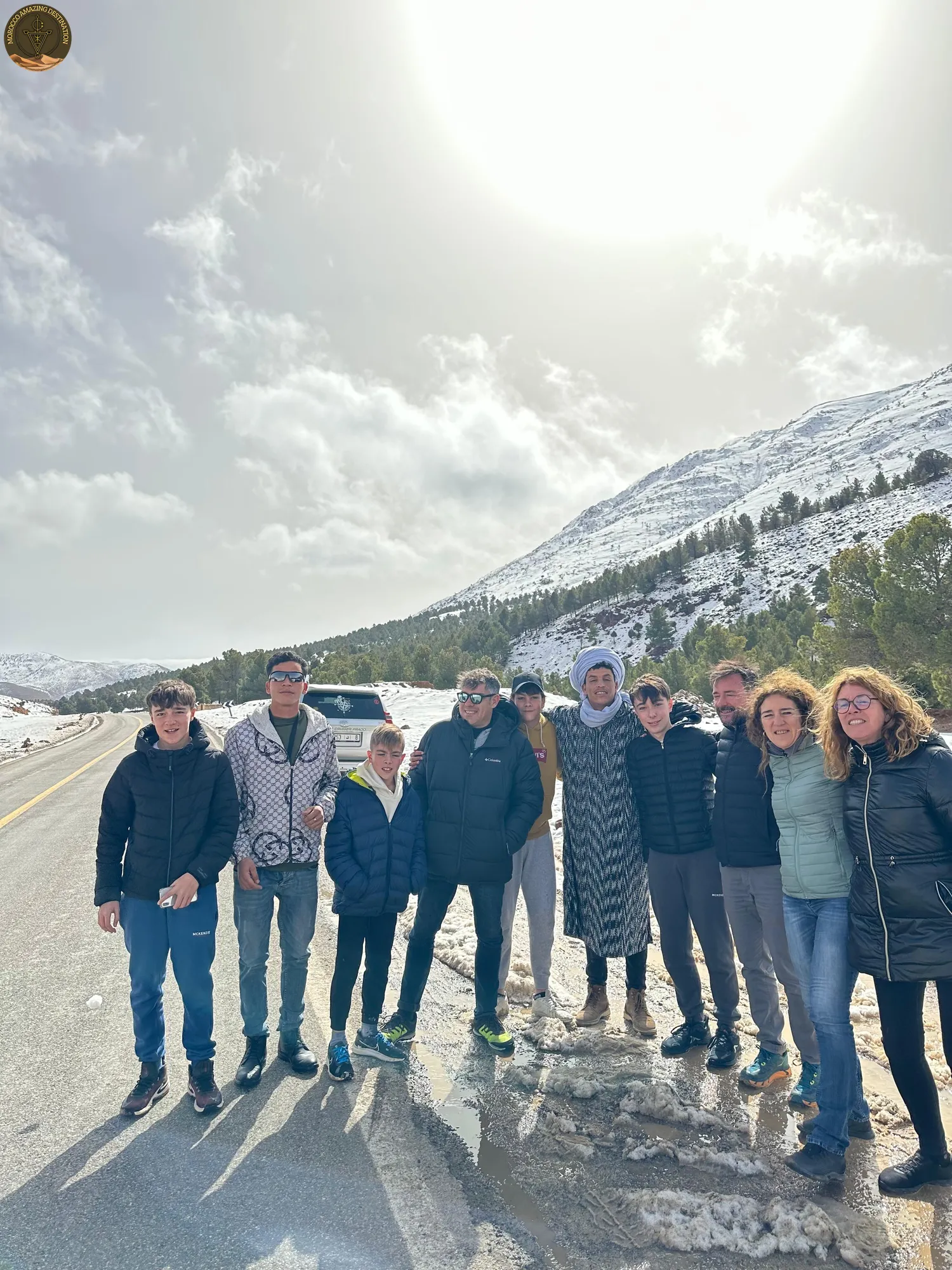
Mountain Climate: The High Atlas, Middle Atlas, and Rif Mountains experience alpine conditions. At elevations above 2,000 meters (6,500 ft), snow falls from November through March. Oukaïmeden, near Marrakech, is actually a functioning ski resort.
Morocco Temperature by Month
Here is what you can expect for temperatures in Morocco throughout the year:
| Month | Marrakech | Fes | Essaouira | Merzouga (Sahara) |
|---|---|---|---|---|
| January | 8°C – 18°C | 5°C – 15°C | 12°C – 18°C | 3°C – 18°C |
| February | 9°C – 20°C | 6°C – 16°C | 12°C – 19°C | 6°C – 20°C |
| March | 11°C – 24°C | 8°C – 20°C | 13°C – 20°C | 10°C – 25°C |
| April | 13°C – 27°C | 10°C – 23°C | 14°C – 21°C | 14°C – 30°C |
| May | 16°C – 31°C | 13°C – 27°C | 16°C – 23°C | 18°C – 35°C |
| June | 19°C – 35°C | 16°C – 32°C | 18°C – 25°C | 22°C – 40°C |
| July | 22°C – 38°C | 19°C – 36°C | 19°C – 27°C | 26°C – 45°C |
| August | 22°C – 38°C | 19°C – 36°C | 19°C – 27°C | 26°C – 44°C |
| September | 19°C – 33°C | 16°C – 30°C | 18°C – 26°C | 22°C – 38°C |
| October | 16°C – 28°C | 13°C – 25°C | 17°C – 24°C | 16°C – 32°C |
| November | 11°C – 22°C | 8°C – 20°C | 14°C – 22°C | 10°C – 25°C |
| December | 8°C – 19°C | 5°C – 16°C | 12°C – 19°C | 4°C – 19°C |
Spring (March – May): The Ideal Season
Spring brings some of the most pleasant Morocco weather. Daytime temperatures range from 22°C to 31°C (72°F–88°F) in most regions, and the countryside is green and blooming after winter rains.
- Best for: City sightseeing, desert tours, hiking in the Atlas Mountains
- What to pack: Light layers for warm days, a jacket for cool evenings
Summer (June – August): Heat Is Real but Manageable
Summer brings the most extreme Morocco temperature readings. Inland cities like Marrakech and Fes regularly hit 38°C (100°F) or higher, and the Sahara sees 45°C (113°F) during peak afternoons. However, the coastal cities remain comfortable.
- Best for: Coastal destinations — Essaouira, Agadir, Tangier
- What to pack: Lightweight, breathable fabrics, sunscreen, a hat, and plenty of water
Autumn (September – November): The Second Golden Window
Much like spring, autumn offers beautiful weather in Morocco. Temperatures cool down from the summer highs, making it the perfect season for desert adventures and exploring the imperial cities without breaking a sweat.
- Best for: Desert treks, cultural tours, photography
- What to pack: Light layers, a warmer jacket for November evenings
Winter (December – February): Sunny Days, Cold Nights
Winter in Morocco surprises many visitors. Days are often sunny and mild at 15°C to 20°C (59°F–68°F), but nights get genuinely cold — especially in the desert and the mountains where snow is common.
- Best for: Budget travel, snow sports in the Atlas, winter sun escapes
- What to pack: Warm clothing for evenings, waterproof jacket for potential rain
Temperature by Region: Where to Go and When
Marrakech
Marrakech experiences a semi-arid climate with hot summers and mild winters. The best time to visit Marrakech temperature-wise is March to May or October to November, when daytime highs sit around 25°C to 30°C (77°F–86°F). In July and August the mercury can push past 40°C (104°F), so plan sightseeing for early mornings and late afternoons.
Fes and the Imperial Cities
Fes shares a similar continental climate with Marrakech but tends to be a few degrees cooler due to its more northerly location. Summer days reach 36°C (97°F), and winter nights drop to around 5°C (41°F). The medina’s narrow, shaded streets provide natural cooling in summer.
Chefchaouen and the North
Nestled in the Rif Mountains, Chefchaouen enjoys mild Mediterranean weather. Summer highs rarely exceed 30°C (86°F), and winter sees occasional rain but temperatures stay above 8°C (46°F). It is one of the most comfortable places to visit year-round.
The Sahara Desert (Merzouga, Erg Chebbi)
The Morocco desert temperature follows the classic desert pattern: blazing days and freezing nights. The temperature swing between day and night can be as much as 20°C (36°F). April, May, September, and October are the sweet spot — warm enough to enjoy the dunes without the extreme heat of July and August.
Essaouira and the Atlantic Coast
Thanks to Atlantic trade winds, Essaouira is a refreshing escape during summer, with temperatures rarely exceeding 27°C (81°F) even in July and August. Winters are mild and breezy at around 18°C (64°F). Essaouira is the perfect year-round destination if you dislike extreme heat.
The Atlas Mountains
Temperatures in the High Atlas drop by roughly 6°C (11°F) for every 1,000 meters (3,280 ft) of elevation gain. In winter, expect snow, ice, and sub-zero temperatures above 2,000 meters. Summer days at altitude are pleasantly warm at 20°C to 25°C (68°F–77°F), making the mountains a cool retreat when the lowlands are baking.
What to Pack for Morocco’s Climate
Your packing strategy should reflect the season and regions you plan to visit:
- Year-round essentials: Comfortable walking shoes, a scarf or pashmina (useful for sun protection, dust, and mosque visits), sunglasses, sunscreen
- Spring/Autumn: Light layers — t-shirts, long trousers, a light jacket or fleece for evenings
- Summer: Loose-fitting cotton and linen clothing, breathable fabrics, a wide-brimmed hat, and a reusable water bottle
- Winter: A warm coat or jacket, layers, thermal underwear for desert nights, waterproof shoes for the mountains
Frequently Asked Questions
What is the average temperature in Morocco?
The average temperature in Morocco varies greatly by region and season. Coastal cities like Essaouira average 18°C to 28°C (64°F–82°F) in summer, while inland cities like Marrakech can reach 36°C to 40°C (97°F–104°F) in July and August. Winter temperatures range from 8°C to 18°C (46°F–64°F) in most regions.
What is the hottest month in Morocco?
July and August are the hottest months in Morocco, with inland cities such as Marrakech and Fes often exceeding 40°C (104°F). The Sahara Desert can reach up to 45°C (113°F) during peak summer days. Coastal areas remain cooler thanks to Atlantic breezes.
Does it get cold in Morocco?
Yes, Morocco can get cold in winter, especially at night. In December and January, nighttime temperatures in Marrakech drop to around 6°C (43°F), while the Atlas Mountains experience freezing temperatures and heavy snowfall. The Sahara Desert also sees cold nights, sometimes dipping below 0°C (32°F).
When is the best time to visit Morocco for good weather?
Spring (March to May) and autumn (September to November) offer the most comfortable temperatures across Morocco, with daytime highs between 22°C and 30°C (72°F–86°F). These shoulder seasons are ideal for exploring cities, hiking in the mountains, and experiencing the Sahara Desert.
Planning Your Morocco Adventure
Understanding the Morocco temperature patterns is the first step toward planning an unforgettable trip. No matter when you visit, the country offers something extraordinary — from snow-capped peaks to sun-drenched dunes.
If you are ready to experience Morocco’s diverse landscapes with expert local guidance, consider a desert tour timed perfectly for the best weather. Our 3-Day Trip from Marrakech to Merzouga takes you from the bustling red city through the High Atlas Mountains and into the golden dunes of the Sahara — best enjoyed in spring or autumn when daytime temperatures are ideal for outdoor exploration.
For those with a little more time, the 4-Day Morocco Desert Tour from Marrakech adds extra depth with stops at the UNESCO-listed Ait Ben Haddou, the stunning Dades Valley, and a full night under the desert stars at Merzouga. Whichever season you choose, a well-planned tour ensures you stay comfortable and make the most of every moment.
If you found this helpful, add us as your preferred source on Google.
Frequently Asked Questions
What is the average temperature in Morocco?
The average temperature in Morocco varies greatly by region and season. Coastal cities like Essaouira average 18°C to 28°C (64°F–82°F) in summer, while inland cities like Marrakech can reach 36°C to 40°C (97°F–104°F) in July and August. Winter temperatures range from 8°C to 18°C (46°F–64°F) in most regions.
What is the hottest month in Morocco?
July and August are the hottest months in Morocco, with inland cities such as Marrakech and Fes often exceeding 40°C (104°F). The Sahara Desert can reach up to 45°C (113°F) during peak summer days. Coastal areas remain cooler thanks to Atlantic breezes.
Does it get cold in Morocco?
Yes, Morocco can get cold in winter, especially at night. In December and January, nighttime temperatures in Marrakech drop to around 6°C (43°F), while the Atlas Mountains experience freezing temperatures and heavy snowfall. The Sahara Desert also sees cold nights, sometimes dipping below 0°C (32°F).
When is the best time to visit Morocco for good weather?
Spring (March to May) and autumn (September to November) offer the most comfortable temperatures across Morocco, with daytime highs between 22°C and 30°C (72°F–86°F). These shoulder seasons are ideal for exploring cities, hiking in the mountains, and experiencing the Sahara Desert.
- morocco-temperature
- morocco-climate
- weather-guide
- morocco-seasons
- best-time-to-visit-morocco
- morocco-travel
- travel-tips
Ready for an Adventure?
Have questions? Feel free to contact us using the form below. We're here to help!