
· Travel · 10 min read
Marrakech to Atlas Mountains: Complete Guide to Day Trips, Valleys and Treks
Discover the best way from Marrakech to Atlas Mountains — valleys, Berber villages, Toubkal treks, drive times and top tours.
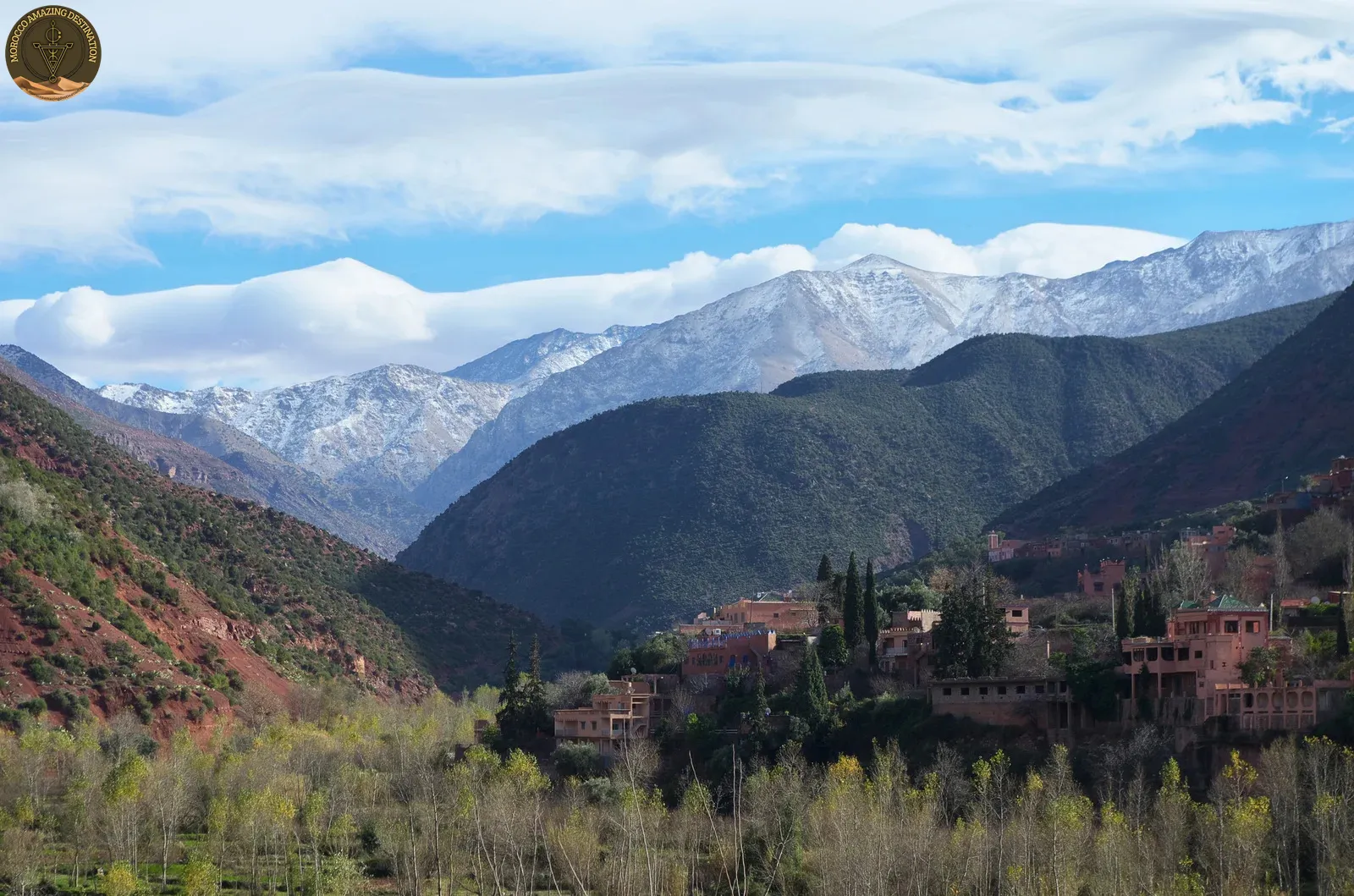
The High Atlas rises like a wall of snow-dusted ridges just south of the Red City, and going from marrakech to atlas mountains is one of the easiest big escapes you can make in Morocco. In under an hour you trade Jemaa el-Fna’s buzz for terraced walnut groves, flat-roofed Berber villages, and air that feels 8–12 °C cooler than the city. This guide explains every practical choice — which valley to pick, how to get there, and whether a day trip or overnight trek suits you best.
If you are weighing a marrakech and atlas mountains holiday or just a single outing, the corridor south of Marrakech gives you options for every pace: gentle river restaurants, moderate waterfall scrambles, mule-supported treks, and the dramatic pass road to Ait Benhaddou and the Sahara.
Why Go from Marrakech to the High Atlas
The High Atlas stretches for about 750 km across Morocco, with a mean elevation around 1,487 m and peaks above 4,000 m, shaped from Jurassic and Cretaceous limestone. Jebel Toubkal at about 4,167 m is the highest in North Africa, set inside Toubkal National Park above Imlil at about 1,740 m. Waterfalls, walnut terraces, and Amazigh (Berber) villages string the valleys below, all within a short drive.
Here is why an atlas mountains tour from marrakech works so well:
- Proximity: The foothills begin less than an hour from the medina.
- Contrast: Red-earth plateaus, green river valleys, and limestone ridges in one view.
- Culture: Tamazight-speaking villages, terraced fields, weekly souks, and homestays.
- Flexibility: Easy walks of 1–3 hours or a two-day Toubkal ascent from the same base.
How Far Is It? Distances and Drive Times from Marrakech
Understanding drive times helps you pick the right valley for a trip to atlas mountains from marrakech:
- Ourika Valley entrance: About 40 km, 45–60 minutes. Setti Fatma at about 1,500 m is about 50 km, 1–1.5 hours.
- Asni + Imlil: Asni about 47 km (45 minutes) plus Asni to Imlil 17 km on a winding road (about 40 minutes). Total Imlil 65–70 km, 1.5–2 hours by private car; shared taxi via Asni takes 2.5–4 hours with changes.
- Kik Plateau & Lalla Takerkoust Lake: About 36–40 km southwest of Marrakech, under an hour; plateau runs about 1,350–1,800 m.
- Oukaïmeden plateau: About 2,600 m, ski slopes in cooler months.
- Tizi n’Tichka Pass: The paved N9 route to Ouarzazate is about 196–200 km, 4–5 hours nonstop, 6–8 hours with stops. The pass is signed at about 2,260 m, while GPS reads about 2,205 m — the highest major paved pass in North Africa, with more than two dozen hairpins.
Day trips typically last 8–10 hours door-to-door, including stops for tea, photos, and lunch.
4 Best Valleys and Routes for a Marrakech Atlas Mountains Tour
Every marrakech atlas mountains tour tends to focus on one of these corridors. Pick by mood, fitness, and time.
1. Ourika Valley — Green, Easy, and Family-Friendly
Ourika is the closest lush valley, threaded by the Ourika River and lined with riverside restaurants built over the water on platforms.
- Highlights: Seven waterfalls above Setti Fatma village, riverside tagines, pottery and argan cooperatives en route.
- Walks: Gentle strolls along the river, plus a 30–90 minute scramble to the falls on uneven stone steps — a light guide helps here.
- Best for: First-time visitors, families, and anyone wanting a green escape without altitude stress.
- Tip: Go early for cooler light and fewer crowds; the valley sits lower than Imlil, so it feels warmer.
An atlas mountain trip from marrakech to Ourika is often the easiest way to test how you adapt to foothill walking before committing to higher trails.
2. Imlil and the Toubkal Massif — Classic Trekking Base
Imlil at about 1,740 m is the authentic mountain hub, with walnut terraces, mule tracks, and views to Toubkal’s ridgeline. The refuge below the summit sits at about 3,207 m.
- Easy walks: Aroumd village (also spelled Armed) and the Mzik terraces, 1–3 hours with minimal gain.
- Moderate treks: Azzaden Valley traverses and passes like Aguelzim at about 3,550 m on multi-day routes.
- Summit: Toubkal needs a minimum of two days (Imlil to refuge, then pre-dawn summit push) and is non-technical but strenuous, with mules carrying luggage.
- Culture: Stone and rammed-earth houses, Saturday souk in Asni, Tuesday souk in Tahnaout along the approach.
If you want mountain air and Berber hospitality, a tour atlas mountains from marrakech that overnight in Imlil gives you sunrise over terraces without a rushed return.
3. Kik Plateau, Ouirgane and Asni — Quiet Red Earth and Lake Views
Southwest of the main road, the Kik Plateau offers limestone scenery and sweeping views over Lalla Takerkoust Lake, with Ouirgane tucked among olive and pine.
- Why go: Fewer visitors, gentle ridges, and a sense of open space after Marrakech intensity.
- Do: Short plateau walks, tea in a village house, and photo stops above the lake.
- Altitude note: The plateau averages between about 1,350–1,800 m; figures vary by viewpoint.
This option suits travelers who want calm, photogenic light and a slower lunch rather than a waterfall scramble.
4. Tizi n’Tichka to Ait Benhaddou — The Pass Route to the Sahara
For road-trip lovers, the Tizi n’Tichka corridor links Marrakech to Ouarzazate and the ksar of Ait Benhaddou, set about 185 km from Marrakech. The pass itself is the experience, with 27+ hairpins and wide panoramas, then the road drops to oases and kasbahs.
- Drive: Allow a full day if you include Ait Benhaddou; many itineraries continue to Dades Valley and Merzouga.
- Combine: Valley lodges en route make it easy to split the Sahara journey without backtracking.
Many trips from marrakech to atlas mountains that continue to the desert use this pass on day one, so you see High Atlas villages and the ksar in one flow.
Day Trip vs Overnight: Which Format to Choose
A quick comparison for any atlas mountains morocco trip:
-
Day trip (8–10h):
- Ourika Valley for waterfalls and river lunch.
- Imlil day hike with guide + mule option, return for Marrakech dinner.
- Kik Plateau circuit for easy views and tea.
- Best if you are short on time or traveling with children who prefer shorter walks.
-
Overnight or 2–3 days:
- Imlil to Aroumd or Azzaden with a Berber guesthouse or homestay.
- Five-day Berber village to village treks carrying by mule.
- Toubkal two-day ascent with refuge night.
- Tizi n’Tichka + Ait Benhaddou with a night in the valleys before Sahara.
Overnight stays let you walk at golden hour, when villages glow and trails quiet, and they reduce driving pressure on the return leg.
What to Expect: Villages, Food, and Hospitality
The Atlas is home to Amazigh communities who have shaped the slopes into terraces for barley, walnuts, and apples. You will see:
- Architecture: Flat-roofed, stone and clay houses clustered on slopes to preserve fields.
- Markets: Asni on Saturday is the main mountain souk; Tahnaout on Tuesday is closer to Marrakech.
- Food: Tagine, tafarnout bread baked on stones, couscous on Fridays, and endless mint tea. River restaurants in Ourika specialize in grilled meats and tagines served over the water.
- Hospitality: Family guesthouses often include home-cooked dinner and a chance to see bread-making.
Respectful dress, a greeting in Tamazight or Arabic, and asking before photographing people go a long way.
What to Do in the Atlas Mountains
Your activity menu depends on fitness and season, but these are the core experiences:
- Village walks: 1–3 hour loops around Aroumd, Imnane foothills, or Ourika gardens — gentle and guide-friendly.
- Waterfall scramble: The Setti Fatma falls route is short but rocky; wear closed shoes with grip.
- Mule treks: Mules carry bags while you walk beside them — helpful for families and multi-day routes.
- Toubkal ascent: Two days minimum with an early summit push; a licensed mountain guide and refuge booking are essential.
- Photography: Kik Plateau and Tichka viewpoints offer layered ridges and lake reflections at sunrise and sunset.
- Tea and craft stops: Argan and pottery cooperatives on the Ourika road, plus walnut and apple harvests in season.
All trips from marrakech to atlas mountains benefit from a local guide who adjusts the route for weather and trail conditions, especially after snow or rain when river crossings change.
How to Get There: Transport Options
- Private driver/car (recommended): About 600–900 MAD per car for a day trip, door-to-door, with flexibility for stops. Comfortable, air-conditioned, and the fastest way to handle mountain roads.
- Shared grand taxi: About 40–60 MAD per person from Bab er-Robb to Asni, then Asni to Imlil relay; budget 2.5–4 hours each way and expect to negotiate and wait until full.
- Shared van tours: Bundled price, fixed timetable, less flexibility but social and economical.
- Self-drive: Paved roads to Ourika, Asni, Imlil, and over Tizi n’Tichka are fine for confident drivers; the final Imlil stretch is winding and narrow. Check road conditions, especially after snow when the pass can close for 1–3 days in colder months.
For most visitors, a private driver plus a walking guide in Imlil or Ourika gives the best balance of comfort and insight.
Altitude, Weather, and What to Pack
Altitude shapes everything. Imlil sits about 8–12 °C cooler than Marrakech; Oukaïmeden at about 2,600 m is cooler still, while the Tizi n’Tichka pass runs pleasant at about 20–25 °C in hot months but can be windy. Snow dusts ridges from late autumn through spring, with heavier cover deeper in winter, and UV is strong at elevation even on cloudy days.
Pack for quick shifts:
- Layers: Base layer, fleece, windproof shell; evenings chill quickly.
- Sun protection: Hat, sunglasses, sunscreen.
- Shoes: Sturdy closed-toe shoes or hiking shoes; the waterfall section is slippery when wet.
- Essentials: Water, small cash in dirhams, and a light scarf for wind or village visits.
- Cold-season add-ons: Gloves and warm hat if heading above 2,500 m.
Ask locally about pass status and trail conditions before you set out.
Planning a Marrakech and Atlas Mountains Holiday
A single day gives a satisfying taste, but two bases make the story richer. Many travelers pair two nights in Marrakech with one night in Imlil or Ouirgane, then loop back or continue over Tizi n’Tichka toward Ouarzazate, Dades, and the Sahara.
When you compare offers, look for:
- Clear drive times and valley focus (Ourika vs Imlil vs Kik vs pass corridor).
- Guide credentials for Toubkal and overnight treks.
- Mule support and guesthouse standards for multi-day routes.
- Flexible start times to catch soft morning light and avoid midday heat on exposed slopes.
Check local road and weather updates before you go, and keep distances as guides — exact times vary by stops and traffic.
Frequently Asked Questions
How far is it from Marrakech to Atlas Mountains and how long is the drive?
Ourika entrance is about 40 km (45–60 minutes) and Setti Fatma about 50 km (1–1.5 hours). Imlil is 65–70 km, about 1.5–2 hours by private car, or 2.5–4 hours by shared taxi via Asni. The Tizi n’Tichka pass to Ouarzazate is around 196–200 km, about 4–5 hours nonstop, longer with stops.
Can you do the Atlas Mountains as a day trip from Marrakech?
Yes. Ourika Valley and Imlil both work as day trips with 8–10 hours door-to-door, including village walks, waterfall views, and a relaxed lunch. Stay overnight if you want sunset, a refuge night for Toubkal, or a deeper Berber village trek.
Do I need a guide for the Atlas Mountains from Marrakech?
A driver gets you to the trailheads, but a licensed guide enriches village walks, manages mules, and is essential for Toubkal and less-marked routes. Even for short scrambles like Setti Fatma falls, a local guide helps with footing and timing.
What should I wear and pack for the Atlas Mountains?
Wear breathable layers, sturdy closed shoes, and sun protection. Pack a light jacket for elevation, water, and cash. Imlil is noticeably cooler than Marrakech, ridges can be windy, and snow is possible on higher ground, so bring a warm layer.
Continue Your Journey Through the Atlas to the Sahara
If the Atlas has sparked the road-trip spirit, keep following the High Atlas corridor south. The 3-Day Trip from Marrakech to Merzouga crosses Tizi n’Tichka, pauses at Ait Benhaddou, and threads Dades and Todra before a camel trek and night in Erg Chebbi. For a more relaxed pace with extra time in the valleys and an added night near the dunes, the 4-Day Morocco Desert Tour from Marrakech adds cultural stops and avoids a rushed return over the pass.
We can customize a tour to match your needs — design your perfect itinerary
If you found this helpful, add us as your preferred source on Google.
Frequently Asked Questions
How far is it from Marrakech to Atlas Mountains and how long is the drive?
Ourika entrance is about 40 km (45–60 min), Setti Fatma about 50 km (1–1.5h), and Imlil 65–70 km (1.5–2h by private car). The Tizi n'Tichka pass to Ouarzazate is around 196–200 km, 4–5h nonstop. Allow 8–10h door-to-door for day trips with stops.
Can you do the Atlas Mountains as a day trip from Marrakech?
Yes. Ourika Valley and Imlil are ideal for day trips. You get village walks, waterfalls, and mountain views. For Toubkal summit or deeper Berber valleys, plan an overnight trek with mule support.
Do I need a guide for the Atlas Mountains from Marrakech?
For village walks and short waterfall scrambles you can go with a driver, but a licensed mountain guide adds context, handles mule logistics, and is essential for Toubkal ascent and navigation on less-marked trails.
What should I wear and pack for the Atlas Mountains?
Wear layers, sun protection, and sturdy shoes. Pack water, sunscreen, hat, light jacket, and cash in dirhams. Even when Marrakech is warm, Imlil is 8–12 °C cooler and ridges can be windy or snowy.
Ready for an Adventure?
Have questions? Feel free to contact us using the form below. We're here to help!