
· Travel · 5 min read
Kundun Filming Locations: Tibet Rebuilt in Morocco
Scorsese's Kundun filming locations were built in Ouarzazate, not Tibet. What his crew made at Atlas Studios, and what you can still walk through.
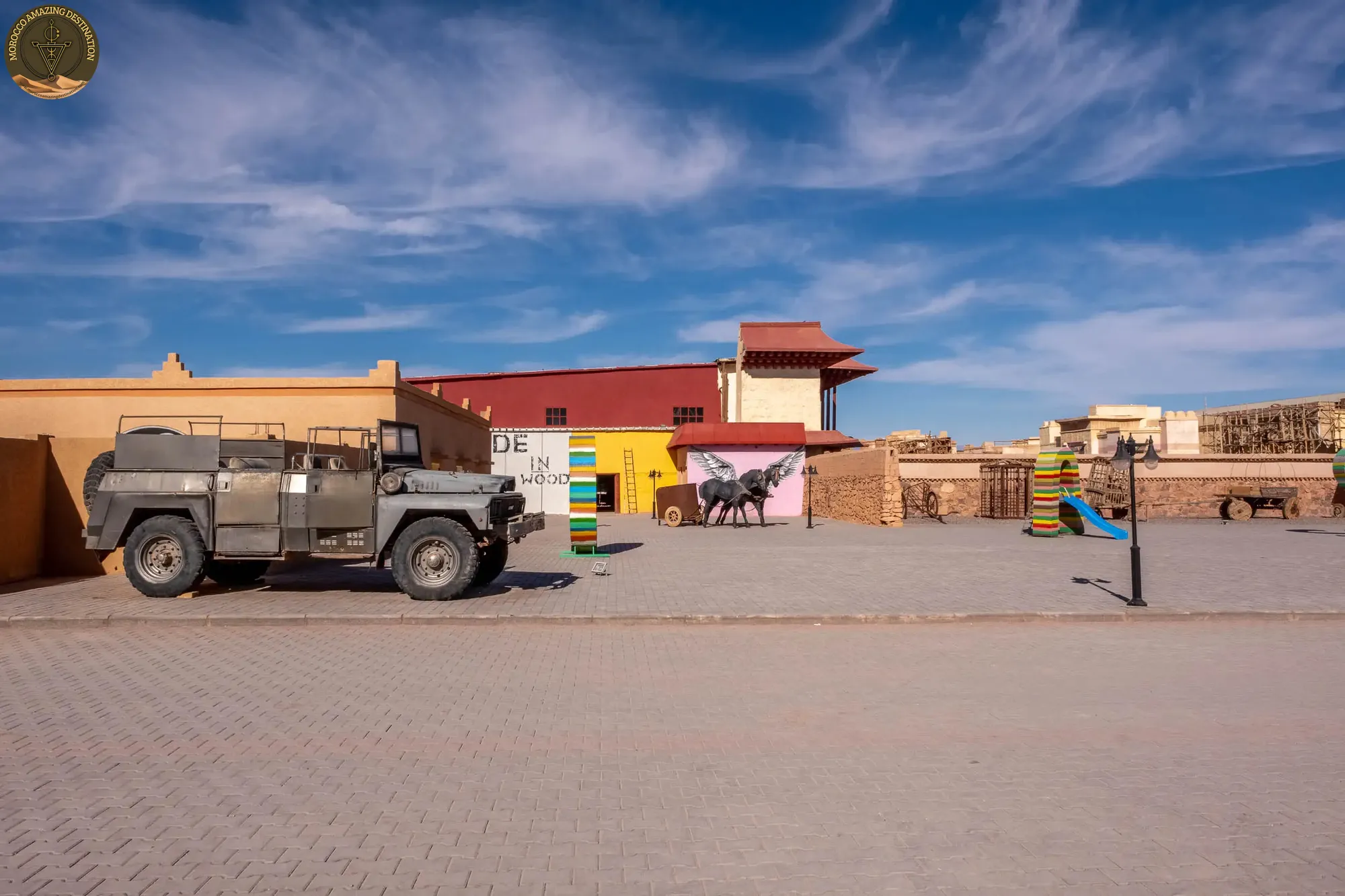
Kundun was never shot in Tibet. Martin Scorsese’s crew rebuilt Lhasa at Atlas Studios in Ouarzazate, Morocco, and a Tibetan temple set from that build is still standing. The Kundun filming locations sit almost entirely inside one country, and every stop within a few hours of a single desert town.
In this guide, we will break down why Tibet was closed to the production, how the crew raised Lhasa inside a desert studio, and how you can walk through what remains.
Why Scorsese Could Not Shoot in Tibet
Permission to film inside Tibet was refused, and the fallback plan in Ladakh, in northern India, was refused as well. That left a production with a Tibetan story and no Tibetan ground to put it on.
Scorsese had worked in the south of Morocco before, in the same mountains, on The Last Temptation of Christ. The country could offer desert light, high ground and a trained crew base within a few hours of each other.
The script came from Melissa Mathison’s interviews with the Dalai Lama. Detail from those conversations reached the designers, who then had to turn description into walls, roofs and courtyards.
The Kundun Morocco shoot spread across three places: the studio outside Ouarzazate, Casablanca for the Peking interiors, and a High Atlas field study centre for the Dungkhar exterior. With one exception, a Tibetan monastery in Woodstock, New York, nothing was filmed in Asia.
Rebuilding Lhasa Inside Atlas Studios
Production designer Dante Ferretti built a second, larger stage at Atlas Studios Ouarzazate, roughly 300 by 200 feet and 50 feet high. Inside it went the Potala Palace, the Norbulingka summer palace, Dungkhar Monastery and the Throne Room, joined to the smaller stage by a passageway.
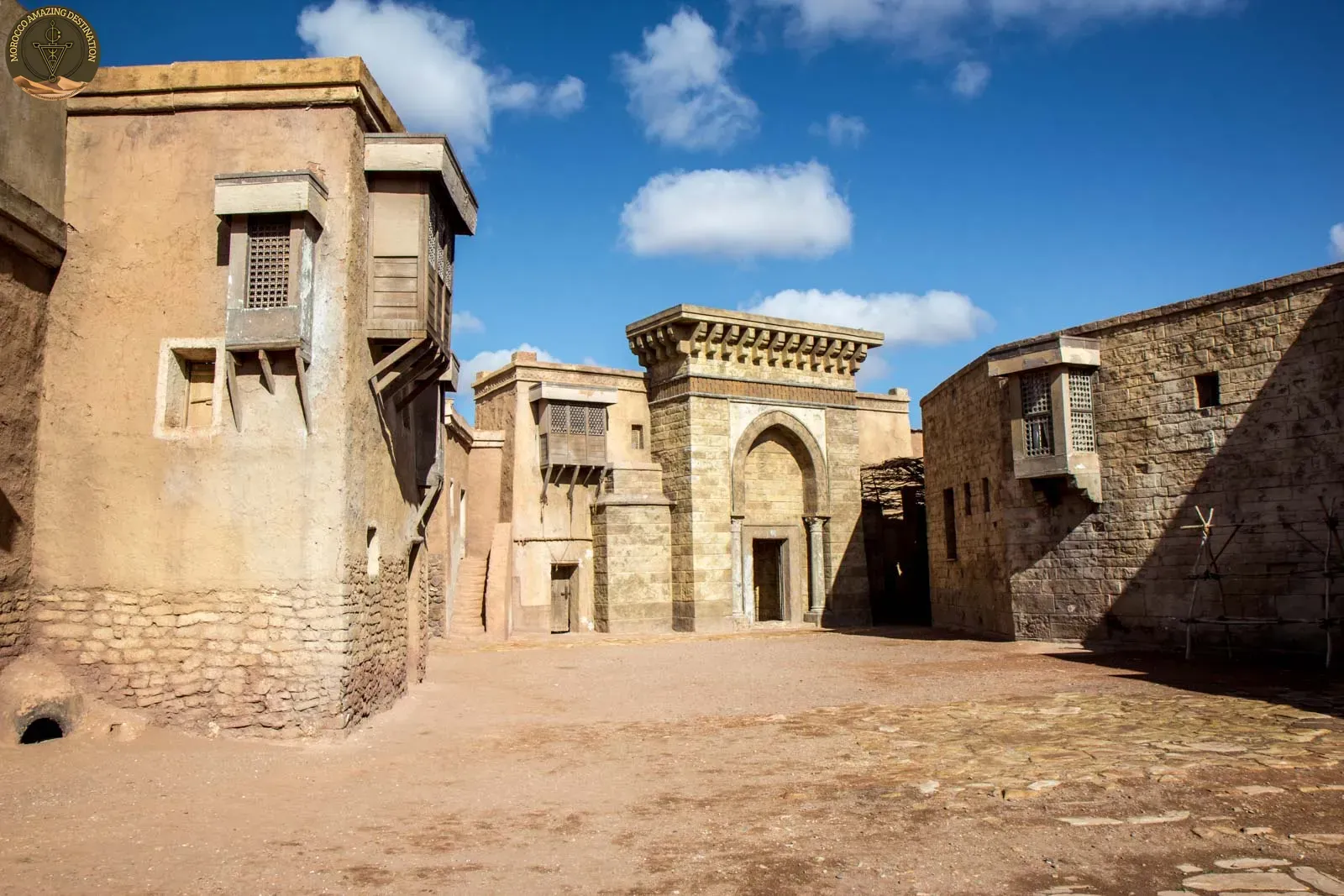
The exteriors used what was already on the ground. An existing street was redressed as Lhasa, with concrete shells of unfinished houses standing in as facades, and the Norbulingka entrance and walled gardens went up on a reservoir shore 40 minutes from town.
The Kundun Tibet sets kept hundreds of Moroccan carpenters, plasterers and sculptors busy at once, working alongside Ferretti’s Italian crew.
What the crews worked with:
- Real flagstone: floors inside the palace sets were laid in stone.
- Brocade from India: the textiles were bought in India and shipped in.
- Borrowed buildings: the Peking interiors used an existing building in Casablanca.
- A field study centre: the Dungkhar exterior came from a High Atlas site about 90 minutes from Marrakech.
The High Atlas Standing In for the Himalaya
Ouarzazate sits near 1,150 m. Lhasa is near 3,650 m, and the two and a half kilometres between them had to be handled on set.
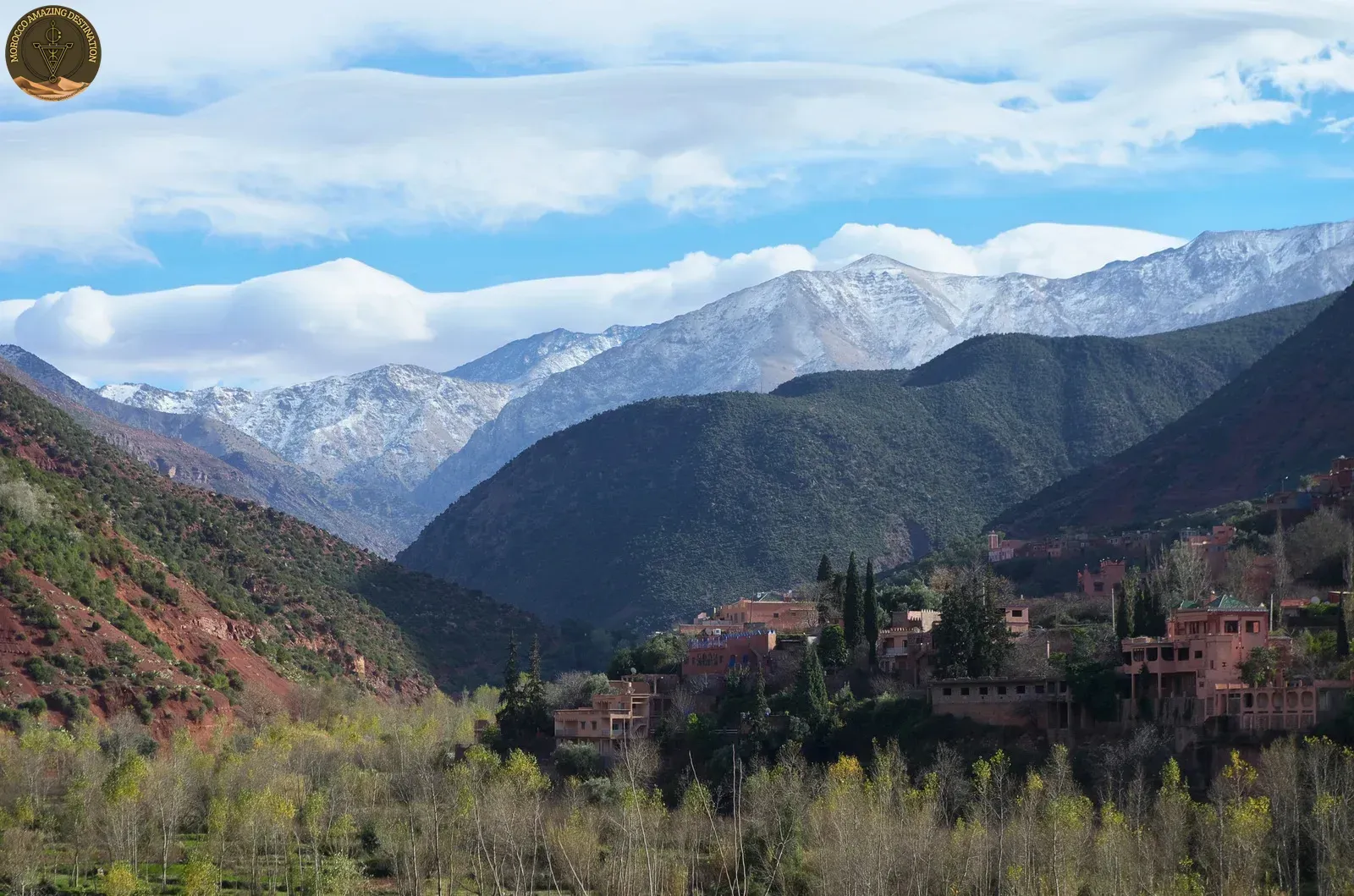
Cinematographer Roger Deakins treated the gap as a lighting problem. He shot hard midday sun instead of golden hour, put polarisers on the lens against the desert dust, and worked on Super 35. He has said there is not a single diffused shot in the film.
The build narrowed the camera as well. Stage walls could not float and the roof carried little weight, so the framing stayed wide and close to what a finished street could hold.
Tibetan crew members who saw the footage found the mountains close enough to their own to be moved by them.
The Temple That Outlived the Film
One piece of that build is still standing. A Tibetan temple set made for the film is on the visitor walk at Atlas Studios, a few minutes from the Egyptian temple front and the Roman walls.
Sets in Ouarzazate are rarely struck. A facade that works tends to be reused before anyone considers taking it down, and the backlot has collected pieces from decades of shoots.
The standing set is a temple and monastery piece, not a scaled copy of the Potala Palace. The palace interiors were stage work, and those came down.
The film’s release was throttled for political reasons and it still took four Academy Award nominations: art direction, cinematography, costume design and original score.
Tickets, opening hours and the rest of the backlot sit in our practical guide to visiting the Atlas Studios.
Plan a Southern Route Through Film Country
The studio is at the edge of Ouarzazate, about 200 km from Marrakech. The drive takes 3.5 to 4.5 hours over the Tizi n’Tichka pass, which tops out near 2,260 m, so an early start puts you there before the afternoon heat. The pass is the highest point of the drive and the scenery changes on the far side.
From town the road keeps going south, and the stops stack up:
- Ait Benhaddou: a UNESCO World Heritage site 30 minutes from Ouarzazate, and the usual first stop out of town.
- The Draa valley: palm groves and mud-brick kasbahs on the road toward Zagora.
- Todra gorge: sheer rock walls with a river road at the bottom.
- Merzouga: the dunes at the end of the southern loop, worth a night in the desert.
The studio is a working production site, and an active shoot can close an individual set without notice. Leave room in the day and the stop still holds.
For beds, food and the kasbahs in town, our Ouarzazate travel guide covers the rest of the stay.
Both stops fit a longer southern loop. Our 4-Day Marrakech to Fes Tour via Dades & Merzouga crosses the Tichka on day one, stops at Ait Benhaddou and passes Ouarzazate. The 14-Day Morocco Tour from Casablanca gives the town a full night, built around kasbahs and the studios. Tell us which films you want to stand in and we will set the driving days around them.
We can customize a tour to match your needs - design your perfect itinerary
If you found this helpful, add us as your preferred source on Google.
Frequently Asked Questions
Where was Kundun filmed?
Mostly in Morocco. The Tibetan sets were built at Atlas Studios in Ouarzazate, the Peking interiors were shot in Casablanca, and a High Atlas field study centre stood in for the Dungkhar exterior. Apart from a Tibetan monastery in Woodstock, New York, the production did not film in Asia.
Can I visit the Kundun temple set today?
Yes. A Tibetan temple set built for the film still stands at Atlas Studios in Ouarzazate and is included in the visitor walk, a few minutes from the Egyptian and Roman pieces. It is a temple and monastery build, not a copy of the Potala Palace.
Why was Kundun not shot in Tibet?
Permission to film inside Tibet was refused, and the planned fallback in Ladakh, in northern India, was refused as well. The production moved to Morocco, where desert light, mountain ground and an experienced crew base were within a few hours of each other.
Was any of Kundun shot in Nepal or India?
No. Nothing in the production record places filming in Nepal or India. The Tibetan story was built in Morocco, and brocade and other fabrics were bought in India rather than scenes being shot there.
Ready for an Adventure?
Have questions? Feel free to contact us using the form below. We're here to help!