· Travel · 11 min read
How Many Jews Are There in Morocco? A Complete Guide to the Jewish Community and Heritage
Discover how many Jews live in Morocco today, from the ancient Mellahs of Fes and Marrakech to the vibrant community in Casablanca. A complete guide to Jewish heritage in the Kingdom.
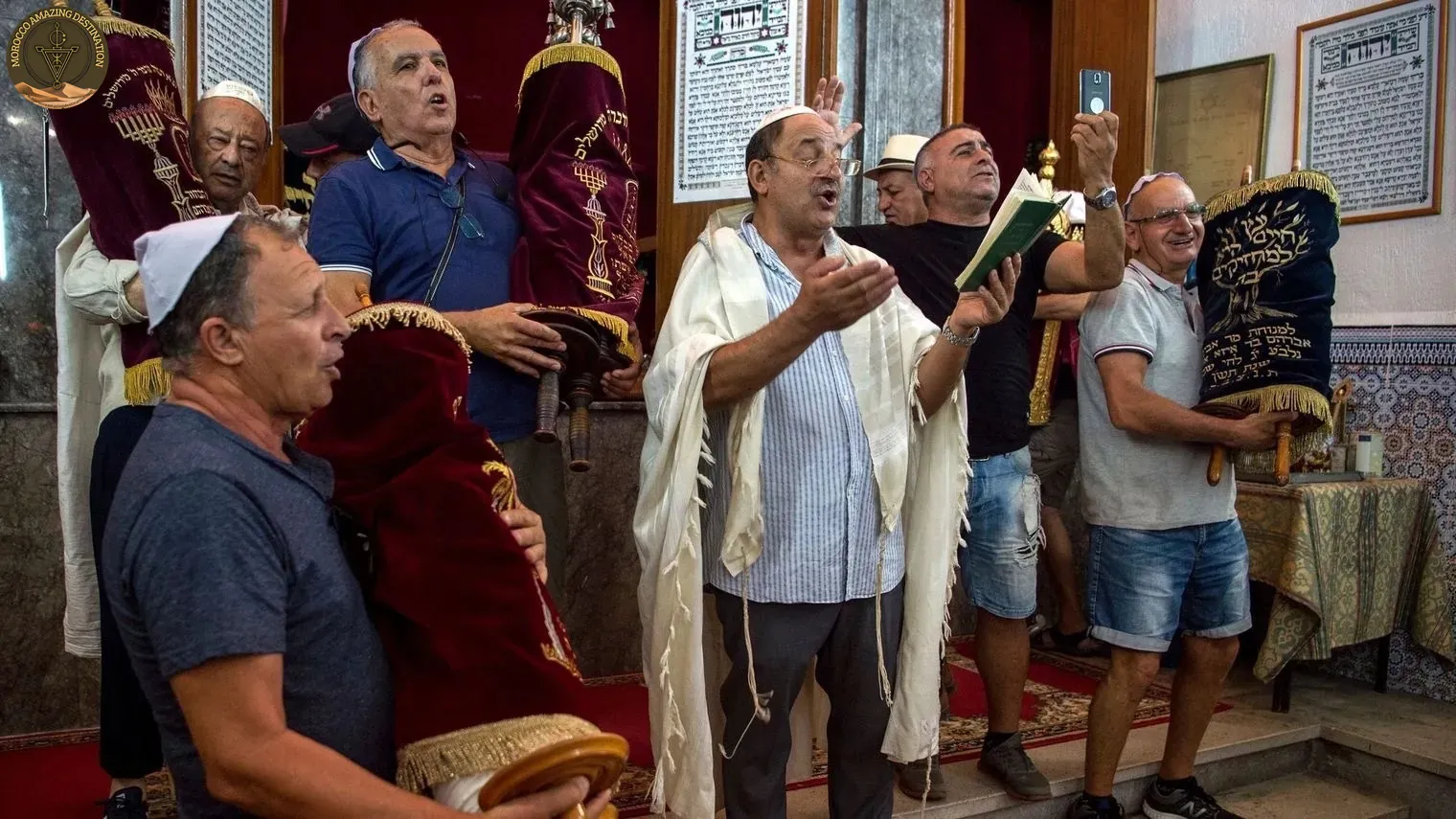
How Many Jews Are There in Morocco?
When people think of Morocco’s religious identity, they immediately picture minarets, mosques, and the call to prayer echoing through ancient medinas. Islam has been the state religion for over 13 centuries, and roughly 99% of Moroccans are Muslim. Yet woven into the kingdom’s cultural fabric is another story — one of a Jewish community that predates Arab rule, flourished for two millennia, and left an indelible mark on Moroccan architecture, cuisine, music, and identity.
So how many Jews are there in Morocco today?
The short answer: approximately 2,000 to 3,000 Jews currently live in Morocco. This makes it the largest remaining Jewish community in the Arab world, though a fraction of its former size. At its peak in the late 1940s, Morocco was home to over 250,000 Jews — the largest Jewish population anywhere in the Muslim world — spread across every major city and hundreds of rural villages.
The story of how those numbers changed — and what remains today — is a fascinating journey through 2,000 years of coexistence, migration, and heritage preservation.
A Brief History of Jews in Morocco
The Jewish presence in Morocco is among the oldest in the Diaspora, dating back to the destruction of the Second Temple in 70 CE. Jewish traders and refugees settled across Roman Mauretania Tingitana, establishing communities in Volubilis, Sala Colonia (modern-day Salé), and other Roman outposts. Hebrew inscriptions found at the Roman ruins of Volubilis confirm the deep roots of this ancient community.
The first major demographic shift came in 1492, when the Alhambra Decree expelled all Jews from Spain. Tens of thousands of Sephardic Jews crossed the Strait of Gibraltar into Morocco, bringing their language (Haketia, the Judeo-Spanish of northern Morocco), their cuisine, their liturgical traditions, and their craftsmanship. These megorashim (expellees) joined the existing toshavim (native Jews), creating a rich blend of traditions that defined Moroccan Judaism for centuries.
Under various Islamic dynasties — the Idrisids, Almoravids, Almohads, Merinids, Saadians, and Alaouites — the status of Jews oscillated between periods of tolerance and persecution. At their height under Saadian rule in the 16th century, Jewish merchants, scholars, and diplomats served as advisors to sultans, managed international trade, and helped negotiate Morocco’s relations with European powers. The Mellah — the walled Jewish quarter — was first established in Fes in 1438, and soon became a distinctive feature of every major Moroccan city, offering protection while also enforcing spatial separation.
The French and Spanish protectorates (1912–1956) brought significant changes. The Jewish population grew rapidly, reaching over 250,000 by the 1940s, concentrated in cities like Casablanca, Marrakech, Fes, Essaouira — once known as the “Little Jerusalem of Morocco” — and hundreds of rural communities. The Alliance Israélite Universelle established a network of French-language schools that transformed Jewish education, and many Moroccan Jews adopted aspects of European culture while maintaining their religious identity.
How Many Jews Are There Today?
The demographic decline of Moroccan Jewry is one of the most dramatic in modern Jewish history. The numbers tell the story:
| Period | Estimated Jewish Population |
|---|---|
| 1940s (peak) | 250,000–350,000 |
| 1948 | ~265,000 |
| 1956 (Independence) | ~200,000 |
| 1967 | ~50,000 |
| 1980s | ~15,000 |
| Today | 2,000–3,000 |
The primary driver was emigration. After the founding of the State of Israel in 1948, a steady stream of Moroccan Jews made aliyah. The flow accelerated dramatically during Operation Yakhin (1961–1964), when approximately 97,000 Moroccan Jews were covertly transported to Israel with the agreement of King Hassan II. The Six-Day War in 1967 triggered another wave, as regional instability and rising Arab nationalism unsettled Jewish communities across North Africa.
Those who remain today are concentrated almost entirely in the cities:
- Casablanca: ~2,000 — The heart of contemporary Moroccan Jewish life. Home to the Beth-El Synagogue, Jewish schools, kosher restaurants, and the Museum of Moroccan Judaism.
- Marrakech: ~150–200 — A small but visible community centered around the Slat al-Azama Synagogue and the historic Mellah.
- Fes: ~100–150 — Once home to one of the most prestigious Jewish communities in the Muslim world, anchored by the UNESCO-restored Ibn Danan Synagogue.
- Rabat: ~100 — The capital hosts an active synagogue and a small, well-integrated community.
- Essaouira: ~30–50 — A handful of Jewish families remain in what was once a city where Jews made up 40% of the population.
Where Do Moroccan Jews Live Today?
The Moroccan Jewish diaspora is vast and globally distributed. Today, more than one million Israelis are of Moroccan descent — forming the largest North African Jewish community in the world. Moroccan Jewish traditions, cuisine, and music are woven into mainstream Israeli culture, and the annual Mimouna celebration — a uniquely Moroccan Jewish festival marking the end of Passover — is now a national event in Israel.
Other significant diaspora communities include:
- France: ~150,000 — The largest community in Europe, concentrated in Paris, Lyon, and Marseille. French is widely spoken among older Moroccan Jews, easing integration.
- Canada: ~80,000 — Primarily in Montreal, where Moroccan Jews have built thriving Sephardic institutions, synagogues, and schools.
- United States: ~50,000 — Spread across New York, Los Angeles, Miami, and other major cities.
- Latin America: ~20,000 — Communities in Venezuela, Argentina, Brazil, and Panama.
- Spain: ~5,000 — Many in the North African enclaves of Ceuta and Melilla, with deep cultural and linguistic ties to Morocco.
Moroccan Jews abroad maintain remarkably strong nostalgic ties to their homeland. Many carry the keys to their ancestral homes, cook Moroccan dishes at Shabbat dinners, and often say that the Morocco they remember was a place of genuine coexistence. This emotional connection fuels heritage tourism, with thousands of Moroccan-born Jews and their descendants returning each year to visit synagogues, cemeteries, and childhood neighborhoods.
The Mellahs of Morocco
One of the most visible legacies of Morocco’s Jewish past is the Mellah — the historic Jewish quarter found in virtually every major city. The word “Mellah” comes from the Arabic word for salt, originating from the salt marsh area where the first official Jewish quarter was established in Fes in 1438.
These are not museums frozen in time but living neighborhoods, many still partially inhabited by Muslim families. Their distinctive architecture — narrow streets, houses with exterior balconies (a Jewish innovation that later spread to the medina), and decorative wooden doors — sets them apart from the rest of the old city.
Notable Mellahs worth visiting:
- Marrakech Mellah — Established in 1557 by Sultan Moulay Abdallah al-Ghalib, this is one of the largest and best-preserved Mellahs in Morocco. It’s located near the Royal Palace and the Bahia Palace, and still houses the Slat al-Azama synagogue with its vivid blue courtyard.
- Fes Mellah (Fes el-Jdid) — The first official Mellah ever established (1438). The 17th-century Ibn Danan Synagogue, restored with UNESCO funding, is one of the oldest and most significant Jewish sites in North Africa. Its simple exterior masks a stunning interior with decorative chandeliers, Torah scrolls, and a mikveh (ritual bath) in the basement.
- Essaouira Mellah — In the 19th century, Jews made up roughly 40% of Essaouira’s population, and the Mellah was the commercial heart of this prosperous port city. Today, the beautifully restored Bayt Dakira (House of Memory) cultural center tells the story of Muslim-Jewish coexistence through photographs, ritual objects, and oral histories. The Haim Pinto Synagogue, named after a venerated Moroccan rabbi whose grave draws pilgrims, still stands.
- Casablanca Mellah — The youngest historic Mellah and the only one with a genuinely active Jewish daily life. You’ll find kosher butchers, bakeries, and the Tahiti kosher restaurant still serving traditional dishes.
Jewish Heritage and the Monarchy Today
One of the most extraordinary aspects of modern Morocco is the active role the monarchy has played in preserving Jewish heritage. King Mohammed VI, who ascended to the throne in 1999, has made the restoration of Jewish sites a personal priority — a continuation of the legacy of his father, King Hassan II, who was famously protective of his Jewish subjects during World War II when Morocco was under the Vichy French regime.
In 2011, Morocco adopted a new Constitution that formally recognized the “Hebraic” component as one of the unifying tributaries of Moroccan national identity — an unprecedented acknowledgment in the Arab and Muslim world. This constitutional recognition places Jewish heritage alongside Amazigh, Arab, Andalusian, and Saharan influences as foundational to what it means to be Moroccan.
The King has directly funded the restoration of over 170 Jewish cemeteries, 20 synagogues, and multiple Mellahs across the country. In Essaouira, the Bayt Dakira project was inaugurated by the King himself in 2020. In Fes, community rabbis are supported by the state, and Jewish schools receive government subsidies. The annual pilgrimage (hiloula) to the tomb of Rabbi Haim Pinto in Essaouira and other Jewish saints’ tombs draws Moroccan Jews from around the world with full state protection and encouragement.
Key Jewish Sites to Visit
If you are interested in exploring Jewish heritage in Morocco, these sites should top your list:
Museum of Moroccan Judaism — Casablanca
The Museum of Moroccan Judaism is a unique institution: the only Jewish museum in the entire Arab world. Housed in a serene villa in the Oasis neighborhood, its collection spans Jewish wedding attire, synagogue furnishings, traditional Megillot scrolls, photographs documenting daily Jewish life in the Mellahs and countryside, and a replica of a traditional Moroccan synagogue. The museum’s garden hosts cultural events and Holocaust remembrance ceremonies. It is open Tuesday through Sunday.
Beth-El Synagogue — Casablanca
The largest active synagogue in Morocco and the spiritual center of contemporary Moroccan Jewish life. With its striking stained-glass windows, marble interior, and capacity for over 500 worshippers, Beth-El is used daily. Visitors are welcome outside of Shabbat and holiday services.
Ibn Danan Synagogue — Fes
A 17th-century masterpiece restored by UNESCO’s World Monuments Fund, the Ibn Danan Synagogue is a small, intimate space with an extraordinary collection of Torah scrolls and a functioning mikveh in the basement. It sits within the Mellah of Fes el-Jdid and is a must-see for anyone interested in North African Jewish history.
Slat al-Azama Synagogue — Marrakech
Dating from the 16th century, this is the historic synagogue of Marrakech’s Mellah. The blue-painted courtyard, the azure Torah ark, and a small museum display of historical photographs and ritual objects create a deeply moving experience. The synagogue was fully renovated in the 1990s and remains active.
Bayt Dakira — Essaouira
Translating to “House of Memory,” Bayt Dakira is part museum, part cultural center, part living testament to coexistence. Located in the heart of the Mellah, its three floors explore the relationship between Muslim and Jewish communities in Essaouira through photographs, artifacts, and film.
Religious Coexistence
Morocco’s history of Jewish-Muslim relations is complex but distinctive in the Arab world. While dhimmi status imposed legal limitations on Jews in pre-modern times — as it did on all non-Muslim communities under Islamic law — the day-to-day reality was often characterized by deep economic interdependence, shared neighborhoods, and cultural exchange. Jewish goldsmiths sold their wares to Muslim brides. Muslim musicians played at Jewish weddings. Moroccan Arabic, spoken by Muslims and Jews alike, absorbed Hebrew words and expressions.
Unlike in many Middle Eastern countries, the mass departure of Morocco’s Jews was driven not by state-sponsored expulsion or pogroms, but by a combination of Zionism, economic opportunity abroad, and the pull of family reunification. The fact that Jewish life continues in Morocco today — with functioning synagogues, schools, and kosher restaurants — sets the country apart from almost every other Arab nation.
Discover Jewish Morocco
The story of how many Jews are in Morocco leads far beyond numbers. It leads through the narrow lanes of ancient Mellahs, into synagogues where the prayers still follow the Sephardic rite of Andalusian Jews, and to the table of a kosher restaurant in Casablanca where a Moroccan-born Jewish family maintains traditions that have endured for centuries.
Whether you trace Moroccan Jewish ancestry, are captivated by the cultural mosaic of North Africa, or simply want to experience a side of Morocco that most guidebooks overlook, the kingdom’s Jewish heritage is an invitation to discover one of the most remarkable stories of survival and coexistence in the Diaspora.
Recommended Tours
To explore the cities where Morocco’s Jewish heritage is most vividly preserved, our multi-day tours offer the perfect combination of cultural discovery and breathtaking landscapes.
8-Day Imperial Cities and Sahara Desert Tour from Casablanca — This comprehensive itinerary takes you through Casablanca, where you can visit the Museum of Moroccan Judaism and the Beth-El Synagogue, then on to Rabat, Fes (with its ancient Mellah and the restored Ibn Danan Synagogue), and Marrakech, where the Slat al-Azama Synagogue and the historic Mellah await. The journey also includes the Sahara Desert for an unforgettable contrast between Jewish heritage and Morocco’s natural wonders. View the tour
10-Day Tour From Casablanca to Sahara Desert via Fes — This extended route gives you more time to explore the Jewish quarters of Casablanca, Rabat, and Fes in depth, before heading south through the Middle Atlas to the dunes of Merzouga. You will pass through regions where Jewish communities once thrived in rural villages, making this a fitting journey through the landscape of Moroccan Jewish memory. View the tour
If you found this helpful, add us as your preferred source on Google.
Frequently Asked Questions
How many Jews live in Morocco today?
Approximately 2,000 to 3,000 Jews currently live in Morocco, making it the largest remaining Jewish community in the Arab world. The vast majority — around 2,000 — reside in Casablanca, with smaller communities of about 100 to 200 people each in Marrakech, Fes, Rabat, Meknes, and Essaouira. This is a sharp decline from the peak of over 250,000 Jews in the 1940s.
Where do most Moroccan Jews live today?
The largest Moroccan Jewish diaspora community is in Israel, where over one million Israelis are of Moroccan descent. Significant diaspora communities also exist in France (approximately 150,000), Canada (Montreal in particular, around 80,000), the United States, and several Latin American countries including Venezuela, Argentina, and Brazil. A small community also lives in Spain, particularly in the enclaves of Ceuta and Melilla.
Is there a Jewish quarter (Mellah) still active in Morocco?
Yes, several historic Mellahs still exist and are actively preserved. The Mellah of Marrakech, dating from the 16th century, is still partially inhabited and holds the Slat al-Azama Synagogue. Fes has two Mellahs — the original one established in 1438 and a newer one in Fes el-Jdid — with the 17th-century Ibn Danan Synagogue restored by UNESCO. The Mellah of Essaouira, while largely depopulated, has been the focus of extensive restoration efforts, including the Bayt Dakira cultural center. Casablanca's Mellah, the newest, remains the most vibrant.
Can tourists visit synagogues and Jewish heritage sites in Morocco?
Yes and it is actively encouraged by the Moroccan government. Most synagogues are open to visitors during daytime hours, though advance contact is recommended for active houses of worship. The Museum of Moroccan Judaism in Casablanca — the only Jewish museum in the Arab world — is open to the public Tuesday through Sunday. The Moroccan National Tourism Office specifically promotes Jewish heritage routes, and King Mohammed VI has personally funded the restoration of dozens of Jewish sites across the country. This makes Morocco one of the most accessible destinations for Jewish heritage tourism today.
Ready for an Adventure?
Have questions? Feel free to contact us using the form below. We're here to help!