· Travel · 11 min read
Indiana Jones and the Dial of Destiny Filming Locations Guide
Discover Indiana Jones and the Dial of Destiny filming locations — Fez, Oujda, Sicily & more. Visit the real sets with a private Morocco tour.
Scrolling through lists of Indiana Jones and the Dial of Destiny filming locations can feel overwhelming — half the results confuse story cities with real sets, and the Morocco details get mixed with studio shots. Imagine walking the same alleys where a tuk-tuk chase weaves past honey-colored walls, pausing at the golden gates you saw as a fictional Tangier hotel, then driving through cinematic desert valleys with a local guide who knows every shortcut. With a private, tailor-made tour, that vision becomes a smooth, hassle-free route designed around you.
You get more than film trivia. A private air-conditioned vehicle with driver means no wasted transit between far-flung cities, a licensed medina guide means you navigate the maze of nearly nine thousand alleys without stress, and hand-picked riads and camps mean you sleep in comfort after a day of location hunting. This guide shows where was Indiana Jones 5 filmed, what Morocco really doubled for, and how to turn screen moments into a real itinerary.
What Are the Indiana Jones and the Dial of Destiny Filming Locations?
Indiana Jones and the Dial of Destiny filming locations span England, Scotland, Sicily, Morocco and studio stages, with each real place doubling for a different story world. England provided Pinewood Studios interiors, Bamburgh Castle and moorland railway lines, Scotland stood in for parade scenes, Sicily doubled for Greece, and Morocco’s Fez and Oujda created the North Africa chase sequence while interiors were completed on soundstages.
Directed by James Mangold and led by Harrison Ford alongside Phoebe Waller-Bridge and Mads Mikkelsen, the film follows an aging Indy hunting the Archimedes Dial, a fictional artifact inspired by the ancient mathematician’s astronomical device. The story moves between a wartime prologue and a later main timeline, which is why the shoot needed such varied looks — from medieval castles to sun-washed Mediterranean ruins to dense medina streets.
Global highlights include:
- England: Pinewood Studios 007 Stage for interiors, Bamburgh Castle in Northumberland, North Yorkshire Moors Railway, and London areas around Hackney and Hatton Garden
- Scotland: Glasgow streets dressed as a bustling American city parade, plus Glencoe, Biggar and the Leaderfoot Viaduct for highland scenery
- Sicily: Syracuse Archaeological Park including the Ear of Dionysius, Grotta dei Cordari and Castello Maniace, the Temple of Segesta, Cefalù, Marsala, Castellammare del Golfo and the Tonnara del Secco, all doubling for Greek coastal and ruin scenes
- Morocco: Historic Fez and eastern Oujda for the fictional Tangier chase — detailed below
- Studio: Pinewood for controlled interiors and effects work
For film-motivated travelers, Morocco is the most rewarding part of the map to visit, because you can walk the actual streets and squares used on screen.
Where Was Indiana Jones 5 Filmed? Story City vs Real Place
Where was Indiana Jones 5 filmed is best answered by separating in-story cities from real shoot locations, since almost every major sequence was shot away from its story setting. Use the table below to match what you see on screen with where the camera actually stood and what you can visit now with a private guide.
| In-Story Location | Real Filming Location | What to Visit Now |
|---|---|---|
| Tangier, Morocco — Hotel L’Atlantique and chase alleys | Fez medina, Mellah, Bab Semmarine and the square outside Dar el Makhzen Royal Palace; chase expanded in Oujda | Walk Place des Alaouites and photograph the Royal Palace gates, explore Mellah lanes and Bab Semmarine with a local guide, feel the tuk-tuk alleys on foot |
| Greece — coastal ruins and sea caves | Sicily: Syracuse Neapolis Park, Ear of Dionysius, Grotta dei Cordari, Castello Maniace, Segesta Temple, Cefalù and west coast tonnare | Visit Syracuse and Segesta archaeological sites for the same limestone textures |
| New York City — ticker-tape parade | Glasgow, Scotland | See Glasgow’s grid streets that doubled for the parade, but focus your Morocco visit on Fez for the adventure core |
| Ocean and castle prologue | Bamburgh Castle and North Yorkshire Moors Railway, England | Tour Bamburgh’s coastal fortress and heritage railway bridges |
| Interiors, labs and apartments | Pinewood Studios 007 Stage, England | Studio not open to visitors — recreate the feel in Morocco’s riads and kasbahs instead |
This approach helps you plan efficiently. Instead of chasing every story city, you focus on the real places where the crew built the illusion — especially the Indiana Jones Dial of Destiny Morocco filming locations you can experience without a studio pass.
Fact Box: Scale of the Production
The film was a large-scale studio release with an estimated production budget around three hundred million plus significant marketing spend, earning roughly three hundred eighty-plus million at the global box office according to Box Office Mojo and The Numbers, and holding a mixed-to-positive critical score around seventy percent on Rotten Tomatoes and low sixties on Metacritic. Principal photography stretched across many months and several countries, requiring multiple units and extensive local crew support as noted by industry coverage from major entertainment sources.
Indiana Jones Dial of Destiny Morocco Filming Locations: Fez and Oujda
Indiana Jones Dial of Destiny Morocco filming locations are the most talked-about part of the shoot for travelers, because they turn a fictional chase into walkable streets. The production originally scouted other regions in South Asia before shifting to Morocco, where experienced local crews and the visual range of Fez made it possible to build a convincing North African city without leaving the country.
Indiana Jones Dial of Destiny Fez Morocco Scenes
The heart of the Morocco shoot is the Indiana Jones Dial of Destiny Fez Morocco scenes. The medina of Fez provided the dense, lived-in texture the story needed for its fictional Tangier sequence. Key spots include:
- Fez medina — the labyrinth: Nearly nine thousand narrow alleys, vaulted passages and artisan workshops created the tight, high-stakes feel for the tuk-tuk chase. Around a dozen auto-rickshaws were brought in and dressed for action, weaving past donkey carts and market stalls while cameras tracked at low speed through the historic core. A licensed local guide is essential here — not for film trivia alone, but to navigate safely and respectfully while keeping you on the most photogenic lanes.
- Mellah and Bab Semmarine: The historic Jewish quarter and its gate area offered wider lanes for stunts and camera rigs, plus distinctive stonework that reads well on film. Today you can stroll the same area, notice the balcony-fronted architecture, and continue to the nearby Royal Palace district in a short walk.
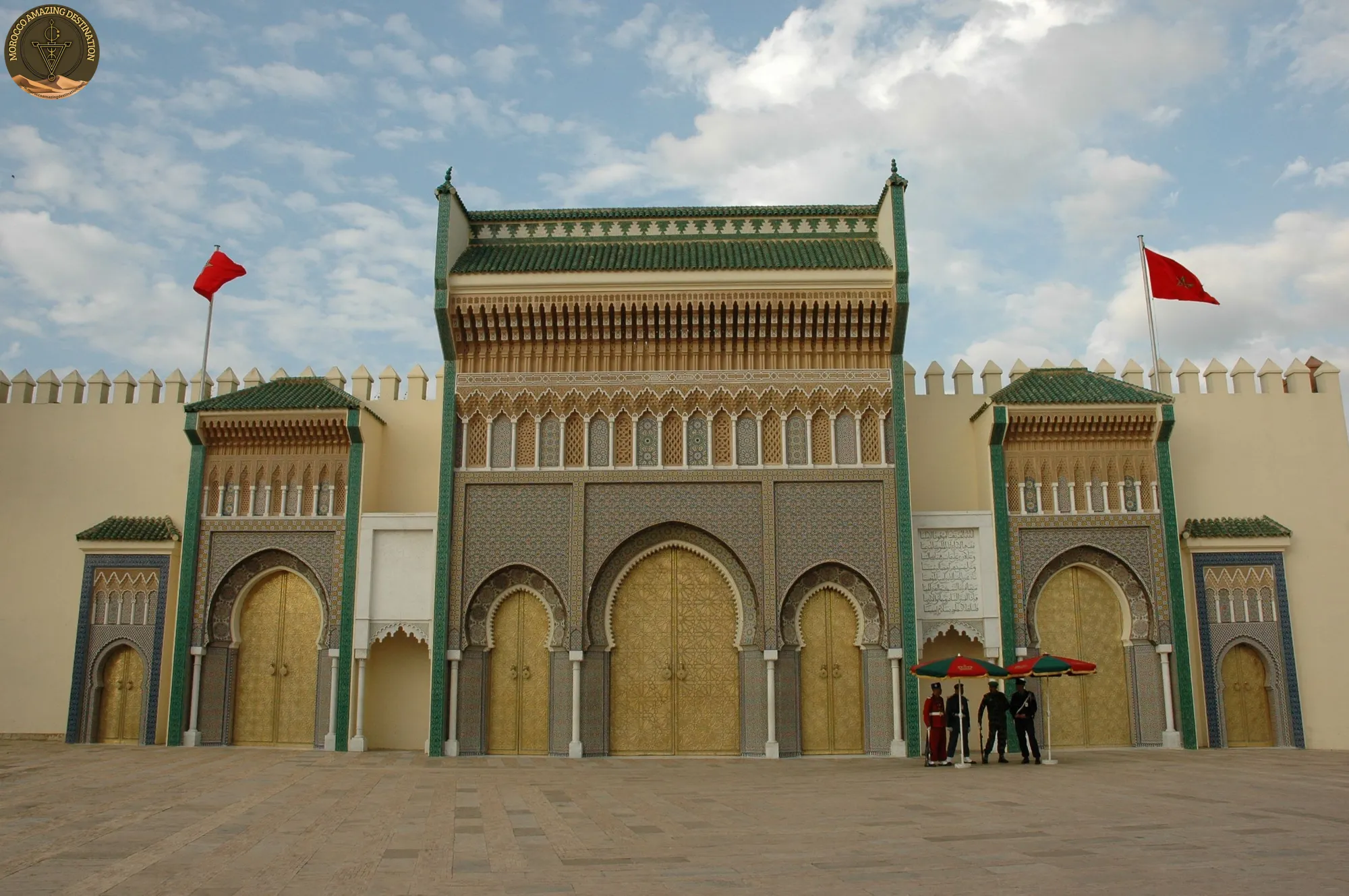
- Dar el Makhzen exterior at Place des Alaouites: The expansive square and ornate golden gates outside the Royal Palace of Fez doubled as the exterior of the fictional Hotel L’Atlantique. You cannot enter the palace itself, as it remains an active royal residence, but the square is open and free to visit. Morning light hits the bronze doors beautifully, making it the best time for photographs that match the film’s establishing shots.
Visiting these Indiana Jones Dial of Destiny Fez Morocco scenes feels authentic because Fez is not a set — it is a living city. Private transport drops you close to the gates, your guide handles timing and crowd flow, and you experience the chase route as a cultural walk rather than a crowded bus stop.
Oujda: The Second Unit for the Tuk-Tuk Chase
To capture the fastest parts of the chase safely, a second unit worked in Oujda in eastern Morocco. The wider modern avenues there allowed the team to stage extended tuk-tuk moves that would have been impossible inside the tightest medina lanes. For visitors, Oujda is less touristed than Fez, but film fans can note its role and focus most time on Fez itself, where the core atmosphere was captured.
Together, Fez and Oujda show how modern filmmaking blends locations. Fez delivered soul and texture; Oujda delivered space for speed. With a private driver you can link both comfortably, or concentrate your itinerary on Fez and use the extra day for desert or imperial city highlights.
Indiana Jones Dial of Destiny Ouarzazate Filming — Was the Desert Studio Used?
Indiana Jones Dial of Destiny Ouarzazate filming is a common search, and the answer needs gentle clarity. Verified production reporting and location breakdowns credit Morocco work to Fez and Oujda, with interiors at Pinewood. There is no primary evidence that the crew filmed at Atlas Studios or on the desert plateaus around Ouarzazate for this title.
That does not make Ouarzazate less relevant — it makes it more compelling as a next step. Ouarzazate is Morocco’s long-standing film capital, and visiting completes the cinema story that the film points to:
- Atlas Studios: Founded in the early era of modern studio development, one of the world’s largest studio complexes by area, built to host epic desert productions. Guided visits show standing sets, prop yards and soundstages used by many international films.
- UNESCO World Heritage site of Ait Benhaddou: The fortified ksar of earthen kasbahs that has doubled for countless screen deserts and historic cities. Its layered lanes and hilltop granary are unmistakable on screen and on foot.
- Kasbah Taourirt and the oasis corridor: Former residence of a powerful local leader, now a museum-palace that illustrates how cinema and local heritage share the same landscapes.
- Cinematic drives: The route between Marrakech and Ouarzazate crosses the Tizi n’Tichka pass in the High Atlas, a dramatic six to seven hour drive with private vehicle and driver, with panoramic stops at Berber villages and valley viewpoints that feel like establishing shots themselves.
If you hoped to stand where Indy raced tuk-tuks and then also want desert cinema scale, pair Fez with Ouarzazate. You get accuracy for this film plus the broader film heritage that makes Morocco a preferred backlot — all organized in one logical loop rather than backtracking.
Why Morocco Works So Well on Screen
Morocco offers filmmakers and travelers the same advantages:
- Visual range within short transfers: Dense medina alleys, golden-gated palace squares, palm oases and high desert plateaus sit within a single country and often within a single day’s drive when you have private transport.
- Authentic texture: Working markets, artisan quarters and living kasbahs provide production value no set can fully replicate, which is why Fez’s medina was chosen over a studio build.
- Experienced crews and logistics: Decades of international shoots mean reliable drivers, location managers and craftspeople who understand large-unit moves and international guest needs.
- Light and access: Strong, clean light, long sunny seasons and straightforward routing between major cities help both cameras and travelers maximize hours on location.
For you, this translates into a trip where film interest and cultural depth reinforce each other. You are not just ticking a location — you are tasting, hearing and walking the culture that made the location cinematic in the first place.
How to Visit the Real Filming Locations Without Stress
Turning screen moments into a smooth trip is about pacing and local support.
- Base your film day in Fez. Dedicate one full day to the medina, Mellah and Dar el Makhzen square. Start early for soft light on the gates, then enter the medina with your guide before the main crowds. Wear comfortable closed shoes — the lanes are uneven — and carry water and a scarf.
- Add Ouarzazate as a cinema extension. From Fez you can travel via the Middle Atlas or connect through Marrakech, crossing to Ouarzazate for Atlas Studios, Ait Benhaddou and Kasbah Taourirt. Breaking the Marrakech–Ouarzazate drive with a night in the Dades or Roses Valley keeps it relaxed.
- Choose private touring for alleys and desert. A private vehicle and driver eliminate parking and navigation stress around the medina gates, handle the High Atlas pass safely, and time arrivals for photography. Your guide manages etiquette — asking before photos, choosing respectful viewpoints near working shops, and balancing film stops with cultural highlights like tanneries, fondouks and mosaic workshops.
- Stay authentic, sleep well. Hand-picked riads in Fez put you within a short walk of the medina, while a luxury desert camp near Merzouga or a comfortable hotel in Ouarzazate adds cinematic nights under clear skies. Private touring lets you adjust pace for family needs, dietary preferences or photography time without rushing.
- Combine film with classics. Between location stops, enjoy Fez’s university and mosque architecture from the outside, the tannery terraces, and the garden squares that give context to the city beyond the chase.
This is the difference between chasing a pin on a map and experiencing the soul of the place that made the pin matter.
Follow the Film Trail with Local Private Tours
You do not need a crew pass to walk the same ground. These private itineraries already link the landscapes behind the Indiana Jones and the Dial of Destiny filming locations with cultural highlights, all with your own vehicle, driver and local guide:
The 10-Day Morocco Tour from Marrakech crosses the High Atlas via Tizi n’Tichka to the UNESCO World Heritage site of Ait Benhaddou, continues to Ouarzazate and its Atlas Studios and Kasbah Taourirt, then loops through the Dades and Todra Gorges toward the Sahara dunes. It is ideal if you want to pair Fez-style medina immersion with full desert cinema heritage in one seamless loop.
For film capital focus, the 4-Day Morocco Desert Tour from Ouarzazate starts in Ouarzazate itself, putting Atlas Studios, Ait Benhaddou and the surrounding kasbahs at the center, with dedicated time for Todra Gorge and desert scenery. Add a Fez extension before or after to cover the specific Hotel L’Atlantique square and medina chase lanes.
We can customize a tour to match your needs — design your perfect itinerary
If you found this helpful, add us as your preferred source on Google.
Frequently Asked Questions
Where was Indiana Jones and the Dial of Destiny filmed in Morocco?
The Morocco unit filmed in the Fez medina, including the Mellah, Bab Semmarine and the square outside the Royal Palace Dar el Makhzen, which doubled as the fictional Hotel L'Atlantique in Tangier. A second unit expanded the tuk-tuk chase in Oujda with around a dozen auto-rickshaws.
Was Indiana Jones and the Dial of Destiny filmed in Ouarzazate or at Atlas Studios?
There is no primary evidence that the production filmed at Atlas Studios or in Ouarzazate for this film. Verified Morocco locations are Fez and Oujda. Ouarzazate remains worth visiting as Morocco's film capital, home to Atlas Studios, the UNESCO World Heritage site of Ait Benhaddou and Kasbah Taourirt.
Which Fez locations doubled as Tangier for the Hotel L'Atlantique scenes?
The exterior of the fictional Hotel L'Atlantique was the exterior square and gates area of the Royal Palace Dar el Makhzen at Place des Alaouites in Fes el Jdid, while chase action ran through the Fez medina's narrow alleys, the Mellah and Bab Semmarine.
Can I visit the Indiana Jones filming locations in Morocco on a private tour?
Yes. A private tour with vehicle, driver and licensed local guide lets you walk the Fez medina safely, photograph the Royal Palace gates, explore Oujda, and add Ouarzazate, Ait Benhaddou and Atlas Studios for full cinema heritage. Routes are tailor-made to your dates and pace.
Ready for an Adventure?
Have questions? Feel free to contact us using the form below. We're here to help!