· Travel · 7 min read
The Imperial Cities of Morocco: A Complete Guide to Marrakech, Fes, Meknes & Rabat
Explore the imperial cities of Morocco — Marrakech, Fes, Meknes and Rabat — with this guide to the history, highlights and best tours.
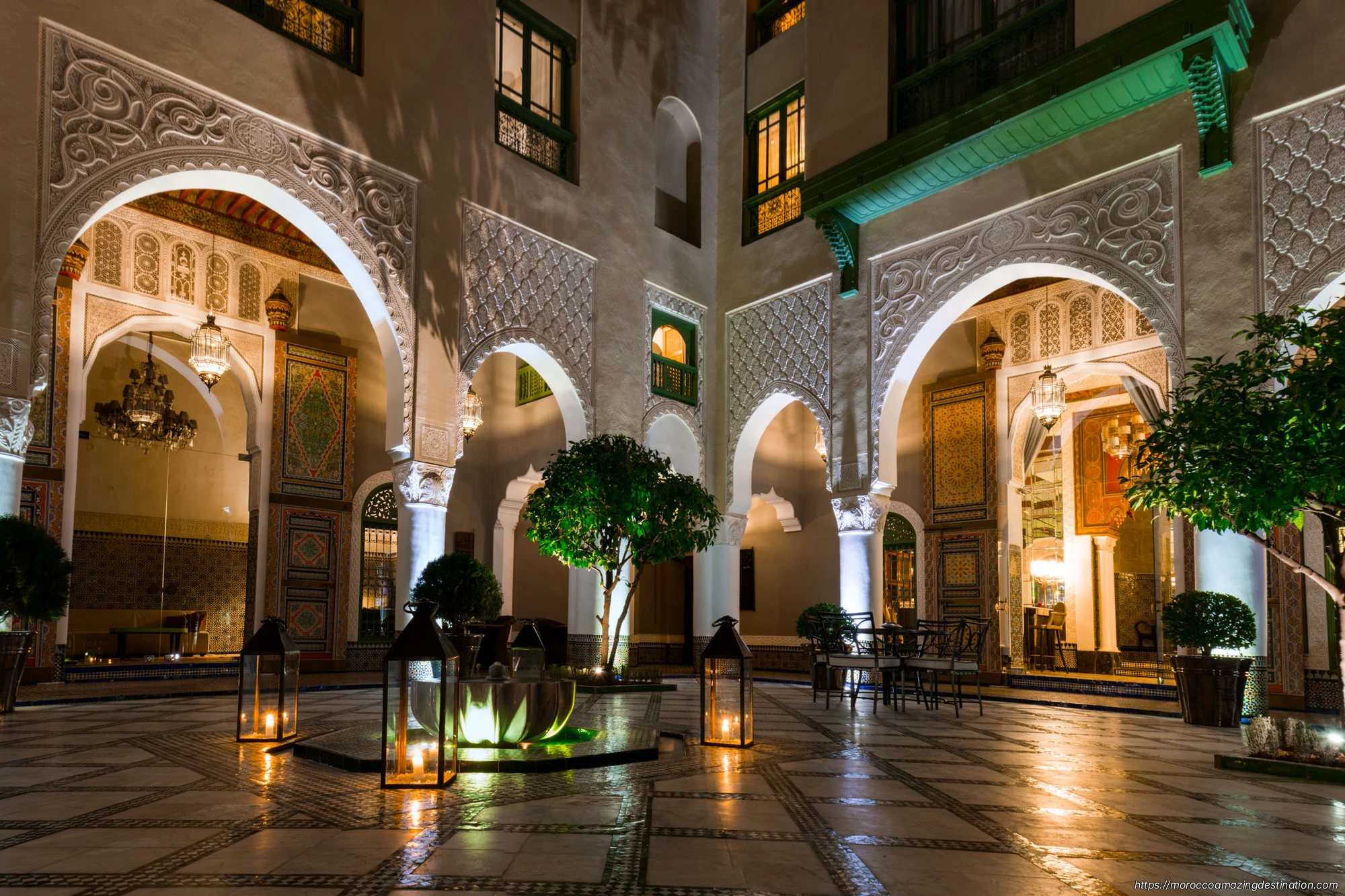
The Imperial Cities of Morocco: A Complete Guide to Marrakech, Fes, Meknes & Rabat
Four cities, four dynasties, four former capitals — the imperial cities of morocco are the living heartbeat of the country’s history. Marrakech, Fes, Meknes and Rabat each served as capital under a different ruling dynasty, and each is today a UNESCO World Heritage Site in its own right. Together they compress more than a thousand years of sultans, scholars, craftsmen and conquerors into a single, unforgettable journey.
The simplest way to see them all in one seamless trip is an imperial cities of morocco tour — a private, guided circuit that links the four cities with a driver, riad stays and local guides in every medina. Whether you call it the imperial cities of morocco or a morocco imperial tour, this is the classic first-time itinerary and the one the country does best. A great place to start is our 8-Days Tour From Casablanca To Morocco Imperial Cities, which loops Rabat, Fes, Meknes, Volubilis and Marrakech into one private journey.
What Are the Imperial Cities of Morocco?
The imperial cities of morocco are the four cities that have, at different moments, been the capital of the Moroccan state. Each rose to power under a distinct dynasty, and each left behind a monumental medina that UNESCO has inscribed on the World Heritage List. They are:
- Marrakech — the Almoravid and Almohad capital, and the city that gave its name to the Moroccan empire (UNESCO).
- Fes — founded by the Idrisids, home to the Qarawiyyin mosque and university, and the country’s cultural and spiritual centre.
- Meknes — the fortified imperial capital built by Sultan Moulay Ismail.
- Rabat — the Almohad capital project and Morocco’s modern capital.
Together they form the classic morocco imperial tour route, connected by a ring of highways and rail lines that makes them remarkably easy to combine.
Marrakech: The Red City and First Imperial Capital
Marrakech is the most famous of the four and, for many travellers, the gateway to a morocco imperial tour. Founded by the Almoravids in the 11th century and raised to greatness by the Almohads, it “gave its name to the Moroccan empire” — a fact UNESCO itself records in the city’s World Heritage inscription.
The landmarks come thick and fast:
- Koutoubia Mosque — its 77-metre minaret is the city’s skyline anchor and the template for countless later towers.
- Jemaa el-Fna — the great square at the heart of the medina, listed by UNESCO as an Intangible Cultural Heritage of Humanity.
- Bahia Palace — a showcase of Moroccan craft, with painted cedar and tiled courtyards.
- Saadian Tombs — a royal necropolis hidden for centuries and rediscovered intact.
- Ben Youssef Madrasa — a masterpiece of Islamic scholarship and decoration in the old medina.
Fes: The Cultural and Spiritual Heart
If Marrakech is the face of the empire, Fes is its soul. Founded by the Idrisids and raised to its height by the Marinids — when it replaced Marrakech as capital — Fes remains Morocco’s cultural and spiritual centre. It is home to the Qarawiyyin mosque and university, which UNESCO describes as hosting the oldest university in the world.
Fes is really two cities:
- Fes el-Bali — the ancient, car-free medina, a labyrinth of thousands of alleys, workshops and markets.
- Fes Jdid — the “new town” founded in the 13th century, alongside the Royal Palace.
Don’t miss the Chouara tannery, where leather is still worked in the same stone vats for centuries — a sight best viewed from a surrounding terrace.
Meknes: The Sultan’s Fortress City
Meknes is the quietest of the four and, for many, the surprise of the trip. Founded by the Almoravids in the 11th century, it became a true imperial capital under Sultan Moulay Ismail, who transformed it into a vast fortified city.
Its monuments are monumental by any standard:
- Bab Mansour — the grandest of the city’s nine monumental gates, and arguably the finest gate in Morocco.
- Ramparts — rising up to 15 metres, they give Meknes its distinctly martial silhouette.
- Heri es-Souani and Sahrij Swani — the immense royal granaries and the reflecting reservoir that supplied them.
- Mausoleum of Moulay Ismail — the resting place of the sultan who built it all.
About 30 km away sits Volubilis, the UNESCO-listed Roman city with some of the best-preserved mosaics in North Africa — an essential stop on any imperial circuit.
Rabat: The Modern Capital
Rabat closes the loop. It began as an Almohad capital project, symbolised by the vast Hassan Mosque whose unfinished minaret still dominates the skyline, and it grew around the 17th-century Kasbah of the Udayas and a carefully planned new town. It has been Morocco’s capital since the early 20th century.
The essential sights:
- Hassan Tower — the soaring minaret of the unfinished mosque.
- Mausoleum of Mohammed V — the tomb of the modern kingdom’s founder, guarded by horsemen in traditional dress.
- Chellah — a walled necropolis layered with Roman and medieval ruins.
How to Tour the Imperial Cities
The four cities sit in a natural loop, which is exactly why the Moroccan National Tourist Office’s (visitmorocco.com) classic circuit works so well. As a rough guide to distances: Rabat to Fes is about 207 km, Fes to Meknes about 64 km, and Meknes to Marrakech about 511 km.
You have several ways to connect them:
- Train (ONCF) — the national rail network links Casablanca, Rabat, Meknes and Fes, with a separate line to Marrakech.
- High-speed rail — the Al Boraq line connects Tangier, Kenitra, Rabat and Casablanca at high speed.
- Private tour vehicle — the default choice for an imperial cities of morocco tour, with a driver and guide handling every transfer.
The best seasons are spring and autumn, when days are mild enough for long medina walks. A typical tour pairs a private air-conditioned vehicle with riad stays and guided medina walks, adds a stop at Volubilis, and runs anywhere from five to eleven days — with an optional extension to the Sahara or the coast. For first-timers, an organized or private tour is the norm, simply because the medinas are maze-like and the transfers are long.
Choosing Your Morocco Imperial Tour
The right morocco imperial tour depends on your time and appetite for the desert:
- Pure imperial cities — our 8-Days Tour From Casablanca To Morocco Imperial Cities focuses entirely on the four capitals plus Volubilis, with optional High Atlas or Ouzoud day trips.
- A compact northern loop — our 5 Days Tour To Chefchaouen & Imperial Cities From Tangier folds the blue city of Chefchaouen into a shorter imperial circuit from Tangier.
- Imperial cities plus the Sahara — our Imperial Cities & Sahara Desert pairs the four cities with the dunes of the desert in a single itinerary.
Whatever you choose, the imperial cities reward a guide. They are not just sights; they are a thousand years of Moroccan history that a good local storyteller brings to life.
Frequently Asked Questions
Which are the four imperial cities of Morocco?
Marrakech, Fes, Meknes and Rabat. Each was the capital of a different ruling dynasty — the Almoravids and Almohads in Marrakech, the Idrisids and Marinids in Fes, the Alaouites under Sultan Moulay Ismail in Meknes, and the modern kingdom in Rabat — and each is a UNESCO World Heritage Site.
How many days do you need for an imperial cities of Morocco tour?
The classic circuit takes about seven days, though operators offer everything from compact five-day loops to ten- or eleven-day journeys. A week lets you cover Rabat, Fes, Meknes (with nearby Volubilis) and Marrakech at a comfortable pace.
What is the best time to visit the imperial cities of Morocco?
Spring and autumn are ideal, with mild days for walking the medinas. Summer is hot inland, while winter is cooler but still pleasant for sightseeing. Book a little ahead for spring and autumn, the most popular seasons.
Do I need a guide to visit the imperial cities of Morocco?
Not strictly, but a private driver and local guide transform the trip. The medinas are maze-like, the distances between cities are long, and a guide unlocks the history, crafts and backstreets you would otherwise miss — which is why most first-time visitors book an organized tour.
We can customize a tour to match your needs — design your perfect itinerary
If you found this helpful, add us as your preferred source on Google.
Frequently Asked Questions
Which are the four imperial cities of Morocco?
Marrakech, Fes, Meknes and Rabat. Each was the capital of a different ruling dynasty — the Almoravids and Almohads in Marrakech, the Idrisids and Marinids in Fes, the Alaouites under Sultan Moulay Ismail in Meknes, and the modern kingdom in Rabat — and each is a UNESCO World Heritage Site.
How many days do you need for an imperial cities of Morocco tour?
The classic circuit takes about seven days, though operators offer everything from compact five-day loops to ten- or eleven-day journeys. A week lets you cover Rabat, Fes, Meknes (with nearby Volubilis) and Marrakech at a comfortable pace.
What is the best time to visit the imperial cities of Morocco?
Spring and autumn are ideal, with mild days for walking the medinas. Summer is hot inland, while winter is cooler but still pleasant for sightseeing. Book a little ahead for spring and autumn, the most popular seasons.
Do I need a guide to visit the imperial cities of Morocco?
Not strictly, but a private driver and local guide transform the trip. The medinas are maze-like, the distances between cities are long, and a guide unlocks the history, crafts and backstreets you would otherwise miss — which is why most first-time visitors book an organized tour.
Ready for an Adventure?
Have questions? Feel free to contact us using the form below. We're here to help!