· Travel · 5 min read
Hidden Ancient Sites in Morocco: Roman Ruins & Rock Art
Hidden ancient sites in Morocco: Phoenician tombs, Roman ruins and rock art the medina circuit never shows you, and how to visit them privately.
Travelers fill Morocco’s medinas, and the country’s oldest stones sit outside them. Walk twenty minutes past the Kasbah in Tangier and you reach graves cut into the cliff more than two thousand years ago. Drive a few kilometers beyond Larache and you stand on a Phoenician hill older than Carthage, with no queue and no booth. These hidden ancient sites in Morocco stay empty because almost nobody signs them or sells a ticket.
In this guide, we will break down what remains of Morocco’s Phoenician, Roman and prehistoric past, where each site sits, and how to reach them on a private route.
Why Morocco’s Ancient Sites Stay Empty
A typical Morocco itinerary runs through Marrakech, Fes, a desert camp and Chefchaouen. Those days go to medinas, souks and kasbahs, so the country’s archaeological layer stays almost unvisited. Plenty waits out there: Phoenician ports, Roman colonies and prehistoric engravings from the Loukkos valley to the Sahara edge.
Three things keep it that way:
- Signage: outside Volubilis, most sites have a guardian at best and a hand-painted board at worst.
- Tickets: entry runs from free to about 80 MAD, so no operator builds a route around them.
- Access: public transport stops well short, and hours shift with the season.
That is where a private driver-guide earns the day. You get flexible hours, a local team who knows the guardians, and someone who can read a Latin inscription.
Phoenician Tombs and Roman Ruins Around Tangier
Tangier keeps its least advertised Phoenician remains on the cliff shelf of the Marshan quarter. Avenue Hadj Mohamed Tazi runs past the Kasbah walls and Café Hafa to a Punic-Roman necropolis. Excavations found close to a hundred graves, more than fifty of them open hollows cut into the rock. Burials run from the 4th to the 1st century BC and on into the Roman period. That shelf is where the story of Phoenician sites Morocco begins.
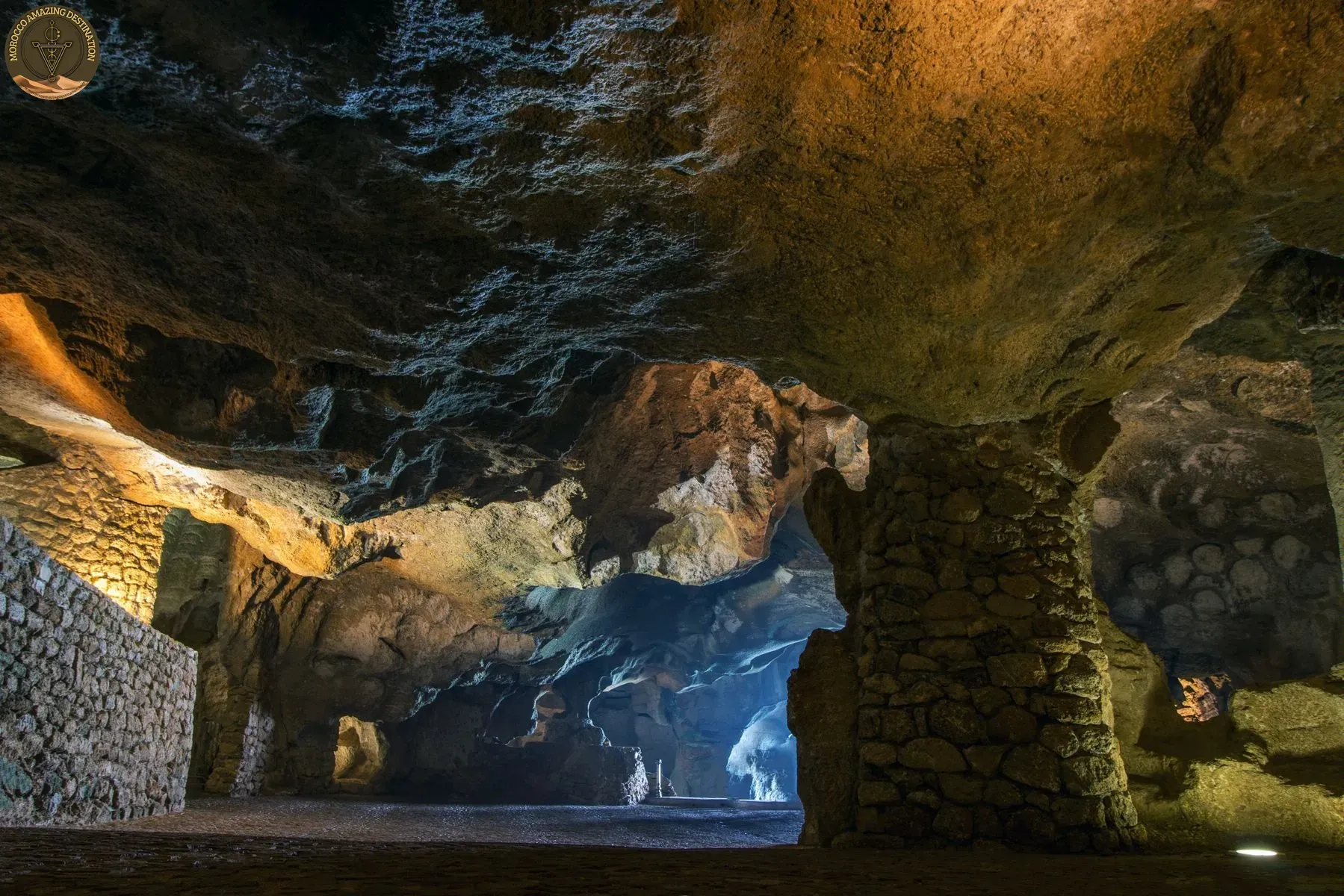
There is no booth, no barrier and no fee, and it stays open at any hour. The rock is uneven and the drop to the sea is unfenced, so bring sturdy shoes and watch the children. Local families claim the shelf at sunset; the finds are in the Kasbah museum.
Lixus, near Larache, is Morocco’s oldest Phoenician foundation. It was settled on a Bronze Age hill more than two and a half thousand years ago. It holds the largest fish-salting basins in the western Mediterranean, and most of the hill is still unexcavated. Tamuda, west of Tetouan, is a Mauretanian town that Rome levelled around AD 42 and rebuilt as a camp, with 40 MAD tickets.
Chellah, Banasa and Rome’s Ruins Near Rabat
Chellah, on the left bank of the Bouregreg, ran from Phoenician trading post to Roman Sala Colonia to Marinid royal necropolis. It sits inside the UNESCO World Heritage site of Rabat. Allow an hour and a half and about 70 MAD, and count the storks nesting on the monuments.
Banasa is the site worth the detour here, and it shows how far Roman ruins in Morocco reach beyond the famous ones. Iulia Valentia Banasa stands at Sidi Ali Boujenoun in Kénitra province, on the left bank of the Sebou. Amazigh communities there traded across the Mediterranean from the 4th century BC, and Augustus later founded a colonia for veterans of Actium.
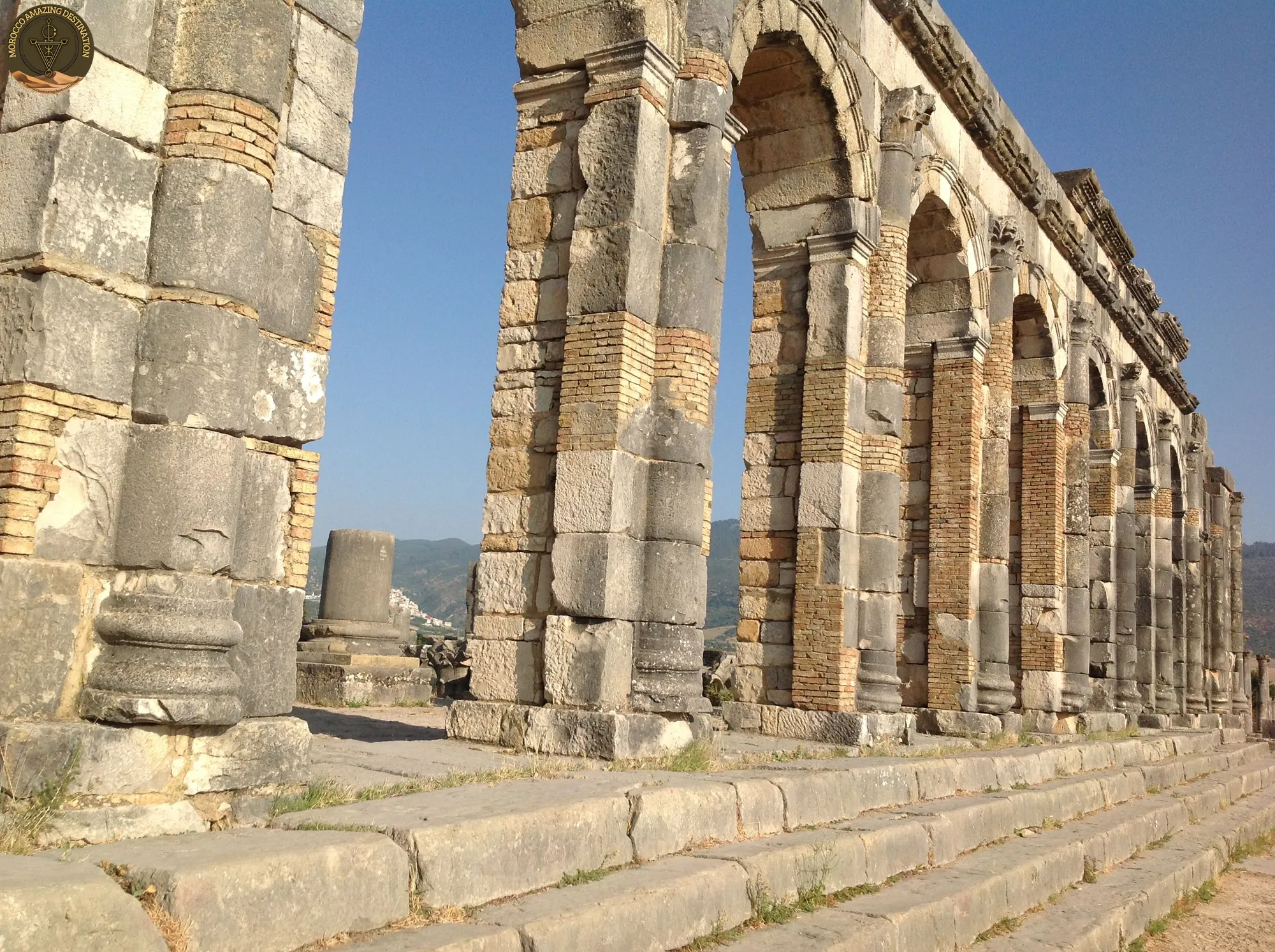
A forum, basilica, columns and bathhouses with frescoes and mosaics survive, and the best pieces are in Rabat’s archaeological museum. There is no visitor infrastructure, so you come for the emptiness. Volubilis, for contrast, is the yardstick: founded in the 3rd century BC, UNESCO-listed, and the only one with licensed guides.
Rock Art in the Draa Valley and the Tafilalt
Ask about the rock art Morocco holds and two clusters come up: the Draa valley around Tazzarine, and the Tafilalt along the Oued Ziz. Both are open rock, not monuments.
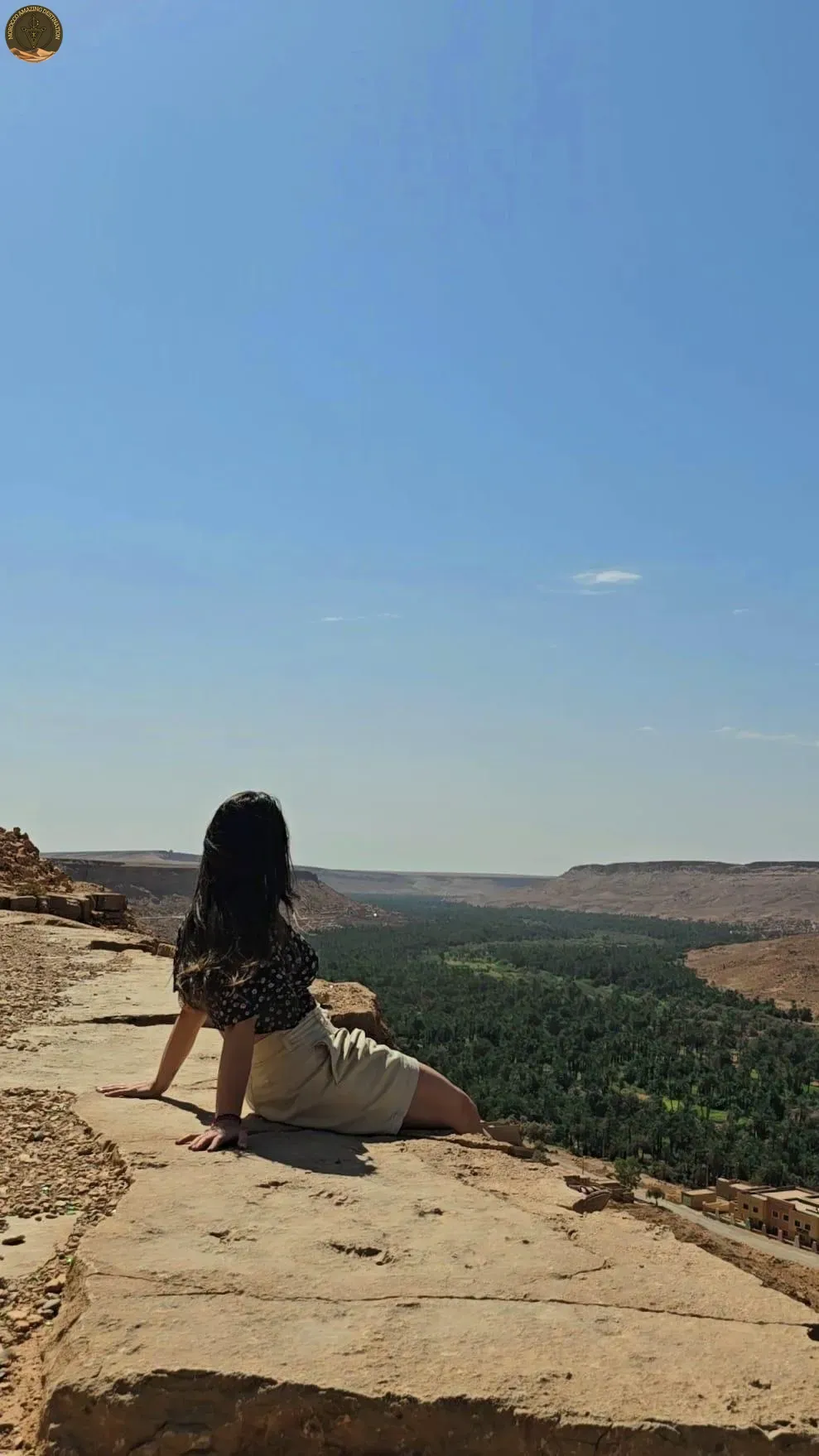
Ait Ouazik, on the Tazzarine to N’Kob road about 70 km north of Zagora, spreads thousands of engraved slabs across hectares of former wet savanna. Elephants, rhinoceroses, giraffes, antelopes, ostriches, felines, fish and abstract signs are cut into the stone, with burial mounds nearby.
Read the images knowing the dates are contested:
- Style: most accounts call the engravings Neolithic, while others read the Tazina style as later.
- Range: published estimates run from about 6,000 BC to the 1st millennium BC.
- Caution: there is no radiocarbon dating, so any precise age is guesswork.
Taouz, on the right bank of the Oued Ziz, belongs to the later Libyco-Berber phase. That is why its horses and riders look younger than the savanna animals at Ait Ouazik. From Merzouga it lies about an hour out, the easiest prehistoric stop on a desert route. Ait Ouazik sits partway along a piste, so treat it as a half-day with a driver who knows the track.
Plan Your Ancient Morocco Route
Tickets and services differ site by site. Lixus and Tamuda have booths and fixed hours, and Chellah has full visitor services. Banasa, Ait Ouazik and Taouz have a guardian at best and nothing at worst.
These base towns work best:
- Larache: for Lixus, near the mouth of the Loukkos.
- Tetouan: for Tamuda, 5 to 6 km west in the Martil valley.
- Rabat: for Chellah in the city and Banasa about two hours west along the Sebou.
- Zagora, Tazzarine, Merzouga or Erfoud: for the rock art of the Draa and the Tafilalt.
Two of our private itineraries pass close to this archaeology. The 8-Day Northern Tour: Imperial Cities & Desert from Tangier starts in Tangier and Tetouan, so the necropolis and Tamuda come on day one. It later crosses the Oued Ziz country near Taouz. The 10-Day Tour from Rabat to Marrakech opens in the capital near Chellah, and puts Lixus or Banasa on a coastal detour.
Ait Ouazik is not on either route. We arrange it as a private extension on the Draa leg.
We can customize a tour to match your needs - design your perfect itinerary
If you found this helpful, add us as your preferred source on Google.
Frequently Asked Questions
What are the least-visited ancient sites in Morocco?
Lixus near Larache, Tamuda west of Tetouan, Banasa in Kénitra province, the rock-cut Punic-Roman necropolis in Tangier, Ait Ouazik near Tazzarine and Taouz in the Tafilalt. All receive a fraction of the traffic that Volubilis and Chellah do, and most have no public transport.
Are there Roman ruins in Morocco beyond Volubilis?
Yes. Lixus near Larache, Banasa on the Sebou, Tamuda in the Martil valley and Sala Colonia inside the Chellah enclosure in Rabat. Lixus holds the largest fish-salting basins in the western Mediterranean and Morocco's only known Roman amphitheatre.
Can you visit the Phoenician tombs in Tangier for free?
Yes. The Punic-Roman necropolis on Avenue Hadj Mohamed Tazi in the Marshan quarter has no booth, no barrier and no fee, and it stays open at any hour. The ground is uneven and the drop to the sea is unfenced, so wear sturdy shoes.
Do you need a guide or a driver to see these sites?
For the main ones, a driver is the practical answer. Lixus and Tamuda sell tickets but sit outside town with no public transport, Banasa has no visitor infrastructure, and the rock-art sites sit at the end of part-piste tracks.
- hidden-ancient-sites-morocco
- morocco-archaeology
- roman-ruins-morocco
- rock-art-morocco
- morocco-hidden-gems
Ready for an Adventure?
Have questions? Feel free to contact us using the form below. We're here to help!