
· Travel · 11 min read
Fes to Marrakech Shared Desert Tour: Complete Guide to Shared Desert Tours from Marrakech & Merzouga
Join a Fes to Marrakech shared desert tour: group Sahara adventure via Merzouga, camel trek, Todra Gorge and Aït Benhaddou.
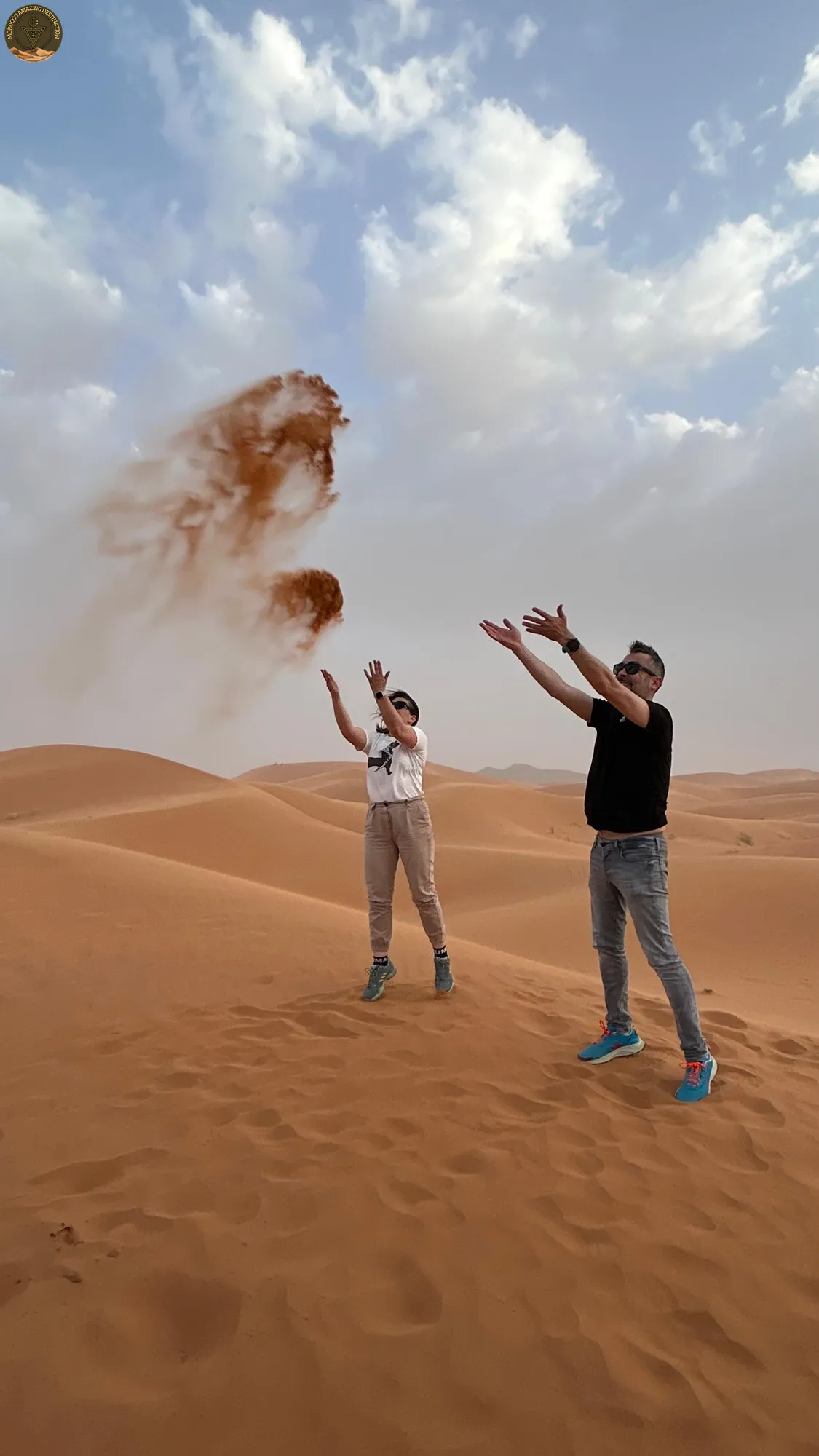
Fes to Marrakech Shared Desert Tour: Complete Guide to Shared Desert Tours from Marrakech & Merzouga
Want to cross Morocco from the spiritual north to the vibrant south without paying for a private vehicle? A fes to marrakech shared desert tour is the most affordable and social way to do it.
You share an air-conditioned minibus with fellow travellers, follow a fixed itinerary through the Middle Atlas and Sahara, sleep under the stars in Erg Chebbi, and arrive in Marrakech with stories and new friends — all while splitting the costs.
What Is a Shared Desert Tour?
Think of a shared desert tour as organized group travel with a set route, set departures and a shared vehicle. It is the opposite of a private tour where you have the vehicle to yourself.
A shared desert tour fes to marrakech follows exactly the same legendary corridor as its private counterpart — from Fes through Ifrane, Azrou, the Ziz Valley and Merzouga to the gorges and kasbahs before Marrakech — but you experience it as part of a small group.
Here is what typically defines the shared format:
- Group size and vehicle: About 8–17 seats in a shared minibus or minivan, sometimes a convoy of 4x4s. Around 8 travellers is the small-group standard, while operators may go up to about 17 for comfort on larger minibuses. Fuel and driver are included.
- Fixed itinerary and departures: The route and overnight stops are pre-set, with departures on fixed days from Fes or Marrakech. You cannot add a private detour on the day.
- Cost-sharing model: The price is per person and divided across the group, which makes it significantly more accessible than a private tour with a dedicated vehicle.
- Driver who is also your host: An English-speaking driver, often fluent in French and Spanish as well, handles driving and logistics and shares context at each stop. This is not always a certified mountain guide.
- Social atmosphere: Solo travellers, couples and friends mix for a few days, sharing meals, the camel trek and the campfire. Expect camaraderie, not solitude.
Many travellers discover that shared desert tours from marrakech are the easiest entry point to the Sahara if they travel alone or want to keep the budget light. The structure removes the stress of organizing transport, accommodation and the desert camp separately.
Shared Marrakech Desert Trips: Routes & Durations
From Marrakech, the Sahara is not a day trip — Erg Chebbi near Merzouga sits beyond the High Atlas — but several shared itineraries make the crossing efficient and memorable.
Most shared marrakech desert trips fall into three pacing options:
- 3 days — express essentials: The fastest shared loop. You cross the High Atlas via the Tizi n’Tichka pass at about 2,260 m (around 2,205 m by GPS), reach Merzouga for a sunset camel trek of roughly 45–90 minutes into Erg Chebbi dunes rising around 150 m, sleep in a desert camp, then return via Todra Gorge with walls about 300 m high, Dades Valley and Aït Benhaddou. Driving days are long, about 5–7 hours.
- 4 days — relaxed and most popular: The same highlights plus more breathing room. You get a fuller morning in the dunes, time for Dades Valley’s unusual rock formations and kasbahs, and less rushing between stops. Most operators recommend this pace for comfort.
- 5 days — exploratory: Adds deeper valley and kasbah visits, slower mornings and more photography stops. Ideal if you want the landscapes without the sprint.
All three centre on Merzouga and Erg Chebbi, but the rhythm changes completely. If you can spare the extra night, the 4-day option balances driving and discovery best, according to local operator itineraries.
The broader family of shared tours from marrakech also includes Agafay and city day trips, but the Sahara routes are the flagship. For the desert, think of shared departures as reliable shuttles with experiences built in, not just transfers.
What you will see on almost every Fes–Marrakech–Merzouga shared route
- Ifrane and Azrou cedar forest: Ifrane’s alpine-style streets and the nearby cedar forest where Barbary macaques gather for a quick photo stop.
- Ziz Valley: The long palm oasis that descends toward the desert, a dramatic change in vegetation and geology.
- Merzouga and Erg Chebbi: Golden dunes that rise around 150 m, with some dunes higher depending on the section. The sunset camel trek and overnight Berber camp with tagine, drums and star-gazing are the emotional core of the journey.
- Todra Gorge and Dades Valley: Todra’s limestone walls of about 300 m create a narrow, echoing canyon; Dades follows with winding roads, kasbahs and the playful “monkey fingers” formations.
- Ouarzazate and Aït Benhaddou: Ouarzazate’s cinema heritage and Taourirt Kasbah, then the UNESCO ksar of Aït Benhaddou, famous from Gladiator and Game of Thrones.
- Tizi n’Tichka pass: The High Atlas crossing with sweeping views before descending to Marrakech.
For a private-route perspective with deeper customization options, see our guide to Morocco Desert Tours from Fes to Marrakech, which complements this shared-tour focus.
Fes to Marrakech vs Marrakech to Fes: Which Shared Route Should You Choose?
The same road runs both ways — you simply reverse the order. Your choice often comes down to where you are starting and where you want to finish.
A shared marrakech to fes desert tour starts in Marrakech, climbs the High Atlas first, reaches Merzouga for the desert night, then heads north through Todra Gorge and the cedar forests to finish in Fes. It is ideal if you land in Marrakech and want to end in the cultural capital.
The southbound classic is the mirror image. Either direction includes the same core stops — Ifrane, Ziz Valley, camel trek, camp, Todra, Dades, Aït Benhaddou and Tizi n’Tichka — just in reverse.
When scanning calendars you will notice many shared marrakech to fes desert tours departing weekly, especially in high-demand periods. Operators often run multiple departures per week from both cities, so check fixed departure days rather than expecting daily availability from every company. The plural simply reflects that several group departures are available to choose from across different dates and pacing options.
Quick way to decide:
- Choose Fes → Marrakech shared if you want to start in Fes and finish with Marrakech’s medina, Jemaa el-Fnaa and easy airport access.
- Choose Marrakech → Fes shared if you are already in Marrakech or plan to continue north toward Chefchaouen and Tangier after the desert.
Both routes are priced per person on a sharing basis and follow the same inclusion logic. The vehicle, camp style and hotel tier depend on the operator, not the direction.
Shared Marrakech to Merzouga Desert Tour Deep Dive
The shared marrakech to merzouga desert tour is the heart of every shared desert programme. Most shared itineraries between the imperial cities and the Sahara are variations of this Merzouga-centred loop.
Here is how a typical 3-day shared Marrakech to Merzouga itinerary unfolds, with the 4-day version adding one extra desert or valley night for a slower pace:
Day 1: Marrakech — High Atlas — Aït Benhaddou — Dades Valley
Early departure across the Tizi n’Tichka pass at about 2,260 m. Pause for mountain panoramas, visit Aït Benhaddou UNESCO ksar and Ouarzazate, then continue to Dades Valley for the first night in a hotel or riad. Driving is the longest today, but the scenery carries you.
Day 2: Dades — Todra Gorge — Erfoud — Merzouga Desert Camp
Morning walk in Todra Gorge between walls about 300 m high, then through palm oases toward Erfoud and Merzouga. In late afternoon you leave the minibus, trek by camel for roughly 45–90 minutes into Erg Chebbi at sunset, and arrive at the camp for dinner, Berber drums and a sky thick with stars. Dunes around 150 m surround you, some higher crests nearby.
Day 3: Merzouga Sunrise — Ziz Valley — Midelt — Azrou — Fes or Return to Marrakech
Wake for sunrise over the dunes, ride camels or transfer by 4x4 back to the vehicle, then drive north via the Ziz Valley and Middle Atlas. A stop in the Azrou cedar forest for Barbary macaques and a break in Ifrane precede arrival in Fes in the evening. On the round-trip version, you instead head back to Marrakech via the same High Atlas road.
In the 4-day shared variant, the extra night often splits Dades and Todra or adds a second night near Merzouga, which reduces daily driving and gives you a full desert morning for sandboarding, a walk or simply lingering over mint tea.
Sources and uncertainty: Dune heights and gorge wall heights vary by source and exact measuring point. Use ranges: Erg Chebbi around 150 m with some dunes higher, Todra about 300 m, Tizi n’Tichka about 2,260 m signed and around 2,205 m by GPS. Group size of about 8–17 also varies by operator and season.
What Is Included (and What Is Not) in a Shared Tour
Shared tours are designed to bundle the essentials so you do not have to book each leg separately. Inclusions are fairly standardized, but always read the fine print.
Typically included:
- Shared transport in an air-conditioned minibus or minivan with driver
- English-speaking driver or guide, often multilingual
- Accommodation: hotels or riads and one night in the Sahara desert camp (tents with beds, blankets; bathroom may be shared at standard tier or private at higher tier)
- Camel trek at sunset and sunrise option, with 4x4 alternative if you prefer not to ride
- Breakfast and dinner daily
Sometimes included — confirm with the operator:
- Lunch stops (often at local restaurants where you pay directly)
- Entry fees to Aït Benhaddou or other sites
- Sandboarding in the dunes
- Bottled water and soft drinks
Rarely included:
- Tips for driver, camp staff and local guides
- Travel insurance and personal health needs
- Personal shopping in souks and cooperatives
- Optional quad or ATV experiences
Shared camp expectations matter: charging points are limited, evenings can be cold enough to need a warm jacket even outside summer, and shared bathrooms are common at the standard level. Pack a headlamp, power bank and layers.
Shared vs Private: Who Should Choose Shared?
Choosing between shared and private is less about which is better and more about which fits your travel style, group and budget.
Shared is ideal if you:
- Travel solo or as a couple and want to lower per-person costs
- Enjoy meeting others and do not mind a fixed schedule
- Are comfortable sharing a vehicle and, at standard tier, sharing camp facilities
- Want logistics handled without planning every overnight
Private is better if you:
- Travel with family, small children or a larger friend group wanting privacy
- Want full control over pace, photo stops and hotel tier
- Have specific interests such as photography, culinary or detailed cultural guiding
- Prefer an exclusive vehicle and an itinerary that can adapt on the day
For a full side-by-side comparison, read The Difference Between Private Tours and Shared Tours in Morocco. That guide lays out pros and cons in detail and helps you match your priorities to the right format. This post stays focused on how shared departures work on the Fes–Marrakech–Merzouga corridor.
Also note our private-route counterpart, Morocco Desert Tours from Fes to Marrakech, which explains the customizable, private-vehicle approach to the same landscapes. Linking the two gives you a complete view without repeating tables.
Practical Tips for Booking a Shared Desert Tour
A little preparation makes a shared tour feel effortless:
- Book ahead for peak periods: Shared seats are limited to about 8–17 per vehicle. Popular departures fill quickly, so reserve early and confirm pickup location — hotel pickup versus a central meeting point.
- Confirm key details in writing: Group maximum size, language of guiding, cancellation policy, and whether the camel trek can be swapped for a 4x4 transfer.
- Understand rooming: Solo travellers may be paired to share rooms or pay a supplement for a private room. Ask how the camp allocates tents.
- Pack smart: Layers, sunscreen, sunglasses, hat, closed-toe shoes for the camel, warm jacket for nights, headlamp, power bank and a small daypack. The desert night can drop near freezing outside summer.
- Money and extras: Carry cash for lunches, entry fees and tips. ATMs are scarce once you leave larger towns.
- Food and health: If you have dietary needs, tell the operator in advance. Hotels and camps usually accommodate common requests when warned early.
- Set expectations on pace: The 3-day shared option is efficient but driving-heavy. If you prefer time to breathe in each place, choose 4 days.
- Language: Shared tours are commonly run in English, often with French or Spanish support. Confirm your preferred language before you book.
Plan Your Shared Desert Adventure
A shared desert tour turns a simple transfer between Fes and Marrakech into a Sahara highlight. You cross two Atlas ranges, ride into dunes around 150 m at sunset, sleep in a Berber camp, walk Todra’s walls of about 300 m, and trace the Road of Kasbahs to Aït Benhaddou before crossing the Tizi n’Tichka at about 2,260 m into Marrakech.
If you want a concrete starting point, explore our 3-Day Desert Tour from Fes to Marrakech, the compact shared-route classic that links Fes and Marrakech via Merzouga. For the Marrakech-based counterpart, see our 3-Day Trip from Marrakech to Merzouga, which follows the same High Atlas and Erg Chebbi rhythm in the opposite direction and works perfectly as a shared-route analogue.
Both options can be adapted to private departures if you later decide you want exclusivity, but the shared format keeps costs down and adds a social layer many travellers love.
We can customize a tour to match your needs — design your perfect itinerary
If you found this helpful, add us as your preferred source on Google.
Frequently Asked Questions
What is a Fes to Marrakech shared desert tour?
A group tour with about 8–17 travellers sharing an air-conditioned minibus or minivan on a fixed itinerary via Merzouga and Erg Chebbi, with driver, one night in a desert camp plus hotels or riads, and costs split per person.
How long is a shared desert tour from Marrakech to Merzouga or Marrakech to Fes?
Most shared routes run 3 days fast-paced for essentials, 4 days relaxed as the most popular option, or 5 days exploratory. Marrakech to Merzouga as a round-trip is typically 3 days, while Marrakech to Fes via Merzouga runs 3 to 5 days.
What is included in a shared Marrakech desert trip?
Typically shared transport with driver or guide, accommodation in hotels or riads plus a desert camp night, a camel trek, and breakfast and dinner. Lunch, entry fees, drinks and tips are usually extra — always check with the operator.
Should I choose a shared or private desert tour?
Choose shared if you are solo, budget-conscious, social and flexible on a fixed schedule. Choose private for families, couples seeking privacy, or a fully customizable pace. See our private vs shared guide for a full comparison.
Ready for an Adventure?
Have questions? Feel free to contact us using the form below. We're here to help!