· Travel · 10 min read
Desert Safari Morocco: Camel Ride & Overnight in Desert Camp at Erg Chebbi
Your guide to a desert safari in Morocco — camel ride, overnight camp, Merzouga Erg Chebbi dunes and booking tips.
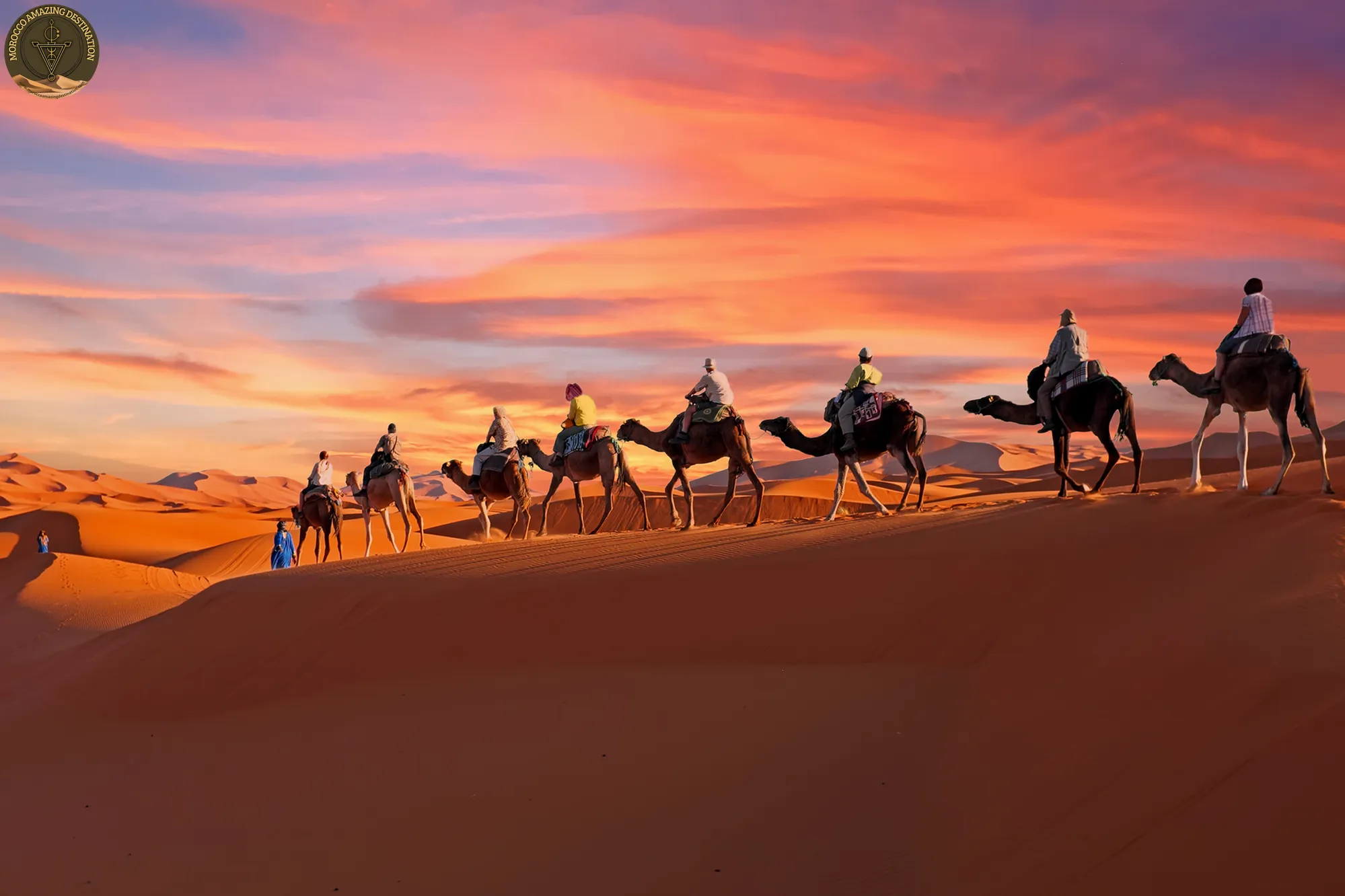
Nothing prepares you for the first moment the dunes appear — a sea of orange and gold rising from the hamada, silent except for the wind. A desert safari morocco is more than a tour; it is the classic Sahara ritual of a sunset camel trek, an overnight under a sky so clear you can trace the Milky Way, and a sunrise that turns the sand rose-gold. This guide shows you how to choose the right desert, the right dunes, and the right camp, so your night in the Sahara becomes the story you tell for years.
Ideal for first-time visitors, couples, families and small groups, a well-planned safari balances adventure with comfort. You can depart from Marrakech or Fes, pick a luxury or standard tent, and spend one or two nights among the dunes. Here is everything you need to know before you book.
Sahara or Agafay: Which Desert Should You Choose?
Morocco offers four distinct desert experiences, and the difference matters.
- Agafay Desert: A rocky, stone desert just 40 minutes from Marrakech. No tall dunes, but dramatic lunar landscapes, easy day trips, and excellent for quad biking, camel rides and dinner shows when time is short.
- Merzouga and Erg Chebbi: The iconic Saharan dunes near the Algerian border — tall, orange, and photogenic. This is the true Sahara most travellers imagine.
- Zagora and Erg Lihoudi: Smaller dunes, about 7 hours from Marrakech. A taste of Sahara with less driving, but not the giant dunes of Merzouga.
- M’Hamid and Erg Chigaga: Remote, wild, and far less visited. Reached by 4x4 across a stony piste, this is deep desert solitude.
If you want towering dunes and a full overnight in desert morocco experience with sunrise over sand, choose Merzouga or M’Hamid. If you have only a day from Marrakech, Agafay is a smart alternative, though it cannot replace the Sahara.
Erg Chebbi vs Erg Chigaga: The Two Great Ergs
Understanding the dunes helps you pick the right safari.
Merzouga desert Erg Chebbi
The Merzouga desert Erg Chebbi is Morocco’s most famous dune field. It stretches roughly 28 km long and 5 to 7 km wide, with dunes reaching around 150 metres high. The sand glows amber at sunset and peach at sunrise, and the dunes are accessible directly by camel from the town of Merzouga. Because it sits at the end of a paved road, Erg Chebbi offers the easiest access to high dunes, well-established camps, and reliable logistics for an overnight stay. For first-timers and photographers who want classic Saharan scenery without a multi-day piste, Erg Chebbi delivers.
Erg Chigaga near M’Hamid
Erg Chigaga is broader and more spread out, with lower, pale-gold dunes up to about 30 metres. It lies roughly 60 km beyond M’Hamid and requires a 4x4 transfer across desert piste. There are far fewer camps and visitors, so the silence feels deeper and the night sky even darker. Erg Chigaga suits travellers who have extra time and crave remoteness over convenience.
Sources: erg field dimensions and characteristics are described by Wikipedia and Moroccan desert guides detailing Erg Chebbi and Erg Chigaga.
Where Your Safari Starts: Marrakech, Fes and Beyond
Most safaris begin in Marrakech or Fes. The route you choose shapes how much time you spend driving versus exploring.
- From Marrakech to Merzouga: The classic loop crosses the High Atlas via the Tizi n’Tichka pass, stops at the UNESCO-listed Ait Benhaddou, Ouarzazate (the film town), the Dades Valley and Todra Gorge, then reaches Merzouga. The drive is around 560 km each way, typically 9 to 10 hours of driving split over two days. A 3-day loop is the minimum; a 4-day loop relaxes the pace.
- From Fes to Merzouga: Shorter and greener, crossing the Middle Atlas cedar forests, Ifrane and the Ziz Valley. It is roughly 7 hours to Merzouga, making a 2-night option more comfortable with less road time.
- From Ouarzazate or Marrakech to M’Hamid/Erg Chigaga: Best for those heading to Erg Chigaga, often combined with a night in Zagora or the Draa Valley.
Private tours let you adjust departure times, linger at viewpoints, and add stops such as the Jewish quarter in Tinghir or a pottery workshop in Tamegroute. Shared group tours follow a fixed itinerary and are more budget-friendly.
The Camel Ride: What to Expect in the Dunes
A sunrise or sunset trek is the heart of the experience. A camel ride morocco is done on dromedaries (one hump), led on foot by a local handler. Each camel carries one rider on a padded saddle with blankets.
- Duration: Expect about 1 to 1.5 hours each way — out to the camp at sunset and back at sunrise. Shorter taster rides are possible if you prefer a 4x4 transfer.
- Pace and feel: Camels walk slowly at around 5 km/h. They rise back-legs-first, so you tip forward then back — hold the handle. Once moving, the rhythm is gentle and meditative.
- What to wear: Long loose trousers prevent chafing, closed shoes protect from hot sand, and a scarf (cheche) helps if wind lifts fine sand.
- Comfort and safety: Handlers pause for photos and to let the animals rest. The ride suits most fitness levels. If you have back issues or are travelling with very small children, ask for a 4x4 transfer or a shorter ride.
Guides time the trek so you arrive on a high dune for sunset, with time for photos before continuing to camp.
Your Overnight in the Desert: Inside a Saharan Camp
An overnight in desert morocco follows a familiar, comforting rhythm.
You arrive to mint tea and a welcome, leave shoes at the tent entrance, and settle into a Berber-style tent with rugs and low tables. As the light fades, dinner is served — often tagine or couscous, bread, salads and fruit. Afterward, local musicians gather around the fire with drums and Gnawa rhythms; you can listen, clap along or simply watch the flames against the dunes.
The best moment comes after the music quiets. With no light pollution, the sky reveals countless stars. In Merzouga the darkness is profound, and on clear nights the Milky Way arches overhead. Mornings begin early: you climb a dune for sunrise, return for breakfast (bread, jam, olive oil, coffee and tea), then trek or drive back to rejoin your vehicle.
A good desert camp morocco keeps the experience authentic while handling logistics well — clean bedding, adequate blankets, and a clear plan for luggage (large bags stay in the vehicle; you bring a small overnight bag into the dunes).
Luxury vs Standard Desert Camps
Both styles sit among the same dunes and share the same sunset, music and stars. The difference is comfort.
Standard camps:
- Tents with beds or mattresses on sturdy bases
- Shared bathroom facilities, sometimes with limited hot water
- Solar lighting and communal dining tent
- Excellent for budget travellers and groups who value authenticity
Luxury camps:
- Private ensuite tents with hot showers and toilets
- Proper beds with premium bedding, rugs and decor
- Electricity or solar power in the tent, often with charging points
- Private dining options and more spacing between tents for quiet
Price levels vary by season, but the pattern holds: standard camps offer authenticity at a lower cost, luxury camps add privacy and hotel-like comfort without changing the dunes themselves.
What’s Included (and What’s Not)
Most overnight safari packages include:
- Transfers: Camel trek at sunset and sunrise, or 4x4 if requested
- Meals: Dinner and breakfast at the camp, plus mint tea
- Accommodation: Tent with bedding and blankets
- Experiences: Drum circle, stargazing, sunrise viewing
- Luggage handling: Secure storage of main luggage in the vehicle while you carry a small bag
Typically not included and worth confirming:
- Lunches and drinks on the road
- Entrance fees to sites like Ait Benhaddou or Todra facilities
- Tips for drivers, handlers and musicians (appreciated but optional)
- Travel insurance
Always check whether your camp choice is standard or luxury and whether you have a private or shared tent, so expectations match reality.
Best Season for a Desert Safari
Morocco’s desert can be visited year-round, but spring and autumn feel easiest.
- Spring and autumn: Warm days around 25 to 30°C and cool nights around 10 to 18°C. Ideal for long treks and comfortable nights.
- Winter: Pleasant days around 15 to 25°C, but nights can drop to 0 to 5°C. Camps provide thick blankets and fires — pack warm layers.
- Summer: Very hot days around 35 to 45°C. Camps operate, but treks shift to early morning and late evening. Hydration and sun protection become essential.
Wind and brief sand haze are more likely in late spring. Reputable operators adjust timing if conditions are dusty.
What to Pack for an Overnight in the Desert
Pack light — you will only carry a small overnight bag across the dunes.
- Light trousers and long sleeves for sun protection
- Closed shoes or sturdy sandals for sand and gravel
- Warm fleece or jacket for the evening
- Scarf or cheche, hat and sunglasses
- Head torch or small flashlight
- Power bank (some luxury tents have charging points; standard camps rarely do)
- Wet wipes, hand sanitizer and personal toiletries
- Sunscreen and lip balm
- Camera with extra battery
Leave large suitcases in your vehicle and bring valuables, medication and night layers in your small bag.
Booking Tips to Get It Right
- Decide on dunes vs time: If you want the tallest dunes with straightforward logistics, choose Erg Chebbi. For remote silence, choose Erg Chigaga with a 4x4.
- Pick your pace: A 3-day loop from Marrakech covers the highlights efficiently; a 4-day loop adds breathing room, a full day around Merzouga, and time for Khamlia village Gnawa music or a visit with a nomad family.
- Confirm camp type: Ask explicitly for luxury with ensuite versus standard with shared facilities, and whether your tent is private.
- Confirm what is included: Meals, transfers, and whether you ride a camel or 4x4 both ways.
- Book with a local operator: Local teams know water points, dune conditions and cultural etiquette. Read reviews and ask about driver licensing and insurance.
- Consider your group: Families with young children may prefer a 4x4 transfer and a luxury tent; photographers may want a private camp deeper among dunes.
With the right operator, the desert feels both adventurous and well cared for — adventurous because the dunes are wild, comfortable because logistics are handled.
Extend Your Adventure
If you have time, pair your Sahara night with cultural stops. The road from Marrakech offers kasbahs, palm oases and gorges that make the drive part of the experience. Fes departures add cedar forests and Ziz Valley panoramas. Either way, plan at least one night at the dunes — a simple afternoon visit cannot match the quiet of sleeping among sand.
Ready to turn the itinerary into reality? Our handpicked tours include transport, carefully selected camps and experienced local drivers so you can focus on the light, the music and the stars.
- 3-Day Trip from Marrakech to Merzouga — The most efficient Sahara loop from Marrakech, crossing the High Atlas and Ait Benhaddou with a sunset camel ride and overnight in a Berber camp. Explore the 3-day desert tour
- 4-Day Morocco Desert Tour from Marrakech — A more relaxed route via Dades Valley and Todra Gorge with an extra day at Merzouga for dunes at leisure, nomad visits and deeper desert time. See the 4-day Sahara itinerary
Both options can be run as private tours with your choice of standard or luxury camp.
We can customize a tour to match your needs — design your perfect itinerary
If you found this helpful, add us as your preferred source on Google.
Frequently Asked Questions
How long is the camel ride on a desert safari in Morocco?
Most desert safaris include a 1 to 1.5-hour camel ride at sunset to reach the camp and a similar ride at sunrise to return. You can request a shorter ride or a 4x4 transfer if you prefer.
What is included in an overnight stay in the desert?
An overnight stay typically includes camel trek or 4x4 transfer, mint tea, dinner, live drums, a private or shared tent, bedding, breakfast, and a sunrise experience over the dunes.
What is the difference between luxury and standard desert camps?
Standard camps have shared bathrooms and simpler beds. Luxury camps add ensuite hot showers, premium bedding, electricity and more privacy, while keeping the same dunes, music and stargazing.
Should I choose a 3-day or 4-day tour from Marrakech to Merzouga?
A 3-day tour is the fastest loop and covers the highlights. A 4-day tour adds a full day in Merzouga with less daily driving, perfect for nomad visits and Khamlia music.
- desert-safari-morocco-camel-ride-overnight-in-desert
- sahara-desert
- merzouga-desert
- camel-trek-sahara
- desert-camps
Ready for an Adventure?
Have questions? Feel free to contact us using the form below. We're here to help!