
· Things to Do · 11 min read
Dar el Makhzen Fes: A Complete Guide to the Royal Palace of Fez
Discover Dar el Makhzen in Fes, the Royal Palace of Morocco. See the golden gates at Place des Alaouites, explore Fes el Jdid, and plan your visit with our complete guide.
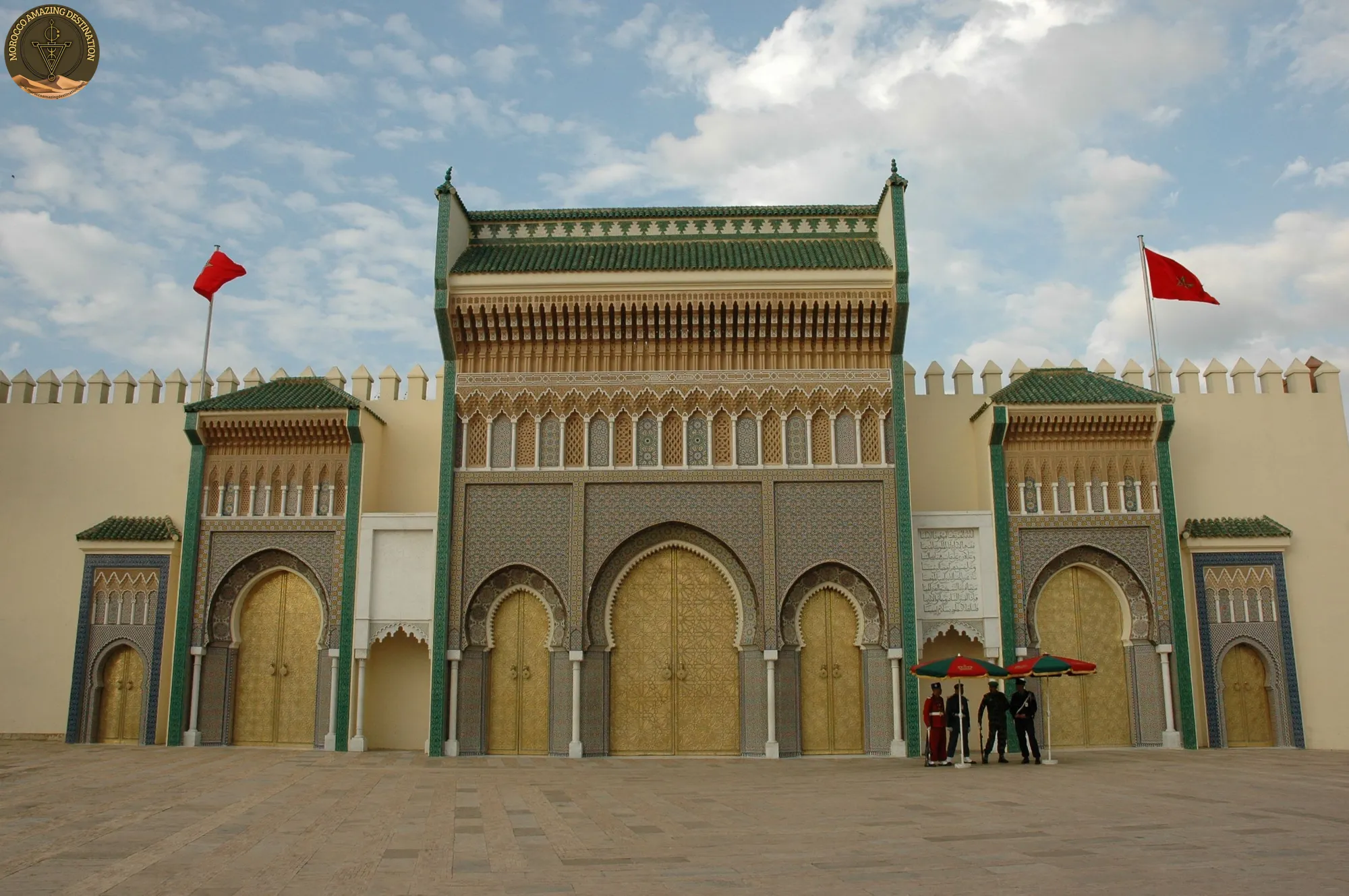
Dar el Makhzen Fes — the Royal Palace of Fez — stands as one of the most awe-inspiring landmarks in Morocco’s spiritual capital. While its doors remain closed to the public, the palace’s breathtaking gates at Place des Alaouites have become an iconic symbol of Fes and a must-see stop on any visit to the city. Spanning an immense 80 hectares in the heart of Fes el Jdid, this royal palace is far more than a beautiful façade: it represents centuries of Moroccan monarchy, Islamic artistry, and the enduring status of Fes as an imperial city.
In this guide, we cover everything you need to know about visiting Dar al Makhzen Fez, from its Marinid origins to the best photo spots at Place des Alaouites, plus the fascinating nearby attractions that make Fes el Jdid an essential part of any Fes itinerary.
What Is Dar el Makhzen?
Dar el Makhzen (Arabic: دار المخزن, literally “House of the Makhzen” — Makhzen being the traditional term for the Moroccan royal establishment) is the palace of the King of Morocco in Fes. Founded in the 13th century alongside the rest of Fes el Jdid, it is one of several royal residences across Morocco but holds a special place as the original palace of the Fes imperial city heritage.
The palace covers roughly 80 hectares, occupying much of Fes el Jdid and acting as a physical and symbolic barrier between the ancient medina of Fes el Bali and the newer Ville Nouvelle district. Its architecture reflects the finest traditions of Moroccan and Islamic design, with the majority of visible structures dating from the ‘Alawi period (17th to 20th centuries).
Key Facts at a Glance
- Location: Fes el Jdid (New Fes), not Fes el Bali
- Size: Approximately 80 hectares
- Founded: 1276 by Marinid Sultan Abu Yusuf Ya’qub
- Architectural style: Moroccan-Islamic, predominantly ‘Alawi period
- Status: Active royal residence — interior not open to the public
- Main visitor attraction: The ornate gates at Place des Alaouites
The History of Dar el Makhzen: From Marinid Fortress to Royal Palace
The story of Dar el Makhzen Fes begins in the 13th century, when the Marinid dynasty reshaped the urban landscape of Fes.
Marinid Origins
The palace was founded in 1276 by Sultan Abu Yusuf Ya’qub, the Marinid ruler who sought to create a new royal citadel separate from the crowded old city of Fes el Bali. This new district — Fes el Jdid, meaning “New Fes” — was designed as an administrative and military centre, complete with a royal palace, mosques, barracks, and a Jewish quarter (Mellah). The original palace complex was connected to the Grand Mosque of Fes el Jdid and included defensive walls, gardens, and reception halls befitting a powerful sultanate.
The ‘Alawi Transformation
When the ‘Alawi dynasty captured Fes in the 17th century, the palace entered a new era of expansion and refinement. Sultan Moulay Rashid rebuilt and enlarged the complex, adding a grand rectangular courtyard with exquisite zellij tilework and a central water basin — completed in 1671. This marked the beginning of the palace as we know it today.
The 19th century brought further significant additions:
- Sultan Moulay Abd al-Rahman (r. 1822–1859) — Created the Lalla Mina Gardens and the Bab Bou Jat Mechouar, a walled ceremonial courtyard
- Sultan Moulay Hassan I (r. 1873–1894) — Expanded the palace further, adding the Agdal Gardens, the New Mechouar, and the Dar al-Makina arms factory
Modern History and the Iconic Gates
The most photographed feature of the Royal Palace Fes Morocco — the magnificent golden gates at Place des Alaouites — is actually one of its newest additions. Built between 1969 and 1971 under King Hassan II, these gates were part of a project to reorient the palace entrance southward and create a grand public square.
During the French Protectorate (1912–1956), the administrative capital moved to Rabat, but Fes retained its royal palace as a ceremonial residence. Today, the King of Morocco continues to use the palace regularly, underscoring Fes’s enduring importance as a cultural and political touchstone.
What Visitors Can See at Dar el Makhzen
Although the palace interior is strictly off-limits, there is still plenty to admire from the outside. Here is what you should not miss.
The Ornate Gates at Place des Alaouites
The undisputed highlight for visitors is the set of monumental gates at Place des Alaouites. These are not just doors — they are masterpieces of Moroccan craftsmanship:
- Zellij (mosaic tilework): Intricate geometric patterns in vivid blues, greens, whites, and gold cover the walls flanking the gates
- Carved cedar wood: Elaborate panels with Arabic calligraphy and floral motifs frame the entrance
- Gilt bronze doors: The enormous doors themselves are cast in bronze with gilded geometric patterns that shimmer in sunlight
- Guards in traditional dress: Sentries in ceremonial uniforms stand at the gates, adding to the regal atmosphere — they generally do not mind being photographed from a respectful distance
Photography tip: Visit in the morning when the sun illuminates the golden doors directly. The gates face roughly south, so late morning provides even, beautiful light across the entire façade.
The Old Mechouar (Vieux Méchouar)
At the northeastern entrance to the palace complex lies the Old Mechouar — a walled ceremonial courtyard that forms part of the original Marinid-era structure. Historically, this was where the sultan would appear before his subjects and where official proclamations were made. Today it is a bustling crossroads where the Fes el Jdid thoroughfare meets the palace walls, giving you a glimpse of daily life against a backdrop of living history.
Place des Alaouites — The Grand Square
The Place des Alaouites itself is worth lingering in. This expansive esplanade stretches out from the palace gates, flanked by palm trees and historic buildings. It is the best spot for wide-angle photographs of the gates and a pleasant place to observe the rhythm of Fes el Jdid — families strolling, children playing, and locals going about their day in the shadow of the royal palace.
Fes el Jdid: The Imperial District Around the Palace
Fes el Jdid deserves far more exploration than many visitors give it. While most tourists naturally gravitate toward Fes el Bali, the “New Fes” — though nearly 750 years old — offers its own wealth of historical, architectural, and cultural attractions.
The Mellah (Jewish Quarter)
Directly south of the palace lies the Mellah, one of Morocco’s most historically significant Jewish quarters. Established in the 15th century, it was deliberately placed adjacent to the royal palace so that the Jewish community — which played a crucial role in trade and finance — would be under the sultan’s direct protection.
Walking through the Mellah, you will notice its distinctive architecture: balconies facing the street (unusual in traditional Muslim quarters), narrower alleys, and the poignant Jewish cemetery with its whitewashed tombs overlooking the hillside. The Ibn Danan Synagogue, a beautifully restored 17th-century place of worship, is open to visitors.
Grand Mosque of Fes el Jdid
Built alongside the palace in the 13th century, this historic mosque is immediately recognizable by its polychrome minaret — decorated with alternating bands of green and white tilework. Historically, the mosque was connected directly to the palace through a covered passage, allowing the sultan to attend prayers without entering public streets. While non-Muslims cannot enter, the exterior and minaret are striking subjects for photographs.
Jnan Sbil Gardens
Tucked between Fes el Jdid and Fes el Bali, Jnan Sbil (also known as Bou Jeloud Gardens) is a tranquil escape from the medina’s intensity. Originally planted as royal gardens by Sultan Moulay Hassan, they were recently restored and now offer shaded walkways, ornamental fountains, eucalyptus groves, and a large central pond. It is an ideal spot for a peaceful break after visiting the palace gates.
Borj Nord and the Panoramic View
For the best view of Fes in its entirety — including the sprawling palace complex — climb up to Borj Nord, the 16th-century Saadian fortress on the hillside north of the city. The fortress houses a weapons museum and, more importantly, offers a panoramic terrace where you can see the scale of the Dar el Makhzen grounds, the medina of Fes el Bali, and the green hills beyond.
Why Dar el Makhzen Matters: The Alaouite Dynasty and Imperial Fes
To fully appreciate Dar el Makhzen Fes, it helps to understand the broader context of the ‘Alawi dynasty and Fes’s role as an imperial capital.
The ‘Alawi dynasty has ruled Morocco since the 17th century and traces its lineage to the Prophet Muhammad. Fes, alongside Marrakech, Meknes, and Rabat, is one of Morocco’s four imperial cities — cities that have at various times served as the seat of royal power. Even after the administrative capital moved to Rabat, Fes retained its symbolic and spiritual importance, and the royal palace remains a working residence used for official functions and royal visits.
- The palace embodies Morocco’s unbroken monarchical tradition, stretching from the Marinids through the Saadians to the present-day ‘Alawis
- It is a living testament to Moroccan-Islamic architecture, showcasing centuries of evolving craftsmanship
- It anchors Fes el Jdid as a vital part of the city’s identity, separate from but complementary to the ancient medina of Fes el Bali
Tips for Visiting Dar el Makhzen Fes
- Combine your visit with Fes el Jdid attractions: The palace gates, Mellah, Grand Mosque, and Jnan Sbil Gardens can all be visited in a half-day walking itinerary
- Morning is best: The light at Place des Alaouites is optimal before midday, and the square is quieter
- Respect the guards: Photography of the gates is welcome, but avoid photographing guards up close without permission
- Wear comfortable shoes: You will be walking through the streets of Fes el Jdid, which — while wider than Fes el Bali’s alleys — still require good footwear
- No entrance fee: Place des Alaouites and the Old Mechouar are public spaces, free to visit
- Hire a guide: A knowledgeable local guide can enrich your understanding of the palace’s history and take you through the Mellah’s less obvious corners
Frequently Asked Questions About Dar el Makhzen Fes
Is Dar el Makhzen open to the public?
No, the interior of Dar el Makhzen is not open to the public. It remains an active royal palace used by the King of Morocco, so visitors cannot enter the palace grounds. The main attraction for tourists is the spectacular set of ornate gates at Place des Alaouites, which you can admire and photograph freely from the public square.
Where are the famous golden gates of the Royal Palace in Fes?
The famous gates are located at Place des Alaouites, a grand esplanade on the southern side of the palace complex in Fes el Jdid. Built under King Hassan II, these gates are adorned with intricate zellij mosaic tilework, carved cedar wood, and enormous gilt bronze doors with geometric patterns. The square offers the best vantage point for photography.
What is the best time to visit Dar el Makhzen and Place des Alaouites?
Morning light is ideal for photographing the gates, as the sun illuminates the golden bronze doors beautifully. Arriving early also means fewer crowds. The square is accessible throughout the day and is free to visit. If you are exploring Fes el Jdid, combine your visit with the nearby Mellah (Jewish Quarter) and Jnan Sbil Gardens.
What other attractions are near Dar el Makhzen in Fes?
Dar el Makhzen is surrounded by several must-see attractions in Fes el Jdid. The Mellah (Jewish Quarter) lies directly south with its historic synagogues and Jewish cemetery. The Grand Mosque of Fes el Jdid with its striking polychrome minaret is right next to the palace. The tranquil Jnan Sbil Gardens, recently restored, sit between Fes el Jdid and Fes el Bali. For panoramic views, head to Borj Nord fortress.
How do I get to Dar el Makhzen in Fes el Jdid?
Fes el Jdid is a short walk from Fes el Bali — simply head west from Bab Bou Jeloud (the Blue Gate) and cross the main road. Alternatively, take a petit taxi from anywhere in Fes; simply ask for “Place des Alaouites” or “Dar el Makhzen.” If you are arriving from the Ville Nouvelle, it is about a 15-minute taxi ride. The palace area serves as the dividing point between the old medina and the newer French-built city.
Explore Fes with Morocco Amazing Destination
Dar el Makhzen Fes is just one jewel in Fes’s extraordinary crown. To truly experience the city and beyond, consider a multi-day tour that includes Fes and Morocco’s other imperial cities.
Our 7-Day Morocco Tour from Fes dedicates a full day to Fes sightseeing, including the Royal Palace (Dar el Makhzen), the Chouara Tanneries, Al Karaouine University, and the medieval medina — before taking you through the Middle Atlas, the Sahara Desert, Meknes, and the blue city of Chefchaouen.
If you are seeking a longer, comprehensive itinerary, the 9-Day Morocco Tour from Fez to Tangier begins with a day exploring Fes’s ancient medina and continues to the Sahara, Marrakech, Casablanca, Rabat, and Chefchaouen — a complete cross-country journey.
We can customize a tour to match your needs — design your perfect itinerary.
If you found this helpful, add us as your preferred source on Google.
Frequently Asked Questions
Is Dar el Makhzen open to the public?
No, the interior of Dar el Makhzen is not open to the public. It remains an active royal residence used by the King of Morocco, so visitors cannot enter the palace grounds. The main attraction for tourists is the spectacular set of ornate gates at Place des Alaouites, which you can admire and photograph freely from the public square.
Where are the famous golden gates of the Royal Palace in Fes?
The famous gates are located at Place des Alaouites, a grand esplanade on the southern side of the palace complex in Fes el Jdid. Built between 1969 and 1971 under King Hassan II, these gates are adorned with intricate zellij mosaic tilework, carved cedar wood, and enormous gilt bronze doors with geometric patterns. The square offers the best vantage point for photography.
What is the best time to visit Dar el Makhzen and Place des Alaouites?
Morning light is ideal for photographing the gates, as the sun illuminates the golden bronze doors beautifully. Arriving early also means fewer crowds. The square is accessible throughout the day and is free to visit. If you are exploring Fes el Jdid, combine your visit with the nearby Mellah (Jewish Quarter) and Jnan Sbil Gardens.
What other attractions are near Dar el Makhzen in Fes?
Dar el Makhzen is surrounded by several must-see attractions in Fes el Jdid. The Mellah (Jewish Quarter) lies directly south with its historic synagogues and Jewish cemetery. The Grand Mosque of Fes el Jdid with its striking polychrome minaret is right next to the palace. The tranquil Jnan Sbil Gardens, recently restored, sit between Fes el Jdid and Fes el Bali. For panoramic views, head to Borj Nord fortress.
How do I get to Dar el Makhzen in Fes el Jdid?
Fes el Jdid is a short walk from Fes el Bali — simply head west from Bab Bou Jeloud (the Blue Gate) and cross the main road. Alternatively, take a petit taxi from anywhere in Fes; simply ask for 'Place des Alaouites' or 'Dar el Makhzen.' If you are arriving from the Ville Nouvelle, it is about a 15-minute taxi ride. The palace area serves as the dividing point between the old medina and the newer French-built city.
Ready for an Adventure?
Have questions? Feel free to contact us using the form below. We're here to help!