· Travel · 6 min read
What Is the Best Way to Travel Around Morocco? A Complete Transportation Guide
Discover the best way to travel around Morocco. From high-speed trains and buses to private drivers, find your ideal transport for an unforgettable trip.
Morocco is a land of incredible contrasts — from the snow-capped Atlas Mountains to the golden dunes of the Sahara, from Atlantic surf towns to ancient imperial cities. With so much to see, finding the best way to travel around Morocco is one of the most important decisions you will make when planning your trip. The right choice can mean the difference between a seamless adventure and a logistical puzzle.
This Morocco transportation guide breaks down every option so you can choose what suits your style, budget, and itinerary.
Morocco by Train: The Gold Standard for City Hopping
Morocco’s rail network, operated by ONCF, is one of the best in Africa. It connects the major cities — Casablanca, Rabat, Tangier, Fes, Meknes, and Marrakech — with reliable, comfortable service.
Al Boraq — Africa’s High-Speed Train The Al Boraq high-speed train is a game changer. It connects Tangier to Casablanca in just over two hours, reaching speeds of 320 km/h. Stops include Kenitra and Rabat. First-class carriages offer spacious seats, air conditioning, and a quiet atmosphere.
Conventional Trains For routes like Casablanca to Marrakech (about 3 hours) or Casablanca to Fes, conventional trains are affordable and punctual. First class offers reserved seating and more legroom, while second class is cheaper and perfectly fine for shorter hops.
Where trains don’t go: The rail network does not reach the Sahara, Chefchaouen, Essaouira, or the Atlas Mountains. You will need to combine trains with buses, taxis, or a private transfer.
Getting Around Morocco by Bus: CTM and Supratours
Buses are the best option for destinations without train service. Two major companies dominate:
CTM is the most reliable private operator. It runs modern coaches with air conditioning and assigned seating to almost every corner of the country. Popular routes include Fes to Chefchaouen and Marrakech to Essaouira.
Supratours is owned by ONCF and coordinates with train schedules. It is ideal for connecting from train stations to off-rail destinations. The Marrakech to Essaouira route is one of its most popular.
Book tickets in advance during peak season, especially for popular routes like Chefchaouen and Essaouira.
Grand Taxis: The Authentic Moroccan Experience
Grand taxis are shared Mercedes or minivans that operate on fixed intercity routes. They leave when full (six passengers) and are faster than buses but less comfortable.
How they work: You pay for a single seat or “buy” the whole car for a private ride. Prices are negotiable but generally fair. Grand taxis are ideal for shorter routes between nearby towns.
Pros: Cheap, fast, no fixed schedule — they leave when full. Cons: Cramped, variable vehicle condition, no luggage space for large bags.
Renting a Car in Morocco: Freedom and Flexibility
A self-drive road trip gives you complete control over your itinerary. How to get around Morocco by car is straightforward — the highways are excellent, especially the toll roads connecting major cities.
What to know:
- An International Driving Permit is recommended
- Drive on the right side
- Avoid night driving on mountain roads
- City driving can be chaotic in Marrakech and Casablanca
- Speed limits: 40 km/h in towns, 100 km/h on national roads, 120 km/h on motorways
Rental costs start from around 270 MAD per day for a compact car. A 4x4 is recommended for desert fringes and mountain passes.
Private Driver or Guided Tour: Maximum Comfort
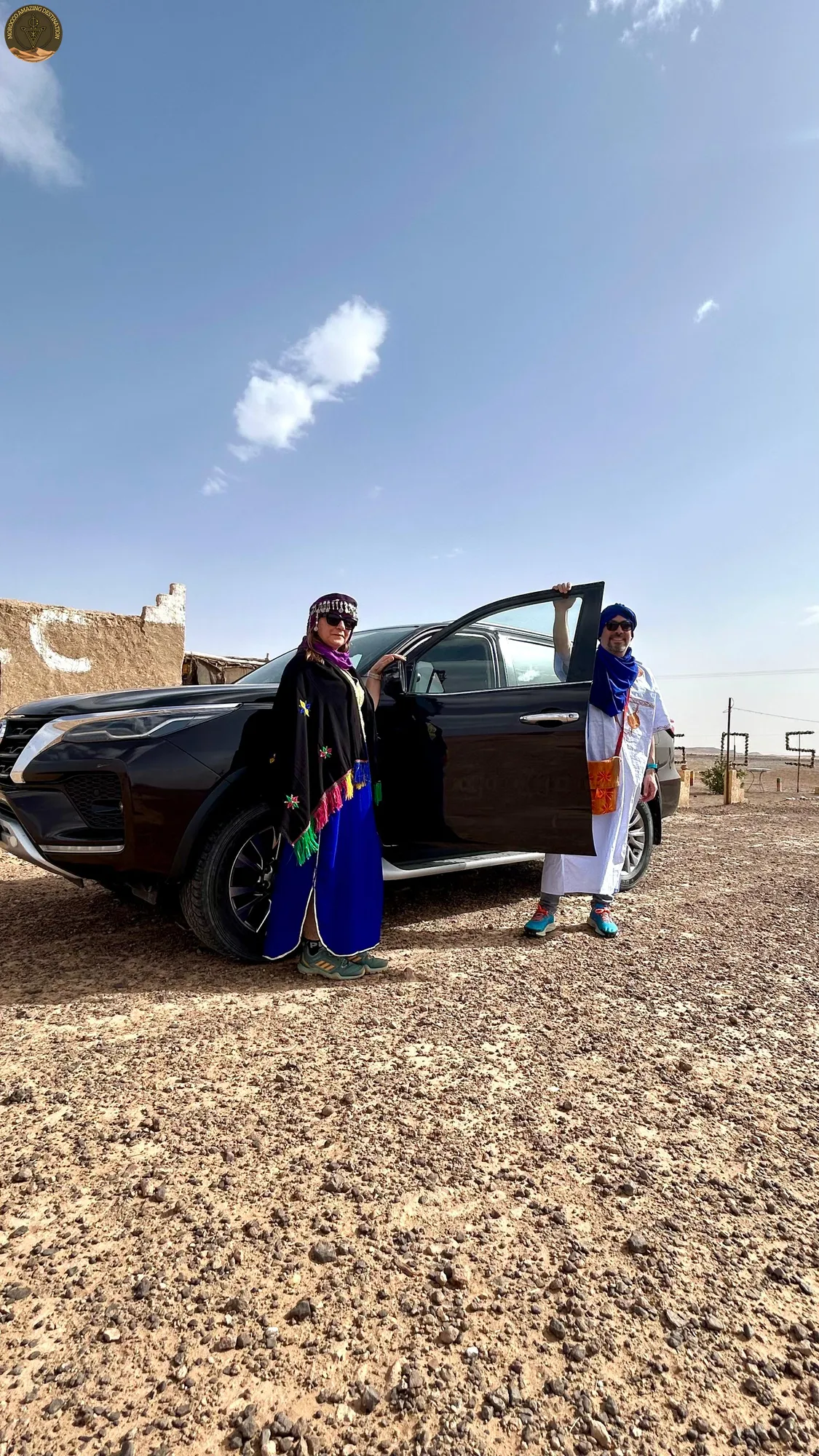
For many visitors, the best way to travel around Morocco is with a private driver or a small-group tour. You get the flexibility of a rental car without the stress of navigating unfamiliar roads.
Benefits:
- Door-to-door service from your riad or hotel
- Local knowledge and insider tips
- Comfortable, air-conditioned vehicles
- No parking hassles or navigation worries
- Ability to stop for photos and spontaneous discoveries
This option is especially popular for multi-day trips through the Atlas Mountains and Sahara, where public transport is limited.
Domestic Flights: When Time Is Short
If you have limited time, domestic flights can save hours. Royal Air Maroc and Air Arabia fly between major cities. Routes like Marrakech to Fes take about an hour, compared to 7+ hours by road. Flights to Errachidia (gateway to Merzouga) are also available.
Which Option Is Best for You?
For budget travelers: Mix trains and buses with the occasional grand taxi. It is affordable, safe, and covers the key destinations.
For couples or families: A private driver or rental car offers comfort and flexibility. Stop when you want, eat where locals eat, and travel at your own pace.
For solo travelers: Trains, CTM buses, and small-group tours are excellent options. They are social, safe, and well-organized.
For short trips (5–7 days): Stick to one region. A private tour from Marrakech to the desert and back is a fantastic way to see the highlights without wasting time on transit.
For long trips (10+ days): Combine trains between cities with a private driver for the desert leg. This mix-and-match approach gives you efficiency where it matters and freedom where you want it.
Practical Tips for Getting Around Morocco
- Carry cash — Small bills in Moroccan dirhams. Many taxis and small vendors do not accept cards.
- Book ahead — Trains and CTM buses sell out on popular routes, especially in spring and autumn.
- Start early — Most grand taxis and buses depart in the morning. Starting your day early gives you more options.
- Use the meter — In cities, insist that petit taxis use the meter (compteur) to avoid overpaying.
- Download offline maps — Google Maps works well, but have Maps.me as a backup for remote areas with no signal.
- Agree on price first — For grand taxis and unmetered petit taxis, always confirm the fare before getting in.
Conclusion
There is no single best way to travel around Morocco — the right choice depends on your budget, time, and travel style. Trains and buses are excellent for independent travelers on a budget. A rental car offers freedom for those who love the open road. And a private driver or guided tour delivers the ultimate comfort and local insight.
Whichever you choose, the journey through Morocco’s ever-changing landscapes is as memorable as the destinations themselves.
If you prefer to leave the logistics to the experts, consider one of our guided tours. Our drivers handle the roads while you enjoy the scenery.
Check out our 4-Day Trip from Marrakech to Fes — a classic route through the Atlas Mountains, Ait Ben Haddou, the Dades Valley, and Merzouga dunes, ending in the imperial city of Fes.
For a more comprehensive journey, our 5-Day Trip from Marrakech to Fes adds extra time in the desert and a visit to Todra Gorge.
If you found this helpful, add us as your preferred source on Google.
Frequently Asked Questions
What is the most comfortable way to travel around Morocco?
The most comfortable way is hiring a private driver or joining a guided tour. You get air-conditioned vehicles, flexible schedules, door-to-door service, and a local driver who knows the roads. For independent travel, first-class ONCF trains offer excellent comfort between major cities.
Is it better to rent a car or use public transport in Morocco?
It depends on your itinerary. Public transport (trains and buses) works well for major cities and is more budget-friendly. Renting a car gives you flexibility for remote areas like the Atlas Mountains or coastal routes, but driving in cities can be challenging. Many travelers combine both or opt for a private driver for the best of both worlds.
How much does it cost to get around Morocco?
Budget around 50–150 MAD ($5–15 USD) per day for public transport within cities. Intercity buses cost 80–200 MAD depending on distance. First-class train tickets from Casablanca to Marrakech run about 150 MAD. Private drivers and guided tours cost more but include transport, accommodation, and expert guidance.
What is the best way to get from Marrakech to the Sahara Desert?
The best way is a guided desert tour or private transfer. The drive to Merzouga takes about 9–10 hours through the Atlas Mountains and Dades Valley. Most travelers book a 3 or 4-day tour that includes stops at Ait Ben Haddou, Todra Gorge, and a night in a desert camp. Public buses go part of the way but require connections.
Ready for an Adventure?
Have questions? Feel free to contact us using the form below. We're here to help!