· Travel · 9 min read
Best Places to Visit in Tangier, Morocco: A District-by-District Guide
The best places to visit in Tangier, Morocco, district by district — Ville Nouvelle, Marshan cliffs, the marina, and Caves of Hercules.
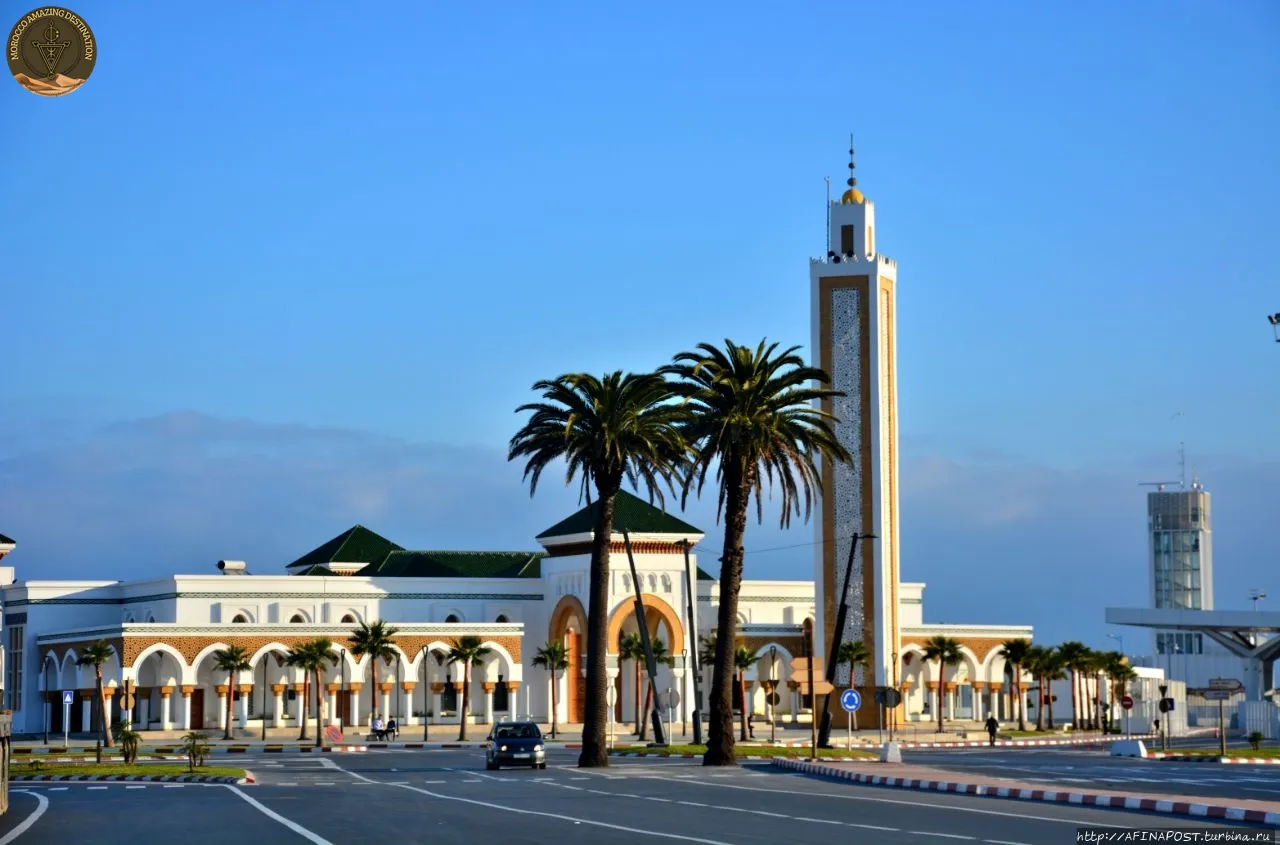
Tangier is a city that lives at a crossroads. Here, the Mediterranean meets the Atlantic, Africa faces Europe across a narrow strait, and centuries of Moroccan, Spanish, French, and British influence have layered into one of the most magnetic cities on the North African coast. Choosing the best places to visit in Tangier, Morocco means more than ticking off a checklist — it means moving through a city of distinct districts, each with its own rhythm. This district-by-district guide ranks the highlights so you can plan your Tangier sightseeing with confidence, whether you have one day or a full week.
The Best Places in Tangier at a Glance
If you are short on time, here are the best places in Tangier, ranked from the under-the-radar to the iconic:
- The Ville Nouvelle — Boulevard Pasteur and the Terrasse des Paresseux, the elegant European heart of the city.
- The Medina — Petit Socco and Grand Socco, the living historic core.
- The Kasbah and Dar el Makhzen Museum — the fortified hilltop palace.
- Café Hafa and the Marshan cliffs — the legendary cliffside mint tea terraces.
- Cap Spartel and the Caves of Hercules — the wild Atlantic headland west of town.
- Tanja Marina Bay and the corniche — the city’s gleaming waterfront.
- Perdicaris Park (Forêt de R’milat) — the green escape above the Strait.
- The American Legation Museum — the first American diplomatic property abroad.
- Ibn Battouta’s memorial — a nod to Tangier’s most famous son.
The Medina & the Kasbah (The Historic Core)
Tangier’s old city is compact and easy to navigate, and its classic sights set the scene.
The Kasbah and Dar el Makhzen. Perched on the highest point of the medina, the Kasbah is Tangier’s fortified hilltop quarter. Inside sits the Dar el Makhzen, an 18th-century palace that now houses the Museum of Mediterranean Cultures, with Andalusian gardens and a rich collection of Moroccan arts and crafts. Allow 1 to 1.5 hours; entry is around 20 dirhams (confirm on site).
Petit Socco and Grand Socco. The medina’s two squares set its rhythm. Petit Socco (Little Square) was once the meeting point of Tangier’s international set and remains perfect for people-watching over mint tea. Grand Socco (Place du 9 Avril 1947) marks the edge of the old city — visit on a Thursday or Sunday morning, when the country market fills the square.
The American Legation. Tucked into the medina, the American Legation was the first American public property abroad — a gift to the United States in the early 19th century and the only US National Historic Landmark overseas. It typically opens Monday to Friday 10:00–17:00 and weekends 10:00–15:00, with a small entry fee.
The Ville Nouvelle & European Tangier
The Ville Nouvelle is Tangier’s most underrated district — a grand, European-style city laid out at the foot of the medina, where the city’s cosmopolitan identity is most visible. While most visitors rush straight into the old town, this is where you will find the best places in Tangier for architecture, cafe culture, and sea views.
Boulevard Pasteur. The main artery of the Ville Nouvelle, Boulevard Pasteur is a wide, tree-lined avenue of early-20th-century facades, banks, and patisseries. Strolling its length is the simplest way to absorb Tangier’s European character.
Terrasse des Paresseux. At the seafront end, the Terrasse des Paresseux (“Terrace of the Idlers”) is the district’s best viewpoint — a palm-shaded belvedere looking over the bay, the port, and the Strait of Gibraltar. It is free and open all day, and most atmospheric around sunset.
Place de France. A short walk inland, Place de France is the district’s landmark square, ringed by cafes and the historic Hotel de France. It is also a practical transport hub — the airport bus stops here, making it a convenient starting or ending point for your visit.
Gran Café de Paris. Overlooking Place de France, the Gran Café de Paris is the quintessential spy-era cafe — a grand, faded interior from Tangier’s international era that has appeared in films such as The Bourne Ultimatum. Order a coffee or mint tea and soak up the old-world atmosphere.
Gran Teatro Cervantes. Just uphill, on rue Salah Eddine et Ayoubi toward Grand Socco, stands the Gran Teatro Cervantes — once the largest and best-known theatre in North Africa, with around 1,400 seats and a stage that hosted the likes of Enrico Caruso and Lola Flores. Built in the early 20th century, it has been donated to Morocco and is now under full restoration, so it is closed to the public — but its faded neo-classical facade remains a striking photo stop.
The Marshan & the Cliffs
The Marshan is Tangier’s leafy residential plateau, rising to the west of the city center — a quiet district of villas, consulates, and sweeping cliff views that most guides skip. It is one of the best places in Tangier to escape the crowds and feel the city’s old-world glamour.
The Marshan quarter. Stroll its tree-shaded streets to see elegant villas and diplomatic residences — remnants of Tangier’s international era.
Palais Marshan (the Mendoub’s Residence). At its heart, the Palais Marshan is an imposing palace that once housed the Forbes Museum of military miniatures and even appeared in a James Bond film. It is a state residence and not open to the public, but you can admire its facade and the panoramic views from the surrounding roads.
Café Hafa. Perched on the cliffs just below the Marshan, Café Hafa is Tangier’s most legendary cafe — opened in the early 1920s, with terraced seating that tumbles down the hillside toward the Strait of Gibraltar. A glass of mint tea here costs only a few dirhams, and the view is worth the walk.
The Marina, Port & Coast
Tangier’s waterfront is where the city looks forward — a rebuilt, modern coast that runs from the old port around the bay to the wild Atlantic headlands west of town.
Tanja Marina Bay and the corniche. At the center, Tanja Marina Bay (the Tangier Marina) is a gleaming superyacht marina framed by a long seaside corniche — roughly five kilometers of palm-lined promenade wrapping around the bay. It is a favorite spot for an evening stroll, and on clear days you can see the coast of Spain, about 14 kilometers away across the Strait.
The port and its seafood. The historic fishing port still bustles nearby, and its seafood restaurants are among the best places in Tangier to eat.
Caves of Hercules and Cap Spartel. Heading west, the coast turns wilder. The Caves of Hercules, about 14 kilometers from the center, are famous for their sea-facing opening shaped like the continent of Africa; allow 30–45 minutes and a small entry fee. A little further on, Cap Spartel is the northwesternmost point of Africa, marked by a 19th-century lighthouse. Visit in the late afternoon, when the sunset turns the cliffs copper.
Green Escapes & Hidden Corners
Perdicaris Park (Forêt de R’milat). Just east of Cap Spartel, Perdicaris Park is a 70-hectare forest of pine and cork oak on the slopes of Jebel Kebir, created in the late 19th century by the American Ion Perdicaris. Trails lead to viewpoints over the Strait, and the former villa now serves as a heritage interpretation center. It is free and open during daylight hours — an easy escape for a picnic or a shady walk.
Ibn Battouta’s memorial. Back in the medina, seek out the small shrine-memorial to Ibn Battouta, Tangier’s most famous son — a 14th-century traveller who covered an estimated 117,000 kilometers and recorded it all in his Rihla. His real tomb is in Marrakesh, so the medina monument is a cenotaph rather than a burial place; a small museum or exhibition dedicated to him is sometimes cited near Petit Socco, so ask locally to confirm what is open.
Practical Tips for Sightseeing in Tangier
- Getting around. The medina and Ville Nouvelle are best explored on foot. For the Atlantic sights west of town — Caves of Hercules, Cap Spartel, and Perdicaris Park, roughly 14 kilometers away — take a petit taxi (agree on the fare first) or a grand taxi, or join a guided tour.
- Best time to visit. Spring (March to May) and autumn (September to November) offer the mildest weather and fewer crowds. Summer is warm and lively; winter is cooler but quiet and still pleasant.
- Money. The local currency is the dirham. Carry cash for cafes, taxis, markets, and small entry fees — many are cash only.
- Dress. Tangier is relaxed, but modest dress is appreciated, especially in the medina. Bring layers in the cooler months.
Frequently Asked Questions
What are the best places to visit in Tangier?
The best places to visit in Tangier are the Ville Nouvelle’s Boulevard Pasteur and Terrasse des Paresseux, the medina with Petit Socco and Grand Socco, the Kasbah and Dar el Makhzen Museum, Cap Spartel and the Caves of Hercules, the Marshan’s cliffside Cafe Hafa, Tanja Marina Bay, and Perdicaris Park. Each district offers a different side of the city, from European architecture to wild Atlantic coastline.
How many days do I need to see the best of Tangier?
Two to three days is ideal. One day covers the medina, Kasbah, and the Ville Nouvelle; a second day is for Cap Spartel, the Caves of Hercules, and Perdicaris Park; a third lets you linger in the Marshan and the marina at leisure.
Is Tangier walkable, or do I need transport?
The medina and Ville Nouvelle are very walkable. For the Atlantic sights west of town (Caves of Hercules, Cap Spartel, Perdicaris Park), take a petit taxi, a grand taxi, or join a guided tour — they are roughly 14 kilometers from the center.
When is the best time to visit Tangier?
Spring (March to May) and autumn (September to November) offer the mildest weather and fewer crowds. Summer is warm and lively, while winter is cooler and quieter but still pleasant for sightseeing.
Sources: Wikipedia (Tangier, Gran Teatro Cervantes, Ibn Battuta, Perdicaris Park, Cape Spartel, Kasbah Museum, Café Hafa); Wikivoyage (Tangier); Lonely Planet (things to do in Tangier); the American Legation Museum (legation.org). Entry fees and opening hours vary — confirm on site before visiting.
Tangier rewards travelers who look beyond the obvious. Once you have wandered the Ville Nouvelle’s boulevards, watched the sunset from the Marshan cliffs, and traced the Atlantic coast past Cap Spartel, you will understand why this city has held so many visitors spellbound.
To go further, pair Tangier with the rest of northern Morocco. Our 5-Day Tour to Chefchaouen & Imperial Cities from Tangier leads you from the blue city of Chefchaouen to the imperial wonders of Fes, Meknes, and Rabat, with expert local guides at every step.
If you dream of the desert, our 7-Day Morocco Tour from Tangier to the Sahara continues south through Fes and the Atlas to the dunes of Merzouga — the ideal next chapter after your Tangier sightseeing.
We can customize a tour to match your needs — design your perfect itinerary
If you found this helpful, add us as your preferred source on Google.
Frequently Asked Questions
What are the best places to visit in Tangier?
The best places to visit in Tangier are the Ville Nouvelle's Boulevard Pasteur and Terrasse des Paresseux, the medina with Petit Socco and Grand Socco, the Kasbah and Dar el Makhzen Museum, Cap Spartel and the Caves of Hercules, the Marshan's cliffside Cafe Hafa, Tanja Marina Bay, and Perdicaris Park. Each district offers a different side of the city, from European architecture to wild Atlantic coastline.
How many days do I need to see the best of Tangier?
Two to three days is ideal. One day covers the medina, Kasbah, and the Ville Nouvelle; a second day is for Cap Spartel, the Caves of Hercules, and Perdicaris Park; a third lets you linger in the Marshan and the marina at leisure.
Is Tangier walkable, or do I need transport?
The medina and Ville Nouvelle are very walkable. For the Atlantic sights west of town (Caves of Hercules, Cap Spartel, Perdicaris Park), take a petit taxi, a grand taxi, or join a guided tour — they are roughly 14 kilometers from the center.
When is the best time to visit Tangier?
Spring (March to May) and autumn (September to November) offer the mildest weather and fewer crowds. Summer is warm and lively, while winter is cooler and quieter but still pleasant for sightseeing.
Ready for an Adventure?
Have questions? Feel free to contact us using the form below. We're here to help!