· Travel · 6 min read
Berber Desert Camp Morocco: What to Expect in Merzouga
Discover what a berber desert camp morocco offers — Erg Chebbi dunes, Berber tents, camel treks and starry nights — and how to choose yours.
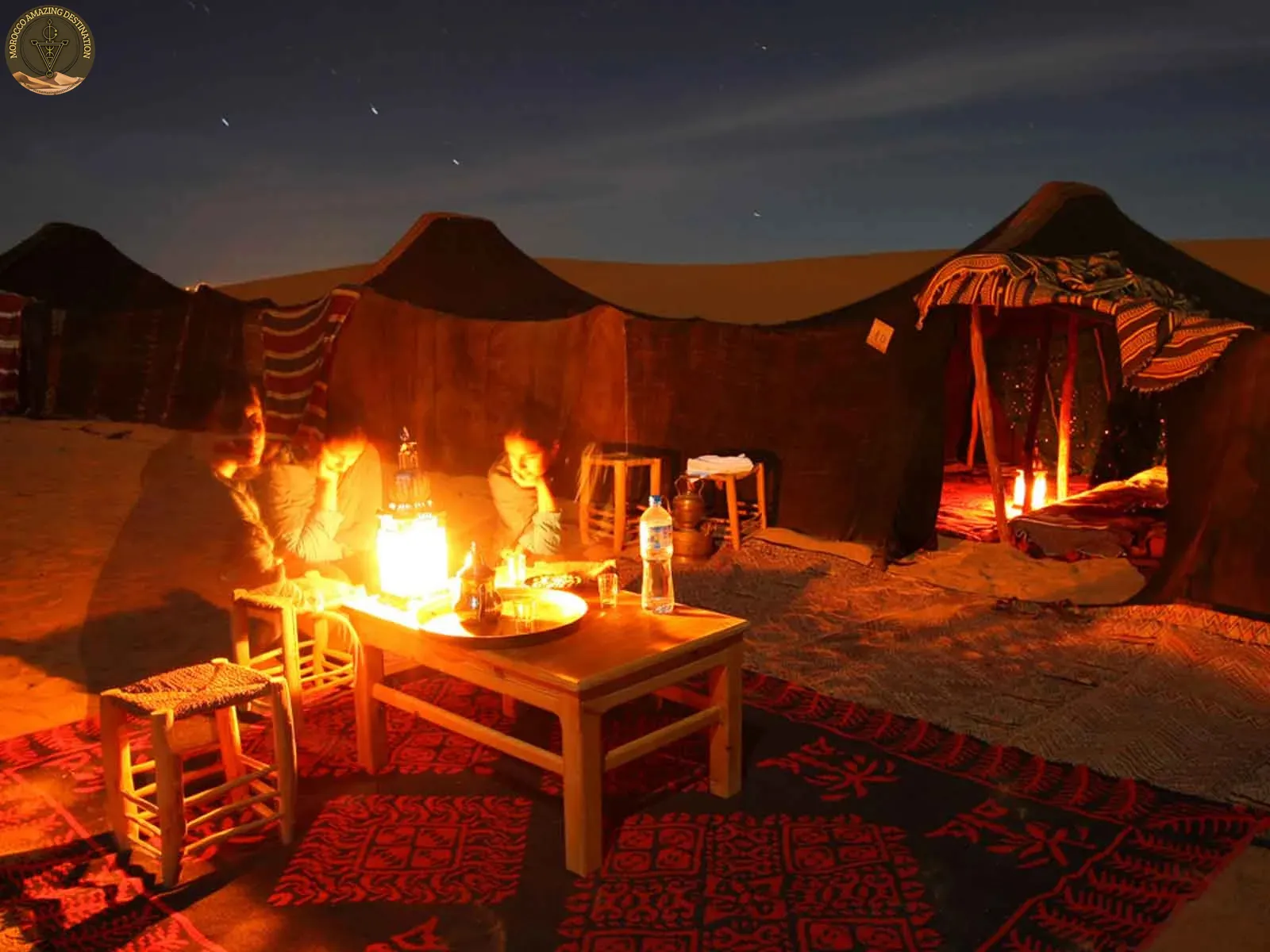
Imagine golden dunes glowing at sunset, a line of camels swaying toward lantern-lit tents, and drums echoing under a sky thick with stars. A berber desert camp morocco stay is that moment — not just a bed in the sand, but an intimate night rooted in Amazigh hospitality.
In this guide, we will break down where camps sit, what Berber style really means, what your night includes, and how to plan for comfort and season.
Where Berber Camps Sit: Erg Chebbi and Erg Chigaga
Most travelers picture erg chebbi desert camp stays for good reason. Erg Chebbi near Merzouga is the classic Saharan dune field — roughly 22 kilometers long by 5 kilometers wide, with golden ridges rising to about 150 meters, close to the Algerian border.
Camps here sit at the foot or edge of the dunes, following preservation rules that keep the highest dunes protected. You get easy access, dramatic views, and a choice of quieter private sections away from the main clusters. A merzouga berber camp is ideal if you want iconic dunes without a long off-road transfer.
Erg Chigaga, near M’Hamid, offers a wilder alternative. It lies about 60 kilometers off-road into the desert, with sweeping dunes around 120 meters high and far fewer camps. The journey takes longer, but the reward is deeper silence and a more remote feel. Choose Chebbi for convenience and classic photos, Chigaga for solitude.
What Berber Style Really Means
Berber style refers to Amazigh heritage, not a marketing label. Traditional tents use heavy black wool or camel hair, woven by hand, stretched over wooden poles. Inside you find rich rugs, patterned cushions, low wooden tables, brass tea trays, and lantern light.
Modern camps keep this aesthetic while adding comfort. Luxury versions set tents on wooden platforms, add proper beds with linens, and curate decor so the space feels both authentic and restful. Standard tents keep the charm in a simpler form.
Expect wool or canvas shells layered with rugs and cushions, soft lantern light around a communal fire, and tea served with quiet care. Luxury keeps the Berber look but adds solid floors, framed doors, and curated furnishings for a suite feel. Ask about tent materials and decor if authenticity matters — the best camps explain their craft and sources.
Standard vs Luxury: The Bathroom Question
The single most important difference is the bathroom. Ask directly: is it ensuite or shared?
Standard tents are typically 12 to 20 square meters. You sleep on mattresses set on raised platforms, with shared bathroom blocks a one to two minute walk away. Water can be solar-heated and occasionally cool, and meals are often communal at long tables. Prices generally fall in the €30 to €60 range per person, though you should confirm inclusions in writing.
Luxury tents are more like desert suites, often 30 to 40 square meters. They include an ensuite flush toilet and hot shower powered by solar or propane, a king or twin bed, electricity for charging, and a private terrace facing the dunes. Staff ratios are higher, transfers are smoother, and locations tend to be quieter. Expect around €100 to €200+ per person for well-run luxury options.
Key checks before you book:
- Bathroom: Private ensuite or shared block, and distance to it at night.
- Heating and power: Heated tents for cold months, solar outlets for phones and cameras.
- Location: Edge of dunes for access versus a private dune section for quiet.
Private driver-guides handle the last transfer by camel or 4x4, so you avoid hauling luggage across sand.
What a Night in Camp Includes
A typical night follows a gentle, memorable rhythm. You leave your vehicle at the dune edge, then ride camels for about 1 to 1.5 hours at sunset, pausing for photos as the light turns gold. At camp, mint tea awaits, then a Berber tagine dinner under lanterns.
After dinner, hosts gather around a fire for drums and songs, and the sky takes over — stargazing here is exceptional, with the Milky Way vivid on clear nights. You wake early for a short climb to watch sunrise paint the dunes, then enjoy breakfast before returning.
Highlights often included:
- Camel trek and sunrise climb: The core desert ritual, sunset in and sunrise out.
- Meals and tea: Tagine dinner, breakfast, and endless mint tea served with hospitality.
- Music and stars: Drum circle by the fire and deep-desert stargazing away from city lights.
Optional add-ons vary by camp but commonly include sandboarding on gentle slopes, quad or buggy rides on designated tracks, and 4x4 visits to a nomad family tent or to Khamlia village for Gnawa music. These are great if you have a full day in the Merzouga area.
How to Plan It: Season, Packing and Getting There
The best window for a berber desert camp morocco stay is October to April, when days are warm and nights are crisp. Winter nights can feel near freezing, so look for heated tents from December to February. Summer brings scorching days with cooler nights, and sand-moving winds are most common from February to April.
Pack for contrast. You need sun protection by day and warm layers at night, plus practical items for a solar-powered camp.
What to bring:
- Clothing: Scarf for wind and sun, closed shoes for sand, warm fleece or down layer for evenings.
- Essentials: Sunscreen, sunglasses, headlamp for night walks, and a power bank for charging.
- Comfort: Small daypack for the camel trek — you leave main luggage with your driver.
Getting there is part of the experience. From Marrakech, the route crosses the High Atlas via the Tizi n’Tichka pass at 2,205 meters, passes the UNESCO World Heritage site of Ait Benhaddou, and winds through the Dades and Todra gorges before reaching Merzouga. From Fes, you travel via Ifrane, the Azrou cedar forest, and the Ziz Valley. With a private vehicle and driver-guide, you can time stops, choose camel or 4x4 for the final dune transfer, and keep the pace relaxed.
For a seamless night in the dunes, explore our 4-Day Morocco Desert Tour from Marrakech, which includes a luxury desert camp, camel trek at sunset, and cultural stops at Ait Benhaddou and the gorges. If your time is shorter, the 3-Day Trip from Marrakech to Merzouga also features a Berber camp stay with a guided route through the High Atlas.
We can customize a tour to match your needs — design your perfect itinerary
If you found this helpful, add us as your preferred source on Google.
Frequently Asked Questions
What is a Berber desert camp in Morocco?
It is a tented camp in the dunes with Amazigh-inspired decor — wool tents, rugs, lanterns and low tables — set at the edge of Erg Chebbi near Merzouga or deeper in Erg Chigaga. You sleep in the desert, dine on tagine, hear drums by the fire and wake for sunrise over the dunes.
What is the difference between standard and luxury Berber camps?
Standard tents are 12–20 sqm with mattresses on platforms and a shared bathroom block a short walk away, with communal dinners. Luxury suites are 30–40 sqm with ensuite hot shower and flush toilet, proper beds, electricity and private terraces, plus higher staff ratio and quieter locations.
What is included in a Berber desert camp stay?
A typical night includes a 1–1.5 hour camel trek at sunset to the camp, Berber tagine dinner and breakfast with mint tea, drum circle and stargazing, plus a sunrise dune climb. Sandboarding, quad or buggy rides and visits to a nomad family or Khamlia for Gnawa music are usually optional add-ons.
When is the best time to stay and what should I pack?
October to April offers the most comfortable weather; winter nights can feel near freezing so heated tents help, summer days are scorching. Pack a scarf, closed shoes, warm layers, sunscreen, headlamp and power bank, as many camps run on solar power.
Ready for an Adventure?
Have questions? Feel free to contact us using the form below. We're here to help!