
· Travel · 8 min read
Arabian Riad Marrakech: A Journey into the Heart of Traditional Courtyard Living
Step into the enchanting world of an Arabian riad in Marrakech. Discover the history, architecture, and timeless hospitality of these traditional courtyard houses in Morocco's Red City.
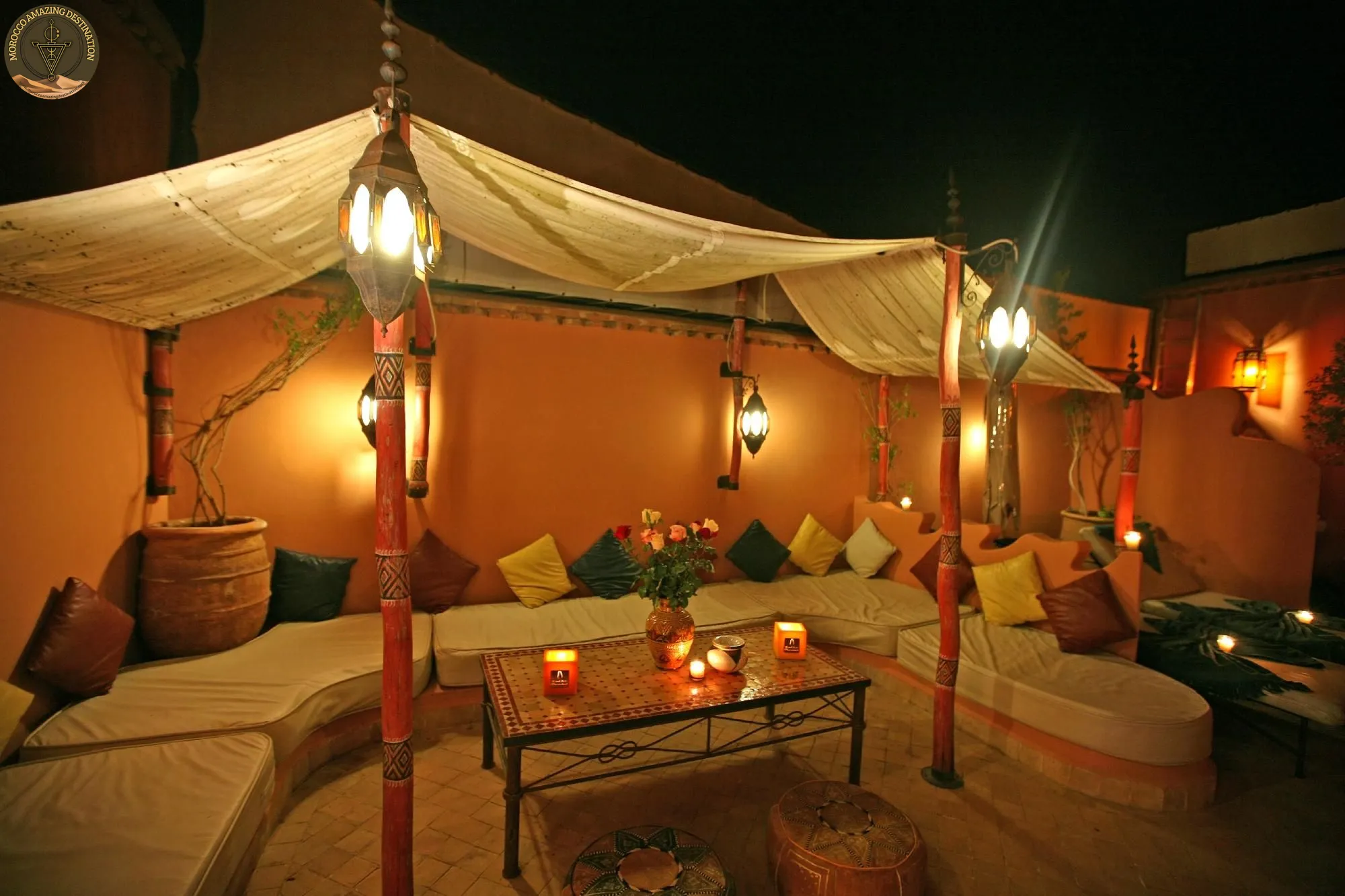
Imagine stepping through a heavy cedar door tucked away in a narrow alley of the Marrakech Medina. The noise of the bustling souks fades behind you, replaced by the gentle sound of water trickling from a marble fountain. Sunlight filters through orange trees, casting dappled shadows across hand-cut zellij tiles. You have just entered an Arabian riad Marrakech — a sanctuary of beauty, peace, and centuries-old tradition.
An Arabian riad is not merely a place to sleep. It is an immersion into the soul of Arabo-Islamic architecture, where every arch, every tile, and every carved ceiling tells a story of craftsmanship passed down through generations. In this guide, we explore what makes the Arabian style riad Marrakech so uniquely captivating and how you can experience it for yourself.
The Arabian Origins of the Moroccan Riad
The concept of the riad traces its roots to the great civilizations of the Arabian Peninsula and the wider Islamic world. When Arab armies and traders spread across North Africa, they brought with them not only a new faith but a sophisticated architectural tradition centered on the courtyard house.
In Arabic, the word riyad (رياض) means “gardens” — a reflection of the Islamic vision of paradise as a lush, walled garden nourished by flowing water. This ideal found perfect expression in the Arabian courtyard house Marrakech, where the central garden became the heart of domestic life.
As Arab dynasties — first the Almoravids, then the Almohads, and later the Saadians — shaped Marrakech into an imperial capital, the riad evolved. Artisans from Al-Andalus and the Arab East brought techniques in zellij tilework, carved stucco, and cedar woodwork. Over centuries, the Arabian riad absorbed Berber, Andalusian, and sub-Saharan influences, but its soul remained rooted in Arabian design principles: privacy, introspection, and harmony with nature.
Key Architectural Elements of an Arabian Riad
What distinguishes an arabian architecture marrakech riad from other traditional houses? The magic lies in the details.
The Central Courtyard: The Garden of Paradise
The courtyard is the beating heart of any Arabian riad. Inspired by the four-part Persian-Arabian garden layout, it typically features a central fountain, fruit trees — often oranges, lemons, or pomegranates — and lush greenery. Arcades with horseshoe arches frame the open sky, creating a seamless flow between interior and exterior.
This design serves both spiritual and practical purposes. Symbolically, it recreates the Quranic image of paradise. Practically, it provides natural cooling, privacy from the street, and a protected space where family life unfolds away from prying eyes.
Zellij Tilework and Arabesque Patterns
Walk through an Arabian riad Marrakech, and your eyes will inevitably be drawn to the floors and lower walls adorned with zellij — hand-cut geometric mosaic tiles arranged in intricate, repeating patterns. These are not random decorations. Islamic tradition discourages figurative imagery, so artisans channeled their creativity into mathematical precision, producing hypnotic star patterns, interlacing polygons, and flowing arabesques that seem to extend into infinity.
Each piece of zellij is chiseled by hand from glazed tiles, a skill that takes years to master. The colors — cobalt blue, emerald green, honey yellow, and terracotta red — are achieved through natural pigments and time-honored kiln techniques.
Carved Plaster and Cedar Woodwork
Raise your gaze above the zellij dado, and you will find walls covered in delicately carved stucco. Master artisans use wooden templates to trace elaborate geometric and floral motifs into wet plaster, creating a lace-like surface that catches the light in endlessly subtle ways. This craft, known as gebs or naqsh, has its origins in the palaces of Abbasid Baghdad and Umayyad Cordoba.
Above, ceilings of painted cedar bear witness to yet another Arabian tradition. Intricate zouak polychrome painting transforms wooden surfaces into kaleidoscopes of color, while tally carving produces deeply sculptural reliefs. The cedar itself, sourced from Morocco’s Middle Atlas mountains, fills the riad with a warm, resinous fragrance.
Horseshoe Arches and Mashrabiya Screens
The horseshoe arch — wider than a semicircle at its base — is one of the most recognizable elements of Arabo-Islamic architecture. In a Marrakech riad, these arches frame doorways, windows, and arcades, lending a sense of rhythm and grandeur to even the most intimate spaces.
Equally distinctive are mashrabiya screens: carved wooden lattice panels that cover windows and balconies. Originally designed to allow women to observe the street without being seen, mashrabiya now serves as a beautiful way to filter light, encourage airflow, and create dappled patterns on courtyard walls.
Arabian Hospitality in Marrakech Riads
Arabian hospitality morocco riad culture is legendary, and for good reason. The tradition of welcoming the stranger with generosity — diyafa in Arabic — is deeply rooted in Bedouin and Islamic values. In a Marrakech riad, this translates into an experience that goes far beyond conventional hotel service.
Upon arrival, you will be greeted with a tray bearing a silver teapot, glasses of steaming mint tea, and a plate of almond-filled pastries. This ritual is not rushed; it is an invitation to pause, breathe, and transition from the chaos of the outside world into the tranquility of the riad.
Throughout your stay, the staff — often family members who have lived in the neighborhood for generations — attend to your needs with genuine warmth. Meals are prepared using recipes handed down from grandmothers: slow-cooked lamb tagines with prunes and almonds, fluffy couscous with caramelized vegetables, and pastilla layered with cinnamon and powdered sugar.
Do not be surprised if your host invites you to join the family for a meal or insists on walking you through the labyrinthine alleys to make sure you find your way. This is not exceptional service; it is simply how things are done.
Where to Find the Best Arabian Riads in Marrakech
The most authentic arabian style riad marrakech experiences are found in the historic Medina neighborhoods:
- Mouassine: Known for its artistic soul and proximity to the souks. Riads here often feature expansive courtyards and rooftop terraces with views over the Koutoubia minaret.
- Dar El Bacha: An elegant district named after a magnificent palace. Arabian riads in this area tend to be among the most meticulously restored, with generous proportions and mature gardens.
- Kennaria: A quieter, more residential area close to the Bahia Palace and the Mellah. Ideal for those seeking an immersive, unhurried atmosphere.
- The Kasbah: Near the Royal Palace and Saadian Tombs, this historic quarter offers larger plots and easy access to some of Marrakech’s most important monuments.
When choosing your riad, consider the depth of your desired immersion. Some riads have been restored with contemporary flair while preserving Arabian architectural elements; others remain faithful to every historical detail, offering a near-museum-quality experience.
How to Experience Authentic Arabian Riad Living
To fully embrace the arabian riad marrakech lifestyle, approach your stay with intention:
- Wake up slowly: Let the call to prayer be your alarm clock. Head to the rooftop for breakfast as the first light touches the Atlas Mountains.
- Sip tea in the courtyard: Dedicate time to simply sitting by the fountain with a book or your thoughts — it is one of the most restorative things you can do in Marrakech.
- Book a hammam: Many Arabian riads have an in-house hammam where you can experience the traditional Moroccan bathing ritual with black soap and argan oil.
- Eat a home-cooked dinner: Ask your host to prepare a traditional meal. Dining by candlelight in the courtyard, with the scent of jasmine in the air, is an experience no restaurant can match.
- Engage with your hosts: The people who run Arabian riads are custodians of an extraordinary cultural heritage. Ask about the history of the building, the craftspeople who restored it, and their family traditions.
Conclusion
An Arabian riad Marrakech is far more than accommodation — it is a living museum, a spiritual retreat, and a testament to the enduring genius of Arabo-Islamic design. From the geometry of its zellij floors to the warmth of its traditional hospitality, every element invites you to slow down, connect, and experience Marrakech not as a tourist but as a guest.
Whether you are a first-time visitor or a seasoned traveler, the Arabian riad offers a depth of experience that no modern hotel can replicate. It is a reminder that the most profound journeys are not measured in kilometers but in moments of beauty, stillness, and human connection.
After soaking in the serenity of your riad, the landscapes beyond Marrakech await. Our 3-Day Desert Tour from Marrakech to Merzouga takes you from the red walls of the Medina to the golden dunes of the Sahara, crossing the High Atlas Mountains and ancient kasbahs along the way. For a more extended journey, the 4-Day Morocco Desert Tour from Marrakech adds the stunning Dades Valley and Todra Gorge to your adventure — the perfect complement to your Arabian riad retreat.
We also specialize in tailor-made experiences. If you have a specific vision for your Moroccan journey — whether it is a private riad stay, a bespoke desert itinerary, or a cultural deep-dive — contact us to design a trip that reflects your interests and travel style.
If you found this helpful, add us as your preferred source on Google.
Frequently Asked Questions
What is an Arabian riad and how is it different from other riads?
An Arabian riad is a traditional Moroccan courtyard house whose design is rooted in Arabo-Islamic architectural principles. While all riads share the inward-facing courtyard layout, an Arabian riad specifically emphasizes elements like horseshoe arches, arabesque tilework, carved stucco, and calligraphic details that trace back to medieval Arabian palaces. These riads offer a deeper immersion into the Islamic architectural heritage of Morocco.
What are the key architectural features of an Arabian-style riad in Marrakech?
The key features include a central courtyard garden with a fountain, zellij mosaic tilework with geometric and arabesque patterns, horseshoe and multifoil arches, intricately carved cedar wood ceilings, decorative stucco plasterwork, mashrabiya lattice screens, and rooftop terraces. The design follows Islamic principles of privacy, introspection, and harmony with nature.
Where are the best Arabian riads located in Marrakech?
The most authentic Arabian riads are found deep within the Marrakech Medina, particularly in historic neighborhoods like Mouassine, Dar El Bacha, Kennaria, and the Kasbah. These areas preserve the traditional architectural fabric and offer easy access to souks, palaces, and historic monuments.
What should I expect from Arabian hospitality in a Marrakech riad?
Arabian hospitality in a Marrakech riad means being welcomed with traditional mint tea and sweets upon arrival, enjoying home-cooked Moroccan meals in the courtyard, and receiving personalized attention from hosts who treat you like family. Expect genuine warmth, unhurried service, and a deep commitment to making your stay memorable.
Ready for an Adventure?
Have questions? Feel free to contact us using the form below. We're here to help!