· Travel · 11 min read
10 Best Places to Visit in Morocco: Top Destinations for Your Itinerary
Discover the 10 best places to visit in Morocco, from Marrakech and the Sahara to Chefchaouen, Fes and the Atlantic coast.
10 Best Places to Visit in Morocco: Top Destinations for Your Itinerary
From the glow of Jemaa el-Fna at dusk to the hush of Saharan dunes at sunrise, Morocco rewards every kind of traveller in a compact geography. If you are planning your first route, this guide to the 10 best places to visit in morocco brings the essentials together in one curated ranking, with why to go, who each place suits, and how to link them without backtracking.
Morocco packs imperial medinas, High Atlas peaks, palm valleys, gorges and Atlantic surf into relatively short distances, which is why the choice of bases matters. The best places in morocco are not just a list of sights — they form three natural clusters: the northern imperial cities and blue town, the southern Atlas and Sahara axis, and the cosmopolitan coast, giving you balance between history, nature and relaxation.
The 10 Best Places to Visit in Morocco — Ranked
Below are the ten destinations that consistently top traveller wish lists, with what makes each special and a practical tip. Distances and heights are approximate — landscapes vary and road conditions change — so take figures as a guide and let a local driver adjust timing. Sources include UNESCO World Heritage listings for the medinas and ksar, and geographic references for heights and dune dimensions.
1. Marrakech — The Red City
Marrakech is the country’s most visited hub and the ideal introduction for most visitors. The UNESCO-listed Jemaa el-Fna square fills each evening with food stalls, storytellers and musicians, while the Koutoubia Mosque minaret at about 77 m, Bahia Palace, Saadian Tombs and Ben Youssef Madrasa showcase centuries of craftsmanship.
- Why go: Energy, colour and architecture in one walkable medina, with gardens like Majorelle and Menara for easy escapes.
- Best for: First-time visitors, photographers, food lovers and anyone who wants markets, palaces and lively squares.
- Tip: Stay inside or near the medina for atmosphere, but allow time for a garden or rooftop cafe when the souks feel intense. Early morning is best for Jemaa el-Fna before crowds build.
2. Fes — The Spiritual and Craft Capital
Fes el-Bali is one of the best-preserved medieval cities in the world and a UNESCO World Heritage site. Its maze of roughly 9,000 alleys holds the University of Al Quaraouiyine, founded over a millennium ago and often cited as the oldest continuously operating higher-education institution, plus Bou Inania and Al-Attarine madrasas and the famous Chouara Tanneries.
- Why go: Deep history, living crafts and a medina that feels largely unchanged.
- Best for: Culture lovers, history enthusiasts and travellers who want a guided walk through layered heritage.
- Tip: A licensed local guide is strongly recommended; the medina is wonderfully complex and key sites are easy to miss without context.
3. Chefchaouen — The Blue Pearl
Set in the Rif Mountains with a small-town feel and a population of roughly 40,000–46,000 at about 600 m altitude, Chefchaouen is beloved for its blue-washed lanes, flower-filled doorways and relaxed pace. Founded centuries ago as a mountain stronghold, its blue tones are often linked to later traditions, with sunset from the Spanish Mosque among the most photographed views in the north.
- Why go: Photogenic streets, cooler mountain air and a slower rhythm after the imperial cities.
- Best for: Couples, photographers, families seeking easy wandering and hikers who can add Akchour waterfalls nearby.
- Tip: Stay overnight for early light before day-trippers arrive, about 200 km from Fes (roughly 3–4 hours) and about 113 km from Tangier; wear comfortable shoes for steep lanes.
4. Merzouga and Erg Chebbi — Sahara Dunes
For many visitors the Sahara is the defining memory. Near the village of Merzouga, the Erg Chebbi dune field stretches for about 28 kilometres, is about 5–7 kilometres wide and rises to roughly 150 m at its highest crests, creating an apricot-gold sea that glows at sunrise and sunset.
Camel treks at golden hour, 4x4 transfers and nights in well-equipped desert camps under star-filled skies make the experience both adventurous and comfortable. The silence, Gnawa rhythms from nearby Khamlia and vast stargazing are unforgettable.
- Why go: Sunrise over dunes, drumming by the fire and a profound sense of space.
- Best for: Honeymooners, families with older children, photographers and anyone seeking a once-in-a-lifetime desert night.
- Tip: There is no train to the dunes; the overland route from Marrakech is about 550–560 km and is best split over two days with stops in the valleys.
5. High Atlas Mountains — Toubkal and Imlil
The High Atlas forms Morocco’s mountain spine. Mount Toubkal at about 4,167 m is the highest peak in North Africa, while Imlil at about 1,740 m is the main trek base. The Tizi n’Tichka pass, the main road between Marrakech and Ouarzazate, crosses at over 2,200 m (signed at about 2,260 m — figures vary, hedge accordingly) with dramatic viewpoints.
Even without summiting, you can enjoy terraced valleys, walnut groves, mule tracks and warm Berber guesthouses. A two-day Toubkal ascent is non-technical but strenuous, with refuges at about 3,200 m.
- Why go: Alpine scenery, village culture and fresh air a short drive from Marrakech.
- Best for: Hikers, nature lovers and travellers wanting a quiet mountain contrast to city and desert.
- Tip: Pack layers; temperatures shift quickly with altitude and a local mountain guide enriches any hike.
6. Ait Benhaddou and Ouarzazate — Kasbahs and Cinema
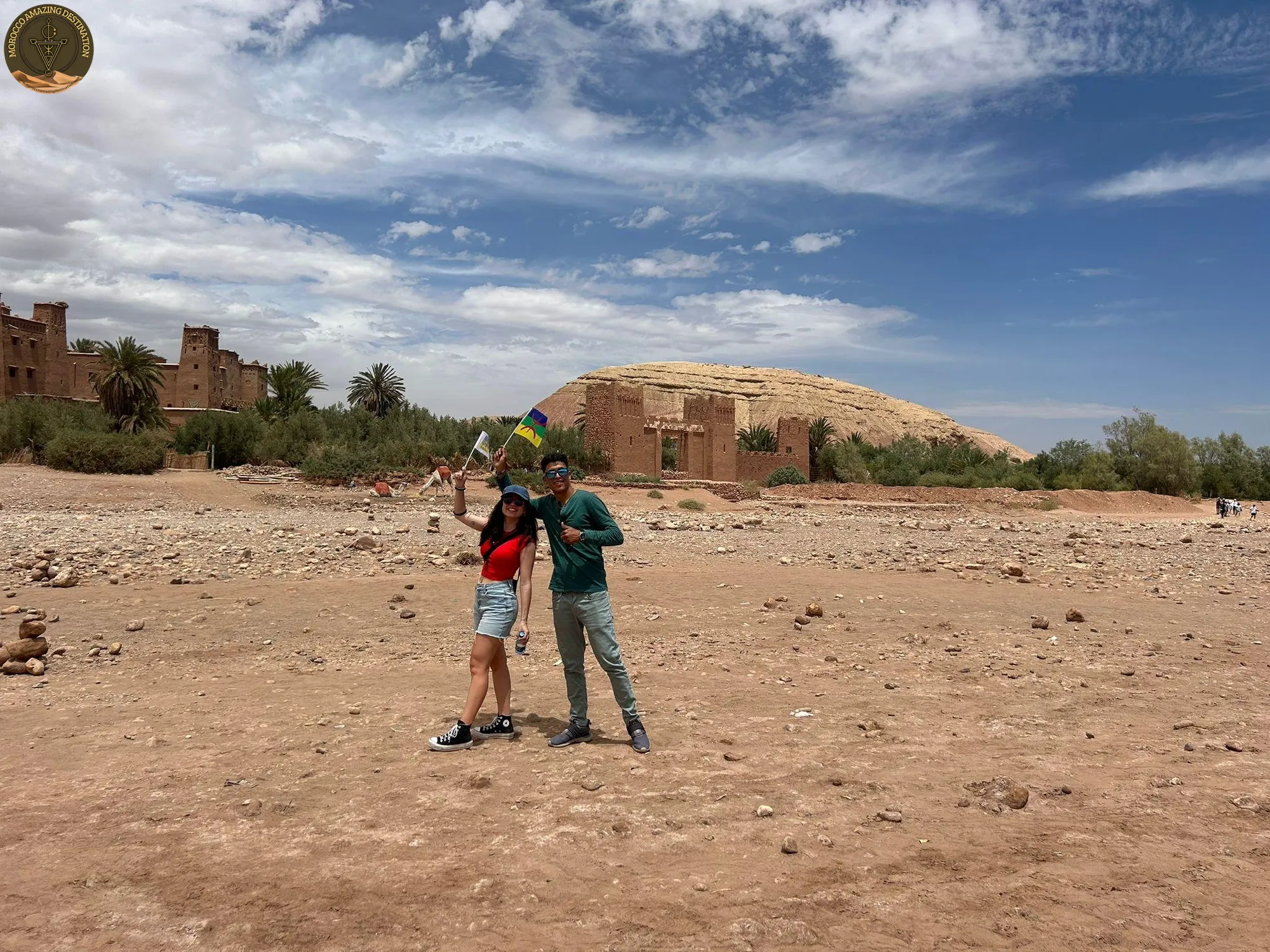
The fortified ksar of Ait Benhaddou, a UNESCO World Heritage site for decades, is one of Morocco’s most cinematic sights. Its pisé walls and earthen towers rise above a seasonal riverbed and have featured in films from Lawrence of Arabia to Gladiator. Just beyond lies Ouarzazate, known as the gateway to the desert, with Taourirt Kasbah and nearby Atlas Studios.
Located about 185 km from Marrakech (roughly 3.5 hours via Tizi n’Tichka), the pair anchor the southern oasis route and are best visited in soft early or late light.
- Why go: Striking earthen architecture, film history and the tangible feel of caravan routes.
- Best for: Architecture fans, film buffs and road-trippers between Marrakech and the gorges.
- Tip: Combine both in one unhurried day and avoid midday harsh light on the ksar.
7. Dades Valley and Todra Gorge — Valley of a Thousand Kasbahs
Winding east from Ouarzazate, the Dades Valley is famed as the Valley of a Thousand Kasbahs, where palm oases, rose fields and fortified villages line a serpentine road with formations often called Monkey Fingers. The nearby Todra Gorge impresses with sheer limestone walls rising to about 300 m, carved by the Todra River, narrowing to about 10 m in places.
- Why go: Dramatic canyon walks, road-trip scenery and authentic villages away from main cities.
- Best for: Drivers, hikers, photographers and travellers who enjoy offbeat valleys.
- Tip: Plan a night in the Dades or Todra area to avoid a rushed pass-through and to enjoy sunrise on the gorge walls.
8. Essaouira — Atlantic Escape
On the Atlantic coast, Essaouira blends a UNESCO-listed medina, whitewashed walls with blue shutters and a breezy oceanfront. The Skala de la Kasbah ramparts lined with cannons offer sweeping sea views, while the fishing harbour delivers some of the freshest seafood in the country.
Known as the Windy City for steady trade winds, it draws windsurfers and kitesurfers yet also suits those who simply want to slow down, browse galleries and stroll a wide sandy beach. About 175–190 km from Marrakech (roughly 2.5–3 hours), it makes an easy add-on.
- Why go: Coastal light, relaxed cafe culture and refreshing contrast to inland heat.
- Best for: Families, surfers, art lovers and anyone seeking a laid-back finale.
- Tip: Afternoons can be windy; bring a light layer even when inland is warm.
9. Casablanca — Iconic Mosque on the Atlantic
Casablanca is the economic capital and home to the Hassan II Mosque, one of the largest mosques in Africa. Built partly over the Atlantic in the contemporary era, its minaret reaches about 210 m and the complex can accommodate roughly 105,000 worshippers. It is one of the few mosques open to non-Muslim visitors via guided tours outside prayer times — check locally for current hours.
Beyond the mosque, the city offers Art Deco boulevards, the historic Habous quarter and a modern corniche.
- Why go: A powerful architectural statement and a glimpse of contemporary Moroccan city life.
- Best for: First or last nights near the international airport, architecture admirers and north–south connections.
- Tip: Guided mosque tours run outside prayer times and fill quickly; arrive early in the day.
10. Tangier — Where Africa Meets Europe
Perched at the Strait of Gibraltar, about 27 km from southern Spain with ferries from Tarifa in as little as 35 minutes and about 23 km from Cap Spartel, Tangier has been a crossroads since Phoenician times. The Grand Socco, kasbah, American Legation museum and Caves of Hercules illustrate layers of Mediterranean and Atlantic influence.
- Why go: Cosmopolitan vibe, literary history and easy access to the Rif and Chefchaouen.
- Best for: Travellers arriving from Europe, culture seekers and fans of port cities with a bohemian edge.
- Tip: Combine Tangier with Chefchaouen and Fes for a smooth northern loop before heading south.
How to Connect the 10 Destinations
Understanding flow turns a wish list into a workable itinerary. The destinations link naturally in a north-to-south arc: begin in Tangier or Casablanca, loop through Chefchaouen and Fes, cross the Middle Atlas via Midelt and the Ziz Valley to Merzouga, then return west through Dades, Todra, Ait Benhaddou and the High Atlas to Marrakech and on to Essaouira.
On a practical level, the train corridor Tangier–Kenitra–Rabat–Casablanca–Fes–Marrakech (including the Al Boraq high-speed section) is fast and frequent; the Atlas and Sahara legs rely on road, so pairing a few train hops with a private driver and 4x4 covers the Top 10 without backtracking. Domestic flights also help between Marrakech and the north if you are short on time.
The Best Places to See Beyond the Medinas
If your focus is landscapes, craftsmanship and coastal light, the best places to see in morocco beyond the medinas are the natural and fortified highlights: High Atlas valleys around Imlil and Toubkal, the rolling Erg Chebbi dunes near Merzouga, the narrows of Todra Gorge and the sinuous Dades, the earthen ksar of Ait Benhaddou and the Atlantic ramparts and harbour of Essaouira. Pairing one or two of these with Marrakech and Fes gives you both cultural depth and wide-open scenery.
This broader view complements a city-first ranking and helps first-timers decide where to linger for photography, hiking or a slower coastal finish.
Practical Tips for Traveling Between the 10 Places
- Time needed: Two nights each in Marrakech and Fes, one to two nights in Chefchaouen, one night in a desert camp, and one night each in Dades/Todra and Essaouira makes a balanced pace. A seven-day loop can cover imperial cities plus desert; ten to fourteen days lets you enjoy the full Top 10 without rush.
- Road versus rail: Use ONCF trains for Tangier–Rabat–Casablanca–Fes–Marrakech. For Imlil, Ait Benhaddou, Dades, Todra and Merzouga, a private driver with a comfortable vehicle saves stress, handles mountain navigation and adapts stops to your pace. Many travellers mix both: train in the north, driver in the south.
- Guided versus independent: Medinas and kasbahs reward a licensed guide for history and access — especially Fes, where signage is minimal. Coastal towns, beaches and medina shopping are easy solo. A tailor-made plan keeps logistics seamless and ensures you see highlights at the best light.
- Stay advice: Choose riads inside the medinas for atmosphere in Marrakech, Fes and Chefchaouen; opt for valley lodges in Dades/Todra and sea-view guesthouses in Essaouira. In the desert, camps range from standard to luxury ensuite — both include blankets, meals and stargazing.
- Hedging note: Distances vary by route and source, so figures like Marrakech–Essaouira about 175 km or Fes–Chefchaouen about 200 km are guides, not guarantees; heights like Toubkal about 4,167 m and Erg Chebbi dunes to about 150 m are widely cited but rounded.
Recommended Tours to Cover the Highlights
If you want to link several of these destinations in one seamless journey, consider a grand circuit that handles driving and guiding for you. The 14-Day Morocco Tour from Casablanca weaves together Casablanca, Chefchaouen, Fes, the Atlas Mountains, Dades and Todra, Ait Benhaddou and the Erg Chebbi dunes before finishing in Marrakech, essentially connecting the entire Top 10 in a balanced route.
For a shorter desert focus, the 3-Day Trip from Marrakech to Merzouga is the classic Marrakech–Ouarzazate–Dades–Merzouga loop, ideal if you are based in Marrakech and want a concentrated taste of kasbahs, valleys and dunes.
For broader inspiration, see our ranked guide to the top 10 Morocco destinations — a sibling overview that this best-places selection complements — and our landscape-focused companion on the most beautiful places in Morocco for scenic pairings.
We can customize a tour to match your needs — design your perfect itinerary
If you found this helpful, add us as your preferred source on Google.
Frequently Asked Questions
How many days do you need for the 10 best places to visit in Morocco?
About a week covers Marrakech + Fes + desert loop; allow 10–14 days to include Chefchaouen, High Atlas, Dades/Todra and Atlantic coast without rushing. Mix train (north) and private driver (Atlas/Sahara).
Which of the best places in Morocco are best for first-time visitors?
Start with Marrakech and Fes for culture, add Merzouga/Erg Chebbi for desert, and choose Chefchaouen or Essaouira for gentler pace. Well set up for guided tours and family-friendly riads/camps.
What are the best places to see in Morocco beyond the cities?
The High Atlas (Toubkal/Imlil), Erg Chebbi dunes, Todra Gorge (up to about 300 m) and Dades Valley, plus Ait Benhaddou/Ouarzazate and the Atlantic ramparts of Essaouira.
How do you get between the 10 best places — is a guide needed?
Trains link Tangier–Casablanca–Rabat–Fes–Marrakech; Atlas and desert legs need private driver/4×4 (no train to Merzouga). Licensed guide highly recommended in Fes medina and helpful at kasbahs/gorges; coast easy solo.
- 10-best-places-to-visit-in-morocco
- best-places-to-visit
- morocco-destinations
- sahara-desert
- atlas-mountains
Ready for an Adventure?
Have questions? Feel free to contact us using the form below. We're here to help!